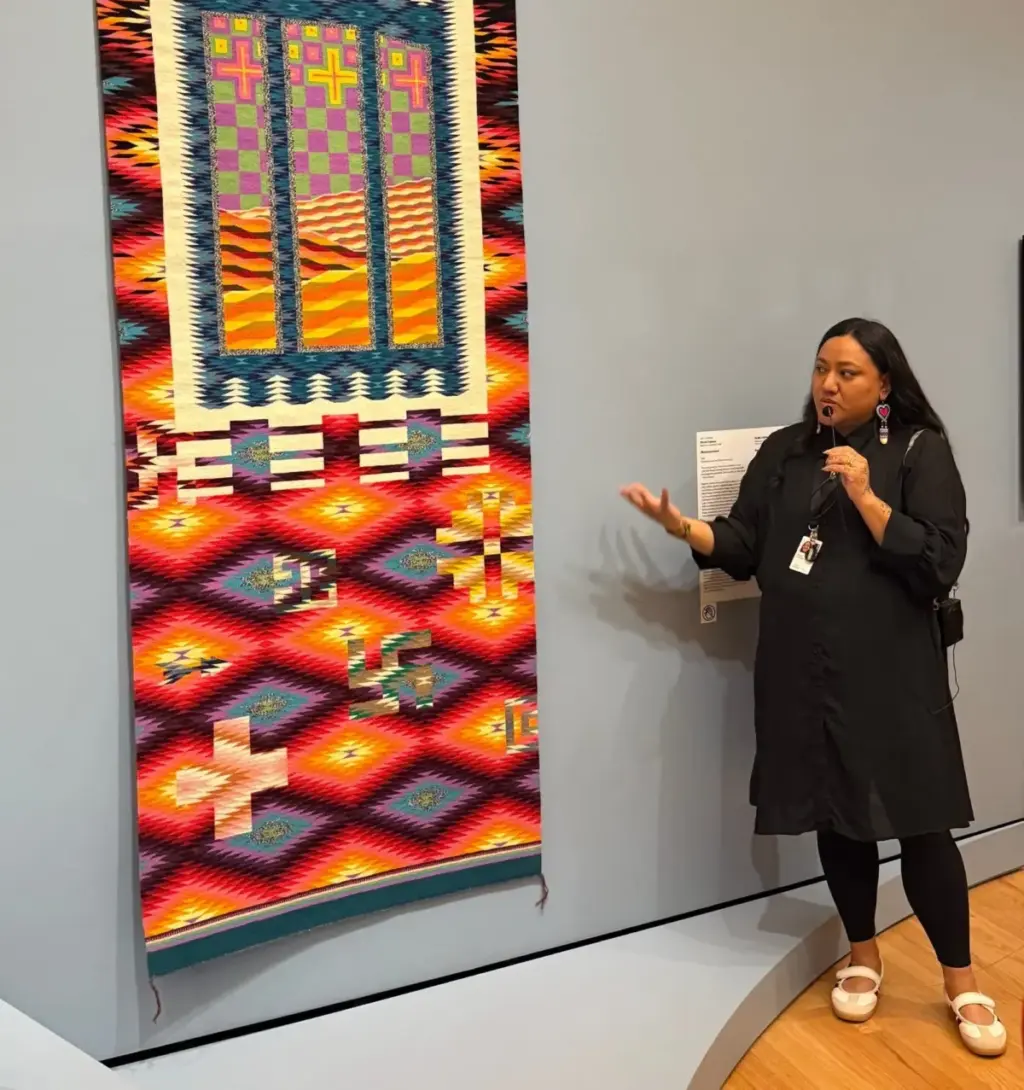
BENTONVILLE, Ark. — In mid-October, a gathering of prominent Indigenous artists, curators, and scholars filled a conference room at the Crystal Bridges Museum of American Art for a landmark symposium on contemporary Native art. Kicking off the two-day event, Jordan Poorman Cocker stepped up to the podium and delivered a land acknowledgment, grounding the proceedings in their specific geographic and historical context.
Founded by Walmart heiress Alice Walton, the prominent museum sits on the ancestral homelands of the Osage Nation, Quapaw Nation, and Caddo Nation, all of whom were forcibly removed from the region during the tumultuous 19th century. Poorman Cocker, a citizen of the Kiowa and Tongan Nations, serves as the museum’s Native American Graves Protection and Repatriation Act (NAGPRA) officer and its first full-time curator of Indigenous art. Appointed to the role in 2023, she commutes an hour and a half to the museum from Tahlequah, Oklahoma—the historic capital of the Cherokee Nation and a destination for several Indigenous nations coerced westward during the federal Indian Removal era.
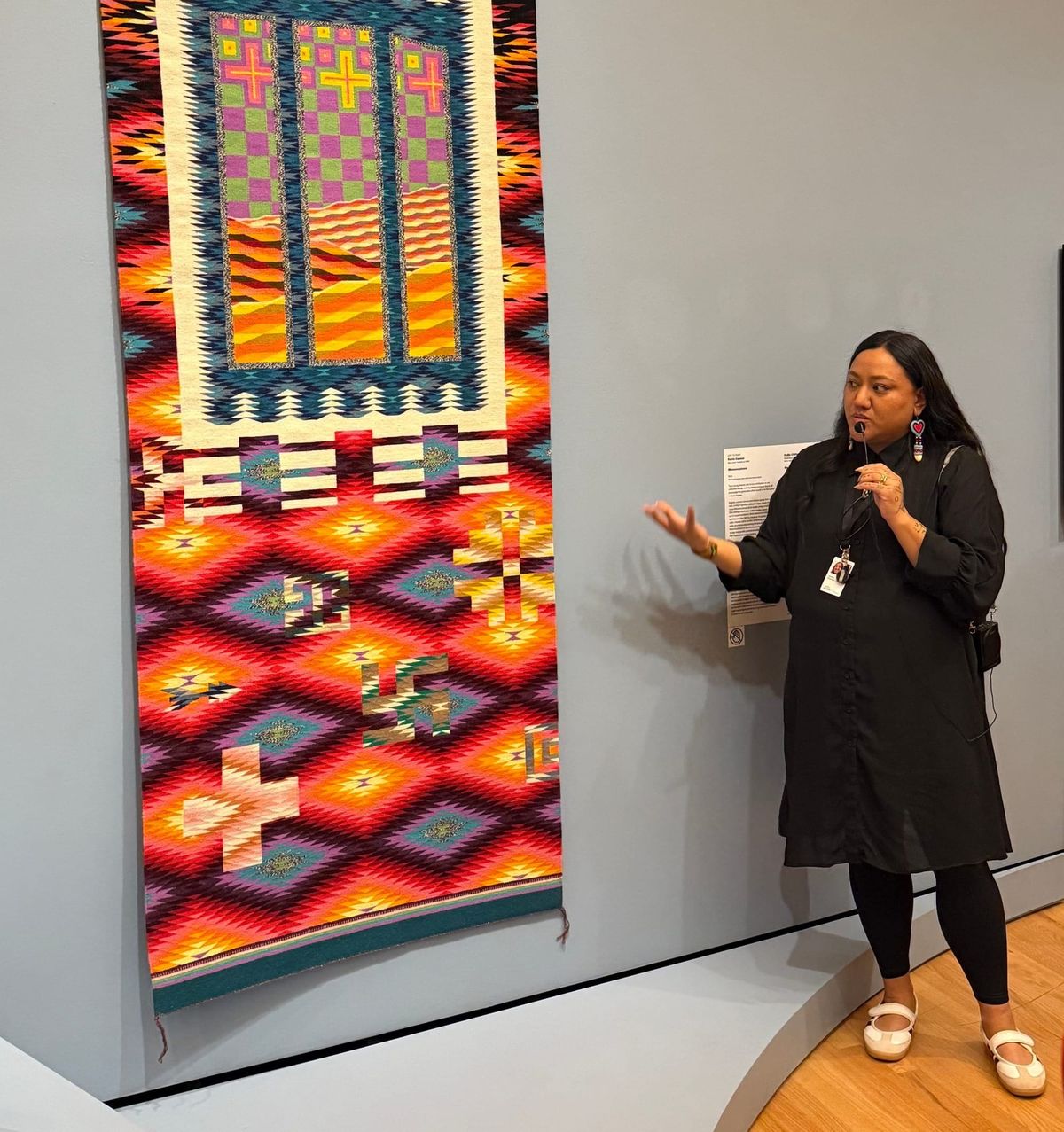
The high-profile gathering coincided with a sweeping reinstallation of contemporary Native art across the museum’s galleries. Spearheaded by Poorman Cocker alongside fellow curator Ashley Holland, who is a citizen of the Cherokee Nation, the ambitious rehang was designed to showcase the staggering diversity of styles, mediums, and living Native artists working across Indian Country today. Significantly, the reinstallation also highlights works by citizens of the very Tribes with ancestral ties to the land in Arkansas where the museum now stands.
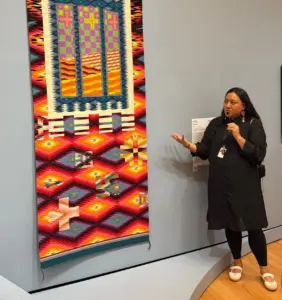
The symposium featured a robust lineup of panels, keynotes, and workshops that drew heavily on intergenerational exchange. Choctaw and Cherokee multidisciplinary artist Jeffrey Gibson delivered a keynote address before sitting down with Poorman Cocker for a live, conversational presentation while actively beading. Elsewhere, Diné weaver Melissa Cody traced the deep historical lineage of her work in a public dialogue with her mother, Lola Cody, while artist Lehuauakea led a hands-on workshop rooted in traditional kapa textile practices.
Poorman Cocker’s distinct curatorial vision is deeply informed by her academic background in museum studies at Victoria University of Wellington in New Zealand. Her global perspective embraces a framework of worldwide Indigeneity, a philosophy that intentionally rejects the rigid, divisive borders imposed by colonial nation-states. Like many contemporary Native curators, she frequently points to the groundbreaking 2019 exhibition Hearts of Our People: Native Women Artists at the Minneapolis Institute of Art as a watershed moment and a major source of professional inspiration.
That sentiment of intergenerational community and artistic lineage was widely shared throughout the Crystal Bridges symposium. Noted Kiowa beadwork artist Terri Greeves spoke during the event alongside other Kiowa Tribe members and matriarchs, reinforcing the central role of women in preserving and evolving cultural traditions. Poorman Cocker herself is an accomplished beadwork and textile artist whose creative output is firmly rooted in the historical conventions of Kiowa and Tongan craft.
In an email correspondence with Hyperallergic, Poorman Cocker elaborated on the significance of the museum’s recent landmark commissions, the ongoing imperative to tell a fuller, more honest history of American art, and what it means to center Kiowa and broader Indigenous voices within a major institutional setting.
Discussing what the comprehensive reinstallation represents for Indigenous art at this particular juncture, Poorman Cocker explained that the primary impetus is to fundamentally recenter two crucial areas of the museum’s holdings: the Indigenous art collection and the craft collection.
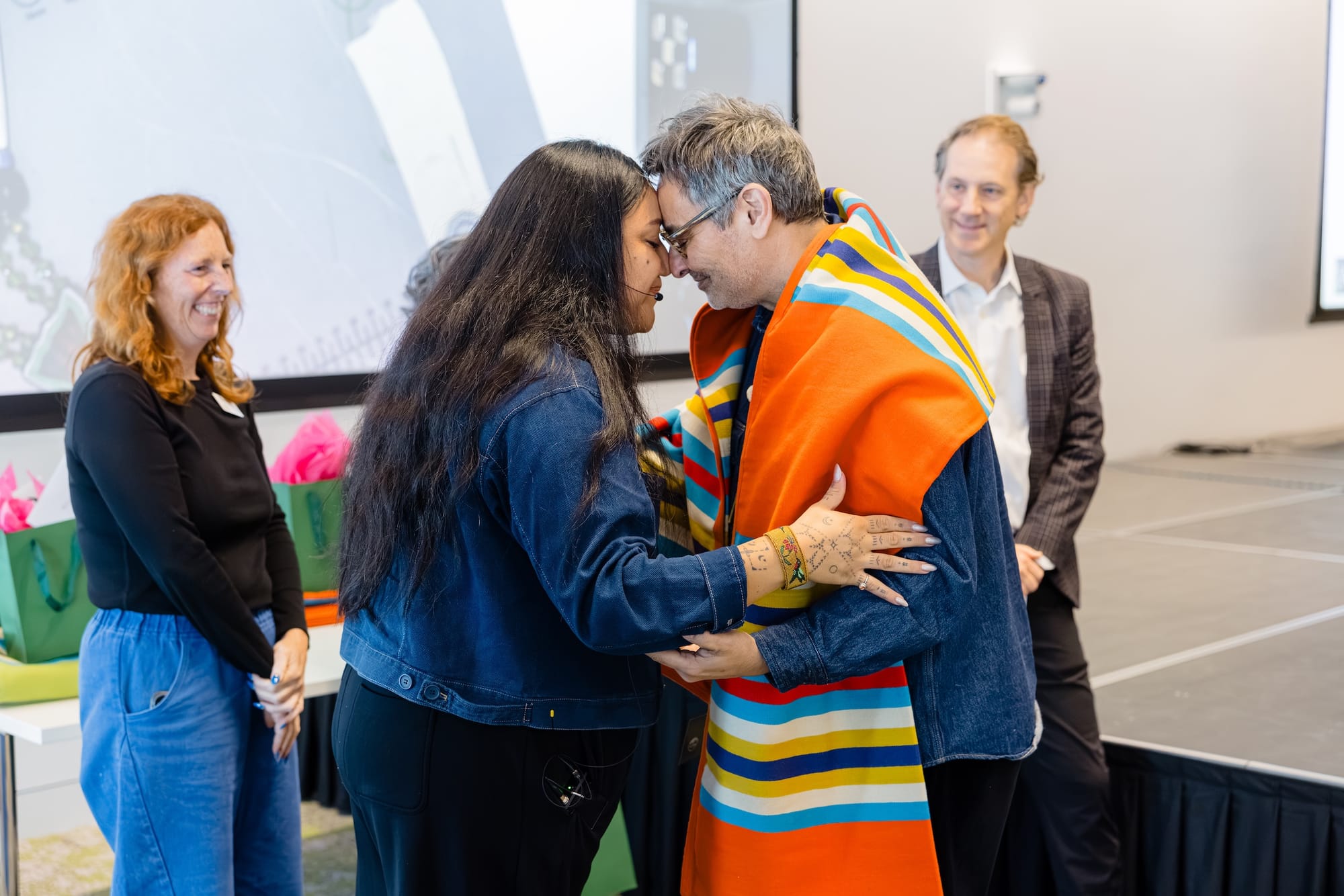
"Native American and Indigenous art are foundational to every American art collection," Poorman Cocker noted, emphasizing that museums can no longer afford to relegate Indigenous works to the margins of art history. Over the years, her work at the institution has involved drafting acquisition proposals for artworks sourced directly from the gallery system and annual markets, with a deliberate, ongoing emphasis on commissioning new works from living artists.
With Crystal Bridges undergoing a massive 114,000-square-foot expansion, the institution is uniquely positioned to nourish the broader artistic ecosystem. Poorman Cocker pointed out that this structural growth enhances the museum’s capacity to provide sustained opportunities for featured artists, particularly those whose practices align with intergenerational art forms. These traditional makers often require vital financial support for artist apprenticeships, community-led classes, and other vital educational efforts that sustain tribal artist communities and safeguard ancestral knowledge systems for future generations.
Despite these positive strides, the broader museum sector still has a long way to go. Currently, Indigenous and Native art accounts for roughly 3% of Crystal Bridges’ permanent collection, a figure that highlights the persistent underrepresentation of Native artists across major cultural institutions nationwide. Through thoughtful reinstallations, sustained artist commissions, and continuous community collaboration, curators like Poorman Cocker are working to ensure that the foundational contributions of Native artists are properly recognized, supported, and celebrated within the American art canon.