Scientists have successfully developed and rigorously tested the world’s first three-dimensional thermal invisibility cloak, an innovative device engineered to completely conceal objects from infrared cameras while simultaneously shielding them from extreme external temperatures. This significant scientific breakthrough promises to open up entirely new avenues for cooling next-generation microchips, safeguarding delicate electronics against harsh environments, and preventing vital equipment from being tracked or detected through its thermal signature.
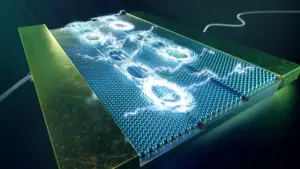
The newly engineered cloak possesses the remarkable ability to conceal objects featuring a wide variety of complex shapes, regardless of the direction from which ambient heat approaches. Earlier generations of thermal cloaks were strictly limited to two dimensions or functioned only under highly restrictive conditions where heat traveled in a singular, predictable direction. The fresh design successfully overcomes these long-standing physical restrictions by seamlessly directing heat entirely around a hidden object rather than simply acting as a conventional thermal block. As a result, when observed through advanced infrared imaging equipment, the surrounding temperature pattern remains uninterrupted, making the concealed object appear entirely absent to the observer.
The groundbreaking research was spearheaded at the University of Illinois Urbana-Champaign by Shelly Zhang, a professor of civil and environmental engineering, alongside postdoctoral researcher Weichen Li and graduate student Yibo Wang. The team conducted their work in close collaboration with professor Ole Sigmund from the Technical University of Denmark. The comprehensive findings detailing the creation and testing of the device were recently published in the scientific journal Nature Communications.
"A real thermal cloak should work no matter where the heat comes from," Professor Zhang explained, emphasizing the omnidirectional nature of their achievement. "Our device can hide a complex 3D object in an infinite number of directions while keeping the temperature inside stable and protected."
A New Material Makes 3D Thermal Invisibility Possible
Creating a functional thermal cloak capable of operating effectively in a three-dimensional space has presented a persistent and formidable challenge to the scientific community for years. Previous experimental devices were plagued by severe limitations, typically able to redirect heat only across a flat surface or strictly along a single direction of heat flow. These earlier iterations fell far short of the complex physical capabilities required for a genuinely three-dimensional, omnidirectional thermal cloak.
To overcome these physical roadblocks, the researchers deliberately revisited the foundational principles of transformation thermotics, an advanced specialized field that explores how thermal energy can be precisely redirected through engineered materials. They focused their efforts on answering a central, difficult question: what kind of material structure could possibly cover almost all the thermal properties needed to construct a truly perfect cloak?
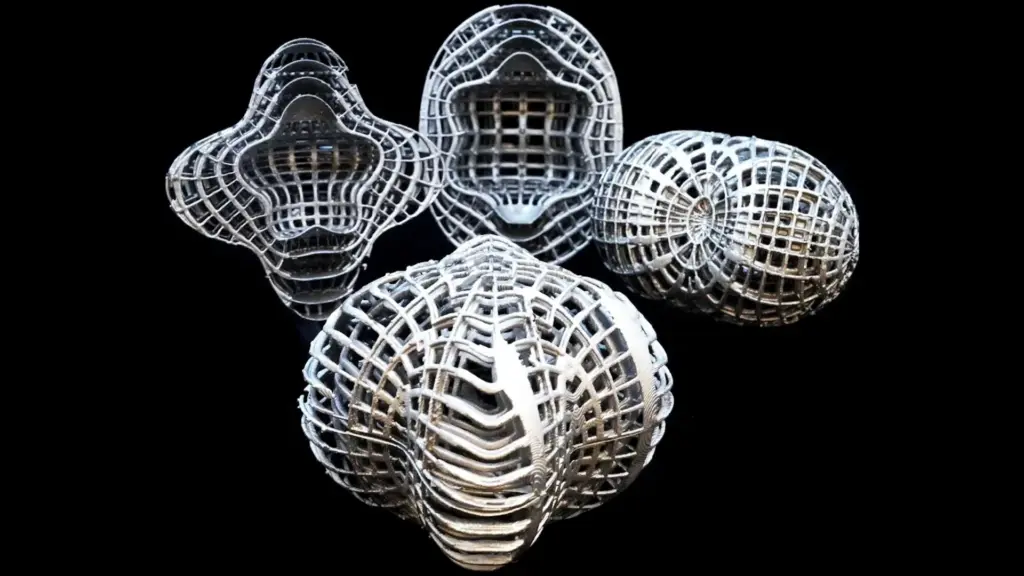
The ultimate solution materialized as an entirely new lattice-based material whose internal structure can be independently adjusted along three distinct spatial directions. These precise structural changes allow the researchers to control with high fidelity how efficiently heat passes through various discrete parts of the cloak. Compared with previous, more primitive designs, this novel material achieves a drastically broader range of thermal conductivities, closely approaching the theoretical properties predicted by physicists to be necessary for ideal thermal cloaking.
Importantly, the research team did not merely stop at theoretical computer simulations; they moved forward to construct a fully functioning physical device. They utilized advanced 3D metal printing technology to manufacture an intricate aluminum lattice, which provides reliable structural pathways for efficient heat conduction. They then employed a mold casting technique to carefully fill the remaining empty spaces with a specialized rubber-like material known for conducting heat poorly. Working together, these contrasting materials form a unified composite structure capable of meticulously governing the movement of heat around the protected cavity.
Infrared Camera Tests Confirm the Cloak Works
To rigorously evaluate the performance of the device, the research team positioned the finished cloak squarely between distinct hot and cold regions in a laboratory setting. This setup established a sustained temperature difference that forced heat to flow continuously through the surrounding environment. They carefully monitored the resulting temperature patterns using a sensitive infrared camera to determine whether the cloak could successfully and smoothly redirect heat around the concealed central area without leaving a thermal trace.
The empirical experiments clearly demonstrated that the device could successfully guide heat around the hidden region while preserving the continuity of the surrounding temperature pattern. To an infrared camera monitoring the scene, the area appeared almost exactly as it would if no physical object were present at all. At the same time, the internal temperatures registered inside the cloak remained uniform, successfully shielding the concealed space from the harsh, extreme thermal conditions raging outside.
Furthermore, the researchers tested whether the cloak could accommodate unusually complicated objects rather than simple geometric shapes. They successfully concealed intricate three-dimensional geometries, including detailed and irregular shapes closely resembling human heads. According to the research team, earlier experimental thermal cloaks have not been able to demonstrate a comparable combination of high geometric complexity and reliable cloaking performance.
Potential Applications in Electronics and Stealth Technology
The proven ability to control heat in three dimensions could have far-reaching and important implications across several diverse industries. In the realm of advanced electronics, the technology could soon help engineers direct excess heat away from sensitive components, dramatically improve overall thermal management in microchips, and protect delicate devices operating under extraordinarily demanding and hostile conditions.
The researchers also recognize significant potential applications within the fields of security and defense. Future iterations of this technology might assist in concealing personnel or specialized military equipment from advanced thermal detection systems, or shield valuable civilian and industrial assets from severe ambient temperature fluctuations. These practical uses would build directly upon the device’s newly demonstrated capability to redirect external heat while keeping the protected region internally stable and secure.
"Any field that needs precise control of heat or needs to protect something from being detected thermally could benefit from this work," Zhang noted, reflecting on the broad scope of the breakthrough. "But we also see it more broadly: it’s about hiding and protecting information that is carried by heat."
The Next Challenge Is Hiding Objects That Generate Heat
Although the current thermal cloak represents a major scientific advance in materials science and thermodynamics, the research team is already looking toward the future. They aim to develop even more sophisticated versions capable of performing additional, more complex functions. One particularly critical goal on the horizon is to successfully conceal objects that actively produce their own heat, rather than only protecting them from ambient heat originating outside the cloak.
Achieving this next major milestone will require the development of novel materials capable of actively controlling and managing heat within the concealed region itself. Instead of merely passively redirecting incoming thermal energy, a future generation of cloaks would need to intelligently concentrate, distribute, or guide thermal energy dynamically as environmental conditions fluctuate. Such advanced capabilities could vastly expand the technology’s overall usefulness in high-performance electronics, advanced thermal protection systems, and specialized applications involving sensitive infrared detection.
"We’ve shown that a true 3D omnidirectional thermal cloak is possible," Zhang concluded. "The next step is to make cloaks that don’t just hide and protect, but also actively manipulate heat in useful ways."
The research project received vital financial support and backing from the National Science Foundation, the Villum Foundation, and the Air Force Office of Scientific Research. In addition to her role in civil and environmental engineering, Professor Zhang is affiliated with the department of mechanical science and engineering and the National Center for Supercomputing Applications at the University of Illinois Urbana-Champaign.