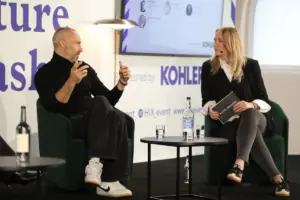
(UK) – The UK lighting industry is increasingly exploring ways to extend the life of existing luminaires, a critical shift that took center stage at Circular Lighting Live 2026. Held in the City of London on 8 October, the landmark event brought together a diverse group of manufacturers, lighting designers, consultants, and sustainability specialists to discuss how circular economy principles are actively being applied across contemporary lighting projects.
Organised by Recolight, the conference served as a collaborative forum for industry stakeholders to evaluate current practices and debate the future trajectory of lighting design and specification. For many years, lighting projects have largely followed a traditional linear model. In this conventional framework, existing fittings are routinely removed and discarded during building refurbishments or whenever technologies become obsolete. However, speakers and delegates at the conference suggested that this linear approach is increasingly being challenged by innovative projects that prioritize retaining, upgrading, and repurposing existing luminaires over outright replacement.
Discussions throughout the day focused heavily on how circular economy principles are beginning to influence specification decisions, procurement strategies, and overarching business models throughout the lighting sector. Among the various circular approaches presented, remanufacturing was widely highlighted as one of the most established and viable pathways forward. With the continued regulatory phase-out of traditional fluorescent light sources and mounting pressure across the construction and real estate sectors to reduce embodied carbon, many organizations are fundamentally reassessing their strategies. Instead of tearing out old infrastructure, stakeholders are increasingly exploring whether to upgrade existing luminaire housings to meet modern performance standards.
The event showcased real-world examples that spanned a diverse array of building types and project scales. These ranged from large-scale commercial implementations, such as the comprehensive remanufacture of 8,000 luminaires presented by DRK Lighting, to intricate heritage applications. A prominent example of the latter was the revitalization of Leadenhall Market, where Light Projects Evolve successfully refurbished historic fittings and developed bespoke LED solutions specifically designed to preserve the unique architectural character of the site.
Organizers and speakers pointed to these diverse case studies as tangible evidence that remanufacturing is no longer a niche concept but a scalable practice that can be successfully applied across a variety of settings. Yet, while remanufacturing appears to be gaining significant traction within the industry, several speakers noted that large-scale luminaire reuse continues to present distinct operational challenges.
Addressing the logistical hurdles of the secondary market, Hattie Emerson of the Finishes and Interiors Sector discussed ongoing efforts to redistribute lighting products that are routinely removed during Cat A fit-outs. Emerson highlighted the persistent logistical, administrative, and commercial barriers that continue to limit the development of a robust, liquid secondary market for used luminaires, emphasizing that industry collaboration will be essential to overcome these hurdles.
A recurring theme throughout the conference was the critical role that innovative commercial models play in enabling true circularity. Speakers argued that embracing reuse, remanufacturing, and equipment leasing approaches allows companies to retain product value for much longer periods. This transition creates new commercial opportunities for manufacturers and service providers to generate ongoing revenue streams beyond the traditional, one-off sale of newly manufactured equipment.
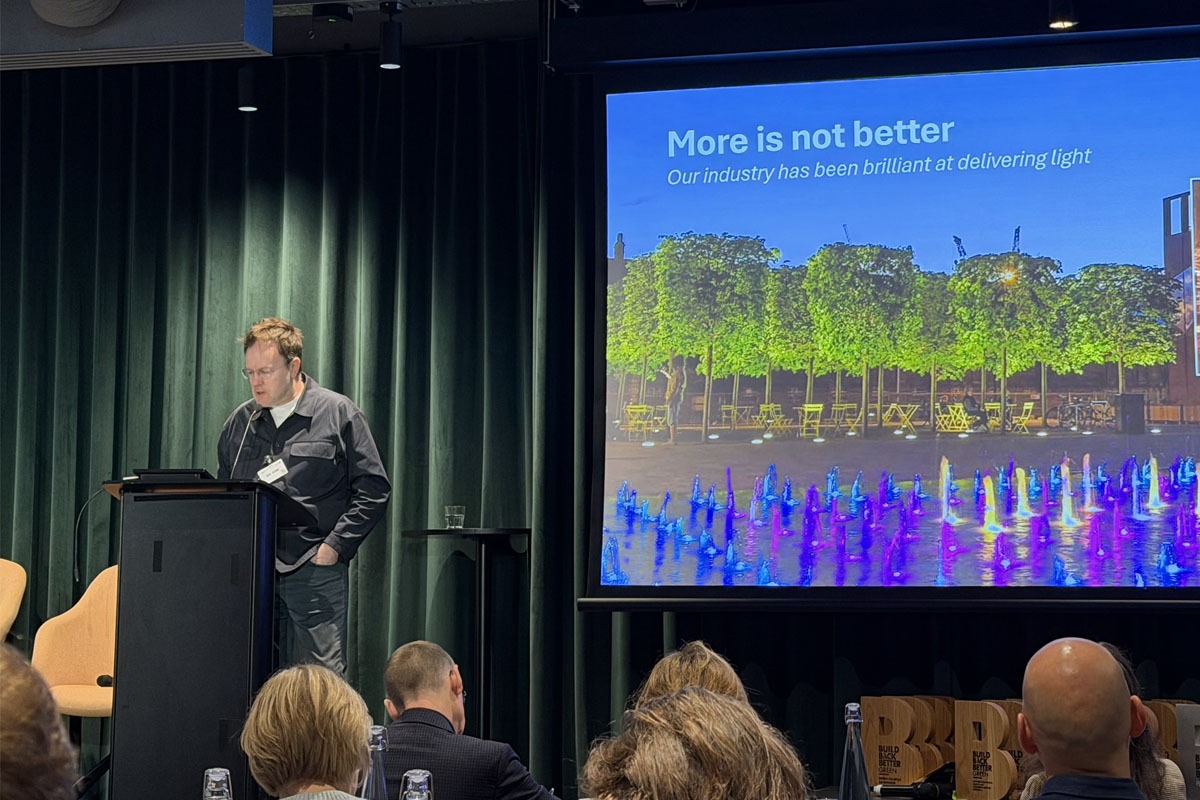
In his compelling keynote address, John McRae, director at prominent architectural practice Orms, encouraged delegates to seriously consider alternatives to conventional consumption models. Echoing these sentiments, designer Sabine De Schutter suggested during her session that embracing reuse and upcycling can actually provide exciting creative opportunities for designers rather than acting as restrictive design limitations.
Reflecting on the tone and outcomes of the event, John McRae, Director at Orms, shared his perspective on the industry’s evolution: "This year’s conference was a step change towards a more circular approach where speakers shared their innovation and lessons learned. The industry has been guilty of an addiction to selling new, but this year disassembly and take-back schemes were amongst the examples shared. The future of lighting is not brighter. It is wiser."
Alongside deep-dive discussions on reuse and remanufacture, the conference programme explored several other critical regulatory and technical topics. These included the adoption and integration of Environmental Product Declarations (EPDs), vital updates to the TM66 circularity framework, and emerging regulatory requirements expected to place a much greater emphasis on product repairability and upgradeability in the near future.
Several conference sessions suggested that embodied carbon considerations are rapidly becoming just as important within lighting specifications as the long-established focus on operational energy performance. As building regulations tighten and corporate sustainability targets become more stringent, understanding the full carbon lifecycle of lighting products from extraction to end-of-life is becoming standard practice for forward-thinking specifiers.
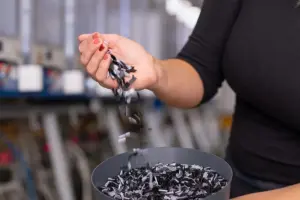
Materials innovation also featured prominently on the agenda, with specialized presentations examining the viability of bio-based plastics and advanced additive manufacturing processes that utilize recycled materials. Together, these diverse presentations pointed to a profound structural shift in how the lighting industry designs, procures, and manages its assets. The overarching direction emerging from Circular Lighting Live 2026 is clear: preserve the intrinsic value of what is already installed, extend its useful life through intelligent engineering, and build the resilient commercial models that make circularity financially viable.
For more information on the initiatives discussed at the event, visit www.recolight.co.uk.