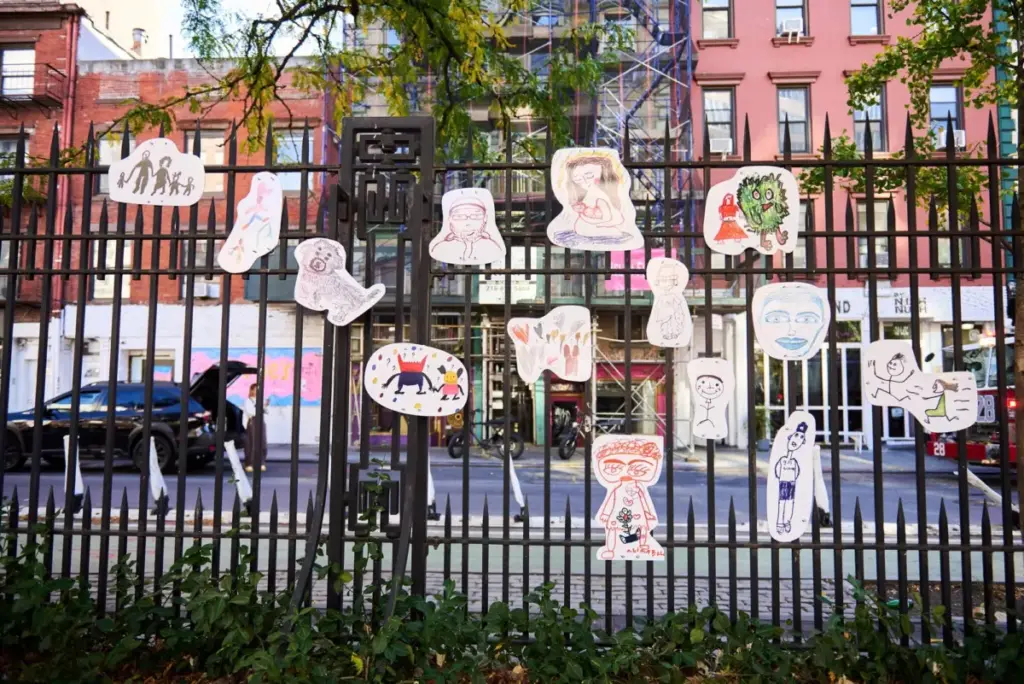
The streets of the Bronx are currently serving as an unconventional canvas and a megaphone for some of New York City’s most overlooked residents. On Monday, September 14, artist Alex Strada’s public art project, Public Address, officially opened in the borough, blanketing a dozen different locations with the handwritten words of more than 400 unhoused individuals and shelter staff.
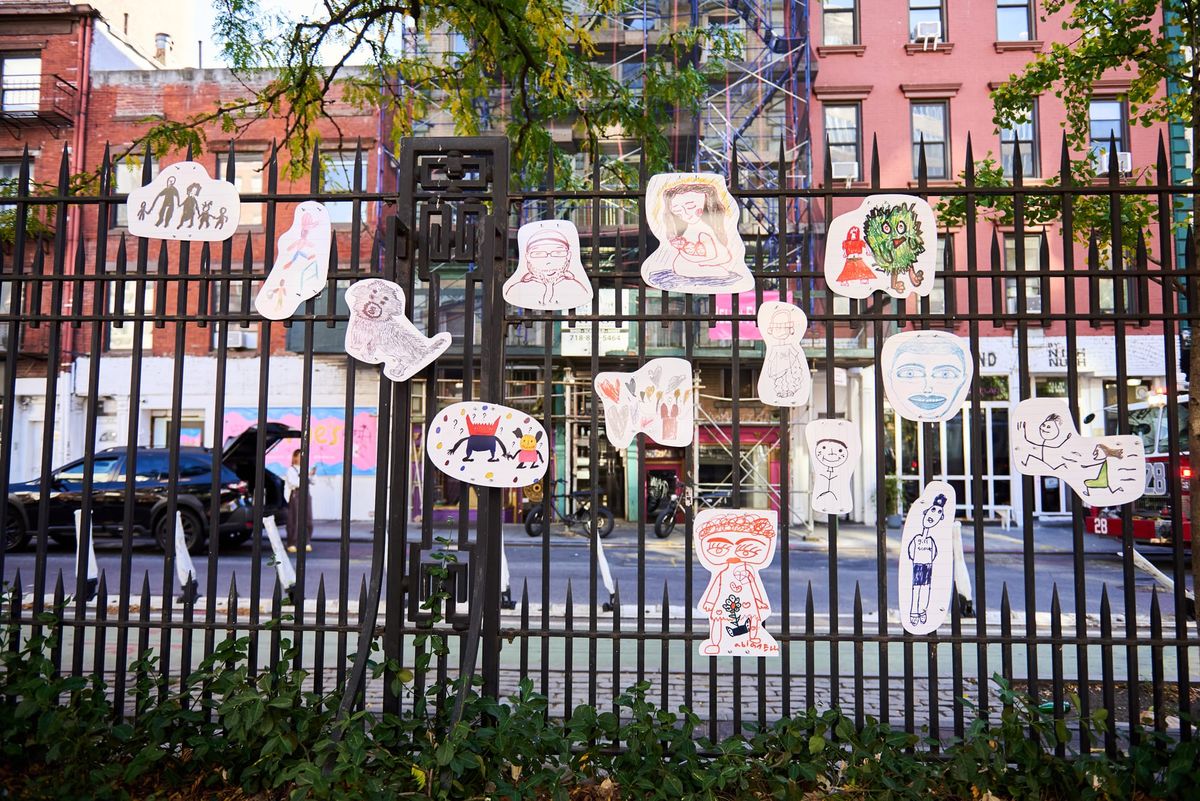
The installation transforms everyday urban infrastructure into a gallery of lived experiences. Using actual log entries, reflections, and personal messages gathered during collaborative workshops held across New York City shelters, Strada has translated these intimate testimonies onto official aluminum signs provided by the Department of Transportation. Now mounted on street corners, park fences, and high-traffic pedestrian areas, these cutout signs demand the attention of passersby, turning invisible struggles into unignorable public statements.
Strada has been developing this profound long-term engagement as the public artist-in-residence with the NYC Department of Homeless Services (DHS) and the Department of Cultural Affairs, a role held since 2022. The initiative initially debuted in Manhattan in October 2025 before traveling to the Bronx. According to the project’s timeline, the installation will continue its borough-by-borough journey until it has been exhibited across all five boroughs by March 2027.
The primary objective of the project is to disrupt ingrained societal narratives and force a reexamination of how homelessness is perceived and treated in the nation’s largest metropolis. By placing direct testimonies into the public sphere, the installation seeks to bridge the gap between housed and unhoused communities.
"My hope for this project is that it functions as a jumping-off point to work towards more just realities that are not mired in stereotype or misperception, or in the acceptance of homelessness as an unavoidable byproduct of New York City life," Strada explained in an interview with Hyperallergic.
The breadth of experiences captured within the signs is vast, reflecting the multifaceted and often misunderstood nature of housing insecurity in a complex urban environment. Among the displays are detailed depictions of an Ecuadorian mother who was forced to flee her home country, undertaking a perilous journey to New York City with her two young daughters. Other signs feature assemblages of multicolored hearts alongside raw, handwritten letters that detail the deeply personal and often agonizing realities of losing stable housing.
Through simple yet evocative imagery—such as bicycles, houses, and distant, unreachable stretches of land—the signs convey privileges that are frequently taken for granted by the general public. Furthermore, the accompanying text sheds light on lesser-known dimensions of the homelessness crisis that rarely make headlines. These include the near-impossible administrative and financial hurdles of trying to secure stable housing as an undocumented immigrant, the immense daily challenge of balancing high school education while navigating the unstable environment of the shelter system, and the sudden, unforeseen personal and economic catastrophes that can lead to an eviction notice at a moment’s notice.

By utilizing Department of Transportation signs—objects that typically dictate rules, warnings, or directions to the public—Strada subverts their traditional function. Instead of regulating civic behavior or traffic flow, these municipal surfaces are repurposed to deliver human truths. They ask commuters, pedestrians, and local officials to pause, read, and reckon with the voices of individuals who are too frequently rendered voiceless by administrative systems and social stigma.
As Public Address continues its multi-year residency across the city, moving from borough to borough, it leaves behind a temporary yet resonant archive of human endurance. In the Bronx, these aluminum signs now stand as quiet sentinels on metal posts and park boundaries, bearing witness to the resilience of shelter residents and staff while challenging the city to envision a more equitable urban future.