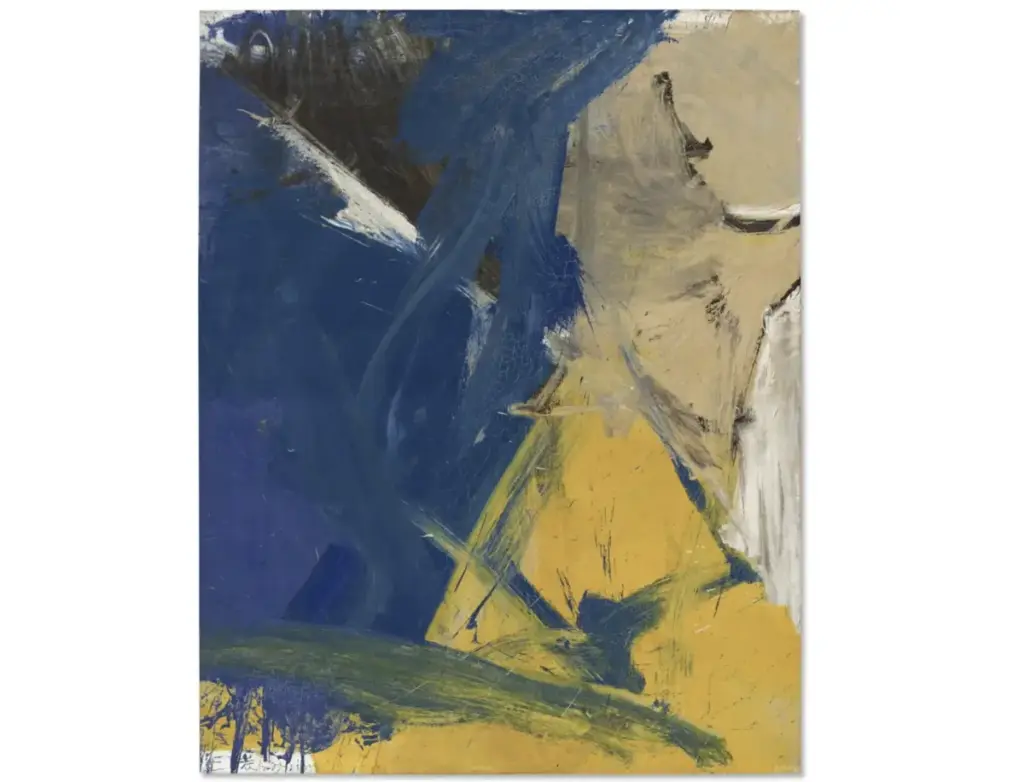
New York’s Whitney Museum of American Art is preparing to offer a major painting by Willem de Kooning at Christie’s upcoming twentieth-century evening sale, sending a prominent abstract work back to the open market just three years after it officially entered the institution’s permanent collection as a bequest.
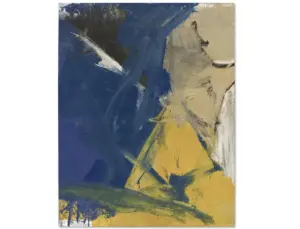
The artwork in question, Yellow River (1958), is a large-scale abstract composition characterized by powerful, energetic sweeps of blue and yellow paint. It carries a pre-sale auction estimate of $12 million to $18 million and is scheduled to cross the block during Christie’s high-profile auction. According to reports from Artnet News, which first broke the story alongside details from the auction house’s official sale catalog, the proceeds generated from the sale of the painting will be directed entirely toward the museum’s acquisition fund to benefit and strengthen its broader collection.
The painting carries a rich provenance deeply tied to the history of the Whitney itself. Yellow River originally belonged to David M. Solinger, a prominent lawyer and avid art collector who broke new ground for the institution when he was appointed as its first president from outside the founding Whitney family in 1966. Solinger originally acquired the de Kooning masterpiece directly from the Sidney Janis Gallery in 1959, just a year after it was created. According to archival notes and information provided by Christie’s, Solinger held a profound personal attachment to the piece, valuing it so deeply that he arranged for it to hang at the foot of his bed for a time, ensuring it was one of the first things he would see every single morning when he woke up.
Following Solinger’s death in 1996, ownership of the painting passed to his wife, Betty Ann Besch Solinger. Demonstrating a long-standing commitment to the institution her husband once led, Betty Ann promised the painting as a gift to the Whitney in 2011. The work was prominently exhibited at the museum that same year, celebrating both its aesthetic power and its connection to the Solinger legacy. However, the legal and administrative process of the gift was not formally completed until 2023, following Betty Ann Solinger’s passing in 2022. Now, a mere three years after the museum formally took possession of the bequest, the canvas is headed back into the commercial art market.
This strategic decision by the Whitney is part of a broader, ongoing institutional practice known as deaccessioning, wherein museums selectively sell works from their permanent collections to fund new acquisitions or support collection care. This is not the first time in recent years that the Whitney has utilized deaccessioning to reshape its holdings. In 2023, the museum consigned a group of significant paintings by celebrated American artists—including Edward Hopper, Maurice Prendergast, and John Marin—to Sotheby’s. That offering was anchored by Edward Hopper’s atmospheric 1930–33 canvas Cobb’s Barns, South Truro, which carried an estimated value of $8 million to $12 million.
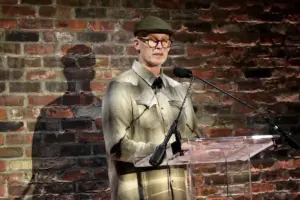
At the time of those 2023 sales, Jane Panetta, who served as the Whitney’s curator and director of the collection, explained to ARTnews that the transactions were executed as part of a deliberate, forward-looking effort to expand, update, and diversify the museum’s holdings to better reflect the changing cultural landscape of the United States.
"We’re always thinking about how one defines ‘the museum of American art,’ being mindful of wanting the collection to accurately represent the United States," Panetta said during the 2023 announcement. "We think that means the collection has to evolve. We have to try and close critical gaps, and having endowment funds for acquisitions is a key means to doing that."
This philosophy was formally codified in the Whitney’s 2023 Collection Strategic Plan, an internal institutional document which recommended that deaccessioning become a more regular, systematic component of the museum’s overarching collecting strategy. The strategic plan emphasized that such sales are particularly appropriate in areas where the institution already maintains a substantial, deep concentration of work by a specific artist. Even after parting with Yellow River, the Whitney retains a formidable presence of Willem de Kooning’s art within its permanent collection, including major masterworks such as Door to the River (1960), a canvas that dates from roughly the same pivotal period in the artist’s career.
Created in 1958, Yellow River hails from a critically acclaimed and transformative era in de Kooning’s artistic trajectory. During this period, the legendary painter was actively moving away from the figurative elements that defined his celebrated and aggressive “Woman” series, transitioning instead toward expansive, highly dynamic abstract compositions. These works were frequently inspired by the physical landscapes, atmospheric conditions, and urban highways surrounding New York City. The painting was selected for inclusion in de Kooning’s solo exhibition at the Sidney Janis Gallery in 1959—an exhibition that achieved legendary status in the commercial art world, with 19 of the 22 featured works successfully selling by noon on opening day.
While deaccessioning remains a frequent topic of debate and sensitive discussion within the broader museum community, established industry guidelines provide a clear framework for the practice. The Association of Art Museum Directors (AAMD) maintains that it is fully acceptable for accredited institutions to use proceeds generated from the sale of collection artworks exclusively for the acquisition of new art or for the direct, long-term care of their existing collections. Furthermore, the Whitney’s internal collections policy dictates that while works entering the museum are intended to remain in the collection permanently, discretionary sales are permitted when they serve to meaningfully refine, improve, or strategically strengthen the institutional holdings. As Christie’s prepares to stage its major evening sale, the art world will be watching closely to see how the market responds to the reappearance of this important mid-century abstract masterwork.