It is a landmark year for Independent, widely regarded as the art world’s favorite contemporary art fair, and its historically minded sibling, Independent 20th Century. Following Independent’s major relocation earlier this year from Spring Studios in New York’s Tribeca neighborhood to the expansive Pier 36 on the Lower East Side, its sister edition has also undergone a dramatic venue change. Opening to the public today, Independent 20th Century has shifted from its former Lower Manhattan home to the architectural masterpiece designed by Marcel Breuer in the 1960s. Located on Madison Avenue and East 75th Street, the striking brutalist structure was once home to the Whitney Museum of American Art and now serves as the headquarters for Sotheby’s auction house.

This high-profile move has provided the fair with the physical capacity to grow significantly. While the 2025 iteration featured 31 participating exhibitors, this year’s edition boasts 57 galleries. The distinctive architecture of the Breuer building has also allowed the layout to closely approximate a museum experience, replacing the traditional, corridor-style trade show booths with discrete, room-like galleries. Despite nearly doubling its physical footprint, the fair maintains an intimate, viewer-friendly atmosphere. This thoughtful curation offers a welcome antidote to larger, more exhausting events taking place concurrently in the city, such as the sprawling Armory Show, which features well over 230 exhibitors.

While other prominent New York art fairs, such as TEFAF and ADAA, also incorporate historical works into their presentations, Independent 20th Century maintains a tightly focused scope. The fair concentrates exclusively on art produced during the tumultuous and transformative hundred-year span between 1900 and 2000. Within this parameters, it places a deliberate emphasis on expanding and re-evaluating the traditional art-historical canon. In doing so, the fair mirrors a broader, growing impulse within the contemporary art world toward inclusivity and representation—a shift that has been increasingly visible through the heightened presence of female artists, outsider artists, queer creators, and voices from the Global South across major international auctions, biennials, and museum exhibitions.

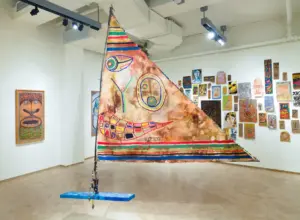
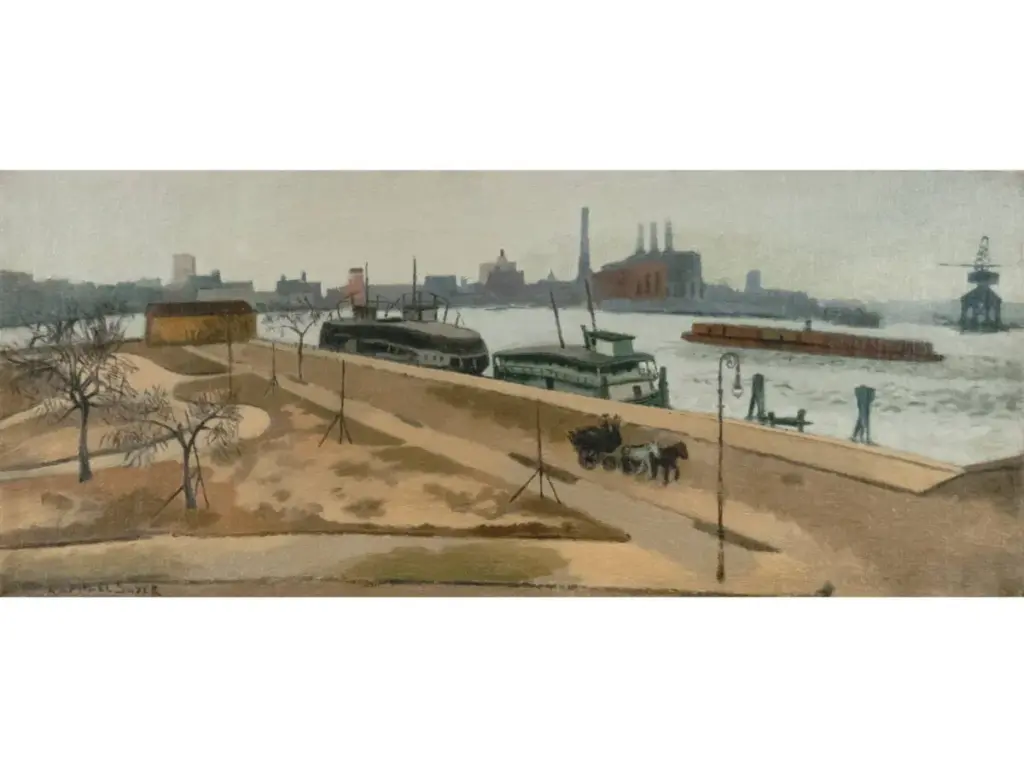
At the same time, the fair purposefully blurs the rigid boundaries that traditionally separate historical works from contemporary creations. Visitors wandering through the galleries will find booths dedicated to Jenny Holzer, presented by Sprüth Magers, and concepts of Relational Aesthetics, brought by Esther Schipper, standing in close dialogue with presentations featuring modern masters like Pablo Picasso, shown by John Szoke, and Raphael Soyer, exhibited by Forum Gallery. This seamless integration encourages viewers to draw unexpected connections across decades and artistic movements.

Among the standout presentations drawing early praise this year is "Black Soho," a collaborative exhibition curated by the galleries Ryan Lee and Salon 94. The ambitious presentation highlights works created in New York City between 1961 and 1984 by a vital generation of African-American artists. The roster includes luminaries such as Emma Amos, Jean-Michel Basquiat, Camille Billops, Frederick J. Brown, Vivian Browne, Ed Clark, David Hammons, and Norman Lewis, capturing the vibrant and politically charged cultural energy of the era.

Elsewhere on the floor, Berry Campbell is presenting a carefully curated selection of pieces celebrating the women artists of the famed Stable Gallery, which operated between 1953 and 1970. This showcase features pivotal works by Elaine de Kooning, Joan Mitchell, Charlotte Park, and Janice Biala. Additional works by Joan Mitchell—including one of the most highly valued and expensive items available at the fair—can be viewed nearby in a thoughtful pairing with the art of Kimber Smith, presented by Bueno & Co.

The solo artist booths also offer deep dives into significant historical practices. Nahmad Contemporary has mounted a striking presentation of punctured, Murano glass-encrusted, and sand-sprinkled works by Lucio Fontana, which predate the artist’s more widely recognized slashed canvases. Meanwhile, Alison Jacques has brought together a mesmerizing selection of surrealistic works by the self-taught artist Bona de Mandiargues, who lived from 1926 to 2000. Mitchell-Innes & Nash is presenting a cohesive grouping of darkly humorous and consistently political works by the influential conceptual art collective General Idea.

The Independent 20th Century art fair runs from September 24 to 27 at 945 Madison Avenue in New York City.