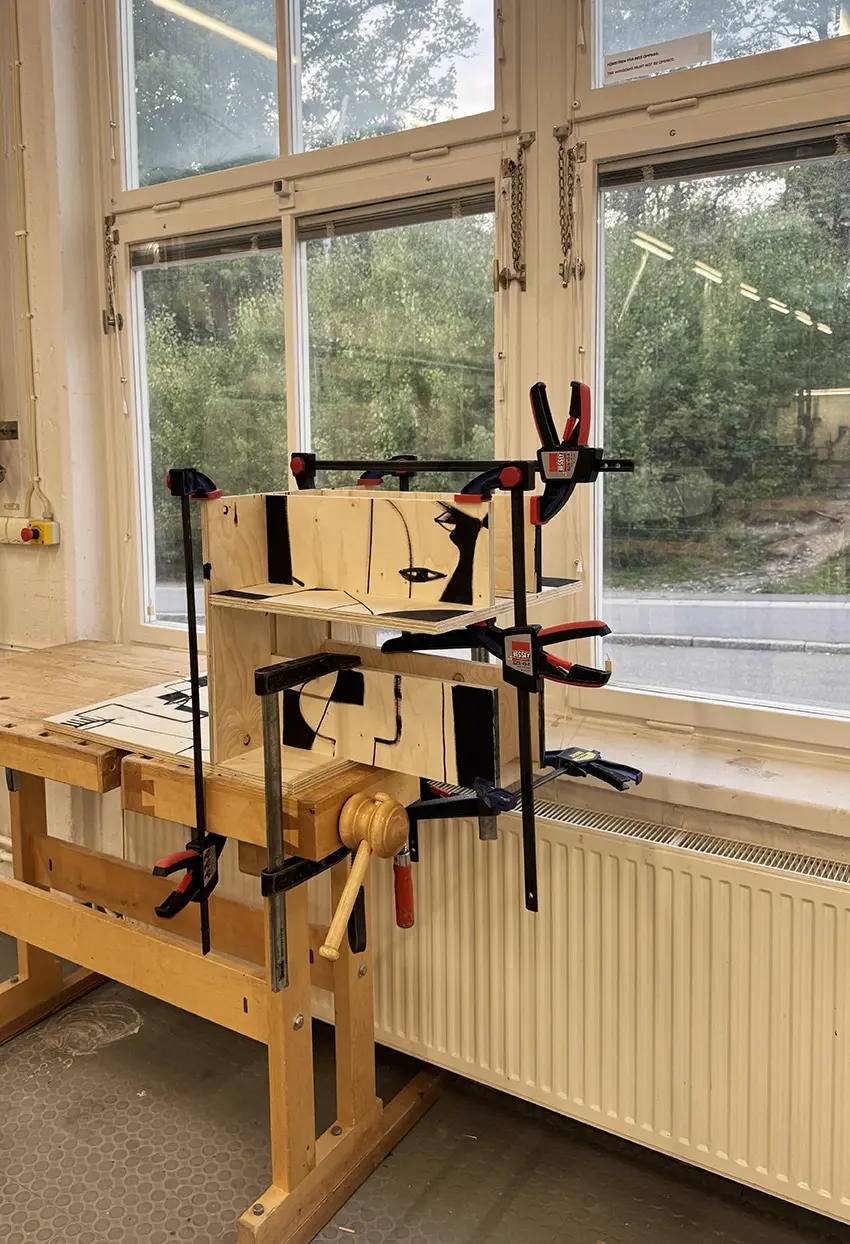
The boundary between static visual art and functional everyday objects is constantly being challenged by contemporary designers who seek to merge mediums. In a striking exploration of this intersection, Stockholm-based brand PEYTIL and lead designer Eitil Arbenz Thorén have introduced Motspråk, a unique project that transforms a single painted piece of plywood into a fully functional chair. Developed during Thorén’s academic studies at the prestigious Konstfack university in Stockholm, the project investigates the physical and conceptual transition from a two-dimensional artwork into a three-dimensional piece of furniture.
Rather than treating a chair as a canvas or painting on a pre-constructed piece of furniture, Motspråk takes a holistic and destructive approach to creation. The process begins with a complete painting executed directly on a sheet of plywood. Once the artwork is finished, the plywood canvas is systematically cut apart into specific geometric and structural components. These individual fragments are then meticulously reassembled and joined together to form a chair. Through this method, the project directly questions how we perceive utility, craftsmanship, and the traditional hierarchies that separate fine art from industrial design.
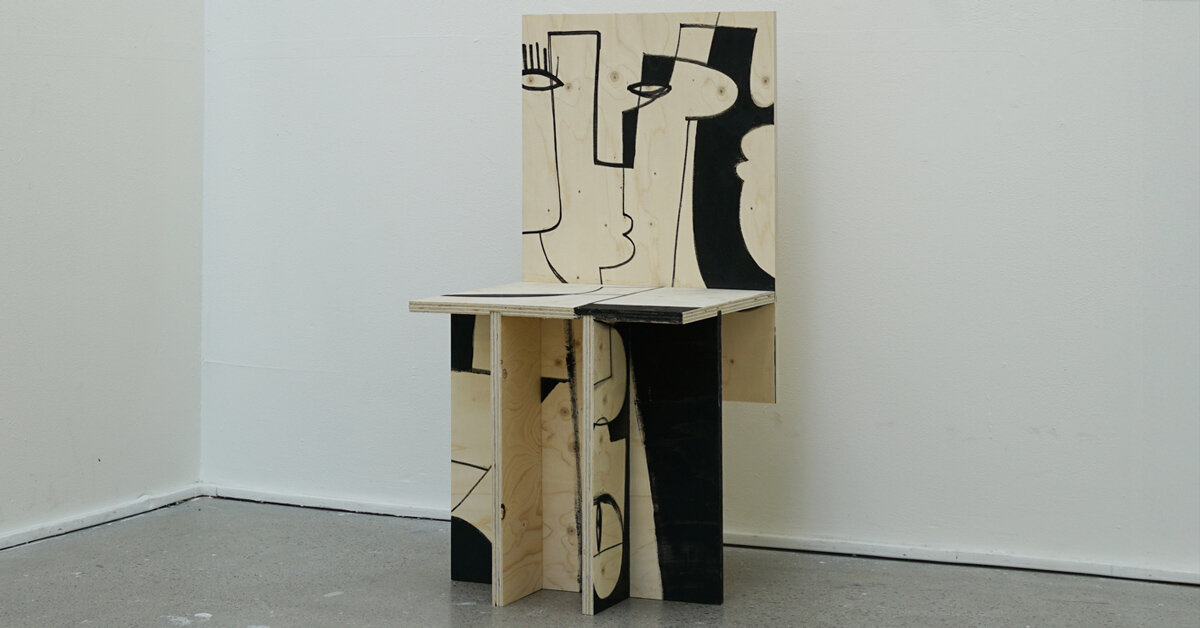
The choice of material plays a critical role in the narrative and structural integrity of the project. Developed during Thorén’s coursework in September 2026, Motspråk relies on plywood specifically for its layered construction and its relative ease of cutting, shaping, and structural manipulation. Plywood is traditionally valued in architecture and furniture making for its strength and stability, achieved by gluing thin layers of wood veneer together with their grain patterns running at right angles to one another. In this project, however, these technical properties are co-opted to serve both structural and artistic functions simultaneously.
Spruce Grain and Knots Become Part of the Painting
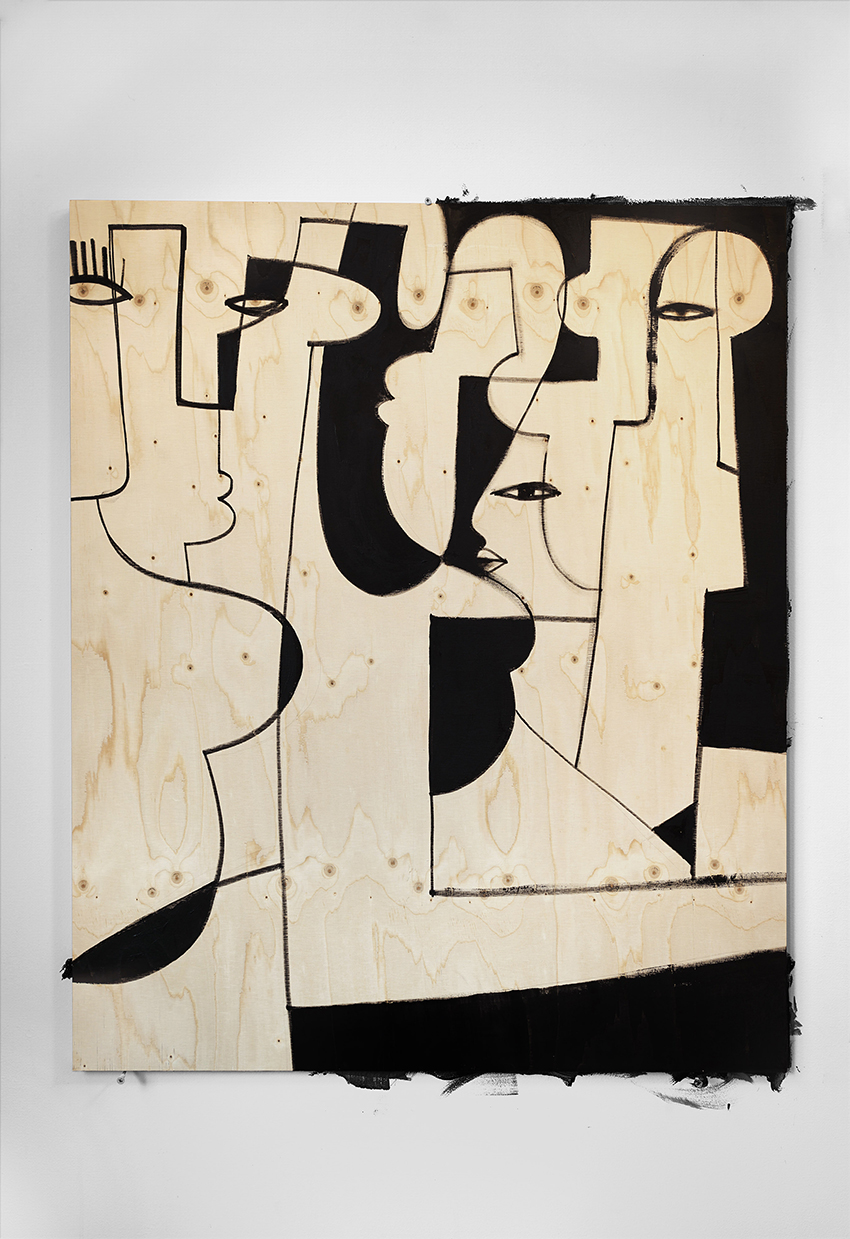
One of the most compelling aspects of Motspråk is how the raw material refuses to remain a passive background for the artwork. Instead, the natural characteristics of the wood actively participate in the composition from the very beginning. The surface of the plywood, featuring the distinct grain and knots of spruce timber, becomes an integral part of the painting itself rather than being covered up or ignored.
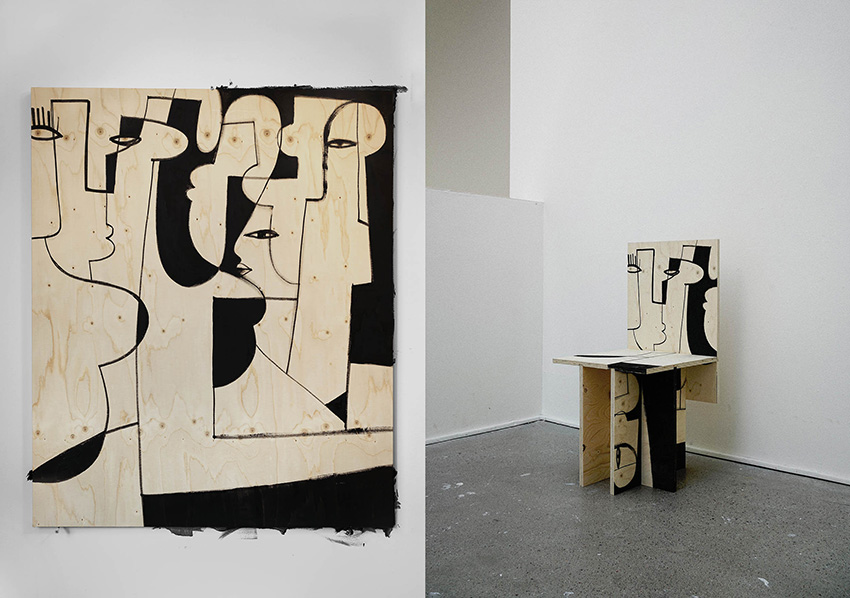
Natural imperfections such as knots and irregularities in the spruce are cleverly incorporated into the visual narrative, appearing as small bodily marks, scars, or even eyes within the painted imagery. This interplay between human brushstrokes and natural wood patterns ensures that the artwork is fundamentally tied to the material substrate. Instead of treating the plywood as a neutral, blank canvas, the project allows its grain, structural layers, and natural irregularities to contribute significantly to the overall visual character of the work.
This symbiotic relationship between art and material requires a delicate balance of planning and intuition. The entire creative process combines the initial artistic concept and vision of designer Eitil Arbenz Thorén with the stubborn physical properties of the wood and the specific academic context of the project at Konstfack. The plywood must be envisioned not just as a flat plane of color, but as a future three-dimensional object where every cut will displace, divide, or highlight different elements of the painting.
As the plywood is shaped and reorganized through precise cutting and structural assembly, the inherent characteristics of the spruce continue to inform the outcome. The visual components painted on the surface are fractured by the saw cuts, only to be re-contextualized when the chair takes its final shape. This creates a visual dialogue where fragments of the original painting are shifted across different planes of the chair—from the seat to the backrest and the supporting legs—allowing viewers to trace the lineage of the artwork within the functional object.
Through Motspråk, PEYTIL and Eitil Arbenz Thorén demonstrate how traditional materials can be reinterpreted through a contemporary design lens. By breaking down the traditional barriers between painting, sculpture, and furniture design, the project offers a fresh perspective on how raw materials, artistic expression, and functional utility can coexist within a single, unified creation.