Happy Friday to all gardening enthusiasts as we wrap up the week with a return visit to Mill Creek, Washington, nestled comfortably in USDA Hardiness Zone 8b. Today, we are taking another visual tour of Lila’s remarkable garden, a landscape that has captured our attention before. Readers may recall hearing from Lila back in August, when she shared the vibrant progress of her ‘Sparkling Burgundy’ pineapple lily (Eucomis ‘Sparkling Burgundy’) while simultaneously celebrating a monumental milestone—her 60th wedding anniversary alongside her husband, Dave. Today, Lila returns to share an enchanting glimpse of how her landscape shifts, breathes, and continues to thrive as the autumn season peaks in October.
Having established their home and yard just north of Seattle nearly three decades ago, Lila and Dave bring close to thirty years of dedicated gardening experience to their property. Like any enduring partnership, their relationship with the landscape has been one of gradual transformation, mutual adaptation, and a bit of playful negotiation. Over the decades, the garden has steadily evolved, reflecting both shared ambitions and distinct personal aesthetic preferences between the couple.
While Dave leans toward a cleaner, more manicured presentation, favoring neat and tidy plants that fit well within conventional boundaries, Lila’s horticultural heart beats for a slightly more wild and untamed aesthetic. This friendly household contrast is most vividly demonstrated by a spirited debate over baby’s tears (Soleirolia soleirolii, Zones 9–11). Lila loves watching this delicate, creeping ground cover ramble freely over decorative stones and meander around the garden fountain. Dave, on the other hand, shares a slightly more reserved appreciation for the plant’s adventurous spreading habits. According to Lila, the two engage in a good-natured domestic "battle" over where the vigorous green carpet is permitted to wander next.
The physical layout of the property presents its own unique set of gardening opportunities and microclimates. The yard features an unusually shaped footprint that happens to be considerably larger than most surrounding properties in their cul-de-sac community. This irregular geometry provides the couple with a diverse tapestry of growing environments. Within their boundaries, they benefit from distinct zones: areas that are deeply shady and fertile, sunny plots characterized by tough hardpan soil, and transitional spaces featuring partial sun and shade accompanied by decent, workable earth.
Designing a haven for local wildlife has also been a central focus of their horticultural journey. The couple carefully selects and arranges their plantings to attract birds to the landscape, complementing their efforts with strategically placed hummingbird feeders. To further encourage avian visitors, the property provides essential natural shelter, soothing water features, an overhead canopy of tall mature trees, and a robust understory of mixed perennials and vibrant summer annuals.
Maintaining a high standard of year-round visual appeal is a shared priority for the homeowners, and October proves to be a particularly magical month for one of their standout seasonal performers. Hardy fuchsias (Fuchsia cvs., Zones 7–10) put on an extraordinary display during the mid-autumn weeks. Because the Pacific Northwest has experienced a particularly warm autumn season, Lila and Dave have been treated to the unusual luxury of a regular fuchsia basket remaining in full, glorious bloom well into the cooler months of the year.
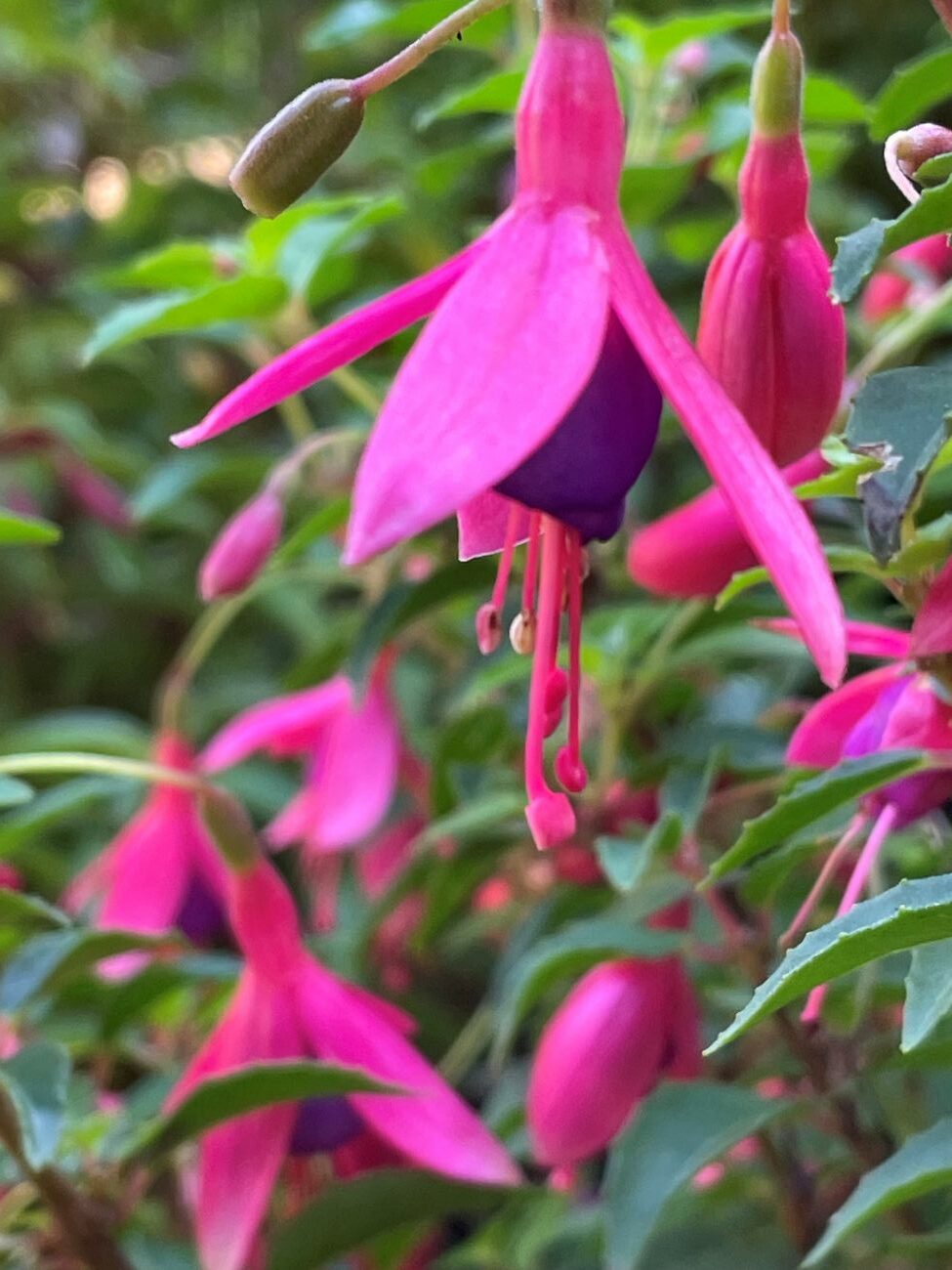
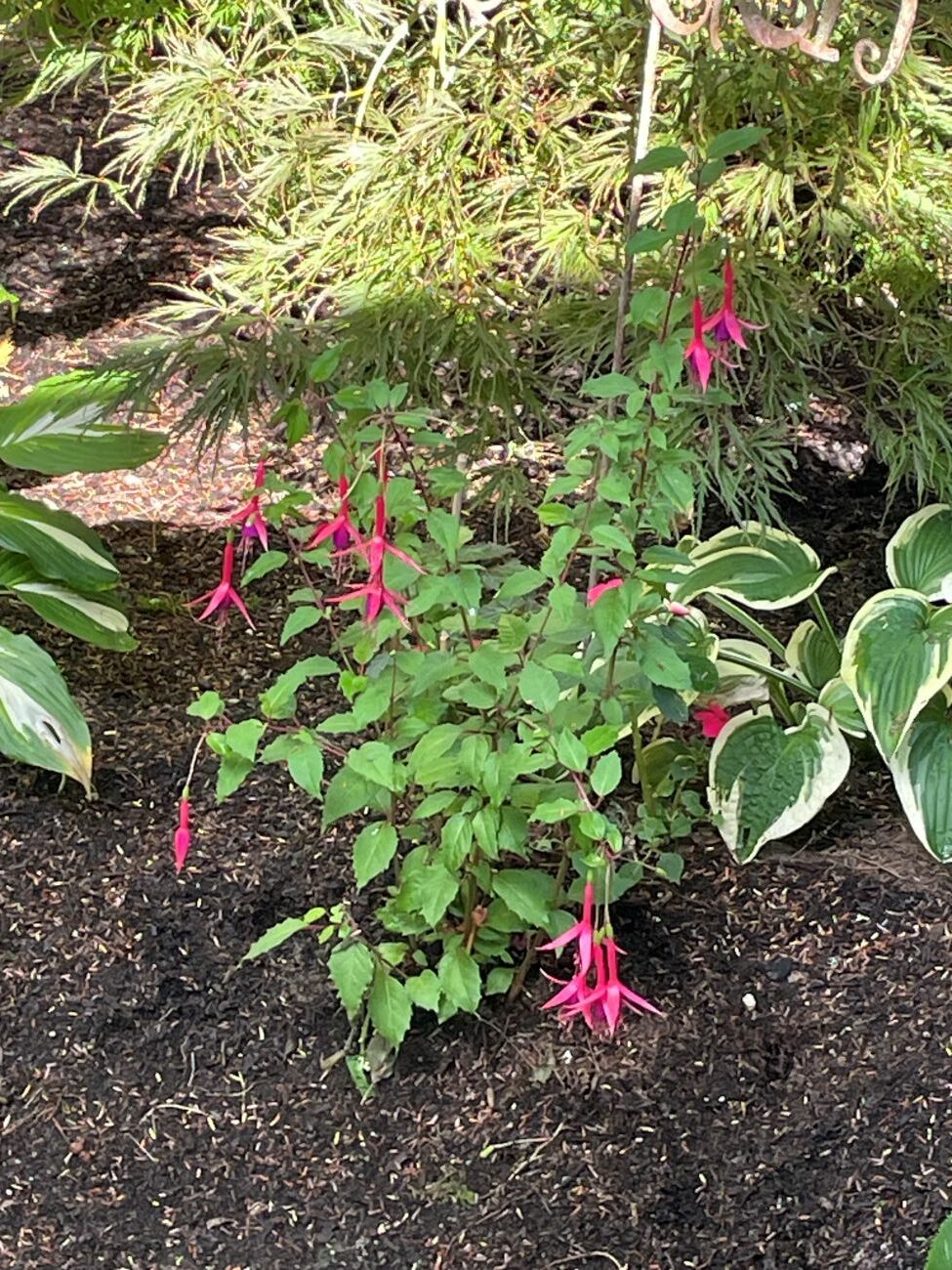
Among the autumn highlights captured in Lila’s latest garden photography is a hardy fuchsia specimen situated in a challenging microclimate. Although this particular plant receives less direct sunlight than it might ideally prefer, it somehow manages to reward the couple with an abundance of whimsical blossoms right on schedule in October. The fuchsia is nestled comfortably in a sheltered spot, surrounded by broad-leaved hostas (Hosta cvs., Zones 3–9) and a delicate laceleaf Japanese maple (Acer palmatum var. dissectum, Zones 5–8). This lush tableau grows quietly beneath the protective canopy of several larger trees that extend beyond the frame of the photographs.
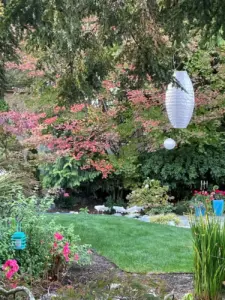
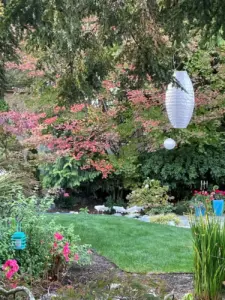
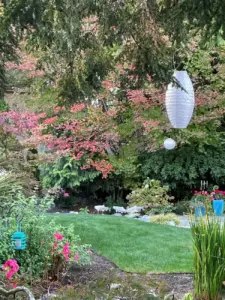
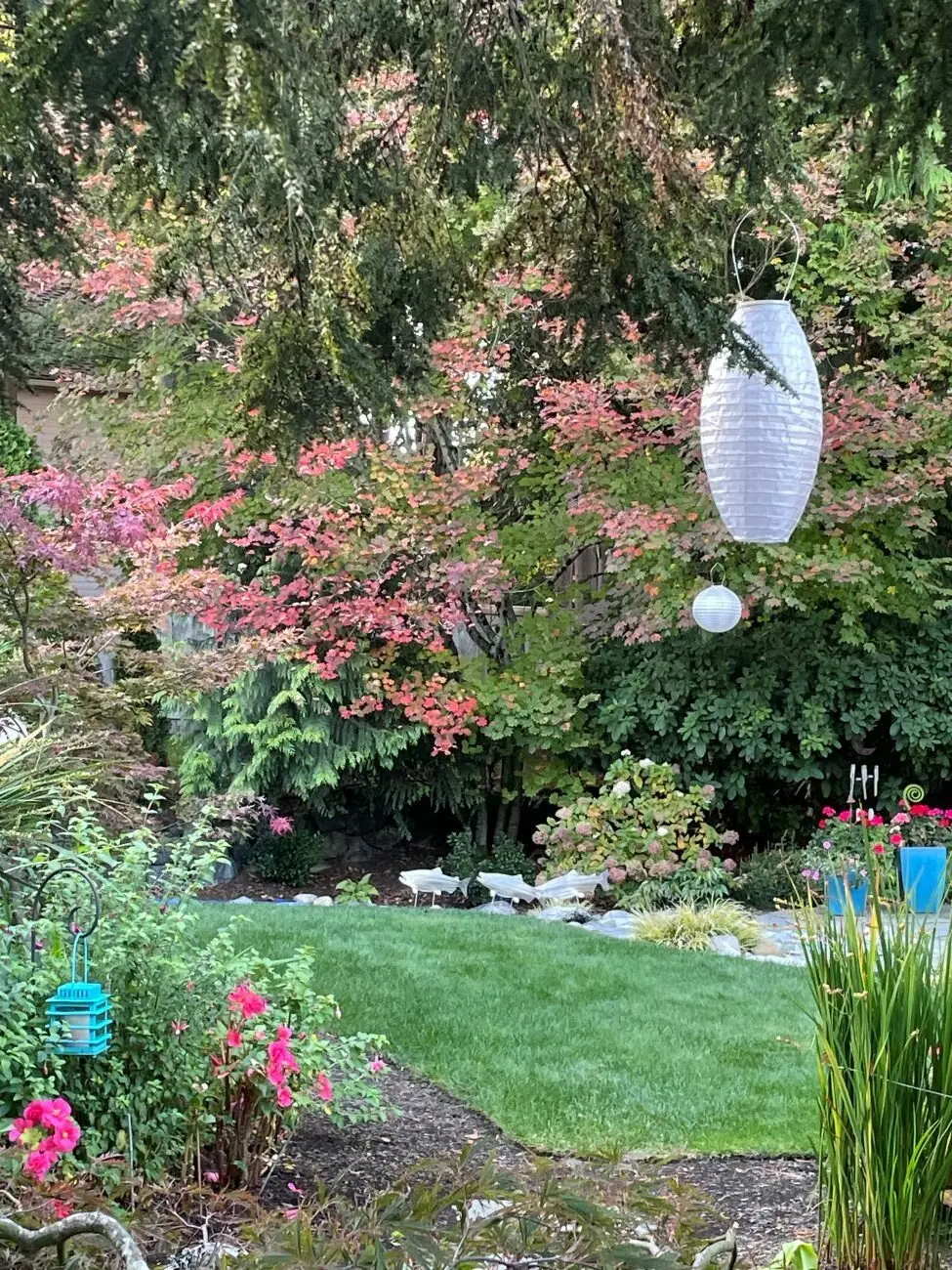
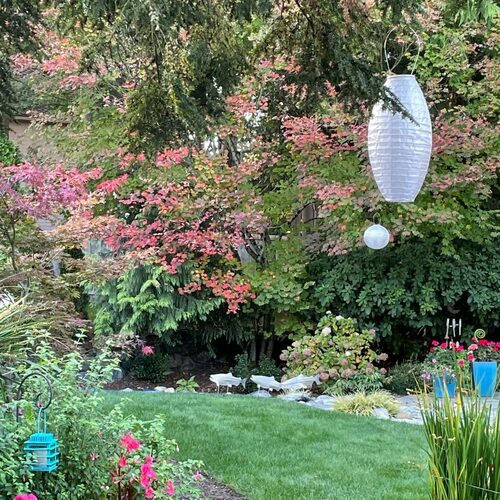
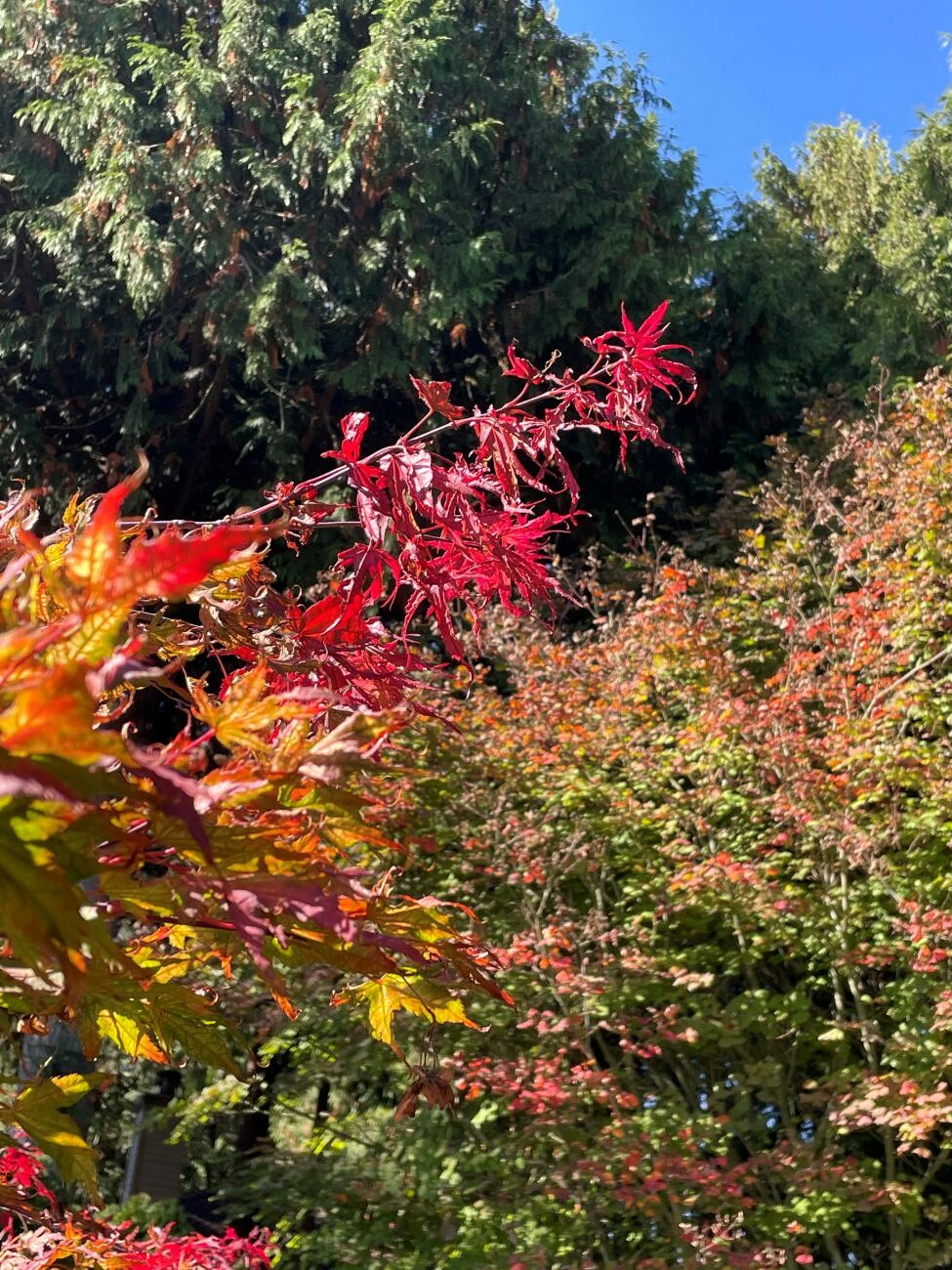
The shifting autumn skies and changing canopies offer a quintessential Pacific Northwest backdrop for the rest of the landscape. In another striking view from the October garden, a brilliant blue sky frames the stunning ‘Olsen’s Frosted Strawberry’ Japanese maple (Acer palmatum ‘Olsen’s Frosted Strawberry’, Zones 6–9). This exceptional ornamental tree is elegantly flanked by native evergreens, including towering western red cedars (Thuja plicata, Zones 5–8) and a graceful native vine maple (Acer circinatum, Zones 5–9), creating a rich textural contrast between evergreen depth and brilliant autumn foliage. Wider angles of the backyard reveal a harmonious composition of mature trees, neat expanses of green lawn, carefully tended garden beds, and charming hanging lanterns that illuminate the space as the daylight begins to shorten.
As the week comes to a close, this snapshot of a mature, lovingly tended Pacific Northwest sanctuary reminds us of the joy found in long-term cultivation, patient observation, and the enduring shared passions that keep gardeners connected to the soil year after year.