As Berlin steps into the final quarter of 2026, the city has firmly re-established itself as Europe’s most compelling laboratory for postwar and contemporary German-language art. This momentum is not merely a product of the city’s inherent creative energy but is anchored by a series of major institutional milestones. The reopening of critical collections at the Neue Nationalgalerie, coupled with the sophisticated sculpture and media-focused programming at the Hamburger Bahnhof, has provided a structural backbone to the local art ecosystem. Meanwhile, the grassroots spirit of the project-space legacy—the very foundation of Kreuzberg’s dense gallery clusters—continues to offer a counterpoint to the city’s more established institutions, ensuring that Berlin remains a vibrant, multifaceted hub for collectors and critics alike.
This institutional rigor has translated directly into market activity. There is a palpable shift in collector sentiment, with renewed focus on Austrian gestural abstraction and the formidable generation of German Neo-Expressionists. Collectors are increasingly seeking out both the blue-chip pillars who defined the genre and the historically significant painters who worked alongside them, marking a period of rediscovery and reassessment.
The Dynamics of the Berlin Market
The autumn calendar in Berlin remains tethered to the influential Gallery Weekend, an event that has done more than just punctuate the season; it has consolidated transaction volumes around mid-career and historically significant artists from the DACH region (Germany, Austria, and Switzerland). In this climate, collectors are demonstrating a high degree of discernment. Priority is being placed on documented exhibition history, the pedigree of printmaking, and a demand for price transparency. In the secondary market, seven-figure transactions remain a hallmark of the top tier, signaling that blue-chip assets remain highly sought after. However, the primary market is equally robust, with a clear preference for works on paper and editions priced between €200 and €15,000. This tier provides a vital entry point for new collectors and serves as a bedrock for the market’s long-term sustainability.
The following index profiles five artists whose practices offer a precise intersection with Berlin’s market identity, ranging from the city’s visceral, expressive painting movements to its long-standing tradition of documentary photography. These artists, currently available through MutualArt’s partner gallery network, embody the aesthetic and historical depth that characterizes the current Berlin scene.

Georg Baselitz: The Master of Inversion
Georg Baselitz (1938–2026) stands as a monumental figure in postwar German painting. Over a career spanning six decades, he fundamentally challenged the conventions of figuration. He is perhaps best known for his decision, beginning in 1969, to invert his subjects. This stylistic pivot was not merely an aesthetic choice but a conceptual one, designed to strip away the dominance of narrative and force the viewer to engage with the painting as pure form, color, and gesture.
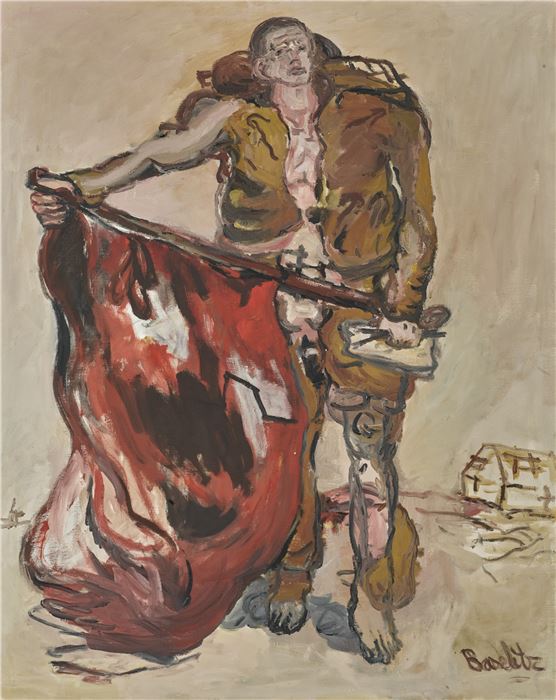
His influence on the global stage is cemented by his presence in the permanent collections of institutions like the Guggenheim and the Centre Pompidou. The market for his work remains formidable. A 1965 canvas, Mit roter Fahne (With Red Flag), commanded £7.47 million (approximately $9 million USD) at Sotheby’s London in 2017, illustrating the enduring demand for his early, critical works. His sculpture has also seen record-breaking interest, with a 1990 bronze group setting an artist record of $11.24 million USD at Sotheby’s New York in 2022. For those looking to engage with Baselitz’s market, his editions and estate-market works are periodically available through MutualArt partner Gallery Art.
Bernd Zimmer: Legacy of the Neue Wilde
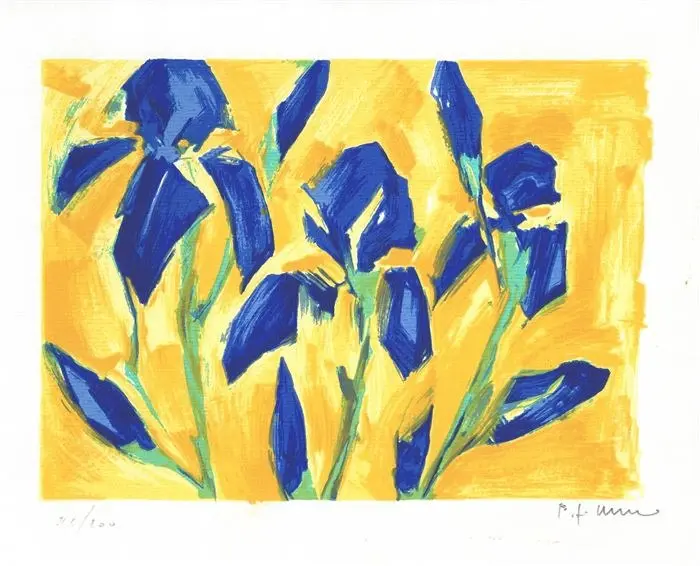
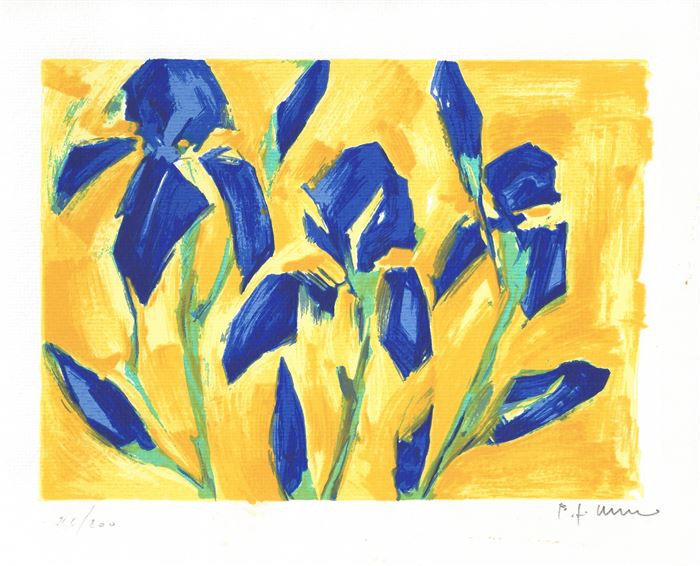
Represented by Stefanini Arte, Bernd Zimmer (b. 1948) is a foundational figure in the Berlin expressive painting movement. His role in the city’s history is inseparable from the 1977 establishment of Galerie am Moritzplatz in Kreuzberg. Co-founded with peers such as Rainer Fetting, Helmut Middendorf, and Salomé, this self-organized space served as the crucible for the Neue Wilde (or Junge Wilde) movement. This collective effort was instrumental in re-establishing Berlin as an international hub for color-driven, figurative painting, reacting against the prevailing minimalism of the era.
Zimmer’s work effectively bridges the past and the present, channeling the raw, emotive brushwork of the early 20th-century Die Brücke movement into a contemporary register. His prints and editions offer an accessible gateway into a pivotal moment in German art history, allowing collectors to own a piece of the movement that defined Berlin’s post-Wall cultural trajectory.
Martha Jungwirth: Gestural Abstraction’s Sharp Trajectory
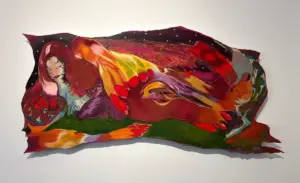
The market for Austrian artist Martha Jungwirth (b. 1940) has seen one of the most aggressive and successful institutional trajectories in recent years. Her work, characterized by visceral, fleshy-toned gestural abstraction, has garnered significant international acclaim. This momentum was bolstered by a 2024 retrospective at the Guggenheim Bilbao, which followed an extensive survey at the Kunsthalle Düsseldorf in 2022 and a major presentation at the Albertina in Vienna in 2018.
Jungwirth’s practice is deeply rooted in the historical avant-garde, tracing back to her inclusion in documenta 6 in 1977. Her recent recognition, including Austria’s Grand State Prize in 2021 and a 2025 exhibition at the Long Museum in Shanghai, has solidified her global standing. Collectors interested in her work may find opportunities through MutualArt partner Hedges Projects, which periodically carries her editions and works on paper.
Karin Bruckner: Structural Precision
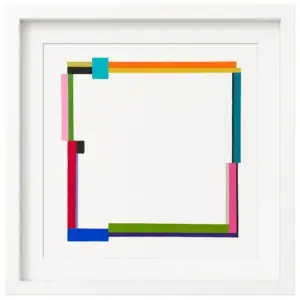
Represented by Susan Eley Fine Art, Swiss artist Karin Bruckner (b. 1960) provides a sophisticated counterpoint to the more explosive Neo-Expressionist legacy that dominates much of the Berlin market. With a background as an architect—trained at TU Munich and Columbia University, and having worked with firms like Richard Meier & Partners and Philip Johnson Architects—Bruckner approaches abstraction with an inherent discipline.
Since transitioning to full-time studio practice in 2009, she has developed an extensive body of monoprints, etchings, and collagraphs. Her work treats mark-making as a form of structural drawing, where layered compositions and gestural movements are balanced by an architect’s sense of space and geometry. Her work appeals to collectors who prioritize formal restraint and process-driven depth, offering a compelling alternative to the more emotionally charged works often associated with the Berlin school.
Thomas Kemnitz: Documenting History
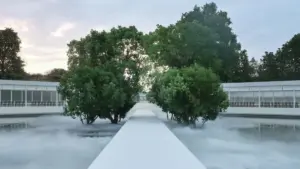
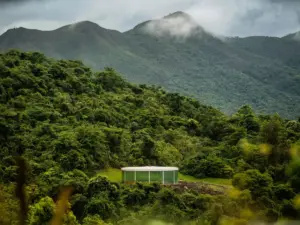
Berlin-based photographer Thomas Kemnitz (b. 1966) operates within the city’s rich documentary photography tradition. Represented by Albumen Gallery, Kemnitz employs large-format archival pigment prints to capture the architectural ruins, historical fortifications, and structural scars of German history. His work reflects a broader photographic lineage in Berlin—a segment of the market that remains highly attractive to collectors due to its synthesis of historical specificity and formal rigor.
Kemnitz’s ability to find aesthetic beauty in the remnants of the past has made him a fixture for those who collect works that serve as both art and historical record. His work is currently available for those interested in the intersections of architectural history and contemporary fine art photography.
As Berlin’s institutions continue to reinforce the city’s status as a central pillar of the art world, the artists profiled here represent a cross-section of a market that successfully balances the permanence of blue-chip masterpieces with the accessibility of works on paper, photography, and editions. For collectors looking to navigate this landscape, the opportunity to secure inventory or connect with representing galleries through MutualArt remains a primary route for engaging with the city’s ongoing artistic evolution. Whether one is drawn to the historical weight of the Neue Wilde or the precise, structural investigations of contemporary abstraction, Berlin’s market continues to offer a wealth of potential for both the seasoned collector and the newcomer.