For the better part of a century, the built environment of the Western world has been dominated by a singular, rigid philosophy: functionality. When a new development project is announced in your city or town, the odds are high that the result will be an uninspired glass-and-steel high-rise, a hyper-optimized grocery outlet, or an anonymous, windowless data center. It is rare indeed for our modern urban planning to prioritize the red-brick warmth of a historic library or the intimate, hand-carved charm of a community event hall. We have traded the soul of the streetscape for the efficiency of the assembly line.
In the Chicago area, this trend has been brought into sharp focus by the long-delayed completion of the Obama Presidential Center. While marketed as a vital resource for the local community, the project has drawn significant scrutiny for its imposing scale and stark aesthetic. To many observers, it appears as a gray, monolithic conglomerate of awkward angles that looms over the historic Hyde Park neighborhood. It is a structure that commands space rather than inviting the public into it, standing in stark contrast to the human-centric architecture that once defined such civic anchors. For the average passerby, the question remains: How are we expected to feel a sense of belonging in a structure that seems designed to alienate rather than embrace?
This pervasive shift in design philosophy has created a deep cultural skepticism. Because commercial, community, and religious spaces have drifted so far from anything resembling "beauty," we have become conditioned to view any effort to beautify our surroundings with suspicion. When a developer adds a decorative facade or an architect proposes a public garden, the public often asks: Is this a marketing gimmick? Is this a political distraction? Are we being manipulated by a veneer of artifice? We have reached a point where beauty is viewed as a novelty—a form of individual expression—rather than a standard expectation for the shared environment. We have lost the collective confidence to demand spaces that elevate the human spirit.
We are, perhaps, not the first civilization to prioritize shelter over style, but we are uniquely positioned as the first to do so with full knowledge and technical capacity to do otherwise. We live in an era of unprecedented engineering capability, yet we spend our days navigating aisles of fluorescent-lit warehouses and overstimulating commercial packaging, all designed with the singular, algorithmic goal of parting us from our money. We have become a society that spends more time meticulously curating our digital aesthetics on social media than we do tending to the tangible, brick-and-mortar reality of our neighborhoods.
The Decline of Architectural Ornament
In a society that bows to the altar of economic efficiency, it has become self-evident that anything not directly serving a profit motive is an unnecessary luxury—or worse, a waste. Yet, for the vast majority of human history, this was not the case. Throughout the development of global civilization, advancements in science and engineering were almost always paired with advancements in aesthetic complexity. The pyramids of Egypt, the soaring arches of the Roman Colosseum, the intricate majesty of St. Peter’s Basilica, and the spiritual height of the Hagia Sophia were not mere machines for living; they were manifestations of the cultural, intellectual, and aesthetic values of their time.
In these historical works, decoration was not incidental; it was an essential component of the craftsmanship. Practically speaking, these embellishments served to project wealth, reinforce institutional power, and foster social cohesion through shared motifs and familiar stories. However, on a deeper, more profound level, these beautiful spaces functioned as a mirror, reflecting the hearts and minds of the communities they served. They signaled that the construction was an act of care, prioritizing the dignity of the people who would inhabit those spaces.
Consider the historical American town: a small parish might dedicate years to a special collection, specifically to fund stained-glass windows imported from Munich. The goal was not profit; it was to ensure that every congregant, regardless of status, had something genuinely lovely to contemplate during prayer. Cities invested in elaborately carved fountains in the main square—not just to provide water, but to provide a place for residents to pause, sit, and converse. Grand railway stations were built with the intention of impressing the weary traveler and instilling a sense of local pride in those returning home. These were not just functional assets; they were civic gifts.
Today, however, the tide may be slowly turning. In many cities, grassroots movements are pushing back, advocating for increased walkability, the restoration of green spaces, and a return to architecture that facilitates human connection rather than hindering it. Architectural firms and city planners, particularly in the United States, are beginning to take notice of this appetite for "place-making." In many urban centers, there is a tangible effort to cultivate an intentional community atmosphere. While there is cause for hope, reclaiming our environments requires us to move past the reign of the car and the corporation and remember what our world looked like before their dominance.
The Victorian Romanticism and Art Nouveau
The century leading up to World War II was a period of frantic design experimentation. As industrialization accelerated the pace of life, the resulting sense of social alienation drove people to look toward the past for inspiration. This tension produced a variety of styles that sought to balance historical reverence with the demands of a rapidly changing contemporary culture.
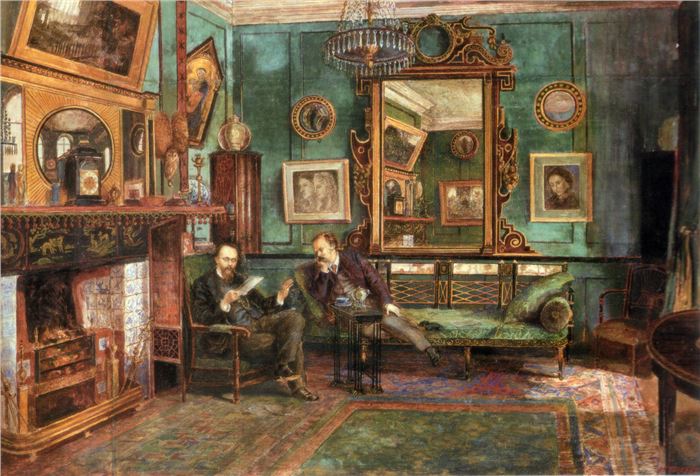
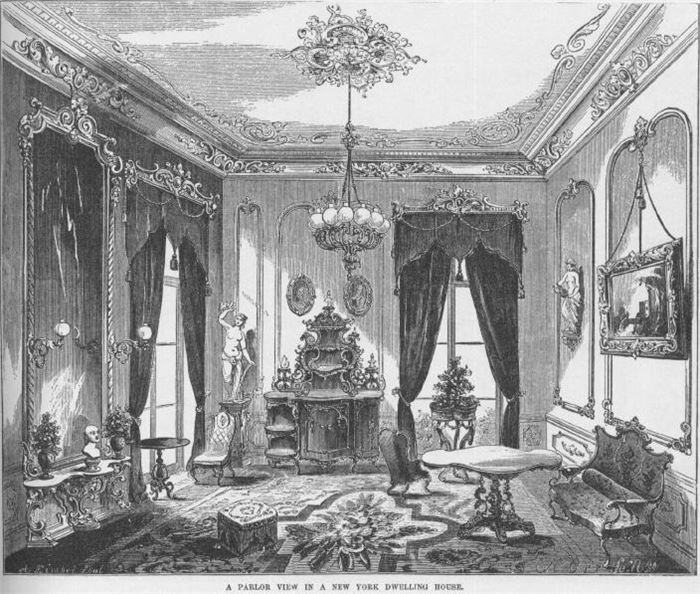
The Victorian period, for instance, was characterized by a distinct embrace of heavy luxury, sentimentality, and intentional clutter. It was a domestic aesthetic where windows were draped in rich, heavy fabrics and every surface was adorned with knickknacks and curiosities. Larger civic and residential structures frequently drew from the quirks of Gothic architecture, utilizing asymmetrical towers and mass-produced yet intricate decorative elements. This style reflected a deep romanticization of a perceived "charmed" medieval past—a time that felt more legible and stable than the chaotic present—but it also signaled a quiet, persistent optimism regarding the role of the individual and the family in creating a more comfortable, personal world.
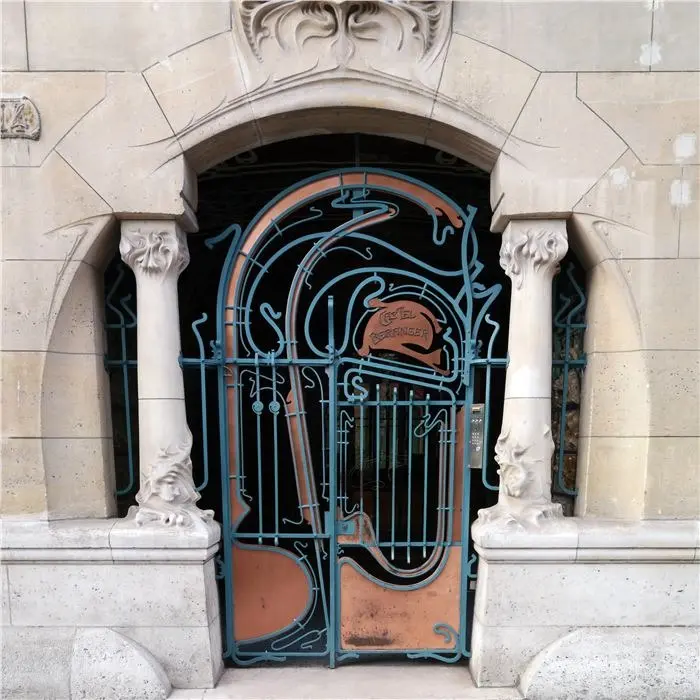
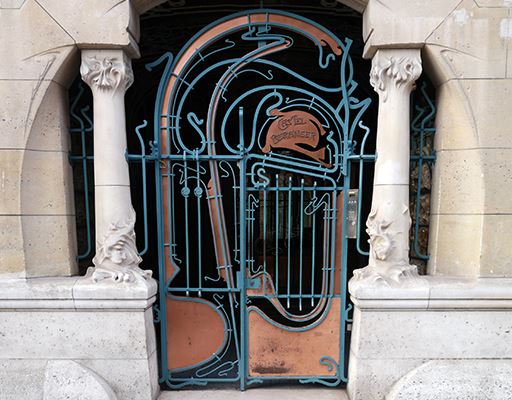
However, as the 20th century dawned and the geopolitical structures of the aristocracy began to fracture, the Victorian obsession with the past gave way to the fluid, organic energy of Art Nouveau. This movement sprouted across Europe like wildflowers, rejecting the rigid, stolid symmetry of the previous era. Art Nouveau blurred the lines between high and low art, contorting Victorian structures into a style defined by flowing, serpentine lines, natural motifs, and complex compositions. In Germany, it was known as Jugendstil, or "Youth Style," and it served as a defiant, bright reaction against the cold, mechanical economic forces that threatened to steamroll natural individuality.
Art Deco and the Modern Disconnect
The trauma of World War I fundamentally altered the collective psyche. The youthful, organic hope of the Art Nouveau movement became increasingly difficult to sustain in the wake of the trenches. By 1925, the debut of the Art Deco movement in Paris signaled a change in tactics. Rather than fleeing from the industrial machine, Art Deco sought to harness it. Through the use of bold geometry, sharp symmetry, and sleek, modern materials, the movement co-opted ancient motifs into a new visual language. It was a style that suggested that technology, if tempered by art, could sweep humanity toward a modern heaven.

The Chrysler Building in New York remains the quintessential symbol of this era—a marriage of industrial might and decorative aspiration. Yet, the momentum of that optimism stalled. Since the end of World War II, architectural trends have retreated from such grand gestures, often veering into the sterile, the corporate, or the outright hostile. Movements such as Brutalism and corporate modernism have frequently resulted in spaces that prioritize efficiency over the human experience.
In the aftermath of the 20th century’s greatest tragedies, it appears as though our collective creativity has turned inward, abandoning the duty to make our shared spaces welcoming. We see the fallout of this abandonment in the social disconnection that defines our modern era: a lack of shared aspirations beyond mere accumulation and an increasing radicalization at a time when we are, paradoxically, more connected than ever.
If we truly wish to heal our communities, we must rediscover the lost art of decoration. This is not merely an aesthetic preference; it is a structural necessity. Quality decoration serves as a testament to craftsmanship and a display of pride in one’s work. It sets a standard for the community, signaling that the structure was built to serve the people, not just the balance sheet. While a functional space may provide convenience, a beautiful space provides a gift—a reminder that we are more than just the sum of our economic functions. Decoration may be unnecessary in the cold light of utility, but it is, fundamentally, what makes a space feel like life itself.