As sustainability transitions from an ambitious corporate talking point into strict accountability across global industries, the lighting sector is facing a profound reckoning. For decades, energy efficiency has stood indisputably at the very heart of innovation in lighting technology. The monumental industry-wide transition away from conventional, energy-heavy light sources toward advanced light-emitting diodes (LEDs) has delivered staggering, measurable reductions in global energy consumption and its associated carbon emissions. Yet, as contemporary designers, architects, and specifiers look toward creating a deeper, more comprehensive environmental impact through sustainable innovation, a critical new question is rapidly taking center stage: what actually happens to the physical resources embedded within a lighting product throughout its entire lifespan?
This pivotal question marks the boundary where circularity steps in to redefine the future of the built environment.
Beyond the proven successes of energy savings, the modern lighting sector has steadily built a commendable track record in vital environmental areas. These include advanced recycling initiatives, the careful management and phase-out of hazardous substances, continuous improvements in component efficiency, and the establishment of frameworks enabling the repair and replacement of failing parts. However, the next frontier for the industry is to scale up and accelerate material efficiency on a global scale. Meeting this challenge requires a structured, consistent, and harmonized circular lighting approach that can be adopted uniformly by manufacturers and specifiers alike.
Transitioning fully to circular lighting not only offers significant cost savings over the long term for building owners and municipalities, but it also unlocks powerful new economic opportunities. It lays the foundational bedrock for a more resilient, resource-conscious lighting industry alongside a thriving commercial ecosystem for related refurbishment, remanufacturing, and recycling businesses. For industry leaders like Signify, sustainability has long been anchored as a cornerstone of corporate strategy, powerfully reflected in ambitious company blueprints such as the Brighter Lives, Better World 2030 programme. Within this comprehensive vision, circularity acts as a central pillar, directly reflecting a deep commitment to responsible, future-focused industrial practices.
For professional designers and specifiers, the daily challenge is no longer simply about selecting luminaires that consume the lowest amount of electricity on paper. Instead, the task is to understand a product much more holistically. This means evaluating a fixture’s complete material footprint, its expected physical longevity, its inherent repairability and upgradeability, its conscious use of recycled or other non-virgin materials, and, crucially, its genuine potential for reuse or material recovery at the ultimate end of its operational life.
This necessary industry shift is currently reflected in initiatives like Signify Circle, a guiding philosophy designed specifically to help professional customers navigate complex product landscapes and make more informed choices in direct support of their own organizational circular economy ambitions. Operating securely within the broader resource-efficiency pillar of Signify’s ongoing sustainability commitments, the initiative addresses the practical realities of modern procurement.
From a Linear Product to a Circular Proposition
True circularity is never a passive feature that can simply be tacked onto a luminaire as an afterthought at the very tail end of its product development cycle. Rather, genuine circularity must start much earlier—right at the initial drawing board during the design stage.
Designing for circularity requires a comprehensive framework that embraces a strict lifecycle approach, actively encouraging product architects, designers, and engineers to consider resource efficiency, longevity, and reusability from the absolute outset of conceptualization. It also recognizes the nuanced reality that individual design decisions can frequently contribute to more than one aspect of circularity simultaneously. For instance, a thoughtful modular design could both dramatically extend a product’s operational life through easy technological upgrading, while simultaneously enabling individual components to be seamlessly harvested for reuse or recycling when the fixture is finally retired.
At the very center of frameworks like Signify Circle are three core principles: use less, use longer, and use again.
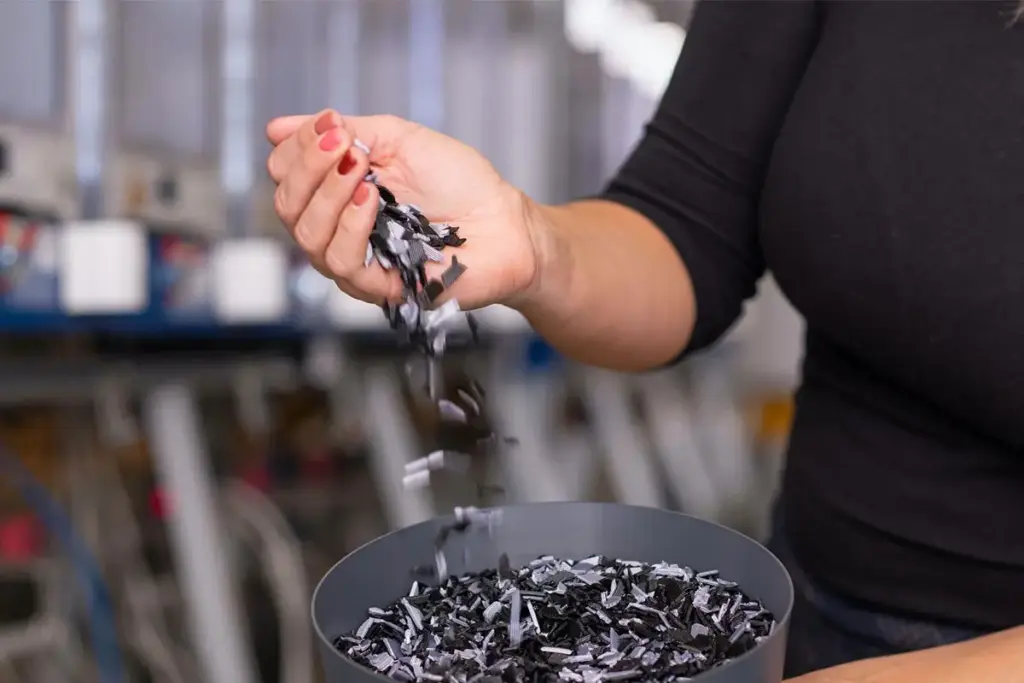
The first principle, use less, means carefully considering how both materials and energy are consumed throughout manufacturing and operation. This includes actively reducing the overall material footprint of a luminaire, increasing the proportion of non-virgin content utilized in its construction, and continuously improving underlying optical and electrical efficiency.
The second principle, use longer, focuses intensely on extending the useful working life of lighting infrastructure through inherent physical durability, straightforward field repairability, and seamless architectural upgradeability.
The third principle, use again, considers what happens when a product, or even an individual sub-assembly component, is no longer required in its original installation application. This ranges from direct secondary reuse and professional refurbishment to the systematic recovery of valuable parts and raw materials for future manufacturing cycles.
Typically represented visually by a continuous ring, this logo design is entirely intentional. Industrial circularity is never a rigid linear sequence in which one isolated action must be fully completed before another can begin. Instead, these principles actively overlap, influence, and interact continuously throughout every phase of a product’s lifecycle.
Making Circularity More Than a Claim
For the professional specification community, however, a critical and practical question remains: how can abstract concepts of circularity be translated into something truly meaningful and verifiable at the exact point of product selection?
The contemporary lighting market contains an ever-increasing proliferation of environmental claims, green marketing labels, and self-declared sustainability statements. Yet, a label is only truly useful if the underlying criteria supporting it are transparent, relevant, and independently verifiable. This creates a vital operational distinction between merely talking about circularity and genuinely demonstrating it through hard evidence.
For an architect or specifier, the ultimate value is rarely found in the marketing logo itself. True value lies firmly in what sits securely behind that badge: a structured, rigorous assessment that provides a reliable framework for evaluating the complex resource and lifecycle characteristics of a complete lighting solution.
This is precisely where Environmental Product Declarations, commonly known as EPDs, become particularly relevant to the specification process.
An EPD provides transparent, standardized environmental data based on a comprehensive life-cycle assessment. For modern luminaires, specific product rules and standardized methodologies are continuously being developed to establish a consistent, reliable basis for assessing cradle-to-grave environmental impacts. Emerging circularity frameworks frequently identify EPDs as the necessary technical foundation underpinning many of the criteria used to determine whether a specific product can legitimately qualify for advanced sustainability programs. The collaborative relationship between the two is remarkably important for the market.
An EPD provides raw, standardized environmental data, while a circularity framework helps put that quantitative data into the practical context of circular design and real-world application.
For designers and specifiers, this synergy can powerfully support a much more informed, multi-faceted conversation with manufacturers.
Rather than asking the traditional, singular question of how efficient a particular luminaire is, procurement discussions can rapidly become much broader and more probing. Specifiers can begin to ask how much raw material a fixture actually utilizes, what exact proportion of those materials comes from non-virgin or recycled sources, how many years the product is engineered to remain actively in service, whether it can be easily repaired by local technicians, and whether its internal technology can be upgraded without necessitating the wasteful replacement of the entire physical housing. Furthermore, professionals can inquire about the ultimate fate of its components at the end of its useful life, and what verified environmental data is readily available to substantiate these performance characteristics.
No single isolated metric can comprehensively answer all of these complex questions on its own. Nor should an EPD ever be expected to fully replace a dedicated circularity assessment, or vice versa. Instead, these powerful tools operate best when they provide complementary perspectives to the design team.
From Energy Efficiency to Resource Efficiency
This evolving dynamic represents a critical shift in the way lighting sustainability is conceptualized and implemented across the building sector.
Energy efficiency rightfully remains one of the lighting industry’s most historically significant contributions to reducing overall environmental impact on a global scale. But the true environmental footprint of a luminaire does not magically begin the exact moment it is switched on for the first time, nor does it necessarily conclude the day it is switched off for the last time.
Long before installation, raw materials must be extracted from the earth, chemically processed, and manufactured into precision components. Subsequently, the finished product must be packaged, transported across continents, installed by contractors, maintained, occasionally repaired, potentially upgraded, and eventually dismantled at the end of a building’s lease or lifecycle. Every single distinct stage presents both unique opportunities and complex challenges for actively reducing resource consumption and retaining maximum economic and material value.
Product design, therefore, becomes radically critical to the future of the built environment. The best luminaire specified for a modern project may no longer simply be the device that delivers the highest luminous efficacy or the lowest absolute energy consumption on a datasheet. Increasingly, the premier choice may also be the fixture that utilizes materials intelligently, remains functionally useful for a significantly longer period, effortlessly adapts as spatial requirements change over time, and guarantees that valuable components and materials remain safely circulating within the economy rather than ending up in a landfill.
Designing for What Comes Next
The lighting industry’s next great sustainability challenge is not necessarily about performing one single action differently. Rather, it is about intelligently connecting the myriad decisions made throughout every single phase of a product’s lifecycle.
Environmental Product Declarations help make complex environmental impacts visible, measurable, and directly comparable across competitive product lines. Meanwhile, structured circularity frameworks help designers, architects, and manufacturers think critically about how products actually use, retain, and recover finite natural resources. Working together, these complementary approaches contribute directly to a much more informed, transparent, and sustainable specification process.
Frameworks like Signify Circle represent a practical example of how high-level environmental thinking can be successfully translated into actionable methodologies for professional customers navigating modern procurement.
Ultimately, a logo or certification mark is simply a convenient identifier for manufactured products that have successfully met clearly defined performance criteria. The far more significant change continues to happen quietly behind the scenes—in the critical decisions made at the drawing board by engineers, during meticulous product development in manufacturing facilities, and ultimately at the moment of specification by design professionals.
The future of sustainable lighting will clearly require the industry to think deeply not only about how little electrical energy a luminaire consumes while illuminated, but about how intelligently it utilizes physical resources throughout its entire existence. That represents the ongoing shift from traditional energy efficiency to holistic resource efficiency, and it is poised to fundamentally transform the very questions we ask every time we specify light for the spaces of tomorrow.