Lúcia Laguna, the celebrated Brazilian painter whose vibrant, fractured canvases captured the lush topography and atmospheric light of the hills above Rio de Janeiro, has died at the age of 85. Her passing was announced by her representative gallery, Fortes D’Aloia & Gabriel, which is based in São Paulo. In a poignant gesture of mourning, the gallery announced that it would close its doors for the day to honor not only Laguna but also Rodrigo Cass, another esteemed artist on the gallery’s roster who recently passed away following a tragic beach accident.
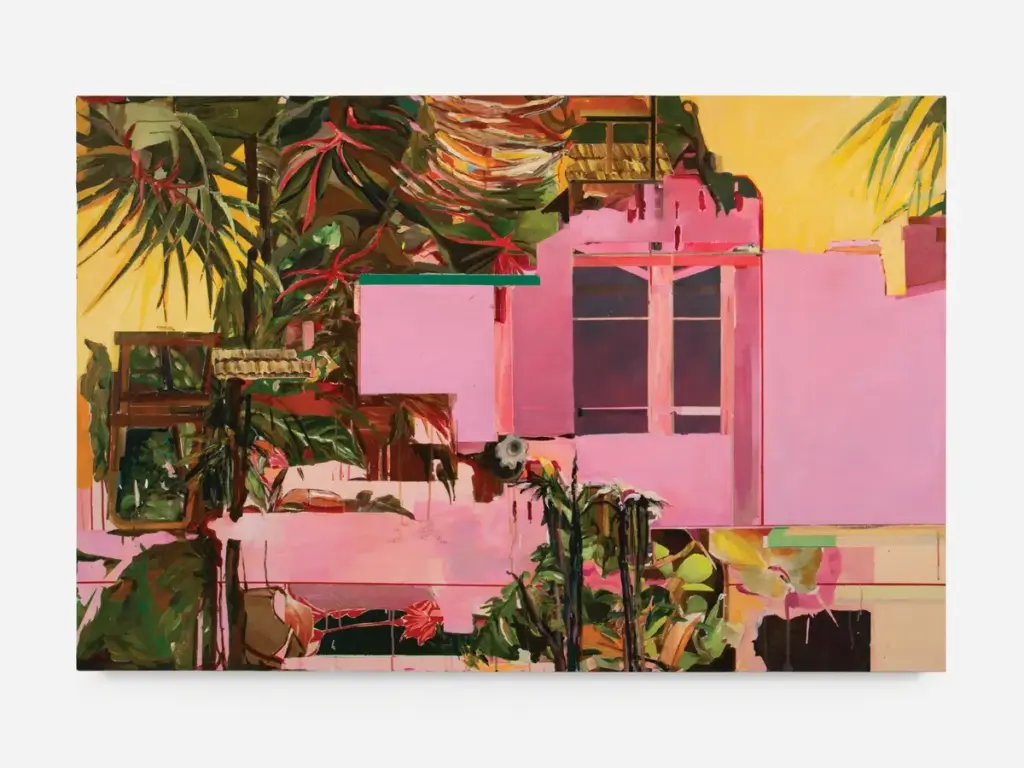
Throughout a career that defied conventional timelines, Laguna carved out a distinct and influential space within contemporary Latin American art. Her work bridged the gap between figurative observation and abstract geometry, rooted deeply in an engagement with landscape, memory, and the rhythms of everyday life.
"Throughout her career, Lucia developed a body of work defined by her engagement with landscape, memory, and everyday life," Fortes D’Aloia & Gabriel said in a statement released to the public. "Her work, at once intimate and open to the world, occupies a fundamental place in contemporary Brazilian art."
Laguna’s artistic approach was as intellectually rigorous as it was visually striking. Before dedicating herself fully to painting, she spent years working as a language and literature teacher. This background deeply informed her creative philosophy, leading her to view visual art through a lexicon of fractured, overlapping forms. Her dense, brightly colored compositions often felt like visual languages constructed, deconstructed, and rebuilt on the canvas.
Adding a unique dimension to her practice, Laguna frequently employed a collaborative creative process. She engaged in what she described as a pictorial dialogue with studio assistants and students. In this distinctive method, collaborators were invited to paint an initial layer around a chosen theme. Laguna would then respond directly to these foundations, accumulating pigment, painting over existing forms, or selectively erasing under-layers. This conversational approach to canvas-making resulted in works that felt alive with collective energy while remaining unmistakably hers.
Many of Laguna’s most celebrated works are organized into recurring, expansive series, most notably "Jardim" (Garden), "Paisagem" (Landscape), "Estúdio" (Studio), and "Azulejo" (Tiles). These groupings allowed her to explore the intersections of interior spaces and exterior environments. In these compositions, viewers encounter the dense tropical foliage and vibrant, bustling cityscapes of Rio de Janeiro, rendered in a way that often appears torn, fragmented, and dynamic. Geometric shapes frequently collide and gently dissolve into organic counterparts, creating a tense yet harmonious balance across the surface of the painting.
Karsten Greve, one of her European galleries, noted the distinctive atmospheric quality of her output, observing that Laguna’s paintings "come across sometimes as expressive and full of energy, sometimes as light and free flowing, and nearly always seem pervaded by atmospheric light."
Laguna herself was deeply reflective about the purpose of her medium in an increasingly frenetic modern world. In a 2008 statement recorded in Paulo Herkenhoff’s publication Economia da Pintura, she articulated a profound philosophy regarding the unhurried nature of art-making.
"I believe that painting can recover a time for gazing that has been lost in the chaos of images that bombard our cities," Laguna said at the time. "The slowness, the introspection that painting entails pleases me, asking me to translate reality according to this lost perspective."
Born in Campos dos Goytacazes, Brazil, in 1941, Laguna took a decidedly unconventional path to international acclaim. For decades, her primary professional focus was education, teaching language and literature rather than fine art. However, her life took a transformative turn in 1995 when, at around the age of 54, she made the bold decision to enroll at the Escola de Artes Visuais do Parque Lage in Rio de Janeiro.
At Parque Lage, she studied under the mentorship of artist Charles Watson, a formative experience that helped crystallize her unique visual vocabulary. Her talent was recognized swiftly; by 1998, she mounted her first solo exhibition at the Cândido Mendes Cultural Centre in Rio de Janeiro.
A major turning point in her career arrived in 2012 when she was selected to participate in the prestigious 30th São Paulo Biennale. That exposure cemented her status as a vital voice in contemporary Brazilian art, leading to widespread institutional recognition. Over the following decades, her artworks entered the permanent collections of major museums throughout Brazil. Her reach also extended far beyond her home country, with her work featured in exhibitions across the globe, ranging from the Martin-Gropius-Bau in Berlin to the Museum of Contemporary Art in Antwerp. Among her many accolades, she was awarded Brazil’s prestigious PIPA Prize, recognizing her enduring contribution to the nation’s visual culture.
Even as her reputation grew internationally, Laguna remained anchored to the inspiring environment of her home in the hills of Rio de Janeiro, where the natural world continued to feed her imagination until the end of her life.
She is survived by her daughter, Laura, and her grandchildren, João and Daniel.