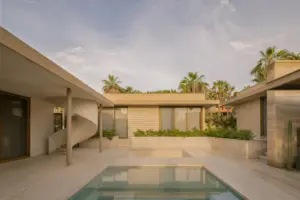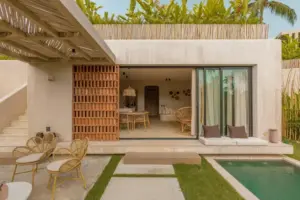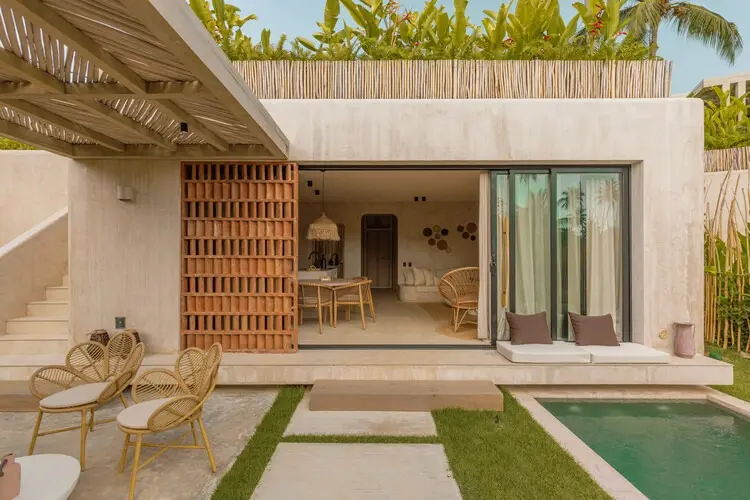
Nestled along a breathtaking and largely untouched stretch of the Dominican Republic’s northern coastline, Hotel Amares emerges as a thoughtful architectural dialogue between tropical nature and contemporary design. Designed by the studio Cel-Ras Arquitectura, the newly completed project occupies a generous 14,152-square-meter beachfront property directly on Playa El Estillero. Situated near the charming town of El Limón on the dramatic Samaná Peninsula, the resort commands a unique geographical position that places it right at the threshold of two contrasting yet deeply complementary ecosystems.
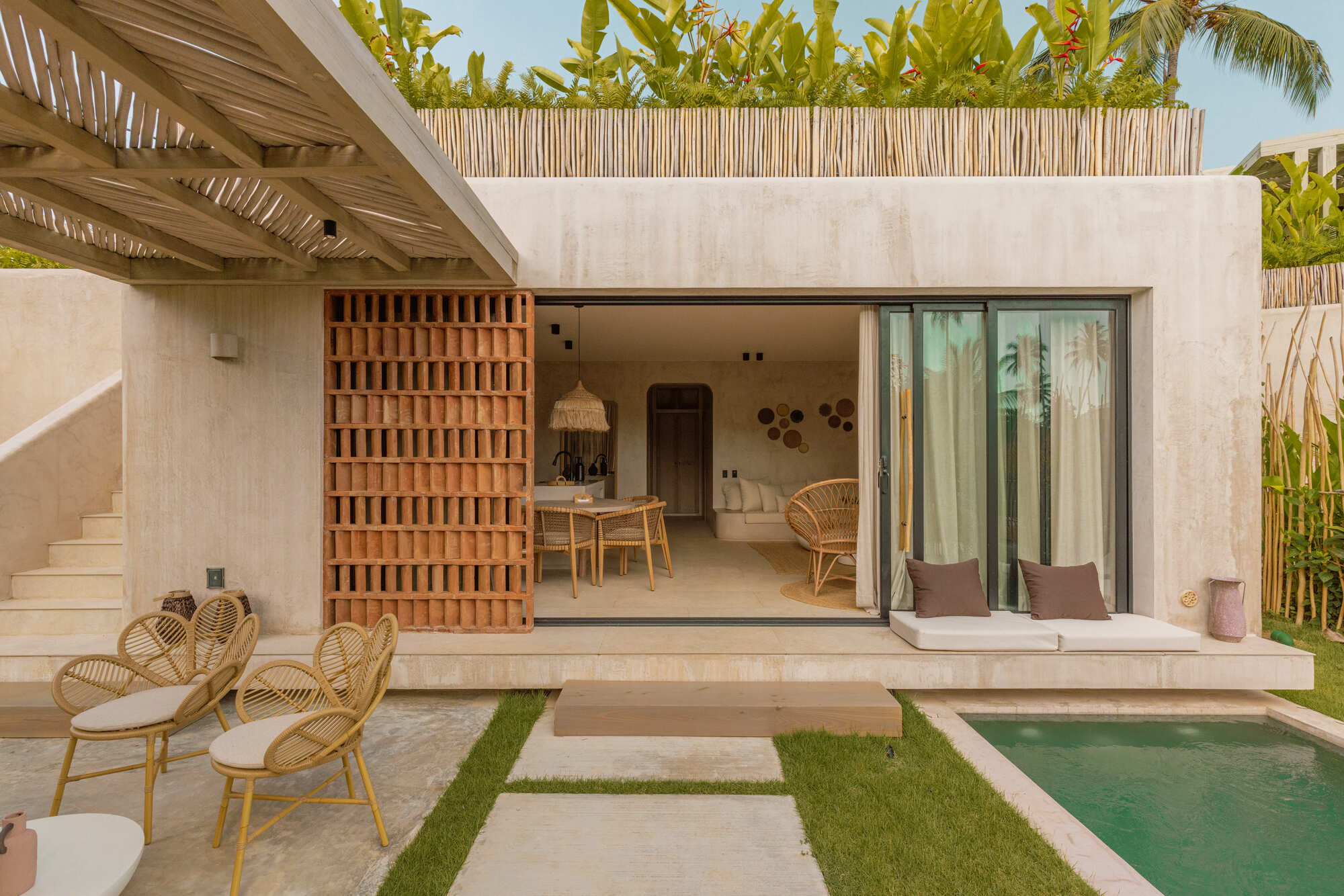
The site itself serves as the primary protagonist in the architectural narrative crafted by Cel-Ras Arquitectura. The plot is intricately sandwiched between the vast, dynamic expanse of the Atlantic Ocean and a dense, verdant backdrop composed of swaying coconut palms and a thriving tropical forest. This rare positioning places Hotel Amares within one of the few remaining pockets of the Caribbean coastline that has successfully evaded the sweeping tide of large-scale, high-density tourism. Instead of imposing an alien structure onto this fragile environment, the design team approached the landscape with a profound sense of restraint, allowing the surrounding topography and native vegetation to dictate the rhythm, orientation, and atmospheric quality of the built forms.
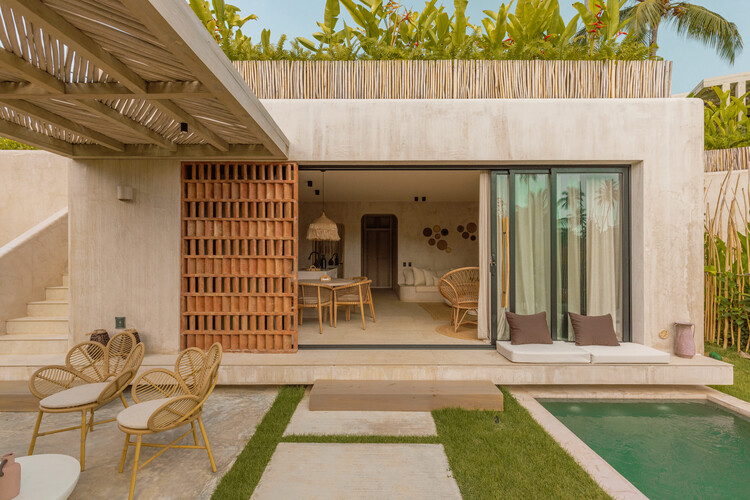
The architectural strategy deployed by Cel-Ras Arquitectura focuses heavily on integration, permeability, and a deep respect for the natural microclimate of the Samaná Peninsula. Rather than relying on sealed, highly artificial indoor environments, the design embraces the tropical climate, utilizing open-air transitions, shaded corridors, and strategic spatial layouts that capture the gentle sea breezes rolling in from the Atlantic. This approach not only enhances the physical comfort of guests but also minimizes the resort’s overall energy footprint by reducing the reliance on mechanical ventilation systems. The material palette reflects this sensitivity to context, drawing inspiration from earthy textures, regional building traditions, and sustainable practices that ensure the architecture ages gracefully alongside the surrounding coastal flora.
Playa El Estillero is widely recognized for its raw, wild beauty, characterized by golden sands, rolling waves, and an undisturbed horizon. By placing Hotel Amares within this secluded context, Cel-Ras Arquitectura has created a sanctuary that prioritizes introspection and a tactile connection with nature over ostentatious luxury. The interplay between the deep green of the tropical forest and the brilliant blue of the ocean is mirrored in the interior and exterior design choices, where neutral, grounding tones allow the vibrant colors of the landscape to take center stage. Through careful massing and strategic sightlines, guests are continually reminded of their unique location, whether they are looking out toward the horizon of the open ocean or gazing inward toward the lush, shadowed canopy of the palm grove.
The realization of Hotel Amares marks a significant addition to the architectural landscape of the Dominican Republic, demonstrating how contemporary design can successfully inhabit ecologically sensitive zones without disrupting their inherent character. As travelers increasingly seek out destinations that offer authenticity, peace, and a genuine connection to the natural world, projects like Cel-Ras Arquitectura’s latest venture set a new benchmark for thoughtful, context-driven hospitality design in the Caribbean. Through a harmonious blend of site-specific planning, environmental sensitivity, and refined spatial curation, Hotel Amares stands as a testament to architecture’s capacity to coexist respectfully with some of the planet’s most pristine environments.