Microorganisms are capable of orchestrating some of the most extraordinary chemistry on Earth. Among these vital biological feats is nitrogen fixation, a fundamental process that converts inert nitrogen gas into a form that living organisms can readily use to build proteins, DNA, and other essential molecules. Although nitrogen makes up about 78 percent of Earth’s atmosphere, plants and animals cannot use it directly. This limitation exists because the two nitrogen atoms in atmospheric nitrogen gas are joined by an exceptionally strong chemical triple bond, making the molecule remarkably stable and unreactive under normal biological conditions.
Certain specialized microorganisms, however, have evolved a remarkable way around this chemical barrier. They possess the biochemical machinery required to break that robust triple bond and transform atmospheric nitrogen into ammonia, which can then be seamlessly incorporated into biological molecules to sustain life. One of these fascinating organisms is the deep-sea archaeon Methanocaldococcus infernus. This extremophile makes its home in volatile marine environments, such as hydrothermal vent systems, where superheated mineral-rich fluids can reach temperatures well above the boiling point of water.
Researchers working in Tristan Wagner’s laboratory at the Max Planck Institute for Marine Microbiology in Bremen set out to understand how this resilient organism manages to perform nitrogen fixation under such extreme conditions. To solve this biological puzzle, the team successfully "tamed" the microbe in a specialized laboratory setting, encouraging it to fix nitrogen gas at blistering temperatures above 90 degrees Celsius.
"How do they do it, in such heat? And how can the enzyme splitting the nitrogen triple bond work under these conditions?" Wagner asked himself, framing the central mystery that drove the investigation forward.
The Enzyme That Makes Nitrogen Fixation Possible
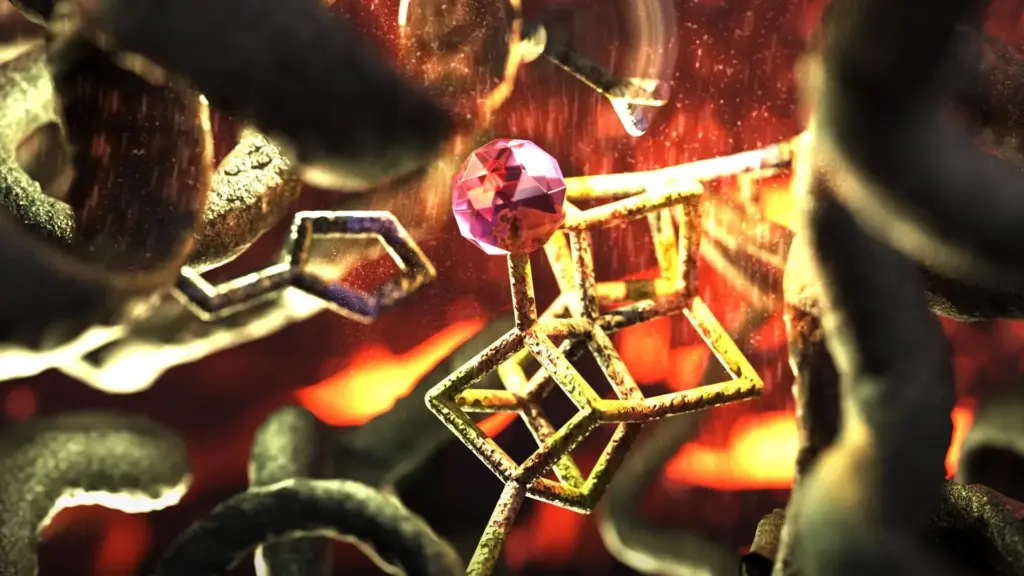
The key biological catalyst behind this extraordinary ability is nitrogenase, an enzyme complex that contains what scientists consider to be the most complex metallocofactor known in biology. Metallocofactors are specialized, metal-containing helper molecules that bind tightly to enzymes and are strictly essential for their catalytic activity. Without these intricate metal clusters, the enzyme would be entirely inert and incapable of performing its life-sustaining chemistry.
Historically, the most extensively studied and highest-performing nitrogenases found in nature contain a molybdenum-based metallocofactor. However, alternative versions of the enzyme exist in other organisms, utilizing vanadium or relying exclusively on iron in their catalytic centers. Despite decades of biochemical research, scientists are still working diligently to determine how these different nitrogenase families are evolutionarily related and precisely how their unique metal centers collaborate to break the notoriously strong nitrogen triple bond.
A Nitrogenase Built for Extreme Heat
The nitrogenase found in Methanocaldococcus infernus presented a unique opportunity for study because it appears to share structural and functional traits with the molybdenum, vanadium, and iron-only forms simultaneously. According to Tristan Wagner, this unusual type of nitrogenase could closely resemble a common nitrogenase ancestor—the ancient, primordial system from which all modern variations ultimately evolved. Because of this evolutionary bridge, studying the enzyme could reveal common chemical principles underlying the nitrogenase reaction across all domains of life.
The research team successfully isolated the nitrogenase directly from the deep-sea microorganism and subjected it to rigorous biochemical testing. To their astonishment, they found that the protein was unusually resistant to thermal stress. The enzyme only began to break apart structurally at 90 degrees Celsius, and remarkably, a portion of it remained entirely intact even when exposed to temperatures reaching 98 degrees Celsius.
"This proves that this enzyme is designed to function under conditions in which most proteins would rapidly decay, like egg white cooked in hot water," says first author Nevena Maslać from the Max Planck Institute for Marine Microbiology. "It is not active at room temperature. Rather, we show that it only produces ammonia at high temperatures. Its extreme stability allowed us to study states of the nitrogenase that are usually difficult to capture."
A Near-Atomic Look at Nitrogenase
To examine the enzyme in intricate molecular detail, the researchers did not need to return to the abyssal depths of the ocean. Instead, they combined advanced microbial physiology, native enzyme purification, rigorous biochemistry, and structural biology. Navigating this phase of the project required extraordinary care, as every single experimental step had to be performed under strictly oxygen-free conditions. Exposure to oxygen can permanently damage and deactivate the sensitive metallocofactors at the heart of the nitrogenase enzyme.
Once the protein was successfully purified and stabilized, the team crystallized the enzyme and transported the samples to the Institut de Biologie Structurale in Grenoble, France. There, they utilized the facility’s synchrotron—a massive circular particle accelerator capable of generating intensely powerful X-rays.
This advanced analytical equipment allowed the researchers to determine the molecular structure of the enzyme at near-atomic resolution. The resulting structural map revealed that this archaeal nitrogenase is the simplest known example of the enzyme studied to date. At the same time, it remarkably combines distinct structural features found across all three major nitrogenase families, including the molybdenum, vanadium, and iron-only forms.
That striking combination strongly supports the possibility that ancient nitrogenases on the early Earth more closely resembled this archaeal enzyme than the specialized nitrogenases found in modern bacteria. Following this discovery, the researchers set out to definitively confirm whether the enzyme contained the anticipated molybdenum-based metallocofactor.
"Our search for the molybdenum was technically extremely challenging and required the experts at the synchrotron to push their instrument to its absolute limits," Wagner notes.
Scientists Capture an Unexpected Molecular State
The high-resolution synchrotron measurements ultimately confirmed the expected presence of the molybdenum signal, but they also delivered a major scientific surprise that caught the team off guard.
"We were stunned to look at a so-called unobserved state in a molybdenum-containing nitrogenase!" the researchers report.
Prior to this discovery, scientists had observed this specific "turnover" state exclusively in vanadium-based and iron-only nitrogenases. This newly captured conformation may represent a crucial intermediate stage in the complex reaction sequence that successfully tears apart the stubborn nitrogen molecule. Finding this exact same state in a molybdenum-containing enzyme suggests that all diverse forms of nitrogenase may actually share a common, unified underlying mechanism to break down atmospheric nitrogen.
From Deep-Sea Microbes to Future Biotechnology
Gaining a deeper understanding of nitrogen fixation has profound implications that extend far beyond the extreme hydrothermal environments of the deep sea. Nitrogen-fixing microorganisms such as Methanocaldococcus infernus do not just convert atmospheric nitrogen into bioavailable ammonia; they also play a vital role in regulating Earth’s global carbon cycle. Such microorganisms are intricately connected to the broader planetary balance and are responsible for producing a significant share of the methane found in the atmosphere.
Looking toward the future, researchers envision a time when these resilient organisms might be harnessed as biological platforms for converting various gases into useful industrial products, including methane and ammonia, using green hydrogen as a sustainable energy source.
"And what if crops could one day obtain nitrogen directly from atmospheric nitrogen?" Wagner speculates, pointing toward a transformative long-term possibility for global agriculture.
An advance of that magnitude could drastically reduce modern agriculture’s heavy reliance on industrially synthesized fertilizers. Currently, producing synthetic fertilizer through the energy-intensive Haber-Bosch process demands vast amounts of energy and is directly linked to substantial greenhouse gas emissions. Furthermore, the widespread overuse and runoff of excess agricultural fertilizers frequently contribute to severe environmental problems, including aquatic eutrophication and widespread ecological damage in coastal ecosystems.
For now, however, the new study provides something much more fundamental to the scientific community: an updated, high-resolution molecular view of one of biology’s most remarkable and complex chemical reactions.