Happy Wednesday, gardening enthusiasts! We are returning to Minneapolis for the second installment of Claire’s stunning side-yard transformation. Yesterday, we explored her initial planning phase, learning how she began the project by thoughtfully defining how she wanted to use the space and intentionally saving the plant selection for later stages in the design process. Today, we turn our attention to what is currently growing and thriving in the lush, shady garden beds that encircle her backyard patio and custom gazebo.
When designing the layout, Claire envisioned a sophisticated and tranquil color palette anchored by shades of green, blue, silver, and white. Because the microclimate of the side yard is quite shady, she made the strategic design choice to prioritize foliage first and flowers second. To lift the heavy shadows and brighten the overall atmosphere, she incorporated a curated selection of mostly white-flowering plants. Even though the garden beds themselves are relatively narrow, Claire was determined to avoid a simple, flat row of plants, opting instead for a deeply textured look that feels remarkably lush and layered.
A Private Jungle Retreat in Minneapolis
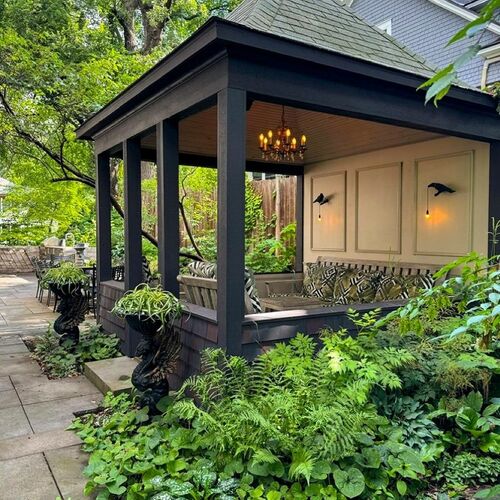
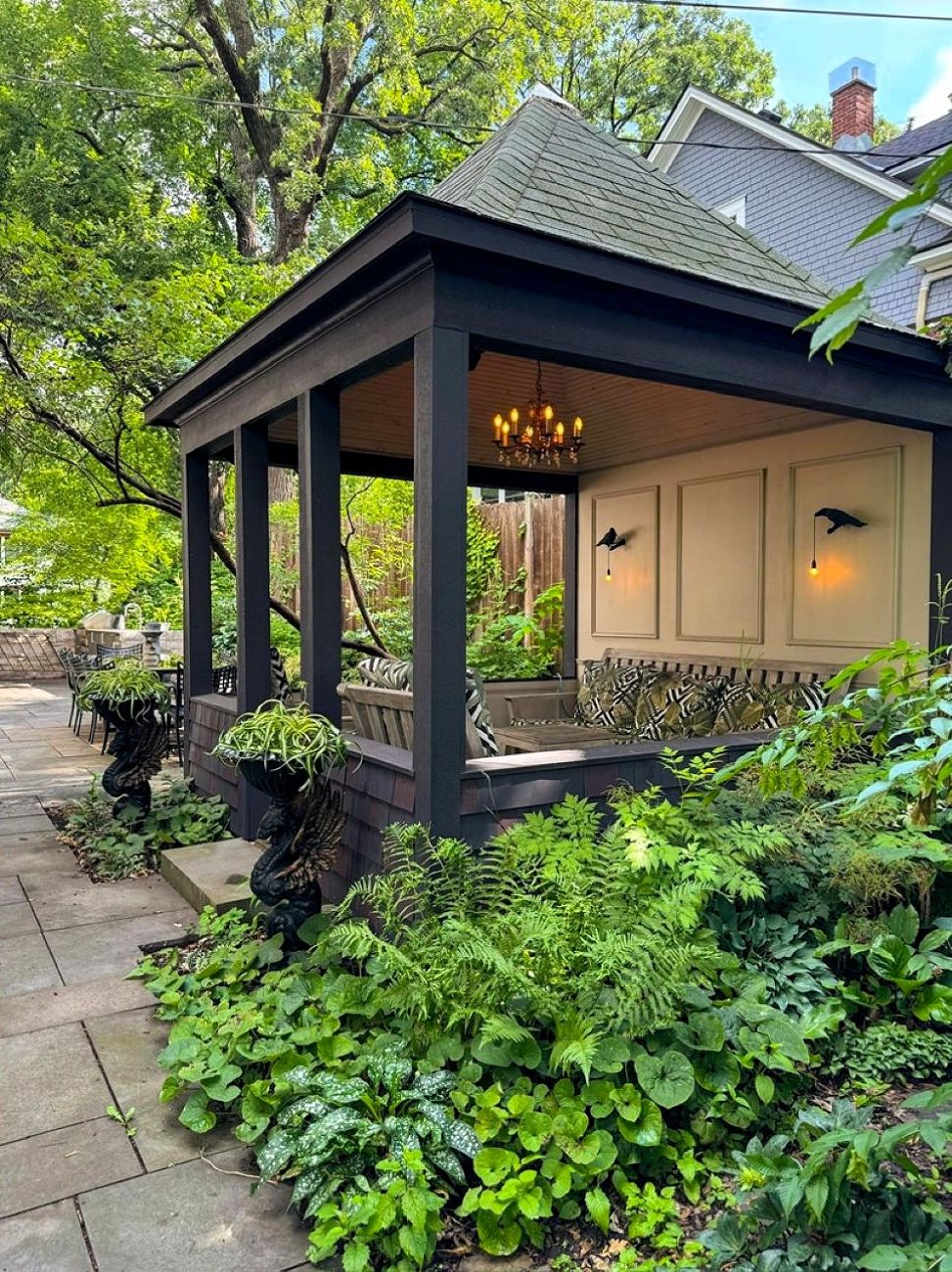
Taking a closer look at Claire’s finished gazebo reveals how effectively the surrounding foliage integrates the structure into the landscape. The dense planting makes the gazebo feel almost like a tiny woodland cottage tucked away into a private jungle. Meanwhile, a pair of matching dragon-shaped planters filled with vibrant spider plants (Chlorophytum comosum, Zones 9–11) frame the entranceway in much the same way traditional containers might flank a formal front door.
The tapestry of plants surrounding this cozy retreat features an intricate mix of textures and forms. Among them are the hairy toad lily (Tricyrtis hirta, Zones 4–8), the delicate ‘Branford Beauty’ fern (Athyrium ‘Branford Beauty’, Zones 3–8), the striking royal fern (Osmunda regalis, Zones 3–9), the luminous ‘Silver Heart’ brunnera (Brunnera macrophylla ‘Silver Heart’, Zones 3–8), and rich heuchera varieties, likely including Heuchera ‘Spellbound’ (Zones 4–9).
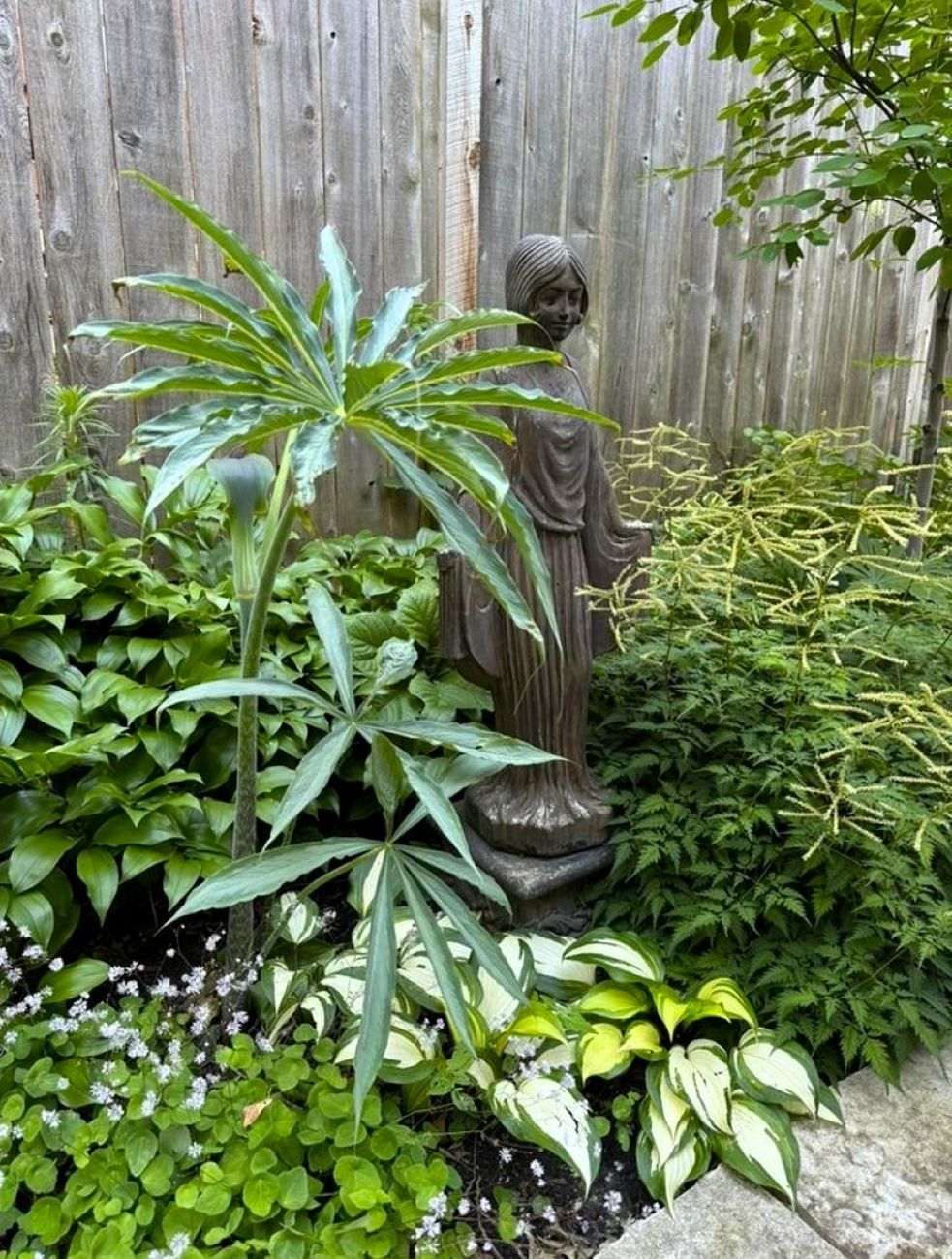
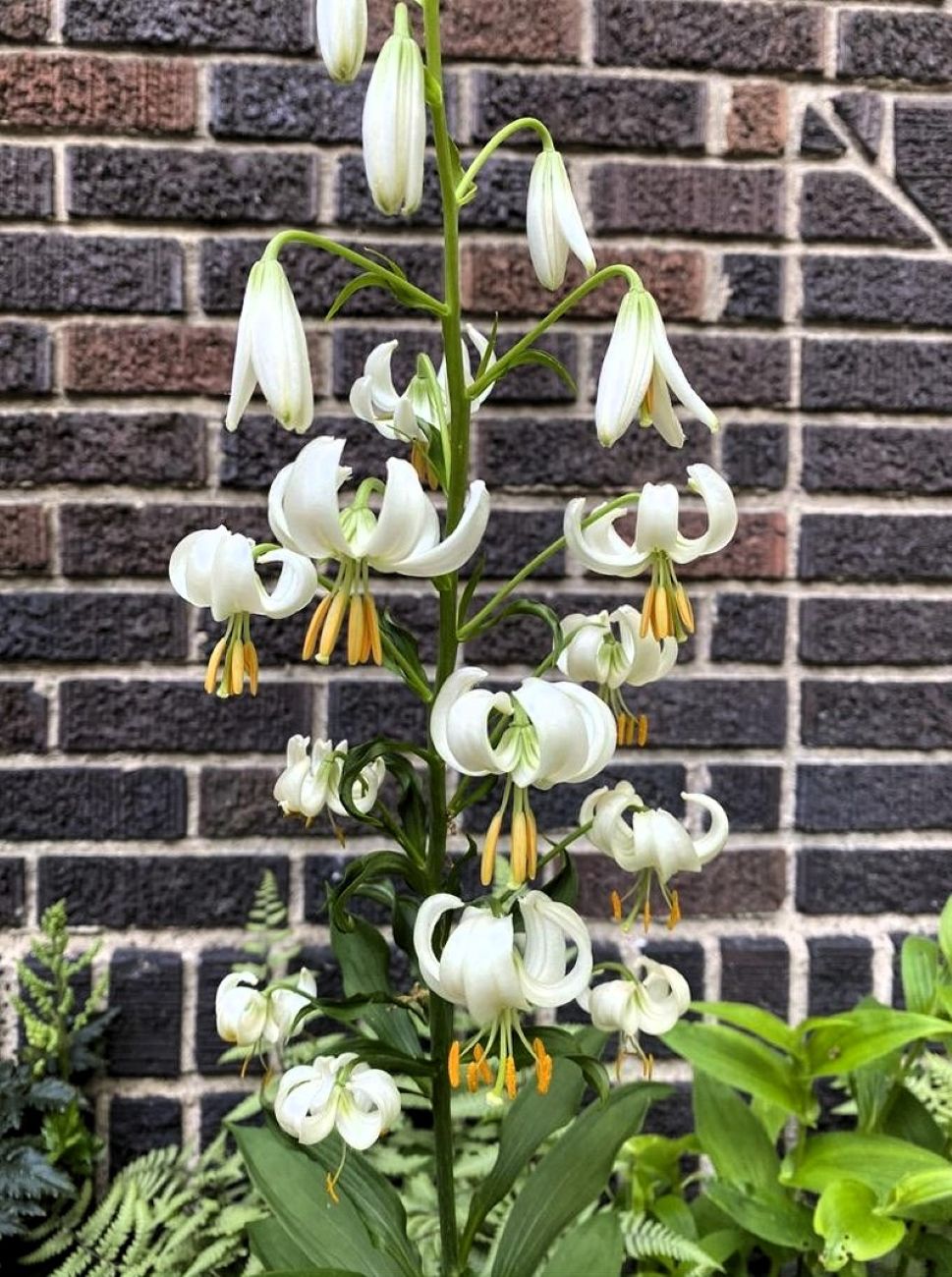
Further accentuating the shaded beds are specimens like the rare Himalayan cobra lily (Arisaema consanguineum ‘The Perfect Wave’, Zones 5–8), a striking feature plant positioned near a garden statue, though Claire notes she is eager to replace this particular specimen following its decline. Nearby, the white martagon lily (Lilium martagon ‘Album’, Zones 3–9) provides a brief yet remarkably glorious seasonal bloom.
Layering Textures and Tones in the Shade
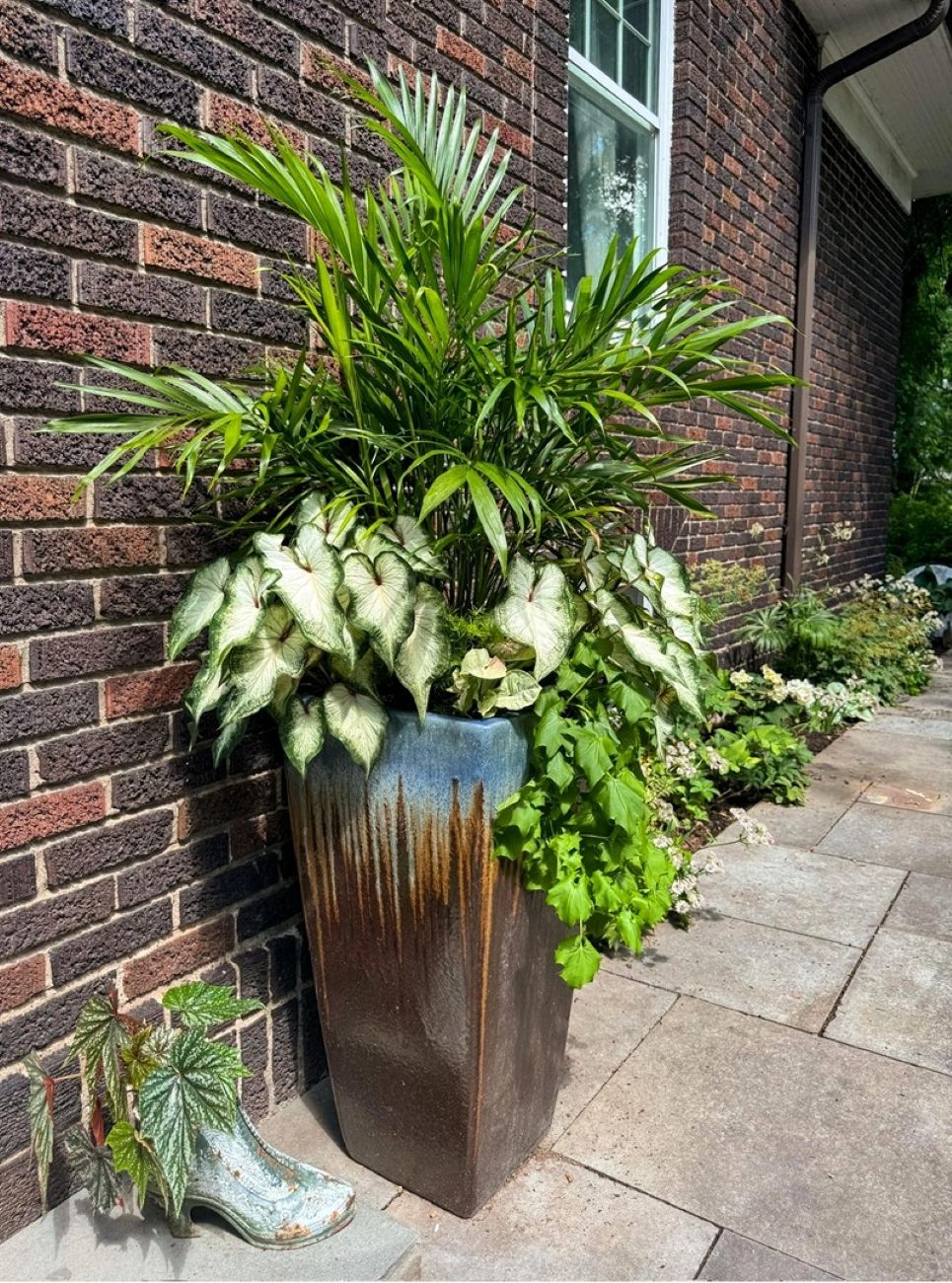
The sophisticated green-and-white color scheme extends seamlessly into container arrangements positioned throughout the patio and brick wall perimeter. In one striking display, an Areca palm (Dypsis lutescens, Zones 10–11) is paired with ‘White Butterfly’ caladium (Caladium bicolor ‘White Butterfly’, Zones 9–11), echoing the overarching botanical palette of the surrounding earth-toned landscape.
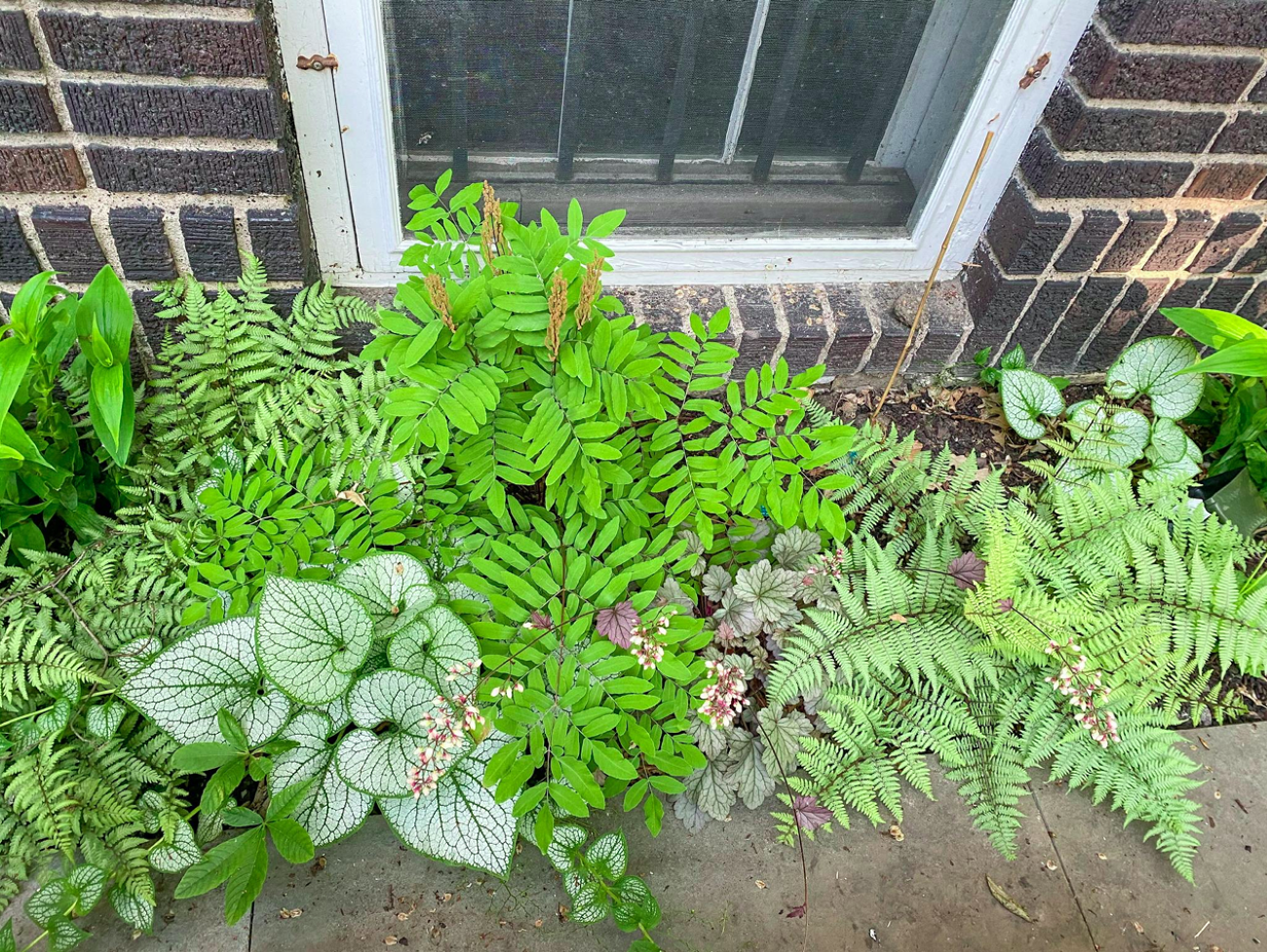
Deeper within the beds, a rich composition brings together the bold leaves of ‘Blue Ivory’ hosta (Hosta ‘Blue Ivory’, Zones 3–9), the dramatic vertical presence of black cohosh (Actaea racemosa, Zones 3–8), the fine architecture of the Japanese painted fern (Athyrium niponicum var. pictum, Zones 5–8), the misty blue tones of ‘Blue Shadow’ fothergilla (Fothergilla × intermedia ‘Blue Shadow’, Zones 5–8), and the unique form of ‘Guinea Fowl’ goatsbeard (Aruncus ‘Guinea Fowl’, Zones 3–7).
The tall, candle-like white flower spikes of the black cohosh serve as a prominent magnet for local bumblebees, swaying gracefully above the lower vegetation to inject both height and organic movement into the scene. They are complemented on the left by ‘Blue Mist’ dwarf fothergilla (Fothergilla gardenii ‘Blue Mist’, Zones 5–8) and umbrella plants tucked into the lower corners, with the subtle blooms of the Himalayan cobra lily visible upon closer inspection. Among Claire’s most prized possessions in this shady haven is a delicate lady’s slipper orchid (Cypripedium ‘Gidget’, Zones 4–7) nestled comfortably beside a small pulmonaria flower.
Projects like Claire’s demonstrate the remarkable potential of shaded landscapes. By leaning into existing environmental conditions rather than fighting them, gardeners can create vibrant, texturally rich sanctuaries that prove direct sunlight is not a prerequisite for a breathtaking outdoor retreat.
Recommended Resources for Gardeners
For those looking to document their own garden transformations or dive deeper into regional design styles, several resources are available through our recommended product selections.
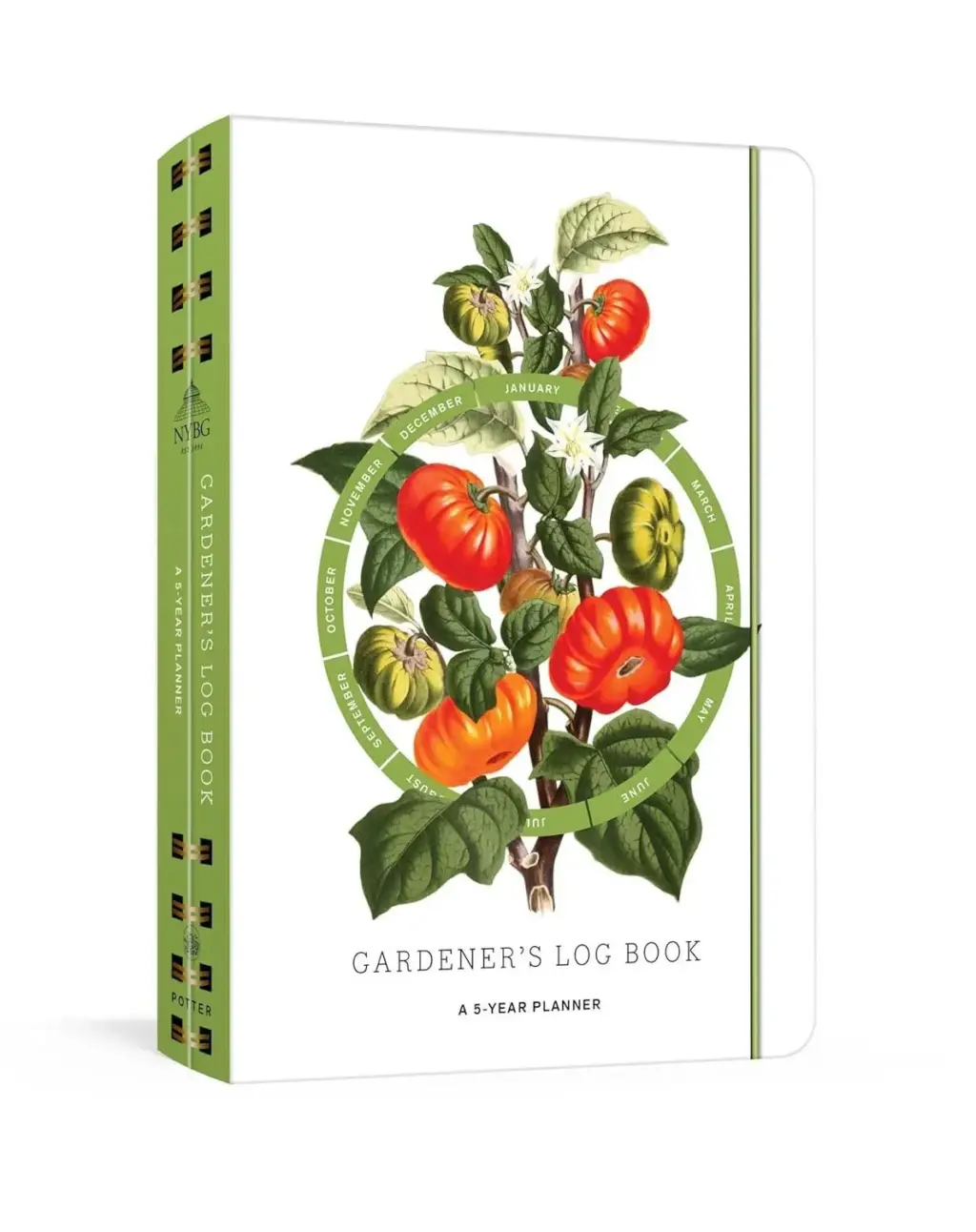
The Gardener’s Log Book from the New York Botanical Garden offers a weatherproof, five-year tracking system designed to withstand rain and muddy soil. Featuring lined pages, gridded paper for bed planning, annual bloom and harvest grids, and authoritative appendices covering composting, pruning, pest control, and container gardening, the log book helps enthusiasts maintain organized records across seasons.
For practical utility in the dirt, SHOWA Atlas 370B Nitrile Palm Coating Gloves provide lightweight, close-fitting hand protection with excellent dexterity. Designed for continuous wear and featuring a breathable back to reduce perspiration, these machine-washable gloves are suited for precision handling and general garden maintenance.
Additionally, readers interested in unconventional design approaches may look to Buffalo-Style Gardens, a volume showcasing offbeat, inventive private landscapes and small-space design concepts originating from the Buffalo region.