To receive Morning Links in your inbox every weekday, sign up for the Breakfast with ARTnews newsletter.
Good morning!
The Headlines
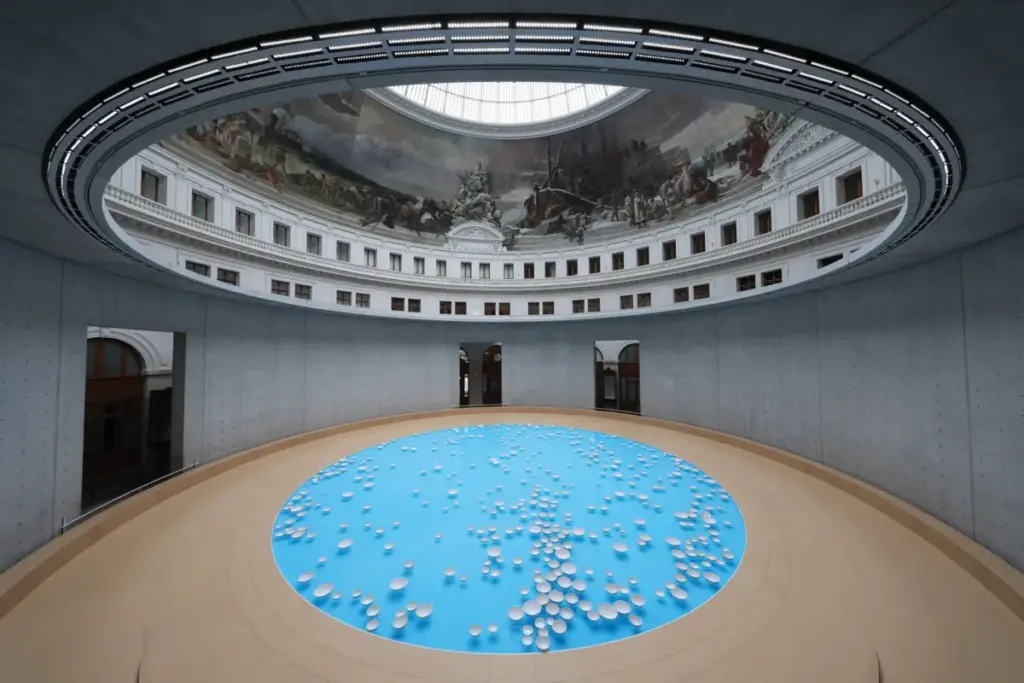
THE SHOW MUST GO ON. Kering founder and Christie’s owner François Pinault is planning a major shift for his cultural footprint in Italy. He intends to install a permanent exhibition featuring 106 works from his renowned personal collection inside the Palazzo Grassi, one of his two prominent contemporary art museums located in Venice. Pinault revealed the ambitious curatorial strategy in a recent interview with the French daily newspaper Le Monde, offering rare insight into his collecting philosophies and the emotional catalysts that drive his acquisitions.
Reflecting on the nature of his massive holdings, which currently number over 10,000 artworks, Pinault explained that his approach has always relied heavily on personal intuition rather than clinical market calculations. "My collection is eminently subjective and very often built on instinct, passion, or even anger in the face of the violence of the present," he told Le Monde.
For years, the Palazzo Grassi—alongside its sister institution, the Punta della Dogana—has relied primarily on dynamic temporary exhibitions. While these rotating shows have brought critical acclaim and international crowds to Venice, Pinault noted that they offer a relatively fleeting perspective on his vast collection. Establishing a permanent display will allow visitors to deeply experience the foundational works that have shaped his journey as a collector over the decades.
Furthermore, Pinault emphasized that the permanent installation is designed to foster dialogue across different eras of art history rather than establish a rigid canon. "A permanent display makes it possible to set works from different periods and generations side by side and to show how certain questions endure," he added. "It is in no way a matter of freezing the collection or offering a definitive reading of it."
LOUVRE’S TOP COP. In Paris, the world’s most-visited museum is continuing its aggressive modernization of internal protocols. Olivier Goupil, a former police commissioner who now serves as the head of security at the Louvre, provided a comprehensive update to Le Figaro regarding the museum’s ongoing efforts to overhaul its protective infrastructure. Goupil is currently spearheading the acceleration of what he describes as an institutional "culture of safety and security."
The wide-ranging security upgrades encompass a multi-layered approach to protecting both the building and its priceless treasures. Improvements include the installation of advanced closed-circuit cameras, sophisticated detective and monitoring devices embedded directly on or near artworks, and overhauled security check stations at all primary public entrances. Balancing operational efficiency with historical preservation in a sprawling, historic palace is a monumental task, but Goupil remains focused on steady progress. "Everything is urgent, but everything is moving forward," he told the publication.
Related Articles
The Digest
Infrastructure challenges are also hitting public art and monuments in the United States. An official inspection report commissioned in August revealed that the liner beneath the Lincoln Memorial Reflecting Pool has failed in at least 85 distinct locations. The extent of the damage is far worse than previously understood by public officials, largely attributed to a rushed historical renovation project and the utilization of improper construction materials. Notably, the report confirmed that the structural degradation was caused by material failure rather than any intentional acts of vandalism, prompting discussions regarding future remediation efforts for the national landmark.
Meanwhile, artists and cultural advocates in Turkey are raising alarms over restrictive new legislation. Creators report feeling increasingly silenced by recently enacted laws that strictly prohibit the public depiction of LGBTQI+ symbols across various mediums of art and culture, a ban that notably includes rainbow imagery. Critics argue that the regulations place a heavy burden on freedom of expression within the country’s contemporary creative communities.
Sculptors are facing a different kind of crisis following unexpected supply chain disruptions. Creators across the United States have been thrown into a pinch after learning that a vital material used extensively in sculpture-making, known widely as Hydrocal plaster, will no longer be manufactured by its primary supplier, the USG Corporation facility located in Blaine County, Oklahoma. The discontinuation of the specialized industrial plaster has left artists scrambling to find viable alternatives for their casting and molding practices.
On the antiquities market, a rare discovery has emerged just in time for auction. A previously unknown pen-and-ink drawing by the celebrated Venetian master Canaletto has surfaced. Dated between 1746 and 1755, the newly authenticated work depicts an overgrown arcade situated amidst atmospheric ruins. The drawing is heading to the auction block at Mallams in the United Kingdom on October 21, where it carries a high pre-sale estimate of $79,000.
In Mexico, the military has officially decided to put its contentious plans on hold. Proposals for a massive new military museum complex—which was slated for construction within a portion of Mexico City’s beloved Bosque de Chapultepec park—have been shelved indefinitely following public and environmental scrutiny.
The Kicker
SEEING RED. Writing for the Financial Times, reporter Melanie Gerlis recently ventured into several traditionally conservative "flyover" states to take the pulse of regional arts ecosystems that are quietly undergoing a remarkable renaissance. According to Gerlis, these areas are experiencing a surge in creative energy, successfully attracting a growing cohort of emerging talent, established artists, and market professionals.
Among the recent additions to this expanding cultural map is the Ostillo Art Foundation in Austin, Texas. Backed by collector René Campos, the nonprofit institution opened its doors to the public last free of charge. Further down the interstate in Houston, commercial and institutional market activity is visibly picking up pace. Michael Slenske, director of the young Untitled Art: Houston fair, highlighted the city’s robust philanthropic culture and noted that a wave of prominent artists—including Rick Lowe, Mark Flood, and JooYoung Choi—have chosen to relocate there. Slenske observed that Houston currently boasts "a rising tide of cultural ambition."
That sentiment echoes across other regional hubs as well. In Atlanta, Kelly Freeman of fair producer Art Market Production emphasized the welcoming and unpretentious nature of the local scene. "If you want to be part of the community, there are so many people excited to talk to you," Freeman said. "It’s not exclusionary, it’s ‘come on in and learn.’"