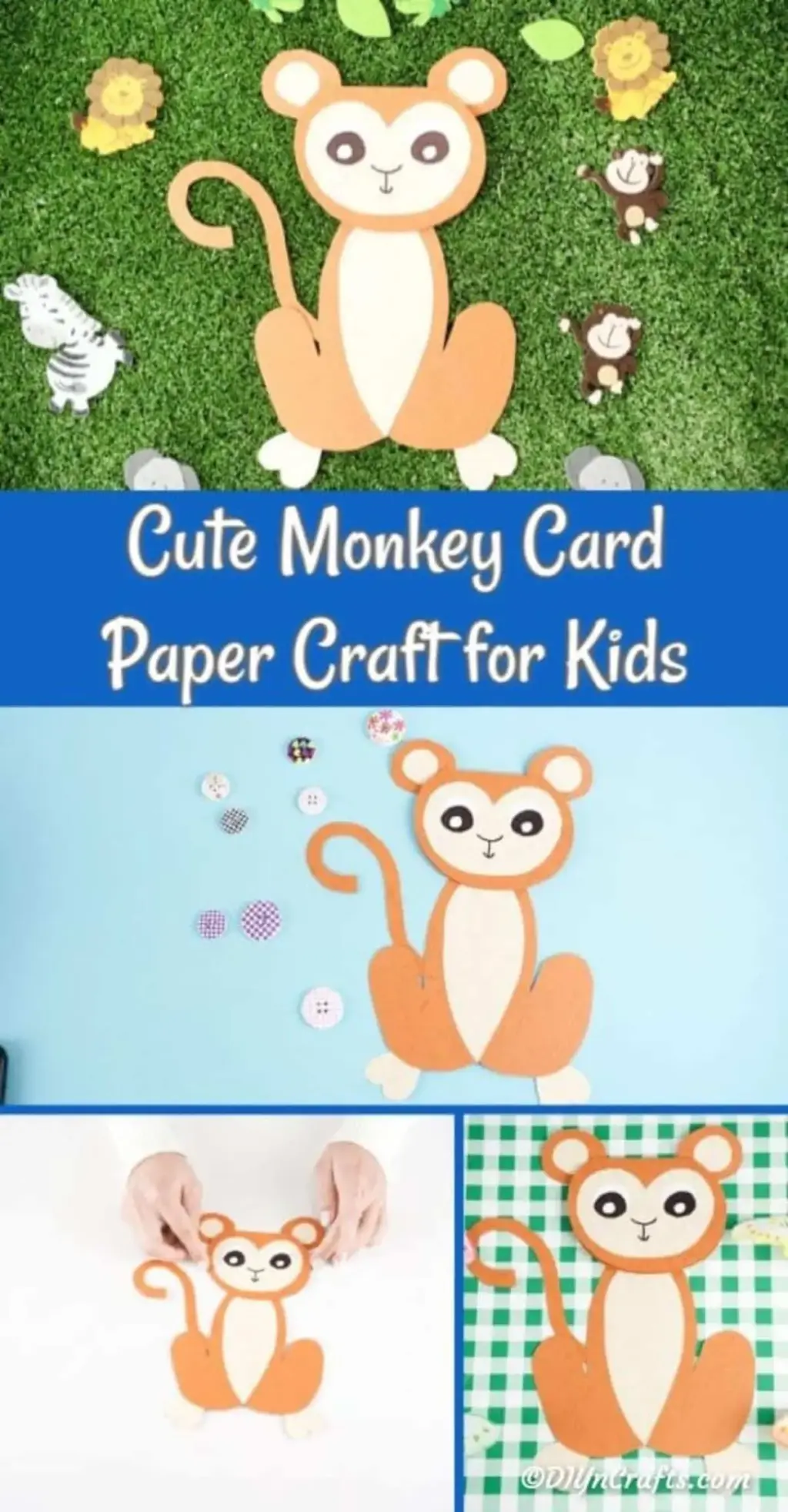
In an era increasingly dominated by digital screens and instant messaging, educators, parents, and craft enthusiasts are championing a return to tangible, personalized expression. Leading this subtle movement is a charming, low-cost paper craft project: the handmade monkey greeting card designed specifically for children. Combining simple geometry with tactile engagement, this interactive paper art offers a creative outlet for young children while encouraging essential social habits like handwritten correspondence for birthdays, holidays, and expressions of gratitude.

The project, which requires little more than standard craft paper, scissors, and glue, has captured the attention of families looking for accessible offline activities. Designed to take roughly fifteen minutes from conception to completion, the monkey card incorporates a unique folding technique that doubles as the animal’s head, creating an opening compartment where children can pen personal messages to friends and family.

For many parents and educators, the value of the project extends far beyond the finished product. Child development advocates frequently emphasize that encouraging children to create homemade items fosters empathy and thoughtful consideration of others. In a culture where store-bought cards or digital greetings often substitute for personal effort, taking the time to cut, glue, and write a message teaches children the intrinsic value of giving. This old-fashioned approach to greeting card etiquette—instilling the habit of sending birthday wishes, seasonal greetings, and thank-you notes—remains a cornerstone of traditional manners that many modern families are eager to preserve.

The project also taps into a universal childhood fascination with primates. Whether through family trips to the local zoo or the enduring popularity of plush jungle animals, monkeys consistently rank among the most beloved creatures for young children. Integrating this favorite animal into a crafting session provides an immediate engagement hook for kids, transforming a routine art activity into an exciting creative adventure.

Logistically, the project is designed for maximum accessibility and minimal expense. Estimated to cost roughly one dollar per card in basic supplies, the craft utilizes common household items. Creators utilize standard orange and cream-colored craft paper or heavier cardstock to ensure structural integrity. For families seeking enhanced durability, alternative materials such as craft foam or standard copy paper laminated with a personal page laminator offer viable paths to preserving the children’s artwork for years to come.

While the whimsical card can be easily adapted to fit standard household envelopes by adjusting its overall dimensions, mailing the creation through the United States Postal Service requires minor logistical considerations. Due to the added texture of the layered paper ears, facial features, and dimensional body elements, creators often opt for oversized manila envelopes and additional postage to ensure the handmade cards arrive safely at their destinations. For those with advanced crafting skills, crafting a custom envelope from patterned scrapbook paper adds an extra layer of personalization to the correspondence.

The monkey card project sits within a broader ecosystem of simple, nature-inspired paper and upcycled crafts designed to keep young hands busy and minds engaged. Similar introductory projects, ranging from upcycled paper roll flowers and paper birds to decorative spring tulips and nature-themed photo cards, share a common philosophy of using minimal materials to achieve delightful results. These activities serve as foundational exercises in spatial awareness, fine motor skill development, and artistic expression.

For crafters seeking assistance with precision or execution, modern technological tools offer supplementary options. While freehand cutting and drawing remain the primary method for children to develop their artistic coordination, templates, stencils, and digital cut files utilized with electronic cutting machines like Cricut devices provide alternative pathways for reproducing precise shapes. Alternatively, tracing simple illustrations sourced from children’s coloring books offers an easy workaround for younger children or those still developing their drawing skills.

Ultimately, the monkey paper card project represents a harmonious blend of traditional values and accessible creativity. By transforming a few scraps of colored paper into an expressive, interactive greeting, children are given a voice to connect with their communities, bridging the gap between imaginative play and thoughtful interpersonal communication.