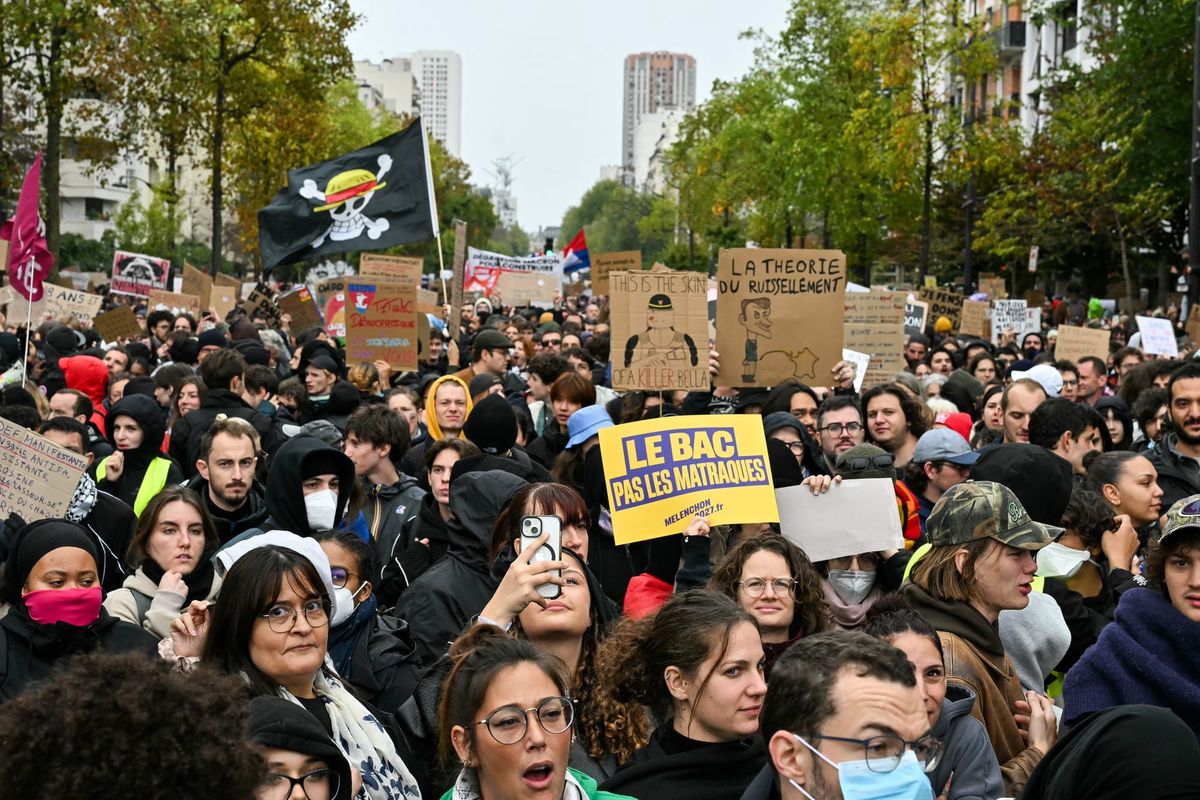
PARIS — Defying intense government warnings, sweeping security measures, and the preemptive closures of major cultural institutions, thousands of artists, art students, and culture workers flooded the streets of Paris on October 24, 2026. The mass demonstrations marked a dramatic escalation in France’s ongoing labor and social unrest, as the creative sector united with broader national coalitions to demand systemic economic reforms and a better quality of life for creative professionals.
The mobilization began at Porte d’Italie, where tens of thousands of protesters gathered under the banner of Cultures en Lutte, a prominent network of culture-sector coalitions. The network has played a vital mobilizing role alongside national labor confederations and student unions since the broader movement erupted in mid-September. Among the driving forces behind the arts sector’s heavy participation is the National Union of Visual Artists (SNAP-CGT), which has amplified calls for fairer compensation, stronger social safety nets, and better institutional support for cultural workers facing rising economic precarity.
The turnout in Paris and across France defied a week of severe government warnings and heavy-handed deterrence strategies. Following widespread property destruction and clashes during demonstrations on October 17, French authorities announced what they termed a “massive” security deployment designed to lock down major cities. Anti-terror Sentinelle soldiers were deployed to relieve police of static guard duties, freeing up specialized mobile units backed by helicopters, armored personnel carriers, and water cannons.
Despite these formidable deterrents and preemptive bans in several zones, an estimated 250,000 protesters turned out in the capital alone, with hundreds of thousands more marching in cities across France. According to independent union reports, at least 800,000 people nationwide participated in the day of action. The confrontation between demonstrators and heavily armed security forces resulted in widespread chaos, with French authorities reporting approximately 1,000 arrests in Paris by the end of the day.
The widespread unrest has brought France’s vibrant cultural calendar to a grinding halt. In the days leading up to the October 24 marches, the city’s art sector felt the immediate economic and logistical shockwaves of the crisis. Organizers of Art Basel Paris announced the preemptive closure of the prestigious international art fair two days early, citing severe security concerns and the spiraling protests. Similarly, iconic cultural landmarks, including the Louvre, shuttered their doors to the public as the city braced for widespread disruption. For an arts ecosystem heavily dependent on international tourism, major events, and steady institutional foot traffic, the sudden closures underscored the profound instability gripping the country.

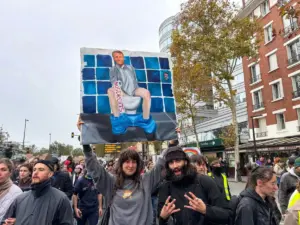
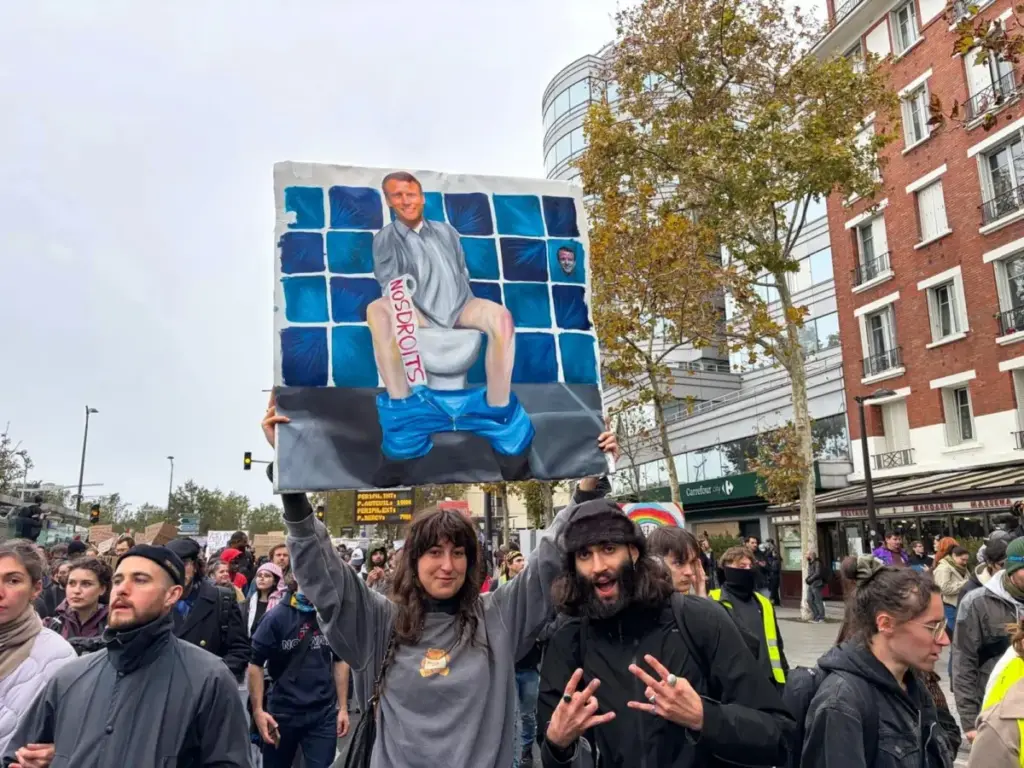
Yet, rather than dampening the spirit of the creative community, the disruption galvanized it. Artists and students marched with striking visual displays, banners, and satirical installations that highlighted both broader political grievances and specific threats facing the contemporary arts landscape. One prominent painted sign depicted French President Emmanuel Macron using citizens’ rights as toilet paper, capturing the raw anger directed at the current administration.
Other placards carried by art students focused on the existential threats facing the modern workforce, including the rapid, unregulated expansion of artificial intelligence. Another widely photographed sign read, “The boat is sinking, but the politicians are fighting over who will be captain,” encapsulating a widespread sense of disillusionment with traditional political leadership.
The integration of artists and cultural workers into the broader national mobilization highlights a deepening intersection between economic justice and cultural policy in France. For weeks, protesters have voiced deep frustration over inflation, eroding public services, labor policies, and the widening wealth gap. By bringing these issues directly to the doorstep of France’s premier cultural hubs—and forcing the premature shutdown of globally renowned events like Art Basel Paris—the country’s creative sector has made it clear that the crisis facing workers in museums, studios, and universities is inseparable from the broader struggle for social and economic reform across the nation.