London has recently experienced an October auction season of rare vitality, marking a significant departure from the more subdued atmospheres of previous years. The combined turnover of the high-profile Frieze Week evening sales—held across the auction heavyweights of Christie’s, Sotheby’s, and Phillips—surged by 63.4 percent compared to the same period last year. This collective performance has yielded the most robust set of autumn marquee sales observed in the 2020s, signaling a potential turning point for the city’s high-end art market.
However, this success was not distributed equally among the major houses. Christie’s emerged as the undisputed titan of the week, capturing nearly four out of every five pounds spent. This represents the house’s most commanding share of the London autumn market this decade. The momentum was largely fueled by its October 14 evening sales, which were anchored by the prestigious Peter Simon collection and a restituted masterpiece by Wassily Kandinsky. Together, these sales brought in an impressive £218.6 million ($287.5 million). In contrast, Sotheby’s, which took the rostrum on New Bond Street the following night, realized less than a quarter of that total, highlighting the lopsided nature of this year’s competitive landscape.
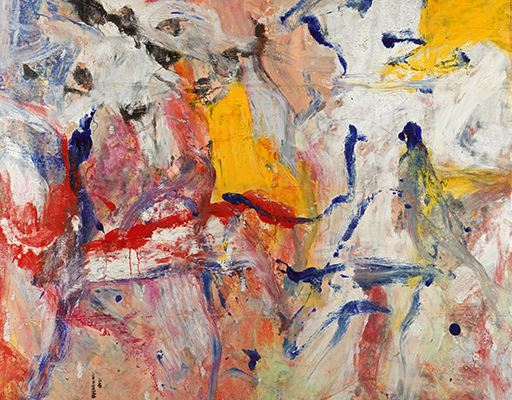
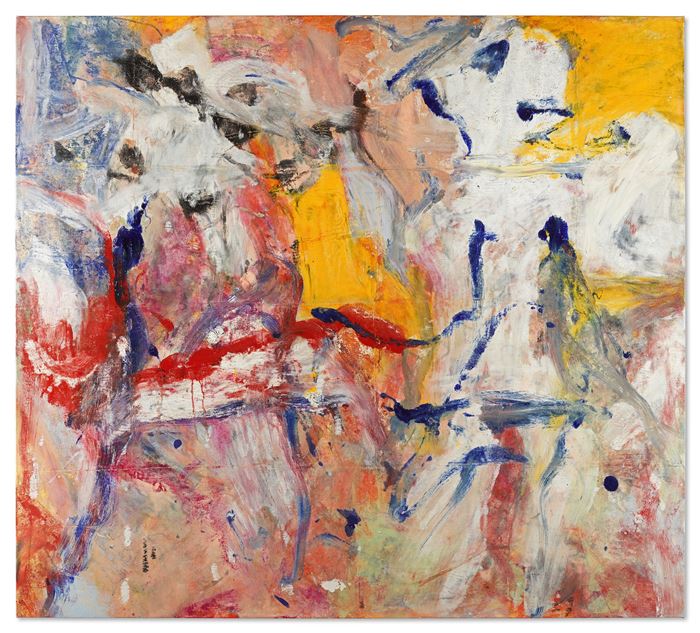
The marquee lot of the week was Willem de Kooning’s Untitled (1977), which achieved £9.8 million ($12.9 million) including fees. While this figure stands as a record for the artist at auction in Europe, it is worth noting that it was a relatively modest benchmark for a top lot. To put the market appetite into perspective, Kandinsky’s Das bunte Leben (1907) had commanded more than three times that amount across town just 24 hours earlier. While Sotheby’s attempted to lean on blue-chip staples such as Gerhard Richter, Mark Rothko, and David Hockney to anchor its evening, the results were uneven, with several younger, emerging names in the catalogue failing to find buyers.
1977: The Miraculous Year of Willem de Kooning
The Sotheby’s Contemporary Evening Auction on October 15, 2026, presented a catalog of 37 lots with a presale estimate ranging between £41.7 million and £58.6 million ($55.2 million to $77.7 million). By the end of the evening, the house realized a total of £46.0 million ($61.0 million). The sale was marked by notable absences; works by Damien Hirst, Anselm Kiefer, and Leon Kossoff were withdrawn prior to the event. Of the remaining 34 lots, 28 sold, resulting in a sell-through rate of 82.4 percent. Perhaps more telling of the market’s current volatility, the hammer total reached only £36.9 million ($48.9 million), falling below the low estimate even when accounting for the withdrawn lots. Compared to last October, turnover slipped by 3.3 percent, despite the fact that this year’s sale featured seven more lots. Sotheby’s currently finds itself closer to its 2024 low of £37.6 million ($49.1 million) than the more prosperous £85.7 million ($98.7 million) achieved in October 2022.
Despite the broader struggles of the session, the de Kooning work remained the evening’s undisputed centerpiece. Tom Eddison, the co-head of contemporary art at Sotheby’s London, opened the bidding on the guaranteed canvas at £7 million ($9.3 million). After a focused period of bidding, the hammer fell at £8.2 million ($10.9 million), landing comfortably within the predicted £8 million to £12 million range.
The sale carried a sense of historical significance; the critic David Sylvester once famously dubbed 1977 the "annus mirabilis" of de Kooning’s career. The timing of the auction was also auspicious, coinciding with the Rijksmuseum’s significant retrospective exhibition, Willem de Kooning at work, in Amsterdam. The result marked a substantial increase—two and a half times the price—from when the same work was last sold at Sotheby’s New York in 2015. Nevertheless, in the context of Frieze Week, it stands as the house’s lowest-priced top lot since 2023, when a Francis Bacon Study for a Portrait (1979) sold for £4.3 million ($5.3 million).
Records on iPad and Paper
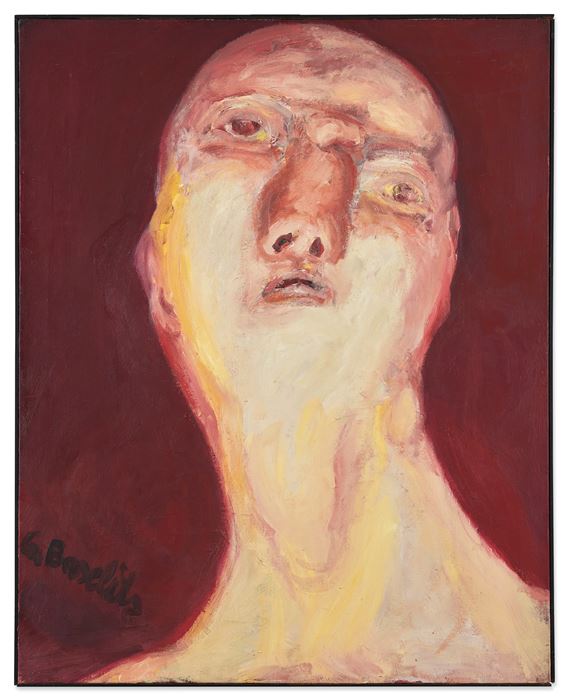
Beneath the headline-grabbing de Kooning, the market showed a clear preference for established, "blue-chip" names. Gerhard Richter’s Abstraktes Bild (1992), a work previously featured at Documenta IX and the recent retrospective at the Fondation Louis Vuitton, realized £6.7 million ($8.9 million). This result represents an 86 percent appreciation over the £3.6 million ($5.7 million) the consignor paid for the work at Christie’s London in 2011. Similarly, a late work on paper by Mark Rothko, Untitled (1969), fetched £3.8 million ($5.0 million), going to an online bidder. For context, the work had previously sold at Christie’s New York in 1992 for a mere $264,000. Other established artists performed well, with David Hockney’s collage Henry Reading (1985) and Georg Baselitz’s P.D. Idol (1964) both exceeding their high estimates to finish at £2.8 million ($3.7 million) and £2.4 million ($3.2 million), respectively.
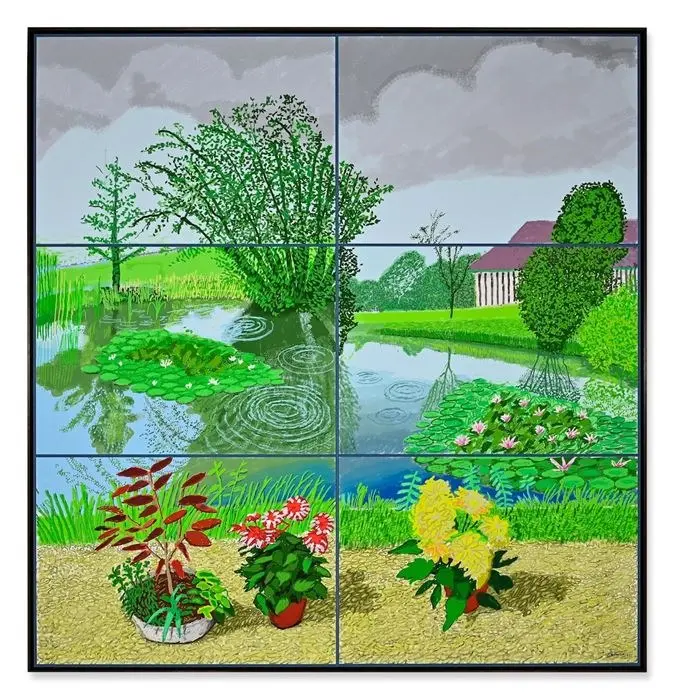
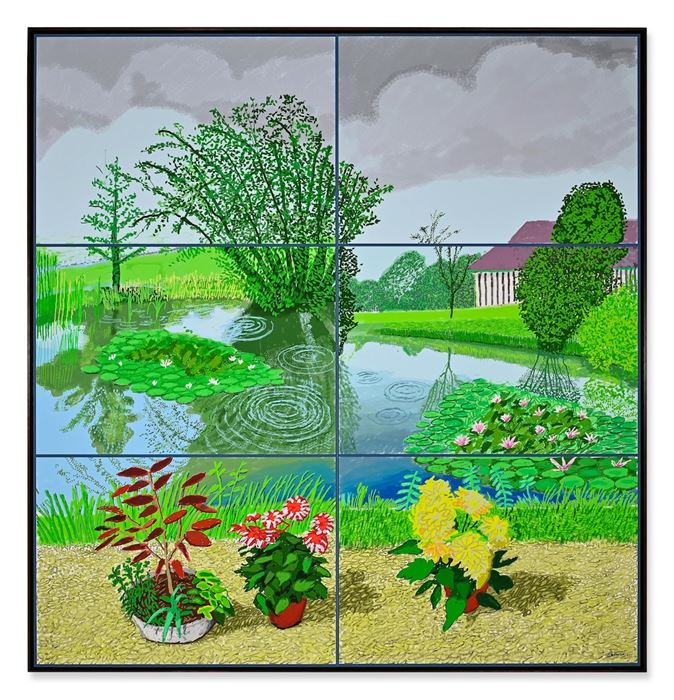
The most spirited competition, however, occurred further down the catalog, particularly with works that challenged traditional mediums. A series of six iPad paintings by David Hockney, titled 10th – 22nd June 2021, Water Lilies in the Pond with Pots of Flowers (2021), was a standout. Printed across two sheets in an edition of 25, the work reached £1.9 million ($2.5 million), nearly triple its high estimate and setting a record for one of the artist’s digital-to-physical works. Another surprise came from Michael Andrews’ Butterfly Fish (1978), a delicate acrylic on paper that was barely larger than a postcard. It soared past its estimate of £80,000 to £120,000 to reach £704,000 ($933,151), establishing a new record for a work on paper by the British painter.
Conversely, the "younger" end of the market struggled to maintain this momentum. Several anticipated works by contemporary stars were either bought in—meaning they failed to reach their reserve prices—or saw lackluster engagement. Both Lynette Yiadom-Boakye’s 11pm, Thursday (2009) and Jadé Fadojutimi’s Undeparted thoughts (2022) were bought in, while Banksy’s Grannies (2006), carrying an estimate of £1.5 million to £2 million ($2.0 million to $2.7 million), remained unsold, representing the highest-estimated lot of the evening to go without a buyer.
The broader performance throughout the week provided little additional correction to these trends. Sotheby’s Modern British & Irish evening sale on October 14 generated £8.9 million ($11.7 million). Across all five of its London sales held between October 14 and 16, the house realized a total of £68.0 million ($90.1 million). While this brings their total Modern and Contemporary output in the city for the year to £598 million ($792.7 million)—the strongest performance at this point in the calendar in over a decade—it is important to note that nearly half of that total was secured in a single event back in June, when the collection of British businessman Joe Lewis, highlighted by Modigliani’s Nu assis au collier (1917-18), realized £296.3 million ($392.6 million).
Young Artists Assist Rebound at Phillips
Phillips, hosting its Modern & Contemporary Art Evening Sale in Mayfair on October 15, found its own reasons for optimism. Despite three withdrawals, every one of the 20 remaining lots found a buyer, bringing in a total of £14.8 million ($19.7 million). This represents a 43.6 percent increase over their performance in October of last year. Gerhard Richter’s Mathis (1983) led the sale at £5.8 million ($7.7 million), landing just beneath its low estimate, followed by Banksy’s Keep Ou T (2019) at £1.6 million ($2.1 million).
The evening was notably marked by two records from younger painters, providing a contrast to the struggles seen at other houses. London-based American artist Joseph Yaeger (b. 1986) saw his work Once, always (2023) achieve £645,000 ($854,947), more than three and a half times its high estimate. Similarly, Paris-based Danish artist Eva Helene Pade (b. 1997) saw her piece Yellow Nights (2020) reach £167,700 ($222,286), significantly outperforming its estimate of £30,000 to £50,000.
As the industry turns its attention to Paris, the focus shifts to a series of high-stakes auctions, including La Collection Schlumberger. Le Temps retrouvé on October 22, and the Surrealism and Its Legacy and Modernités sales on October 23. These upcoming events, taking place in a city currently navigating significant social upheaval, will serve as a crucial barometer for collector sentiment as the global art market prepares for the November marquee sales in New York.