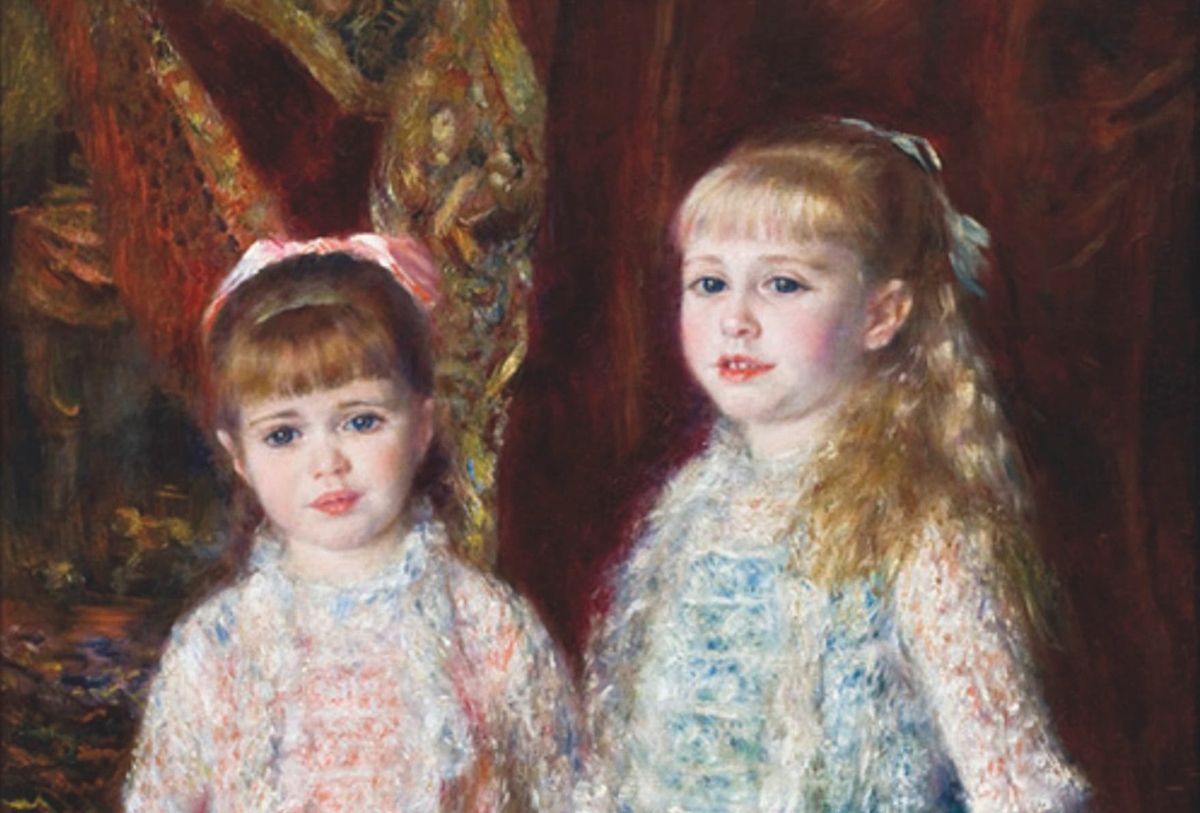
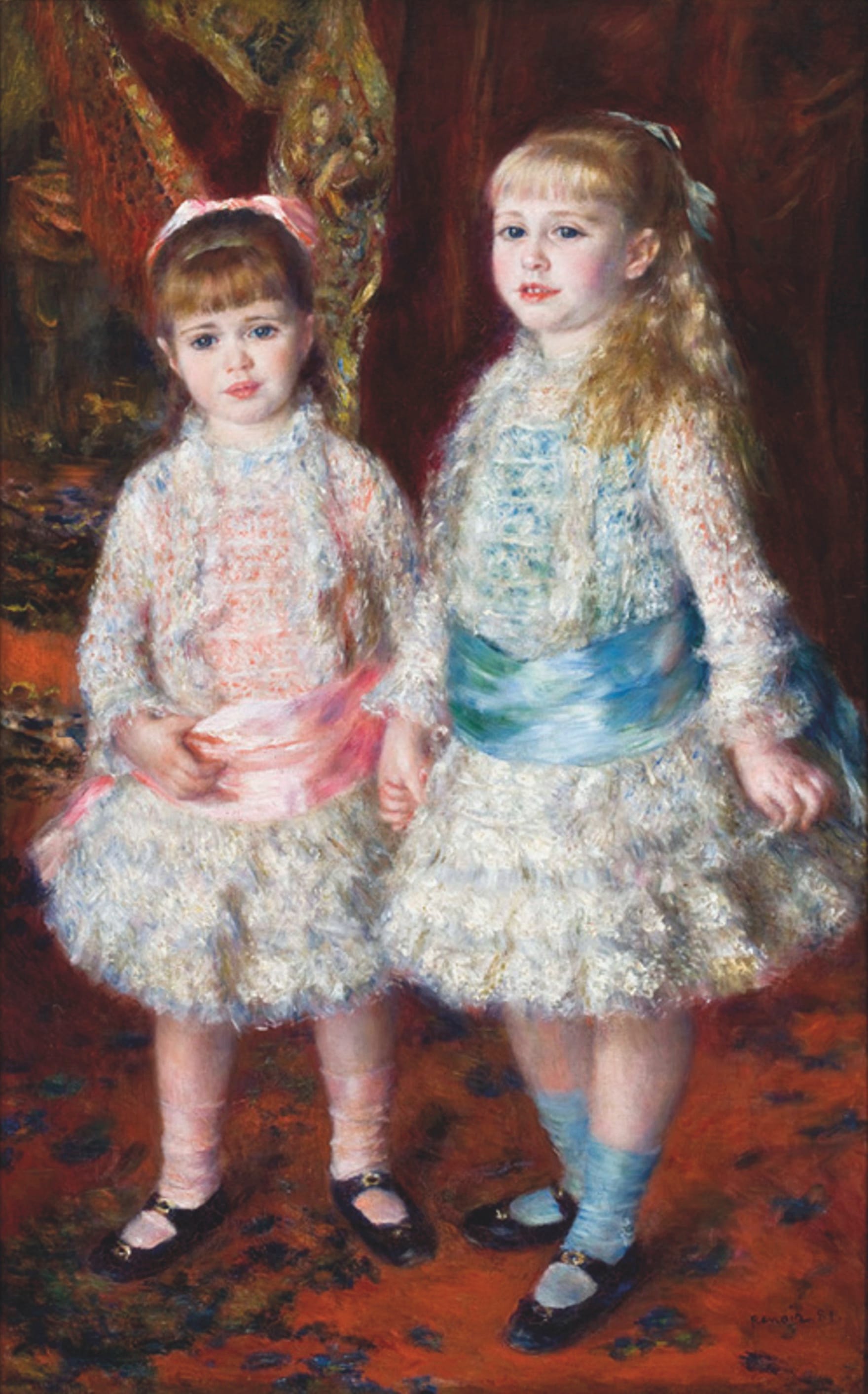
In 1881, at the radiant dawn of the Belle Époque, Pierre-Auguste Renoir stepped into the opulent Parisian townhouse of the affluent Cahen d’Anvers family. His mission was to immortalize four-year-old Alice and six-year-old Elisabeth, the daughters of the Antwerp-born Jewish banker Louis Cahen d’Anvers and his formidable salonniérre wife, Louise. The resulting masterpiece, Pink and Blue, the Misses Cahen d’Anvers, captured the two cherubic girls with their rosy cheeks and reddish-golden hair, standing hand-in-hand in a sumptuous salon and enveloped in a cloud of delicate lace and satin.
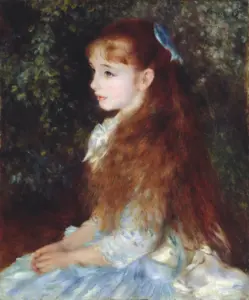
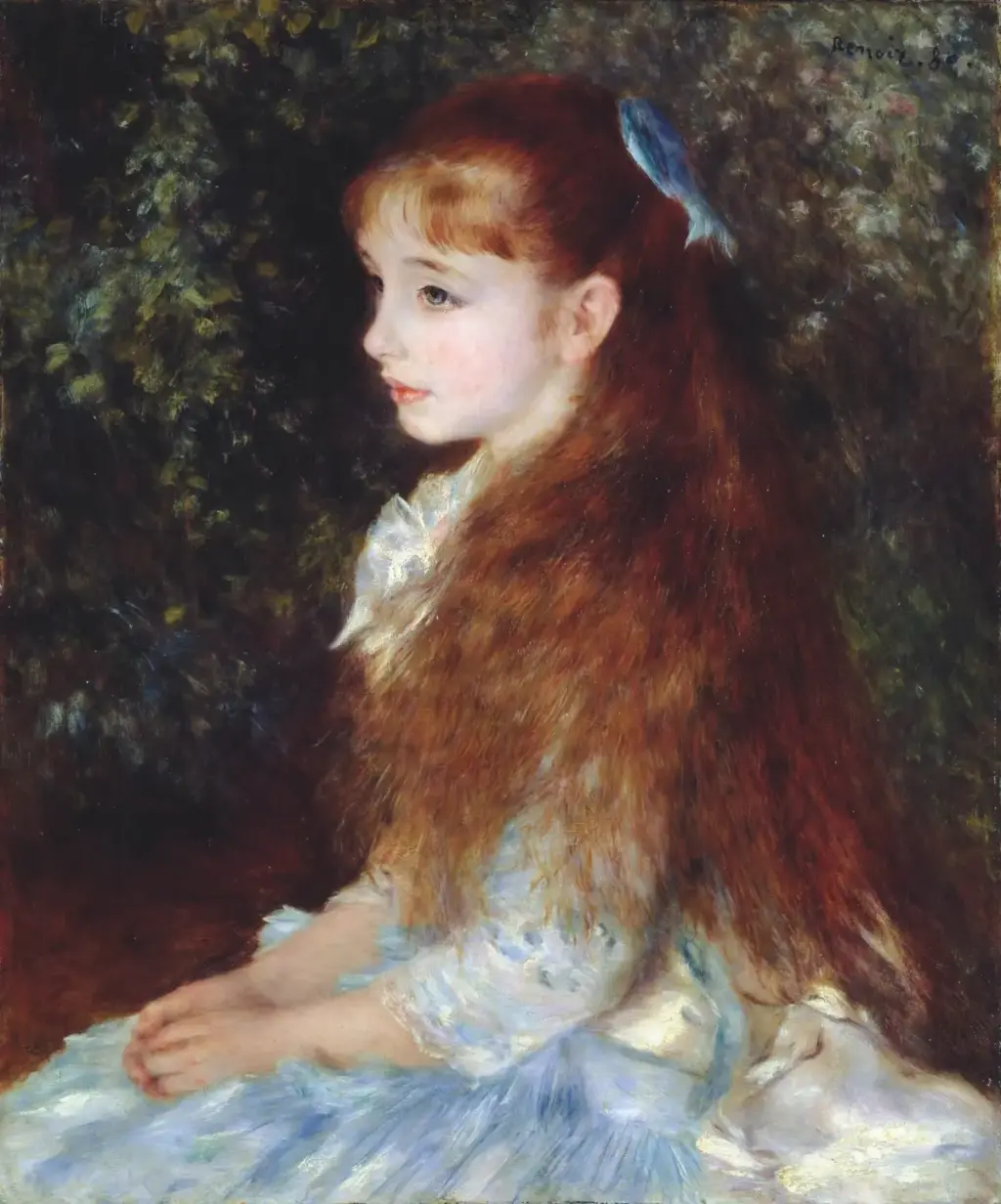
This striking canvas, which author Catherine Ostler describes as a “duet of sugared-almond-colored-sweetness,” alongside La Petite Irène—a portrait of their older sister painted by Renoir a year earlier in 1880—serves as the rich artistic and historical springboard for Ostler’s compelling new book, The Renoir Girls.
From its opening pages, Ostler’s exhaustively researched and deftly structured volume conjures the dazzling, high-society world of fin-de-siècle Paris. She leads the reader directly through the heavy brocade curtains of the Cahen d’Anvers family’s daily existence, shedding light on their prominent position within the French Jewish elite before their lives were ultimately upended by the horrors of the Holocaust. At center stage of this glittering world was Louise Cahen d’Anvers, an influential art patron whose close circle included literary giants like Marcel Proust. Her famed salon drew a diverse mix of avant-garde artists, celebrated writers, and members of the conservative Catholic aristocracy.
Also central to this privileged ecosystem was Louise’s lover, the prominent art collector and critic Charles Ephrussi, who had originally arranged for Renoir to paint the young girls and was widely suspected of being Alice’s biological father. Yet, running parallel to this world of extreme wealth and privilege—where every grand ball, social gathering, and horse race attended by the Cahen d’Anvers women made the society columns—existed another Paris. This was a capital increasingly divided by severe social inequality and intense political instability, forces that steadily fueled a virulent antisemitism and eventually punctured the sisters’ rarefied lives.
Ostler captures the collision of these two contrasting worlds with the dreadful inevitability of a train derailing in slow motion. Despite the hard-fought gains of the French Revolution and the Napoleonic Code, which had formally ensured equal civil rights for France’s Jewish population, insidious antisemitism simmered across the country. It manifested in various ways, ranging from resentful grumbles that aligned with the cultural prejudices of the era to outright hostility. Even Renoir himself succumbed to these undercurrents, writing to a friend to complain about Louis’s “stingy” payment and declaring in frustration, “I really give up with the Jews.”

This hostility also took the form of venomous anti-Jewish writings by diarist Edmond de Goncourt, who was ironically a frequent and welcomed visitor to Louise’s salon. The underlying prejudice ultimately reached a boiling point during the Dreyfus Affair between 1894 and 1906, a protracted political crisis in which a loyal Jewish French army officer was falsely framed for treason. While the Cahen d’Anvers family and their close circle firmly belonged to the Dreyfusard camp supporting justice and exoneration, other members of the wealthy Jewish elite, known as the haute Juiverie, often attempted to waltz untouched through a moral and political crisis that deeply polarized the entire nation.
Amid public scandals, political assassinations, and anarchist bombings, Louise and Louis maintained an unwavering devotion to the aesthetics of the 18th century, dedicating significant time and resources to restoring the historic Château Champs-sur-Marne to its ancient regime glory. Meanwhile, their daughters continued along their own complex paths toward assimilation, marked by puzzling twists, personal rebellions, and heartbreaking departures.
In 1895, at the absolute height of the Dreyfus Affair, a 21-year-old Elisabeth made the dramatic decision to convert to Catholicism and marry a penniless aristocrat, a union that ultimately ended in divorce. In 1897, the adventurous and anglophile Alice crossed paths with the ambitious British Colonel Charles Townshend in Egypt, marrying him a year later in an Anglican ceremony hosted at her parents’ grand chateau. Meanwhile, Irène—the only one of the sisters to enter into a traditional, arranged marriage—later chose to leave her husband, Moïse de Camondo, for the head of his stable. However, as the 1930s unfolded, this glittering social carousel came to a screeching and terrifying halt, and Ostler’s account of the Nazi occupation descends into a harrowing chronicle of targeted persecution.
The deep-seated patriotism of the Cahen d’Anvers family and their profound desire to truly belong to France echo throughout the narrative. Their forebears had previously adapted their surname to sound more traditionally aristocratic. Furthermore, Irène’s son, Nissim de Camondo, bravely fought for France and ultimately gave his life during World War I. The family generously contributed to numerous philanthropic causes, lovingly restored dilapidated historical properties, and ultimately donated those invaluable cultural assets to the French state.
Yet, neither their immense generational wealth, their high social standing, nor their unwavering belief in the enlightened values of the French Republic could shield them from the catastrophic destruction to come. Ultimately, four members of the extended family perished mercilessly in concentration camps. Among them was Elisabeth who, by 1944, had grown old and infirm. Betrayed by the mayor of the rural French village where she was desperately hiding, she died either in or on the forced transport to Auschwitz.
The physical artifacts that inspired the book have likewise endured turbulent journeys through history. Today, Renoir’s Pink and Blue hangs prominently at the Museu de Arte de São Paulo Assis Chateaubriand, where it remains one of the institution’s most beloved and popular works. La Petite Irène, on the other hand, suffered a darker fate: it was systematically looted by the Nazis, eventually restituted to Irène after the war, and subsequently acquired by the Swiss arms dealer and controversial war profiteer Emil Georg Bührle.
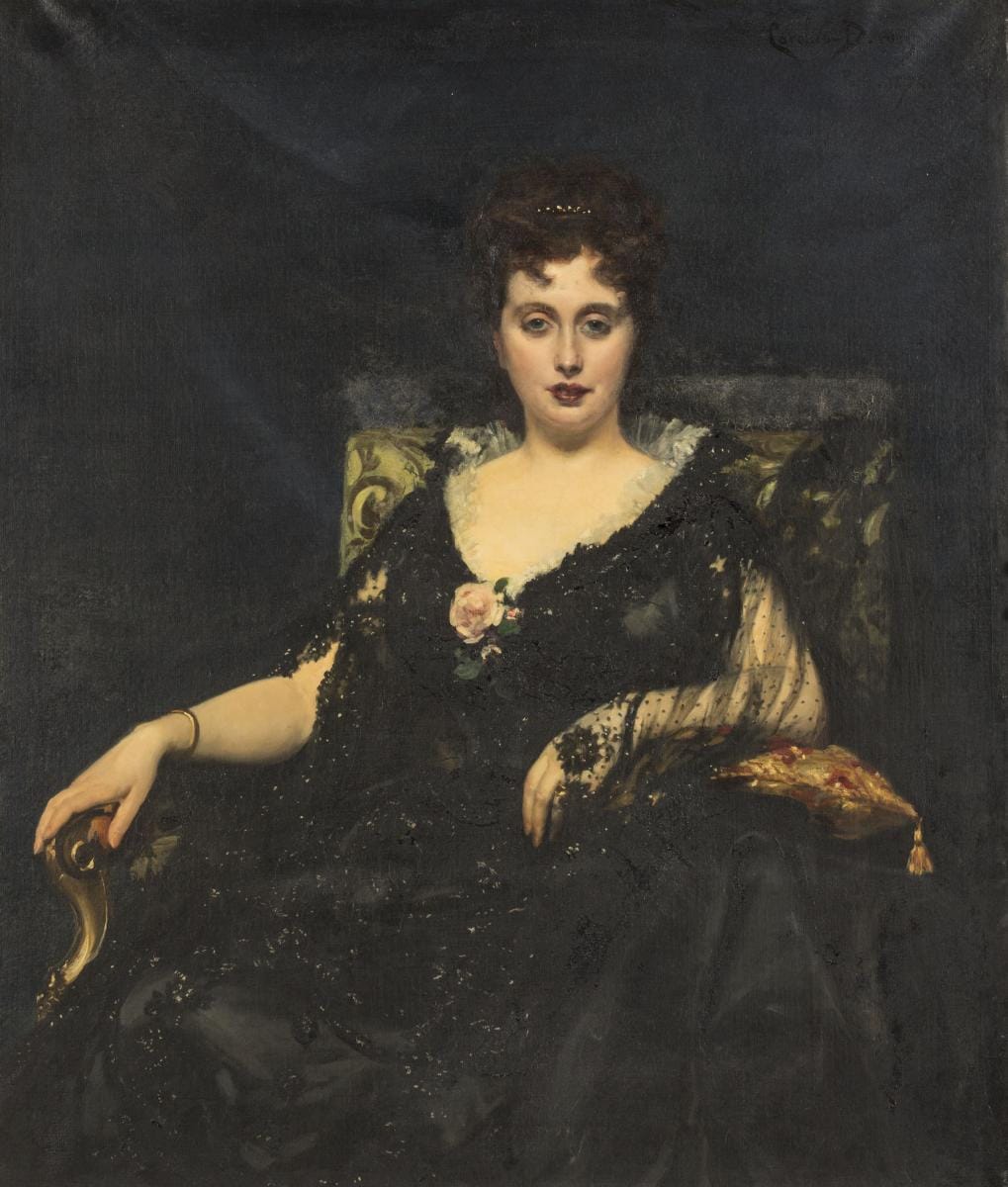
The painting is now on public view at the Kunsthaus Zürich, its surface sweetness belying a profound story of devastation, betrayal, and survival amid one of the darkest chapters of European history. It is this complex, haunting narrative that Catherine Ostler’s engrossing and kaleidoscopic chronicle so vividly brings back to life.