As November approaches, the focus of the international art community shifts toward Nigeria. Lagos is once again preparing to host its most significant annual cultural event: the 11th edition of ART X Lagos. Returning to the Federal Palace Hotel from November 5 to 8, the fair marks the beginning of a new decade for the institution, following the successful completion of its tenth-anniversary celebrations last year. This year’s edition arrives at a pivotal moment, with the fair serving as a central hub for regional dialogue, featuring a curated selection of twelve galleries—nine of which are Nigerian—complemented by a spotlight section dedicated to three emerging Nigerian spaces.
The fair is not an isolated event but rather the anchor of a vibrant cultural season. ART X Lagos arrives during the mid-point of the fifth Lagos Biennial, an ambitious city-wide endeavor curated by Folakunle Oshun. Titled "The Museum of Things Unseen," the Biennial runs from October 17 through December 18, offering a thematic counterpoint to the commercial focus of the art fair. This convergence of institutional and market-driven programming underscores the city’s growing stature as a global cultural capital. Internationally, the appetite for the region’s output remains steady, as evidenced by the recent conclusion of the 14th edition of 1-54 Contemporary African Art Fair at Somerset House in London.
A Shifting Commercial Landscape
While the excitement surrounding ART X Lagos is palpable, the broader commercial backdrop for African art is undergoing a period of recalibration. The primary auction sector, in particular, has seen significant changes. Most notably, Sotheby’s made the strategic decision to dissolve its dedicated African art department in April 2025. This move has shifted the weight of the auction landscape, leaving Bonhams as the primary standalone auction program focused on this segment.
Recent results from Bonhams reflect a market that is currently being highly selective. The house’s sale on March 19, 2026, generated a total of $2.35 million. While the sale demonstrated continued interest, it fell below its low estimate, with a sell-through rate of 66% of the offered lots. However, these aggregate figures mask the performance of individual works. Exceptional pieces continue to defy broader trends; for instance, Obiora Udechukwu’s Delicate burden achieved $37,600, far outperforming its low estimate of approximately $2,700.
Market intelligence from MoMAA’s 2026 outlook provides a nuanced view of this environment. The report classifies the mid-market segment—specifically works priced between $1,000 and $50,000—as "strong," suggesting that collector interest is currently concentrated in accessible, primary-market entry points. In contrast, the high-end tier, encompassing works priced between $500,000 and $5 million, is described as "mixed." The headline records for the region remain dominated by a handful of blue-chip names, with Njideka Akunyili Crosby and Amoako Boafo both holding auction records of approximately $3.4 million. For many collectors and emerging enthusiasts, the mid-market primary tier now represents the most viable and rewarding point of entry into the ecosystem.
Cultural Anchors: The ART X Icon Exhibition
A key highlight of the upcoming fair is the ART X Icon exhibition, Ladi Kwali: Beyond the Vessel. Curated by Dr. Jareh Das, this exhibition offers a profound reassessment of the legacy of Ladi Kwali (1925–1984), the pioneering Gbari potter whose work bridged traditional Nigerian ceramic techniques and contemporary fine art. By drawing on ceramics and archival material held by the National Museum, Lagos, the exhibition seeks to situate Kwali’s practice within a broader art-historical framework, challenging the historical marginalization of craft-based mediums. It is an exhibition that not only honors the past but frames the evolution of Nigerian artistic identity for a contemporary audience.
Five Artists to Watch in the Contemporary Circuit
While the top-tier auction market remains dominated by a few household names, the true vitality of the West African scene is currently found in the practices of artists working across diverse materials and conceptual frameworks. The following five artists, currently represented by various international partners, exemplify the diversity of the contemporary Nigerian and West African art scene.
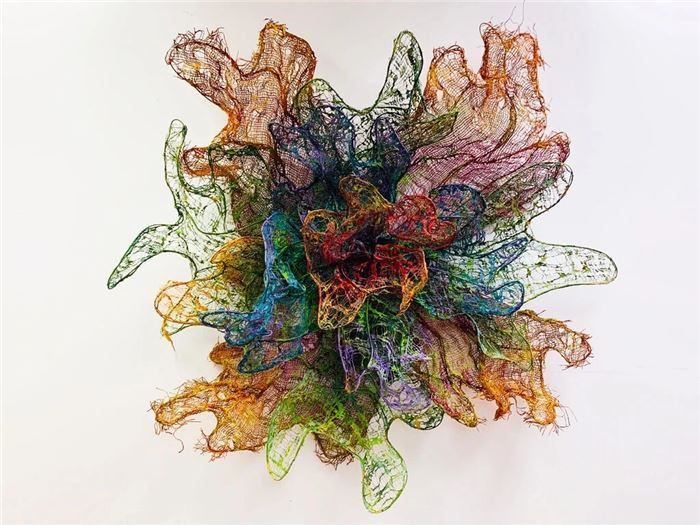
Nnenna Okore (b. 1975) is an artist whose work sits at the intersection of ecology, memory, and material culture. Raised in Nsukka and now based in Chicago, Okore utilizes humble, discarded materials—cheesecloth, burlap, jute, paper, and wire—to create complex, organic installations. By dyeing and sewing these elements, she produces forms that evoke the natural world, specifically roots and veins. Her practice is deeply informed by her Igbo heritage and her interest in the cycles of decay and renewal. With a history of international institutional recognition, including the 29th São Paulo Bienal and solo exhibitions at London’s October Gallery and the Stanley Museum of Art, Okore remains a significant figure. Currently, her work, such as All Things Must Grow in Time, is available through the Rome-based Black Liquid Art.
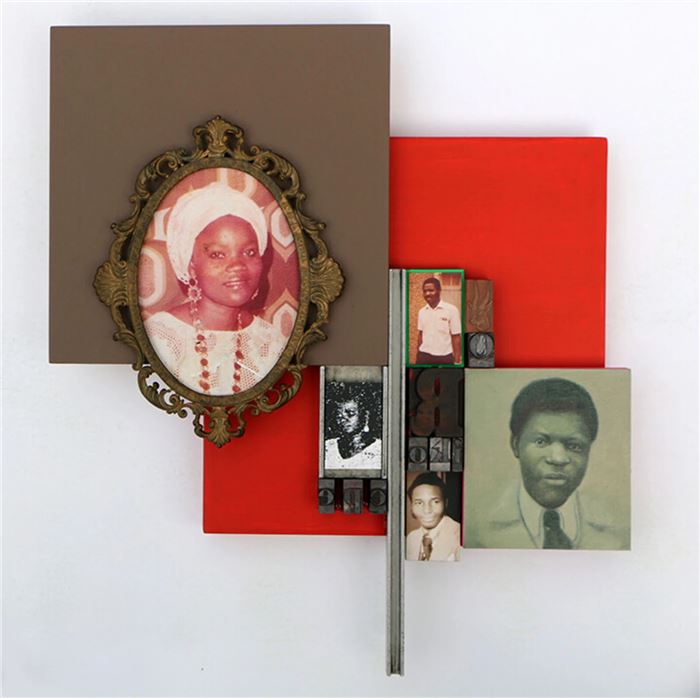
Kelani Abass (b. 1979) offers a different perspective on the Nigerian experience through his engagement with the archive. Born and based in Lagos, Abass creates layered works that combine digital printing, painting, and sculpture to explore themes of memory and the post-independence era. A graduate of the Yaba College of Technology, Abass has cultivated a practice that interrogates the "scrap of evidence" left behind by history. His work, such as Scrap of Evidence (Ori ko Epe), is currently offered through Efié Gallery in Dubai. His previous auction performance—including the sale of Casing History 5 for approximately $4,300 in 2022—suggests a growing, albeit modest, market for his archival explorations.
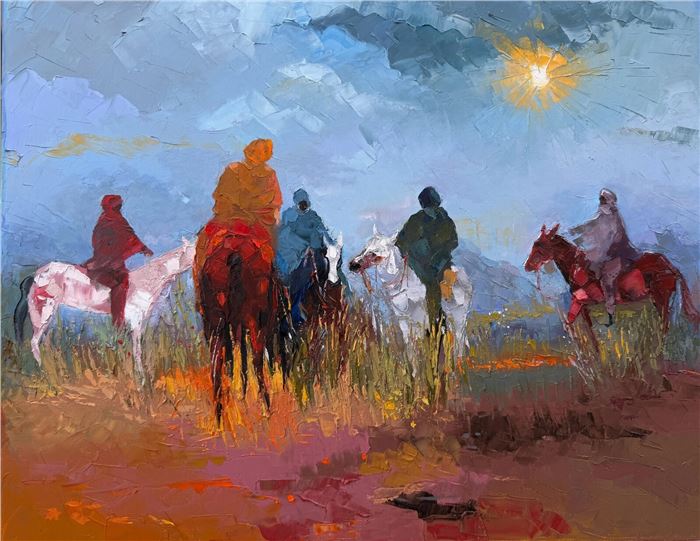
Godfrey Afebuame (b. 1969) brings a tactile, expressionistic energy to the market. Working primarily with a palette knife to create thick impasto oil paintings, Afebuame often focuses on the human form, with his subjects touching upon themes of peace, economic struggle, and sustainability. His practice is deeply rooted in his Nigerian upbringing, though he is currently based in the Niagara region. His representation by EAA Gallery, which maintains a dual presence in Niagara Falls and Lagos, makes him a particularly accessible artist for those following the ART X Lagos circuit.
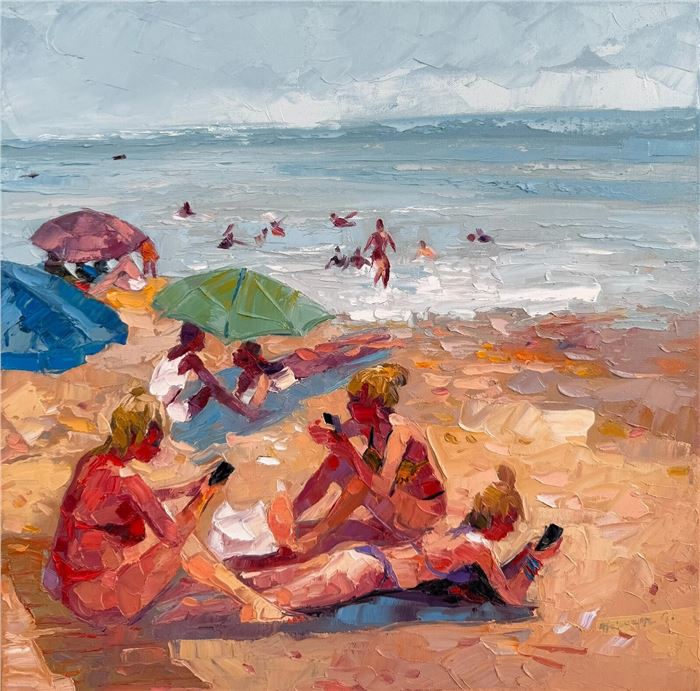
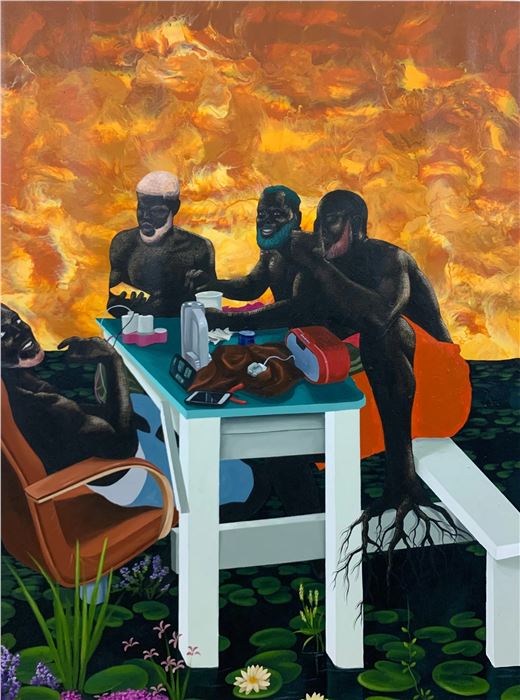
Ebuka Pascal Agudiegwu (b. 1997) represents the burgeoning generation of self-taught artists who are rapidly gaining visibility. Defining his work as "Figurative Surrealism," Agudiegwu draws upon a rich tapestry of Igbo proverbs, folklore, and observations of nature. His use of acrylic and oil pastel creates vibrant, contemplative canvases that question contemporary identity. With his work featured in the Collection Montparnasse and represented by the nomadic gallery RIANA RAOUNA, Agudiegwu’s accessibility—with prices ranging from roughly $1,700 to $4,850—makes him a compelling subject for emerging collectors.
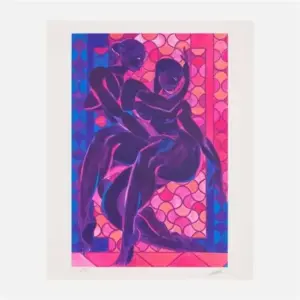
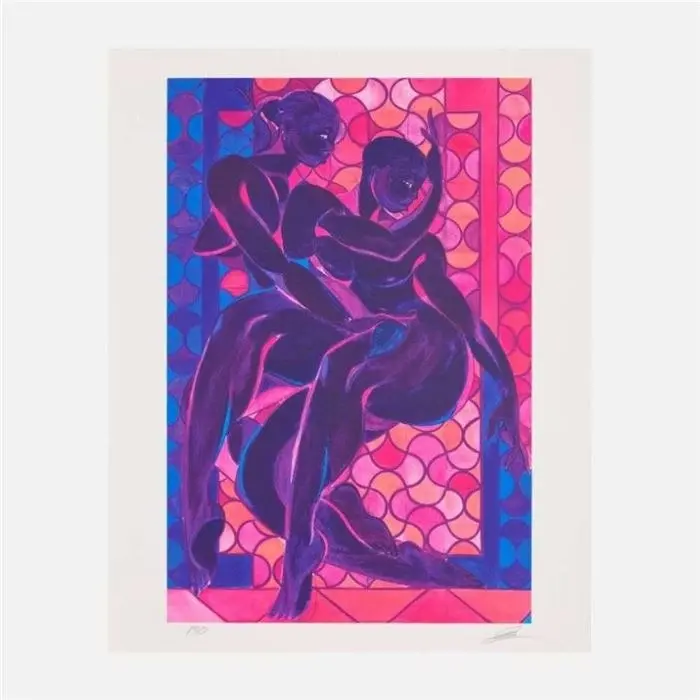
Finally, Tunji Adeniyi-Jones (b. 1992) has garnered significant international attention for his paintings that synthesize West African mythology, Yoruba heritage, and the aesthetic traditions of Cubism and Matisse. While he is represented globally by White Cube and has enjoyed major solo presentations from Seoul to London, his inclusion here via the Bristol-based Lougher Contemporary highlights the secondary and edition-based market for his work. Collectors looking for his distinctive, fluid aesthetic in print form can find opportunities here that differ from the high-value unique paintings found in his primary-market gallery shows.
A Globalized Practice
These five artists illustrate a defining characteristic of the contemporary West African art scene: a pattern of circulation that defies simple geography. While their roots are firmly planted in Nsukka, Lagos, and Imo State, their work reaches global audiences through a decentralized network of galleries in Rome, Dubai, Niagara Falls, Nicosia, and Bristol.
For the collector, this dispersal offers a practical challenge. While ART X Lagos will undoubtedly serve as the focal point for the region’s art world for four days this November, many of the most interesting practices exist outside the immediate exhibitor list of the fair. Furthermore, because many of these artists have thin auction histories, price discovery remains an intimate process. The value of these works is not dictated by a hammer price in a crowded room, but through direct, informed dialogue with the representing galleries. As the market continues to evolve, the most meaningful connections will continue to be forged in the gallery space, where the story behind the work remains as important as the object itself. Collectors are encouraged to engage directly with these galleries to navigate the complexities of this vibrant, ever-expanding market.