If you were navigating the internet in 2015, you likely followed the twisty, headline-grabbing tale of the Wu-Tang Clan’s Once Upon a Time in Shaolin. The Staten Island hip-hop titans conceived of the album not as a traditional commercial release, but as a conceptual artwork—a high-profile protest against the cheapening of music in an era defined by widespread digital piracy and streaming devaluation. Rather than dropping the record to the general public or putting it up on streaming platforms, the work was sold at auction for a reported $2 million to a then-anonymous American buyer. The stunt seemingly proved that contemporary music could command the same financial stratosphere as works by Picasso and Warhol.
However, that triumph quickly soured into a Pyrrhic victory when the buyer was unmasked as the hated “pharma bro” Martin Shkreli. The episode served as a bitter lesson for the iconic group, resulting in internal resentment, fragmentation, and intense public fallout. Even Clan member Method Man pulled no punches, famously declaring, “Fuck that album. … When music can’t be music and y’all turning it into something else, fuck that. Give it to the people, if they want to hear the shit, let them have it. Give it away free.” Though he has somewhat softened his stance recently after finally getting the opportunity to hear the project, the underlying sting of the experiment remained a defining chapter in the group’s legacy.
The Shaggy Tale of an Unfolding Mess
A new Netflix documentary, The Disciple: A Wu-Tang Fable (2026), presents a long and shaggy ride through this bizarre experience. Directed by producer Joanna Natasegara and featuring RZA as an executive producer, the film ultimately proves to be a frustrating watch. No one involved seems to, even now, have thought deeply about the lessons from their attempt to hijack the art market—a volatile and sometimes unpredictable world they blundered into. They appeared to know very little about the inner workings of fine art commerce while somehow assuming that is precisely where the big money resided.
“Contemporary art is worth millions by virtue of its exclusivity,” said the band at the time of the sale. Of course, a vanishingly small percentage of artworks across any era are priced at that level, but maybe their misconception is understandable. Judging by the way they are quoted in the film, the members’ art world reference points seem to be strictly restricted to the heavyweights of history: Leonardo da Vinci, Pablo Picasso, and Andy Warhol.
Many of the art world’s seasoned denizens could easily have warned them away from the public relations stunt. Ironically, in 2017, during the height of the fallout, artist Richard Prince publicly disavowed an artwork he had sold to Ivanka Trump before her father’s entry into mainstream politics. By then, of course, it was far too late to warn RZA and his collaborators.

The album’s fateful sale is mentioned right in the opening sequence of the documentary, accompanied by the audio of an unidentified interviewer calling it “one of the coolest stories in art history.” RZA breaks down the original thinking behind the project, explaining, “We’ll make one single copy of the album, treat it like it’s the Mona Lisa. It was a combination of ideas that led to it. Me and my student Cilvaringz—won’t take all the credit.”
When the interviewer presses him with the question, “Would you ever do it again?”
The rapper responds with a loaded, hesitant two-letter word: “Um …”
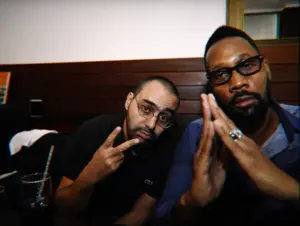
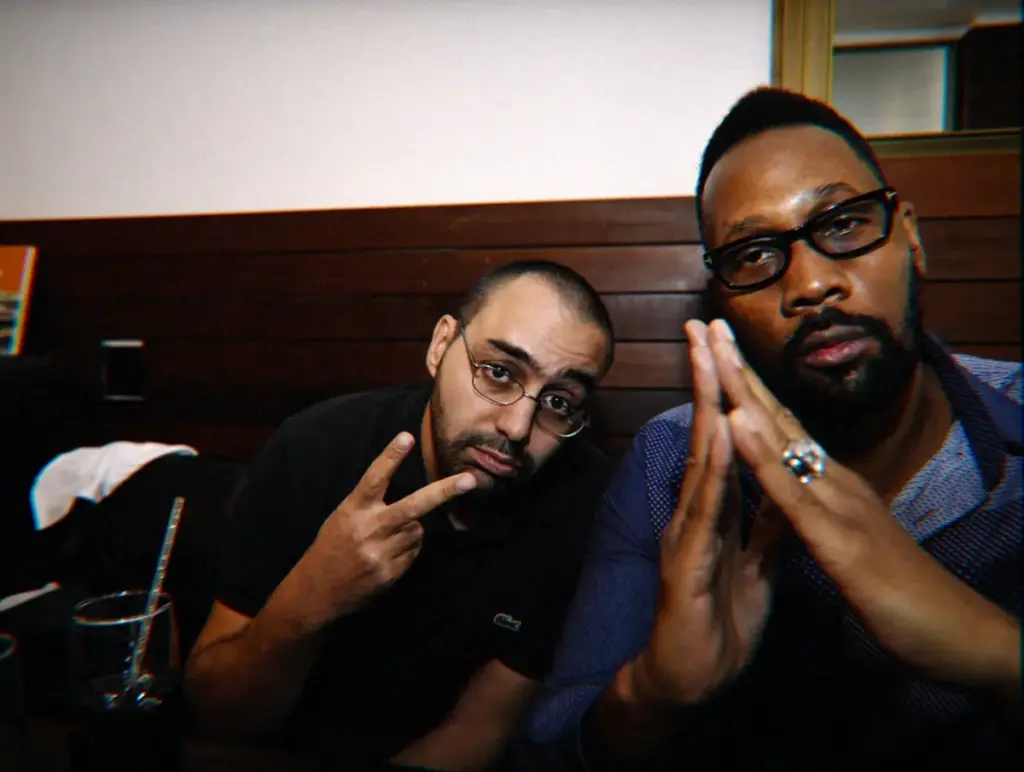
Following this opening, the documentary remarkably drops any mention of the album for a full 55 minutes. Instead, it plunges the viewer deep into the life story of Dutch-Moroccan rapper-producer Tarik Azzougarh, one of the primary masterminds of the project. The film explores his background, including his traumatic childhood experiences with racism and abuse.
The director found him profoundly compelling, explaining in promotional press materials: “Over a long lunch in beautiful Marrakech, where he lived, Tarik told me the twists and turns of the album’s 30-year story, and I was fascinated. It wasn’t only a great story; it resonated with me personally as someone who grew up in the ’90s with mixed heritage. The Wu-Tang Clan often talk about being teenagers inspired by East Asian culture through movies, while Tarik and his friends had, in turn, been inspired by the Clan.”

Unfortunately, Azzougarh does not ultimately emerge as a magnetic or electrifying presence on screen. “I figured that a doc would show my side of the story,” Azzougarh tells the off-camera director early on, offering a characteristically understated observation.
The film slowly details how the aspiring rapper and superfan managed to ingratiate himself into the band’s inner circles, flying to New York multiple times as a teenager explicitly for that purpose. He eventually earned the sobriquet Cilvaringz and secured membership in the Killa Beez, an extensive network of musicians in the broader Wu-Tang family. He went on to release his own records on their imprint while also producing tracks for some of the Clan’s core albums.
As the documentary illustrates, Once Upon a Time was packaged in a custom, handcrafted silver box and traveled with all the pomp, circumstance, and security of a seven-figure fine art masterpiece. Only one physical copy would ever legally exist—a conceptual protest against the loss of music’s aura in the age of its digital reproducibility, to paraphrase German philosopher Walter Benjamin. The band sold the record via the online auctioneer Paddle8 in 2015, establishing a strict legal stipulation that the buyer could not release it commercially for 88 years, though they were permitted to host private listening parties.
In keeping with the fine art theme, the band staged an exclusive listening event at MoMA PS1. Afterward, Complex described the record as “rich, layered, and sonically bombastic,” praising its “rugged, hard-hitting sound” that felt reminiscent of early Wu-Tang Clan albums. Writing for ARTnews, a slightly more skeptical Dan Duray noted, “There were plenty of unexpected samples, melodramatic horns, cheesy bits of kung-fu dialogue.” Brief snippets of these tracks are audible throughout the documentary.
The narrative takes a dramatic turn with Shkreli’s arrest. Some of the film’s lighter and funnier moments arrive when it discusses the Wu-Tang Clan’s frantic, unorthodox attempts to find a way to reverse the sale and get the music back to the people. This included rumors of a bizarre contractual clause suggesting that either Clan members or actor Bill Murray could legally steal the record back.

In 2018, Shkreli was convicted of securities fraud and conspiracy. Consequently, the United States Department of Justice seized and sold the record to help pay off his court-ordered financial reparations. In 2021, the album changed hands again, selling for roughly $4 million to the digital art and crypto collective PleasrDAO, in whose hands it remains today. The group’s late founder, Jamis Johnson, remarked back in 2021 that “there’s not a world in which we don’t own this album.” Since acquiring it, the collective has organized several exclusive listening events, holding them at diverse venues ranging from the Museum of Old and New Art in Tasmania to the Angel Orensanz Center, a historic 175-year-old former synagogue located in New York City.
Today, Once Upon a Time in Shaolin—along with all of its inherent contradictions, legal hurdles, and cultural baggage—remains firmly PleasrDAO’s responsibility. In a video interview with ARTnews, the collective’s self-described “chief pleasing officer,” Jamis’s brother Adrian Johnson, outlined the tricky and delicate position in which the group now finds itself.
“We don’t want the record to be streamed,” he said, emphasizing the foundational philosophy of the project. “The moment it is, it becomes another album.”
He continued, elaborating on the ongoing dilemma: “Everything about it is a paradox: it’s for the people, but it’s also highly guarded. It’s quite a difficult job as stewards of this art to say, ‘How can we bring it to the people but not devalue it?’, and I don’t believe that keeping it locked away is right. I also don’t believe making it freely available is right. So we are constantly looking for creative ways to share this with the people.”
For those interested in tracking future public activations or listening sessions, a dedicated website remains active. Meanwhile, the documentary is available to stream on Netflix, offering viewers a comprehensive, if occasionally uneven, look inside one of modern music’s strangest conceptual experiments.