As the global art calendar enters the final quarter of 2026, the industry finds itself navigating a complex landscape defined by high-stakes market activity, significant institutional shifts, and the unavoidable friction of social and political unrest. From the high-gloss corridors of Art Basel Paris to the activist-led protests at the National Museum of Colombia, the role of art as both a luxury asset and a site of ideological contention has never been more apparent.
In the Spotlight: High-Stakes Art Amid Civil Unrest
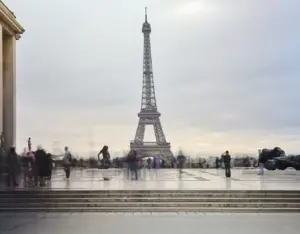
The opening of Art Basel Paris’s "Avant-Première" preview earlier this month served as a stark juxtaposition between the rarefied world of blue-chip collecting and the realities of modern France. Despite an escalation of anti-government protests, riots, and instances of looting across several French cities, the fair successfully drew a significant contingent of major collectors. This resilience reflects the "art world bubble" effect, where the market’s momentum often remains insulated from local volatility. However, the presence of these events outside the fairgrounds highlights a growing unease within the cultural sector regarding the sustainability of hosting major international events during periods of profound civil instability.
While Paris grapples with the present, the heritage of the art world is undergoing a permanent transformation in Venice. Billionaire collector François Pinault has announced that he will transition his collection at the Palazzo Grassi into a permanent display. This strategic pivot marks the conclusion of the palazzo’s celebrated temporary exhibition program, which had long been considered a pillar of the contemporary art scene in Venice. For art historians and regular visitors, this signals the end of an era defined by rotating, site-specific curatorial projects, moving toward a more static, legacy-focused model of institutional engagement.
Across the Atlantic, the intersection of art and identity politics has reached a boiling point at the National Museum of Colombia in Bogotá. Over the past weekend, the museum became the site of intense demonstrations following the removal of more than 30 objects from public view. These items, described by local reports as being fundamentally tied to the struggles of the LGBTQ+ movement, feminism, and various political left-wing factions, were pulled from the galleries without immediate explanation, triggering an outcry from local activist groups and cultural commentators who view the act as an attempt to sanitize the nation’s historical narrative.
Institutional Shifts and New Leadership
Institutional boards and national collections are currently in a phase of significant realignment. In the United Kingdom, the Tate has leveraged the 2026 Frieze London and Frieze Masters fairs to make strategic additions to the national collection. Through the Frieze Tate Fund, the institution has acquired new works by Michaela Yearwood-Dan and Luis Fernando Zapata. These acquisitions are particularly noteworthy as they represent the first time either artist has been inducted into the national collection, underscoring Tate’s ongoing commitment to diversifying the British art canon and supporting artists whose practices engage with contemporary global discourses.
Further north, the city of Liverpool is preparing for a major milestone. The Bluecoat, which holds the distinction of being England’s oldest art center, has appointed Emer Grant as its first-ever creative director. The appointment comes at a critical juncture for the institution as it approaches its centenary in 2027. Grant’s leadership is expected to define the trajectory of the center as it looks to balance its long-standing historical importance with the demands of a contemporary audience, setting a new tone for one of the country’s most established cultural landmarks.
Meanwhile, in the United States, New York City is gearing up for an ambitious new initiative. "Art Week NYC," set to launch next month, represents an unprecedented level of collaboration among the city’s cultural institutions. With over 80 museums and galleries committed to participating, the four-day event aims to move beyond traditional fair models by fostering deep-dive discussions on the state of art in the modern world, alongside a marathon of gallery openings and museum programming designed to re-engage the public in the wake of a crowded, often fragmented exhibition calendar.
The Market: Auctions and Emerging Voices
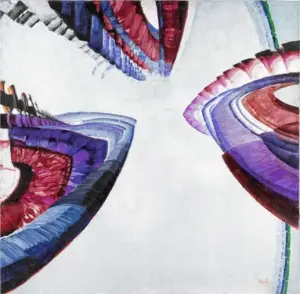
The secondary market continues to track the rising valuation of historical abstraction. Next month, all eyes will be on Stockholm, where Bukowskis is set to auction Ser III No. 5 (1920) by the pioneering Swedish artist Hilma af Klint. Given the extreme scarcity of af Klint’s works on the open market, the piece carries an estimate of $600,000 to $800,000. Experts suggest the sale could potentially break the artist’s existing auction record, a testament to the enduring global fascination with her esoteric and visionary approach to painting, which has seen a meteoric rise in critical and commercial value over the last decade.
In the realm of biennales, the Biennale de Lyon is preparing for a change in artistic vision. The board has confirmed that Hélia Paukner will assume the role of artistic director effective February 1, 2027. Paukner’s appointment is being watched closely by the international art community, as the Biennale de Lyon remains a significant platform for experimental and large-scale installation art. Her tenure will be expected to address the evolving socio-political landscape of Europe and the shifting definitions of the "biennale" format in a post-pandemic, globalized art market.
Simultaneously, the boutique-style fair Asia NOW has introduced its "New Voices" initiative in Paris. The program is specifically designed to bridge the gap between emerging curators and the broader international art ecosystem, with a sharp focus on South Asian practices. By highlighting the curators who act as conduits between Asia and its diasporas, the fair is positioning itself as a vital networking hub, emphasizing the human infrastructure of the art world—the curators, researchers, and writers—as much as the physical objects being traded.
Recognition and Legacy
The awards circuit continues to validate the contributions of established and mid-career artists. Dublin Gallery Weekend recently announced the winners of its inaugural Francis Bacon Awards for Irish Visual Arts. The prestigious new prize was awarded to Irish artist Patrick Graham and Northern Irish artist Cathy Wilkes. The selection of these two figures highlights a commitment to celebrating the depth of the Irish visual arts tradition, honoring artists who have demonstrated a long-term, rigorous commitment to their medium.
As these developments suggest, the art world remains a space of constant movement. Whether it is through the acquisition of new works for national collections, the shifting of leadership at heritage institutions, or the heated protests over museum collections, the industry is currently navigating a period of profound re-evaluation. The coming months will likely see these threads converge as major auctions and the inaugural Art Week NYC bring these conversations to the forefront of the global cultural discourse. For collectors, institutions, and the public alike, the remainder of 2026 promises to be a defining chapter for the future of the arts.