The autumn art auction season in Paris proved to be a study in contrasts this October. While the city streets were gripped by widespread social unrest that brought daily life to a standstill and forced the early closure of Art Basel Paris, the atmosphere inside the hallowed salerooms of Sotheby’s and Christie’s told a different story. Despite the turmoil unfolding just blocks away, the city’s major auction houses delivered a robust performance, collectively signaling a resilient appetite for blue-chip art and historic provenance.
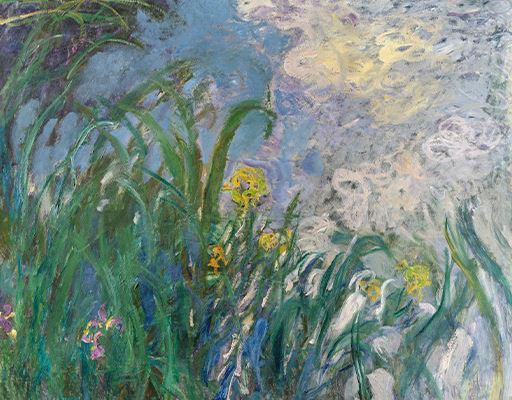
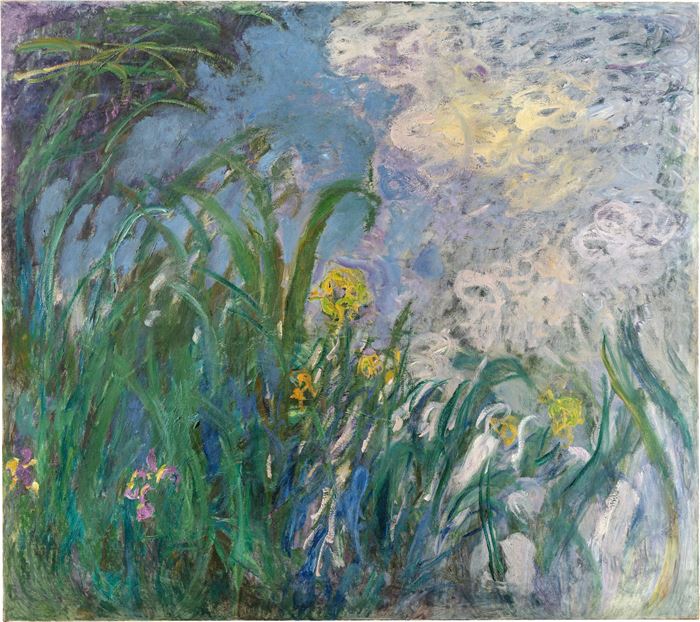
The defining moment of the week arrived on October 22 at Sotheby’s, where a masterpiece by Claude Monet, Iris (1924–1925), became the centerpiece of an extraordinary sale. Drawn from the distinguished collection of Jeanne Schlumberger, the painting commanded €50 million ($56.1 million), a figure that secured its place in the history books. As nationwide protests caused safety concerns across the French capital, forcing art fairs to shutter their doors to protect visitors and inventory, the auction houses remained largely insulated, having timed their premier events to coincide with the broader fair week while maintaining the security of their private viewing environments.
The resilience of the market was underscored by the financial results: marquee sales at the two houses generated 51.8 percent more revenue than the same period last year. This surge was driven largely by two major family collections: the late Monets from the Schlumberger estate at Sotheby’s, and a significant cache of works from the descendants of the legendary art dealer Paul Durand-Ruel at Christie’s. Beyond these heavy hitters, the week saw a flurry of record-breaking results for artists including František Kupka, Alfred Sisley, and Gustave Loiseau, proving that even amidst civil uncertainty, high-caliber works with impeccable history remain a preferred asset class.
The Schlumberger Legacy: A Record-Breaking Triumph for Sotheby’s
The standout success of the week was La Collection Schlumberger: Le Temps retrouvé, a sale that turned out to be the highest-grossing fine art auction in the history of Sotheby’s Paris. Jeanne Schlumberger, who married the cofounder of the global oilfield services giant SLB, Marcel Schlumberger, in 1909, was a visionary collector. In the mid-20th century, she turned her attention to Monet’s late-period works—paintings that, at the time, were largely overlooked by the French establishment. By acquiring these pieces directly from the studio of the artist’s son, Michel Monet, she assembled a collection that would eventually define the market for late Impressionism.
The collection was estimated to fetch between €39.3 million and €53.9 million. However, the sale exceeded expectations significantly, totaling €74.4 million ($83.5 million). The result was bolstered by the fact that all 23 lots on offer found buyers, and none of the lots relied on financial guarantees, reflecting genuine organic demand.
The undisputed star, Iris, triggered a 45-minute bidding war involving six determined participants. Ultimately, Jen Hua, Sotheby’s Deputy Chairman for Asia, secured the canvas on behalf of a private Asian collector. The painting, one of approximately twenty iris-themed works Monet created in his final decade, had never before appeared at public auction, nor had it ever been loaned to a public exhibition, adding a rare layer of market "freshness" that drove the price well beyond its €22–30 million estimate.
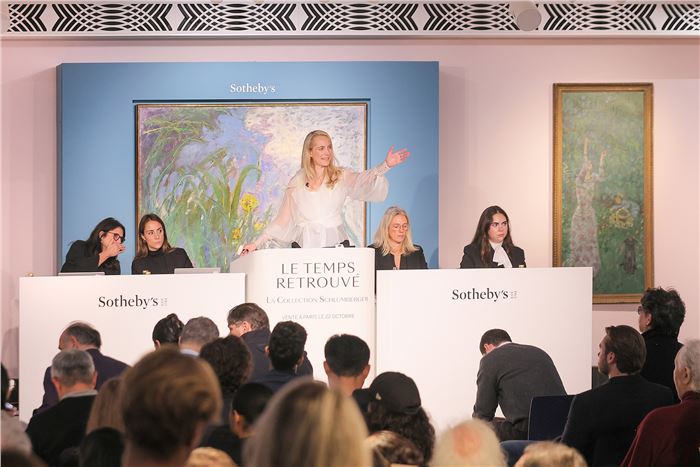
This sale price represents the highest amount ever paid for a work of art at auction in France in nominal terms. It effectively eclipsed the €43.2 million paid for Amedeo Modigliani’s Tête at Christie’s in 2010. While historical records are often difficult to compare due to currency fluctuations and inflation, the Iris sale surpassed the 314.9 million French francs (roughly €48 million) paid for Picasso’s Les Noces de Pierrette in 1989. Adjusted for inflation, the Picasso would still hold a higher value, but the current market momentum behind Monet is undeniable.
Other highlights from the Schlumberger sale included Saule pleureur (or L’Arbre de feu, 1918–1919), which realized €9.7 million ($10.9 million). Additionally, Pierre Bonnard’s La Cueillette des prunes (c. 1899) reached €2.5 million, marking the highest auction price for the artist within France, while Gustave Moreau’s Rêve d’Orient (1881) set a new world record for the artist’s works on paper at €1.4 million.
Diversity and Modernism: Strengthening the Paris Market
Following the success of the single-owner collection, Sotheby’s held two additional sales on October 23, which collectively brought in €63.2 million ($70.9 million). The Surrealism and Its Legacy auction generated €24.6 million, led by Joan Miró’s 1952 work La Tige de la fleur rouge pousse vers la lune, which sold for €5.7 million. Victor Brauner also saw a high point, with TOT IN TOT et La grande Métamorphose (1942) setting an artist record at €1 million.
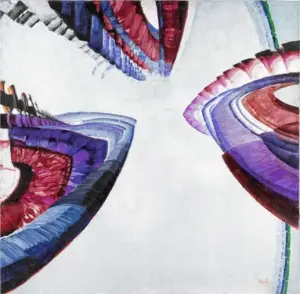
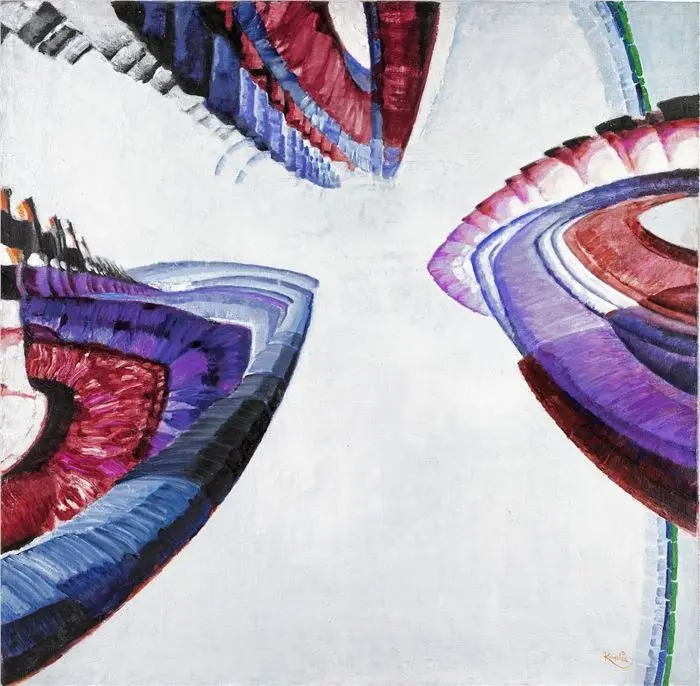
The Modernités sale, which focused on the evolution of early 20th-century art, proved equally dynamic. The auction was led by František Kupka’s Espace non-descriptif (1914–1922), which achieved €9 million—a record for the artist in France and his second-highest price globally. The sale also featured a rare plaster work by Alberto Giacometti, Tête crâne (1934), which reached €8.7 million after a spirited contest between eight bidders.
In total, Sotheby’s realized €137.7 million across its series, a 53.5 percent increase over the previous year. Beyond the podium, the house also engaged in high-end private sales, transforming an apartment on the Rue de Rivoli into a boutique gallery space that hosted approximately €134 million worth of art, offering a bespoke experience for top-tier clients.
Christie’s and the Durand-Ruel Pedigree
Christie’s opened its season with a poignant tribute to the history of Impressionism: Durand-Ruel, Generations of Vision. Paul Durand-Ruel was the essential patron of the Impressionist movement, supporting Monet and his peers when the wider market remained skeptical. As Monet himself famously remarked, Durand-Ruel was the only person to whom he truly owed his career.

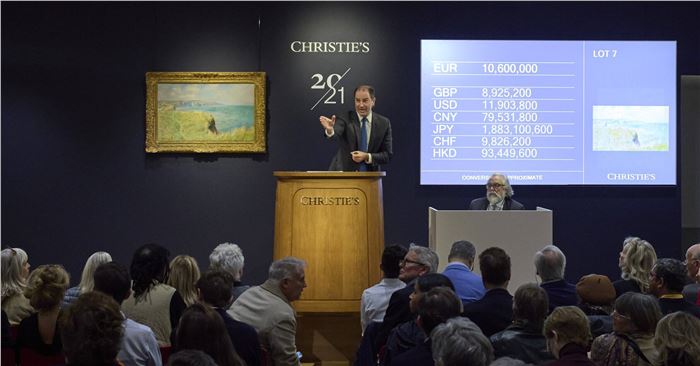
The sale of 27 works from the dealer’s descendants saw a 100 percent sell-through rate, totaling €41.7 million against a high estimate of €42.3 million. The centerpiece, Monet’s Bord des falaises à Pourville (1882), sold for €12.8 million. While this briefly held the record for a Monet in France that evening, the title was quickly snatched away by the Iris sale at Sotheby’s hours later.
The session also saw notable activity for Alfred Sisley, whose Un Verger (1873) fetched €3.7 million, and Gustave Loiseau, who set back-to-back world auction records for his coastal views.
Christie’s evening session, titled 20th/21st Century: Paris Evening Sale including Thinking Italian, further bolstered the house’s total, reaching €66 million. The top lot was Lucio Fontana’s 1961 Concetto spaziale, Mezzogiorno in Piazza S. Marco, which made its auction debut at €6.8 million. By the conclusion of its four-part series, Christie’s had reached a total of €137.6 million, mirroring the performance of its rival, Sotheby’s, and confirming that the French capital remains a vital hub for global collectors despite the external social pressures.
As the Paris season concludes, the focus of the global art market shifts to New York. The upcoming November sales, including Christie’s 20th Century Evening Sale and the highly anticipated Legendary: The Blaquier-Arrieta Collection at Sotheby’s, are poised to carry the momentum forward. With a major Van Gogh, Châtaigniers en fleurs (1890), estimated at $180 million, the industry remains poised for a strong finish to the year, buoyed by the historic results recently achieved in the heart of Paris.