Researchers at the Harvard John A. Paulson School of Engineering and Applied Sciences (SEAS) have successfully demonstrated a novel method for safeguarding fragile quantum information. By utilizing mechanical vibrations—essentially microscopic sound waves—the team has charted a promising path forward for the reliability and scaling of quantum computing and networking architectures.
The technological advance, developed within the laboratory of Marko Lončar, the Tiantsai Lin Professor of Electrical Engineering at SEAS, stands to significantly support the development of compact quantum networks built directly onto microchips. Furthermore, this breakthrough may help enable complex hybrid quantum systems capable of combining several different kinds of quantum bits, commonly known as qubits, into a unified, functioning platform.
The detailed findings of the study have been published in the academic journal Nature Physics. The underlying experiments were spearheaded by Eliza Cornell, a recent Ph.D. graduate from the Lončar laboratory who currently serves as a postdoctoral researcher at Boston University, alongside Zhujing Xu, a former postdoctoral scholar who also conducted research within Lončar’s active research group.
Using Sound to Carry Quantum Information
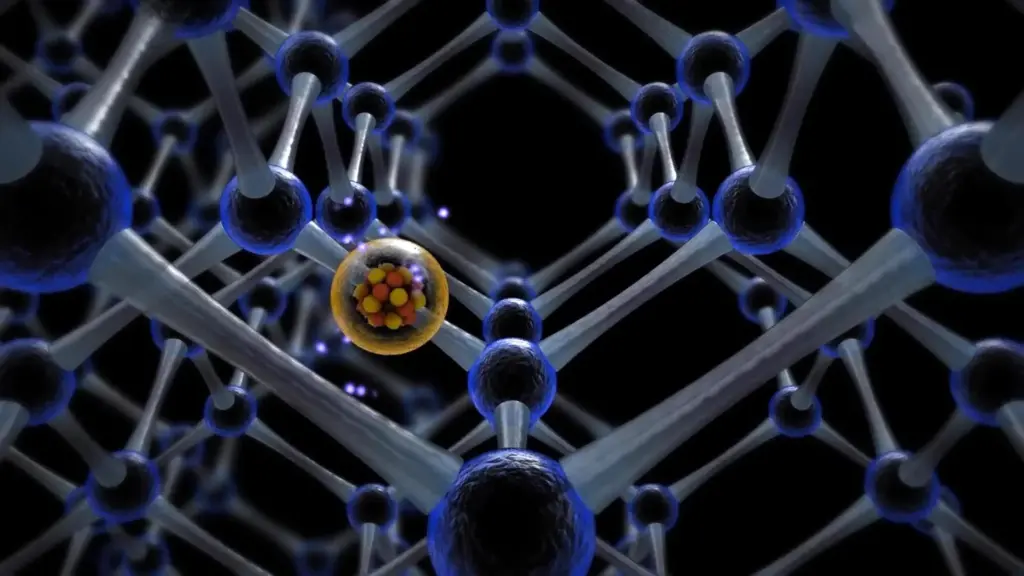
One of the most promising methodologies currently pursued in the architecture of quantum networking relies on the spin of an electron, which is closely associated with atomic impurities embedded within diamond lattices, to securely store quantum information. To transmit this data between distinct nodes, tiny packets of mechanical vibration, known scientifically as phonons, can serve as the primary carriers moving information from one qubit node to another.
Over recent years, the Lončar laboratory has played a major and influential role in exploring the vast potential of these mechanical-quantum systems. Among its notable past advances is the engineering of a specialized microscopic structure referred to as a phononic cavity. This device is specifically designed to trap mechanical vibrations effectively, allowing them to interact much more strongly with the electron spin residing directly inside a qubit.
Phonons possess several key characteristics that may grant them vital operational advantages over light particles, or photons, which are traditionally and more commonly employed to move quantum information across chip-scale optical networks. At the exact same operational frequency, phonons feature significantly shorter wavelengths than light. This stark difference in physical scale makes it entirely feasible for engineers and physicists to build considerably smaller optical and mechanical components, packing them much more tightly together on a single semiconductor chip.
Moreover, phonons interact readily and efficiently with both solid-state electronic spins and external electromagnetic fields. This inherent versatility makes them especially attractive candidates for the realization of advanced hybrid quantum technologies, which seek to bring together entirely different types of qubits—each with its own distinct operational strengths—into a single, cohesive system.
The Challenge of Preserving Quantum Memory
Despite the considerable promise offered by utilizing phonons as information carriers, putting this theoretical advantage into practice introduces a major and persistent difficulty: the challenge of effectively protecting quantum memory from external disruption.
By their very nature, qubits are extraordinarily sensitive to disturbances originating from their immediate surroundings. To remain viable and useful for computation or communication, these systems must preserve their delicate quantum state for a sufficient duration to successfully store and process information. This critical capability to maintain stability is known to physicists as coherence.
In traditional setups, researchers frequently protect vulnerable quantum memories from environmental interference by deploying precise microwave pulses. These pulses effectively separate, or decouple, the sensitive memory components from the surrounding ambient noise. However, these standard decoupling techniques do not work particularly well when applied to qubits that have been placed directly inside phononic cavities.
This inherent limitation has historically made it remarkably difficult for experimental physicists to achieve both a strong, desirable interaction with phonons and long-lasting quantum memory within the very same physical device.
"Dressed" Qubits Protected by Sound
To tackle and overcome this persistent hurdle, the SEAS research team successfully demonstrated what they formally describe as "all-mechanical coherence protection" for a silicon-vacancy spin embedded within diamond.
Instead of relying on conventional microwave pulses to shield the system, the researchers continuously applied a mechanical driving field constructed entirely from phonons. This continuous application fundamentally changed the nature of the qubit, shifting it into a different and more resilient kind of quantum state known in physics as a "dressed" qubit.
The evocative scientific term "dressed" refers to the physical phenomenon where the qubit effectively "wears" a continuous acoustic field. When maintained in this specialized condition, the qubit becomes substantially less vulnerable to low-frequency noise originating from its external surroundings.
Because this essential protection is derived directly from a continuous mechanical field that is inherently compatible with phononic cavities, the newly demonstrated technique can operate directly inside the exact same physical structures that may eventually be utilized to connect stationary nodes in advanced quantum networks.
This gives phonons a potentially powerful and versatile dual role within future architectures. They could simultaneously transport quantum information between different parts of a sprawling network while actively helping to protect that very same information from the disruptive effects of environmental noise.
"আমরা দুটি সমস্যার সমাধান করছি," Cornell explained, discussing the dual achievement. "We want the spin to have strong interaction with phonons, and we want the spin to have a long coherence time. Our paper demonstrates a method of extending the coherence time that is compatible with the silicon-vacancy center being in a cavity."
Quantum Coherence Lasts About Three Times Longer
By implementing this innovative all-mechanical method, the research team successfully increased the coherence time of the silicon-vacancy spin by roughly a factor of three.
This tangible result powerfully demonstrates that continuous-wave mechanical noise suppression can effectively extend quantum coherence in real, physical devices. In doing so, it strongly suggests that microscopic sound waves could soon become an indispensable tool for engineers striving to build significantly more reliable and compact quantum systems.
The foundational research study, titled "All-mechanical coherence protection and fast control of a spin qubit," was co-authored by Zhaoyou Wang, Hana K. Warner, Eliana Mann, Michael Haas, Smarak Maity, Graham Joe, Liang Jiang, Peter Rabl, and Benjamin Pingault.
The project received substantial U.S. federal support from several key organizations, including the National Science Foundation under grant number EEC-1941583; the Air Force Office of Scientific Research under award numbers FA9550-23-1-0333 and FA9550-23-1-0338; and Q-NEXT, a U.S. Department of Energy Office of Science National Quantum Information Science Research Center under award number DE-FOA-0002253.
Portions of the experimental work were performed at the Harvard Center for Nanoscale Systems, an esteemed member of the National Nanotechnology Infrastructure Network supported by National Science Foundation award number ECS-0335765. Looking toward the future application of these breakthroughs, the Harvard Office of Technology Development is actively pursuing comprehensive patent protection and commercialization opportunities for the various innovations arising directly from this ongoing research.