For decades, the life and expansive oeuvre of artist Beverly Buchanan occupied a paradox in the art world. Mentored by luminaries like Norman Lewis and Romare Bearden, counted as a contemporary to pioneering figures such as Ana Mendieta and Eva Hesse, and most recently celebrated in the 61st Venice Biennale within Koyo Kouoh’s curated presentation In Minor Keys, Buchanan nevertheless remained profoundly understudied and underexplored.
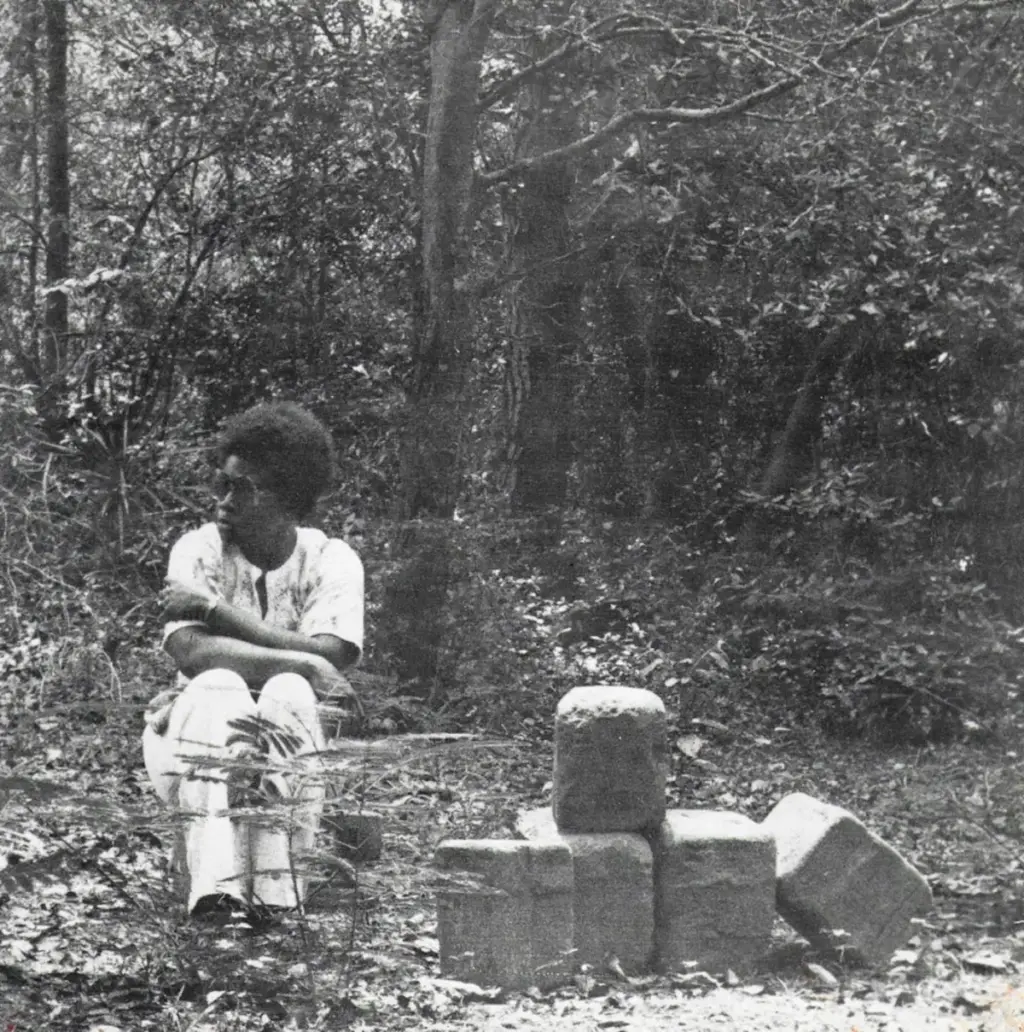
Instead of leaving the American South behind, the polymath artist carried it directly into her writings, zines, paintings, and signature "shack sculptures" that powerfully echo the vernacular architecture of her childhood. Now, a comprehensive new publication seeks to correct historical oversights and reintroduce her multifaceted genius to contemporary audiences. Beverly Buchanan: Ruination and Regeneration, slated for release in 2026 and edited by Aurélie Bernard Wortsman, arrives as a definitive testament to the North Carolina-born artist’s immense complexity, sharp intellect, and deep emotional sensitivity across sculpture, photography, land art, and video work.

More than a standard monograph, the book serves as a vital intervention against the compounding forces that marginalize certain artists. It acts as a clear reminder that the combined effects of systemic racism, anti-Blackness, misogyny, and persistent regional bias against Southern artists must be actively counteracted. This collective rescue mission is modeled by the diverse voices of 18 contributors within the book, whose perspectives span personal friendships, art dealing, historical scholarship, curatorial practice, and contemporary art production.
The volume opens with an insightful introduction penned by Andrew Edlin, a longtime dealer and steadfast supporter of Buchanan’s artistic vision. From there, the monograph unfolds through a rich tapestry of essays, interviews, poetry—including a contribution by acclaimed writer Alice Walker—and a generous archive of images. Together, these elements trace the vast arc of Buchanan’s career, documenting her early engagement with Abstract Expressionism and Post-minimalism, her active creative years grounded in Atlanta, Macon, and Athens, Georgia, and her eventual later relocation to Michigan.
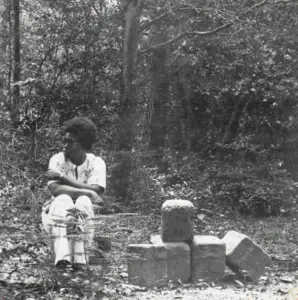
A core strength of the publication is its extensive presentation of Buchanan’s wide-ranging output. Rather than focusing exclusively on a single medium, the monograph captures the true polymathic nature of her practice. Readers are treated to a thorough selection of her early paintings, photocopied zines, intimate sketches, architectural and floral works on paper, large-scale environmental installations, and her iconic sculptural houses.

Among these is pieces like Orangeburg County Family House (1993), a striking assemblage composed of paint, Sharpie, garland, necklaces, wood chips, bark, buttons, bottle caps, a license plate, a film canister, thumbtacks, a clay pot, a glass bottle, thread, and glue on wood. Works such as these vividly demonstrate how Buchanan translated the memory, resilience, and vernacular architecture of Southern shacks into deeply moving physical structures.
By bringing together these diverse materials, historical perspectives, and critical analyses, Beverly Buchanan: Ruination and Regeneration offers a necessary recalibration of the art historical canon. It ensures that Buchanan’s profound contributions to American art—rooted firmly in the landscapes and histories she carried with her—are finally given the rigorous attention, celebration, and permanence they have long deserved.