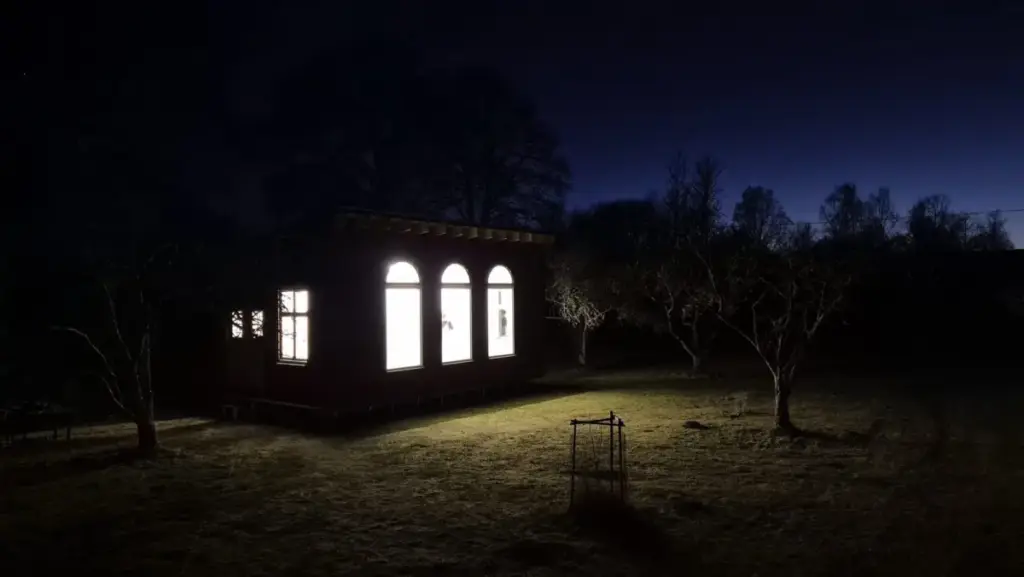
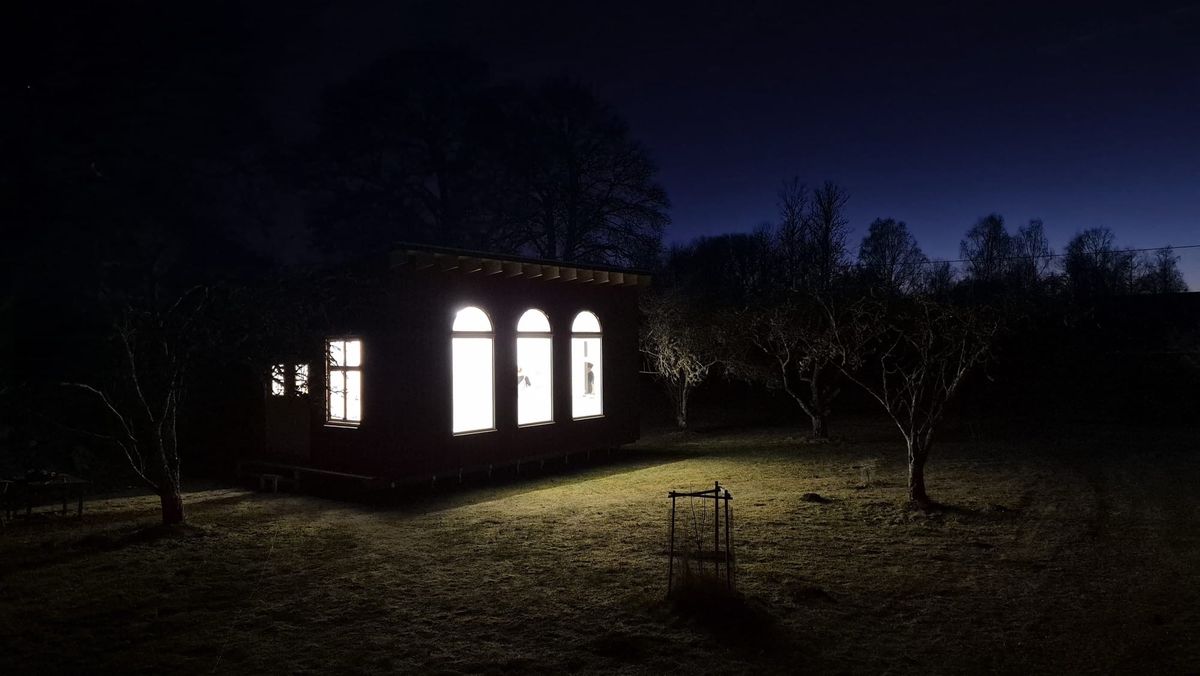
In the quiet, forested landscape of southern Sweden, artist Anna Pajak spends her days conjuring symmetrical will-o’-the-wisps and ethereal forms onto canvas. For Pajak, the workspace is much more than a mere room where art is produced; it is a sacred environment, carefully cultivated to nurture her creative impulses. "I wanted it to feel like a chapel, a place for everything I believe in. My painting chapel," she reflects, capturing the spiritual and deeply personal connection she maintains with her physical surroundings.
Pajak’s studio is featured in the 361st installment of A View From the Easel, a long-running editorial series by Hyperallergic that invites artists from around the world to reflect on their workspaces, creative routines, and daily rituals. Running across diverse geographic locations and artistic mediums, the series offers readers an intimate glimpse into the environments where contemporary art takes shape, welcoming everything from high-ceiling urban warehouses to quiet home studios nestled in remote corners of the globe.
For the past four years, Pajak has called her current studio in Tingsryd, Sweden, home. Located in a region renowned for its dense woods, lakes, and serene isolation, the workspace provides an ideal backdrop for an artist whose practice engages with atmospheric light, symmetry, and evocative natural phenomena. Surrounded by the changing seasons of the Swedish countryside, Pajak has spent nearly half a decade tailoring the space to suit the demands of her intensive painting practice.
Describing an average day in the studio reveals a rhythm driven by immediate physical action rather than rigid, over-calculated planning. Pajak prefers to begin her working hours early in the morning, accompanied by a cup of coffee. True to her energetic and spontaneous approach, she lays out her paints and heads straight for the canvas, bypassing any prolonged periods of hesitation.
While many artists rely on meticulous preliminary sketches or structured mental blueprints before touching a brush to fabric, Pajak admits that her natural temperament leans in a different direction. "I often imagine that I’ll sit down and thoughtfully plan what I’m going to do, but I’m unfortunately too restless for that," she explains. "The moment I enter the studio, I just want to squeeze out the paint and get going." This urgency often leads to a humorous domestic casualty within her daily ritual: the morning coffee is frequently left behind, growing entirely cold and forgotten as the act of painting takes over.
Sound plays a dynamic and deliberate role in Pajak’s studio hours, shifting in response to the cognitive demands of the work at hand. On most days, music serves as a steady companion while she applies paint, establishing a steady momentum for her brushstrokes. However, the auditory landscape shifts dramatically when the technical complexity of a piece increases. If a painting requires intricate thought, precise measurements, or deep problem-solving, Pajak demands complete silence to navigate the spatial and compositional challenges on the canvas.
Her working method also incorporates a unique sense of dialogue between concurrent pieces. Rather than focusing her attention entirely on a single canvas from inception to completion, Pajak frequently works on two paintings at the same time. She visualizes these simultaneous projects as sisters standing side by side, engaging in a visual conversation where decisions made on one canvas can inform, balance, or challenge the development of the other. This dual approach helps maintain a fluid energy across her body of work, preventing her from becoming overly precious or hyper-focused on any single surface.

As the daylight shifts over the southern Swedish landscape, Pajak finds her cues for concluding the workday not by looking at a clock, but by watching the sky directly outside her studio window. The natural environment dictates the rhythm of her evening closure. When the sky transitions through its daily gradient—moving gracefully from a warm orange into a soft, pale light green—Pajak knows it is time to put down her brushes.
This careful observance prevents the pitfalls of physical exhaustion and mental fatigue. Stopping before she becomes overtired ensures that her vision remains sharp, protecting her from the trap of staring too long at a canvas and losing her visual clarity. It also keeps at bay the overthinking and self-critical voice that often creeps into the studio during late, weary hours.
Before leaving the space for the evening, Pajak engages in a final, grounding ritual: she thoroughly washes all of her brushes. This act of care is not merely about tool maintenance; it is a deliberate preparation for the morning ahead, clearing the slate so that she can step back into her chapel of painting with minimal friction when the sun rises again.