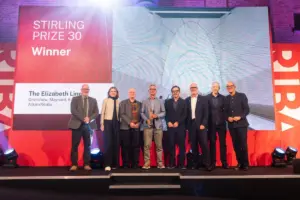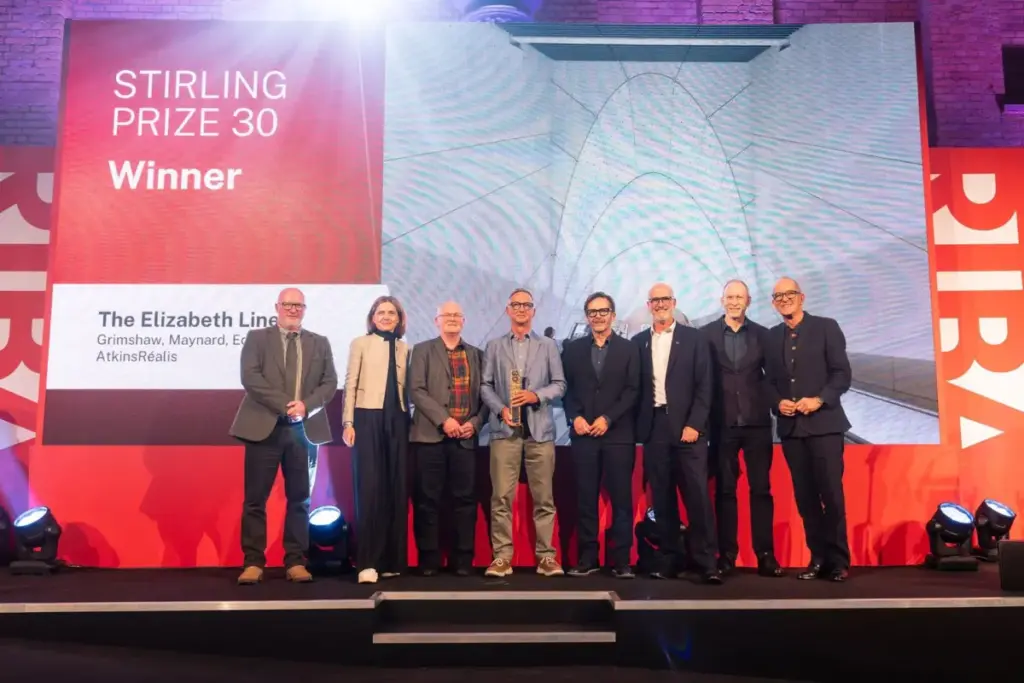
London’s Elizabeth Line has achieved yet another milestone in its remarkable architectural journey, taking the top spot in a special public vote celebrating thirty years of the prestigious Stirling Prize. Announced during a ceremony marking the milestone anniversary, the public poll invited people across the United Kingdom to select their absolute favourite winner from the past three decades of the Royal Institute of British Architects (RIBA) Stirling Prize. Having originally claimed the overarching Stirling Prize in 2024, the Elizabeth Line captured the hearts, minds, and daily commutes of the public, emerging as the overall favourite in a celebration of design that elevates and transforms everyday life, connects communities, humanises the journey, and fosters deep civic pride.
This latest public accolade adds to an already extensive list of prestigious honours for the transit project and its design team. The line’s revolutionary approach to public infrastructure has previously earned it the 2024 RIBA Stirling Prize itself, alongside esteemed international accolades including an International Association of Lighting Designers (IALD) Award of Merit, a LIT Lighting Design Award, and a Build Back Better Platinum Award. While the engineering feats of tunneling beneath a bustling metropolis are staggering in their own right, the accolades consistently highlight the human-centric design philosophy that defines the line from end to end.
Central to the project’s triumph is a comprehensive, line-wide lighting scheme developed by Equation Lighting Design. Tasked with a monumental challenge, the lighting designers sought to craft an approach that would not merely illuminate the underground spaces, but actively respond to and enhance the architecture while simultaneously supporting passenger comfort, intuitive accessibility, and seamless navigation. Equation operated as a key player within a vast, multidisciplinary design collective that brought together some of the industry’s finest talents, including Grimshaw, Maynard Design Consultancy, and AtkinsRéalis. Together, these collaborative entities successfully transformed public transit across the British capital, forging a unified design language that seamlessly integrates architecture, lighting, materials, and wayfinding.
Rather than treating illumination as a superficial visual feature or an afterthought tacked onto structural concrete, Equation’s visionary scheme embeds lighting directly into the architectural environment. Throughout sprawling concourses, deep escalator tunnels, and bustling platforms, indirect lighting is deployed to emphasise the dramatic scale and sweeping forms of the underground spaces. This sophisticated technique creates an overarching sense of openness and airiness deep beneath the city streets, successfully banishing the claustrophobic shadows and harsh reflections traditionally associated with underground transit environments.
Furthermore, the lighting design plays an indispensable role in supporting intuitive wayfinding across a complex, high-capacity network. The design team implemented a nuanced system of varying colour temperatures to help passengers subconsciously distinguish between different spatial functions and environments. A crisp, cooler white light set at 5,000K is utilised within transition spaces such as corridors and passageways, while a warmer white light at 3,000K is introduced within primary wayfinding and waiting areas. This subtle thermal shift helps travellers instantly recognise their surroundings, orientation, and proximity to platforms, making navigation through the labyrinthine system remarkably straightforward even for first-time visitors.
Visual comfort and accessibility were held as paramount considerations throughout the development phase. Diffused luminous surfaces and meticulously controlled illumination ensure that glare and blinding reflections are kept to an absolute minimum. At the same time, high standards of vertical illuminance support facial recognition among commuters, drastically improve the legibility and visibility of vital signage, and assist passengers in the quick detection of potential obstacles along their path. To achieve this level of visual harmony, a specially coordinated family of luminaires was meticulously designed, detailed, and manufactured to integrate flawlessly with the wider architectural vocabulary, cementing a consistent visual identity across every underground station on the line.
These coordinated elements demonstrate conclusively that thoughtful lighting design can achieve far more than simply making a space visible. Within the high-pressure, complex environment of a modern mass-transit system, expert illumination actively supports the way people move, think, and experience their surroundings, frequently achieving this profound impact without passengers ever consciously realising the lighting is even there.
Maida Hot, Managing Director of Equation, reflected on the significance of the public triumph and the collaborative nature of the undertaking. She noted that what makes this particular recognition so deeply meaningful is its democratic origin, coming directly from the everyday users of the network. As lighting designers, Hot explained, much of their core mission revolves around crafting environments where people can navigate comfortably and intuitively without needing to consciously process the mechanical and electrical engineering behind the illumination.
Hot added that the Elizabeth Line was an extraordinary collaborative project from its inception, characterised by a shared vision where every distinct element of the design contributed to a unified passenger experience. To see the line recognised once again, and this time directly by the people who rely on it day in and day out, serves as an especially rewarding acknowledgment of the immense dedication poured into the project by every individual and firm involved.
For Equation and the wider multidisciplinary team, this latest public endorsement reinforces the enduring value of a collaborative, people-focused approach to civic infrastructure design. It stands as a clear testament to how thoughtful, integrated lighting can contribute meaningfully to public works that continue to serve, inspire, and shape the daily lives and travel experiences of millions of passengers across London.