For decades, the prevailing wisdom in materials science held a strict rule: if you want to control how tiny building blocks assemble into advanced materials, your molecular connectors must be rigid. Scientists believed that any flexibility or deviation in these connecting links would cause the entire assembly process to fail, frustrating attempts to create customizable, designer materials with predictable properties.
Now, a team of researchers at the Massachusetts Institute of Technology (MIT) and their collaborators have discovered that doing the exact opposite yields remarkable results. Instead of relying on rigid molecular connections to lock nanoparticles into carefully planned arrangements, the research team developed extremely flexible connectors that dynamically bend, adjust, and reorganize as the particles come together.
This unexpected strategy provides scientists with a powerful new mechanism to dictate how nanoparticles organize themselves. By leaning into molecular flexibility rather than fighting it, the team successfully produced crystal structures that have never been observed before. The breakthrough addresses a major, long-standing bottleneck in materials science and introduces new possibilities for manufacturing substances with precisely engineered properties, with potential applications spanning electronics, medicine, energy generation, agriculture, and advanced chemical manufacturing.
The findings, detailed in a paper appearing in Nature Materials, shed new light on the fundamental forces of nanotechnology. Specifically, the study demonstrates how the intrinsic flexibility and electrical charges of molecular connectors can dictate the precise geometric structures that nanoparticles ultimately form.
Challenging Two Decades of Dogma in Materials Science
Nanoparticle superlattices have long fascinated researchers because of their immense potential for creating custom-tailored materials. By dictating the architecture of these superlattices, scientists hope to gain unprecedented say over the ultimate behavior of bulk substances. However, turning that theoretical ambition into a practical reality has proven exceptionally difficult.
"People are interested in nanoparticle superlattices because of the promise of building designer materials where you have more say in what types of structures they can actually build into," says Rob Macfarlane, the Richard P. Simmons (1953) Professor in Metallurgy in MIT’s Department of Materials Science and Engineering. "This is a new approach in nanoparticle assembly that hasn’t been investigated before. It’s exciting to have a new tool that is so counterintuitive. It’s the exact opposite of what the dogma has been for 20 years: that you need to make connector ligands rigid, and any deviation causes assembly to fail. We showed if you just crank it all the way to the opposite extreme, it works just as well."
The research team behind the discovery includes MIT PhD candidate Nicholas Sbalbi, University of Delaware doctoral student Stephen Kronenberger, MIT undergraduate Hana Shinzawa, Matthew Ye PhD ’26, and Arthi Jayaraman, a former professor at the University of Delaware.
At the core of the discovery lies a foundational principle of materials science: the macro-level behavior of any material is fundamentally determined by how its smallest components are arranged. According to Macfarlane, understanding this relationship is the key to innovation.
"That means if you know what your building blocks are and how they’re arranged, you can explain what properties materials have," Macfarlane notes. "Controlling that is how you make materials that have new properties."
This principle carries profound weight when working with nanoparticles, which are microscopic pieces of matter whose physical shapes, sizes, and chemical properties can be fine-tuned for specialized tasks. Already, scientists harness individual nanoparticles in a variety of cutting-edge technologies, including targeted drug delivery systems, advanced energy storage devices, high-density computing components, and sensitive diagnostic sensors.
Yet, translating these isolated nanoscale building blocks into larger, highly organized bulk materials remains an uphill battle.
Overcoming the Complexities of Nanoparticle Control
One of the most persistent hurdles in nanotechnology is governing how individual nanoparticles attach to one another. To build sophisticated materials, researchers must control not only how many neighboring particles each nanoparticle connects with, but also the specific spatial directions in which those connections form.
Without precise control over these attachment points, nanoparticles naturally default to tightly packed arrangements. These dense configurations severely restrict the variety of structures researchers can produce, effectively limiting their ability to engineer materials with unusual, highly specialized, or exotic properties.
Historically, the scientific community has approached this assembly challenge through two main strategies. The first involves altering the physical shapes of the nanoparticles themselves to dictate how they fit together, much like geometric puzzle pieces. The second strategy involves modifying specific chemical regions on the surfaces of the particles so that only designated zones will attract neighboring particles.
While these conventional methods can occasionally yield useful structures, they are notoriously complex, highly specialized, and exceptionally difficult to scale up for industrial manufacturing.
"The challenge with both of those approaches is they’re difficult to do synthetically as we make the particles," Macfarlane explains. "The methods for defining stickiness that have been developed are always bespoke: They work for one material, at one size scale, in one condition. It’s good for studying, but you can’t do much with it."
Both traditional strategies also rely heavily on molecular connectors known as ligands. These organic molecules attach to the surfaces of nanoparticles and act as tethers, linking neighboring particles together. Traditionally, researchers attempted to engineer these ligands to be as rigid as possible, ensuring that the resulting connections remained fixed at carefully controlled angles. While this rigidity helped maintain a desired arrangement, it severely restricted the types of structures that could form and the functions they could eventually perform.
Faced with these persistent limitations, the MIT team chose to explore a radically different hypothesis.
Harnessing the Power of Flexible Molecular Bonds
Instead of forcing molecular connectors to remain locked in rigid, predetermined positions, the researchers investigated whether granting them maximum freedom to bend could unlock an entirely novel form of structural control.
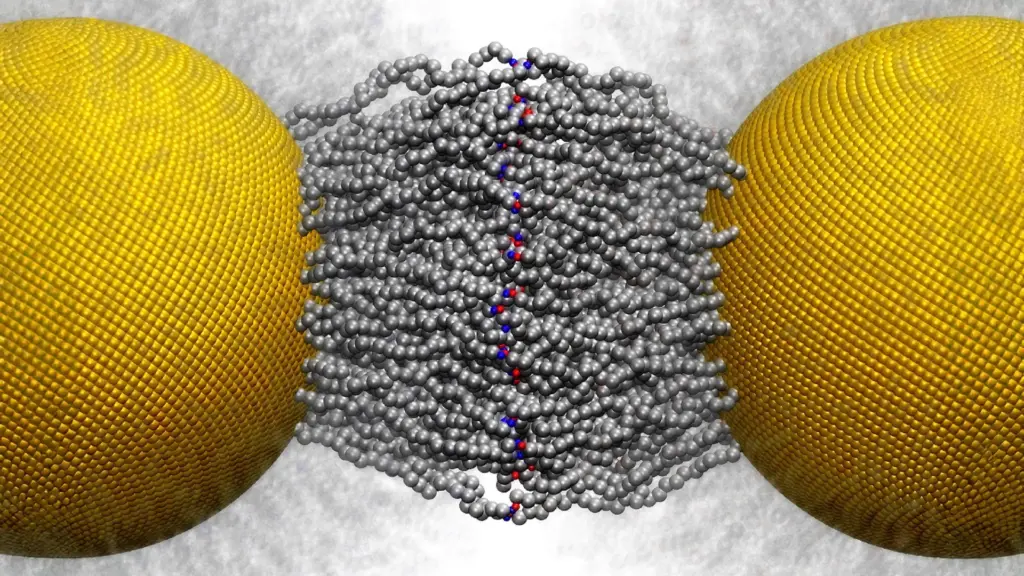
"我们 thought, ‘Let’s do the exact opposite: make the bonds so flexible it doesn’t matter what direction they’re initially pointing,’" Macfarlane says. "The ligands can then reorganize as the particles come together, and that reorganization itself limits how many neighbors each particle can bind."
This concept fundamentally inverts the traditional philosophy of nanoparticle assembly. Rather than predetermining the orientation of every single connection through complex chemical synthesis, the scientists allowed the connectors to adjust dynamically and naturally as the particles interacted within the system.
For years, Macfarlane’s laboratory has pioneered methods to construct various types of nanoparticles using attached polymer chains. Polymers are large, flexible macromolecules built from repeating smaller chemical units, making them ideal candidates for creating adaptable, adjustable molecular connections.
For this latest study, the team equipped nanoparticles with exceptionally flexible ligands that carried electrical charges at their extremities. Some of these molecular chains were given positive charges, while others carried negative charges. Because opposite electrical charges naturally attract one another, the connector molecules naturally bend toward neighboring partners possessing the opposite charge. This electrostatic attraction facilitates the joining of nanoparticles, while the inherent flexibility of the polymer chains dictates the maximum number of connections each individual particle can support.
"The idea is, instead of defining a specific direction the bonds are going to occur in with complicated synthesis methods, we just said, ‘The bonds are going to be as flexible as they want to be, and they’ll spontaneously go to whatever valency is going to maximize bond stability,’" Macfarlane explains.
In this scientific context, valency refers to the total number of connections a nanoparticle forms with its surrounding neighbors. By permitting the connectors to move and flex freely, the researchers discovered that the system could naturally settle into stable, organized arrangements without requiring every single connection to be painstakingly engineered in advance.
Synthesizing Unprecedented Crystal Structures
Laboratory experiments spearheaded by Sbalbi demonstrated that the researchers could successfully modulate the connections between nanoparticles by modifying two relatively straightforward physical characteristics: the physical sizes of the nanoparticles themselves and the lengths of their flexible molecular polymer chains.
Adjusting these two variables altered how the particles assembled, granting the research team precise control over the coordination number—the count of neighboring particles each unit could bind with. Most significantly, the team leveraged this straightforward method to produce entirely new, previously unseen crystal structures.
In materials science, crystals are ordered materials whose microscopic building blocks are arranged in repeating, highly organized patterns. In this case, those repeating arrangements are composed of assembled nanoparticles rather than individual atoms or small molecules. Such ordered networks are broadly referred to as nanoparticle superlattices.
By strategically reducing the number of connections between neighboring particles, the team successfully created more open, porous arrangements rather than the densely packed, tightly bound structures that typically dominate nanoparticle assembly.
"Without having to predesign where the particles connect or what their shapes are, we can control the number of bonds each particle has," Macfarlane notes. "The amount of flexibility of the polymer dictates how many bonds it has. It allows us to lower the number of bonds each particle has and make lattices we have never seen before."
These findings suggest that molecular flexibility—long dismissed by the scientific community as an insurmountable obstacle to precise assembly—can be transformed into a powerful, versatile tool for engineering entirely new classes of materials.
Toward Customizable Designer Materials
The breakthrough brings researchers significantly closer to realizing a long-sought goal in materials science: achieving fully independent control over the intrinsic properties of individual nanoparticles and the larger, macro-scale structures into which those particles assemble.
Ideally, materials scientists want to select nanoparticles based purely on their desired electrical, optical, or chemical characteristics, and then organize those exact particles into whatever lattice arrangement best serves a specific technological application. In practice, however, existing assembly methodologies have made that level of modular flexibility extraordinarily difficult to achieve.
"We in the nanoparticle assembly community talk about having completely independent control over what your particle is and what assembly it goes into," Macfarlane says. "In theory, that should be the case. In reality, it absolutely has not been."
This new approach helps bridge that persistent gap. Because researchers can now influence nanoparticle superlattice arrangements simply by tuning the flexibility of their molecular connectors and the electrostatic attractions between them, they can generate a much broader diversity of structures. Crucially, they can do this without resorting to the complicated, bespoke manufacturing techniques that have historically held back practical applications.
The team views this discovery as a promising stepping stone toward producing customizable materials at commercially relevant scales, which could eventually help transition advanced nanoparticle technologies out of academic laboratories and into widespread practical use.
Expanding Horizons in Electronics, Medicine, and Energy
The capacity to construct more open, varied, and tailored nanoparticle structures holds immense promise across numerous technological sectors.
In photonics—the field dedicated to controlling and manipulating light—precisely organized nanoparticles could empower researchers to engineer advanced optical materials with customized refractive or reflective behaviors. In chemical catalysis, where specialized substances accelerate chemical reactions, introducing novel particle arrangements could create new pathways to optimize catalytic efficiency and performance.
Furthermore, the newly established assembly approach could support future breakthroughs across medicine, agriculture, advanced electronics, and next-generation energy technologies. A major advantage of this platform is that nanoparticles can already be synthesized with a vast array of desirable characteristics. By improving how those building blocks integrate into larger frameworks, scientists can better combine their individual capabilities.
"Nanoparticle superlattices offer a way to create designer materials where your building blocks have all sort sorts of unique properties," Macfarlane says. "But just densely packing these nanoparticles together limits your applications. This offers a way to get less dense formations of nanoparticles, and that’s where a lot of the interesting applications are."
While additional research and development will be necessary to translate this laboratory method into robust commercial production techniques, the discovery firmly establishes molecular flexibility as a viable, highly effective strategy for engineering materials with custom structures.
Rather than treating bending molecular connections as a fundamental engineering flaw to eliminate, scientists may now harness that very flexibility to unlock structural arrangements that traditional, rigid design philosophies could never easily achieve.
The research was supported in part by funding from the National Science Foundation, the Department of Energy, the U.S. Army, and the U.S. Navy.