The contemporary design landscape thrives on objects that do more than simply occupy space—it values creations that provoke thought, challenge conventions, and invite continuous dialogue. Standing at the forefront of this philosophy is Polish product designer Maria Gil, the official recipient of the prestigious DesignEuropa Next Generation Design Award. Honoring emerging talent across European product design, the award recognizes Gil’s remarkable trajectory, which she has built upon a foundation of self-directed curiosity, rigorous hands-on manufacturing, and a distinct aesthetic vocabulary defined by loud, expressive forms.
Reflecting on her design philosophy and the milestone achievement, Gil sat down for an in-depth conversation to discuss the ethos driving her work. "I think the most valuable out of this whole experience, is realizing that the most powerful designs are the ones that keep asking questions, even after they’re finished, and open room for a conversation instead of being just a monologue," Gil shares, encapsulating the core motivation behind her portfolio.
EXPRESSING UNTOLD STORIES THROUGH MATERIAL AND FORM
The DesignEuropa Next Generation Design Award shines a spotlight on young and emerging creatives across diverse artistic and industrial disciplines in Europe. Prior to achieving this major recognition, Gil’s path was shaped by a truly international education and lifestyle. Having studied and lived across London, Italy, and her native Poland, she developed a multifaceted approach to object creation. This global trajectory not only molded her personal creative identity but also deepened her historical awareness of how different cultures influence contemporary objects.
Discussing her formative years abroad, Gil highlights the profound impact of her international experiences. "London is such a multicultural environment, introducing you to a range of attitudes all at once. When there are so many diverse voices, you’re inspired to explore your own identity," she explains. This multicultural immersion laid the groundwork for her introspective creative direction. However, it was her academic exchange in Milan that served as a major turning point. "I gained so much knowledge about foreign design history, especially Italian heritage during my exchange in Milan, that I felt ashamed to admit I knew barely anything about Polish design history. I decided to take a journey around Poland and its most focal points regarding craft and design to see everything up close. That’s where I realized that one puzzle was missing, one that in Italy was my favorite moment—postmodernism."
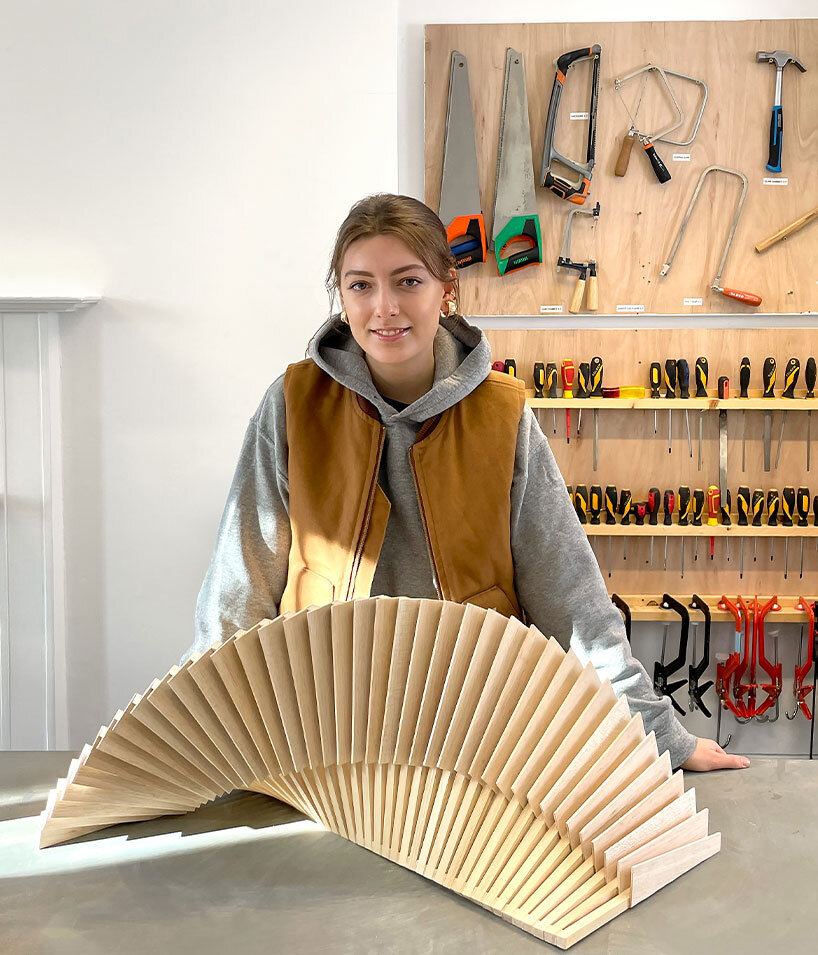
This deep dive into Italian cultural legacy ultimately sparked a powerful desire within Gil to reconnect with her own roots, transforming her eventual relocation back to Poland from a logistical choice into a profound conceptual homecoming. Reconnecting with her homeland provided both the raw material and the intellectual inspiration necessary to mature her design practice.
"Being able to express untold stories using something seemingly as straightforward as a piece of furniture was something I didn’t realise was possible," Gil notes. Articulating her strict standard for creation, she adds, "My guiding rule is to not create things that already exist. That doesn’t mean inventing for the novelty but rather shifting the conversation towards meaning. I don’t want to add more meaningless objects to the world."
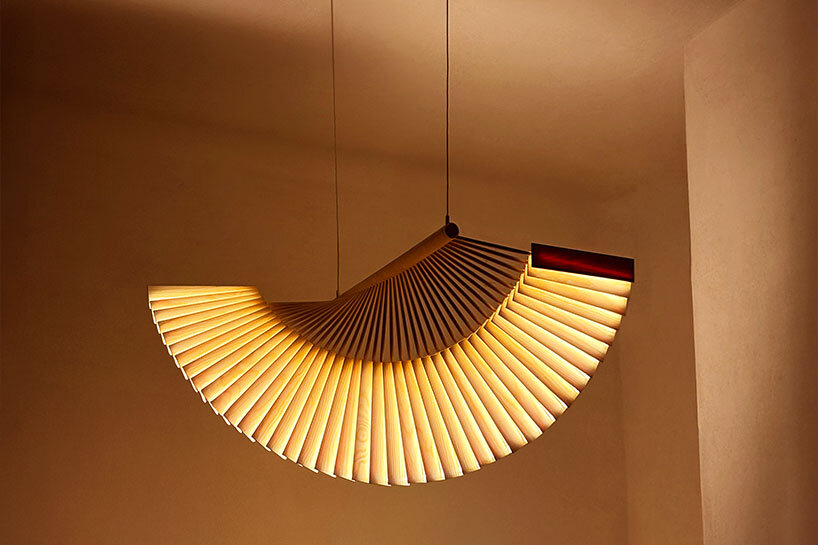
FROM SELF-PRODUCTION TO INDUSTRY COLLABORATION
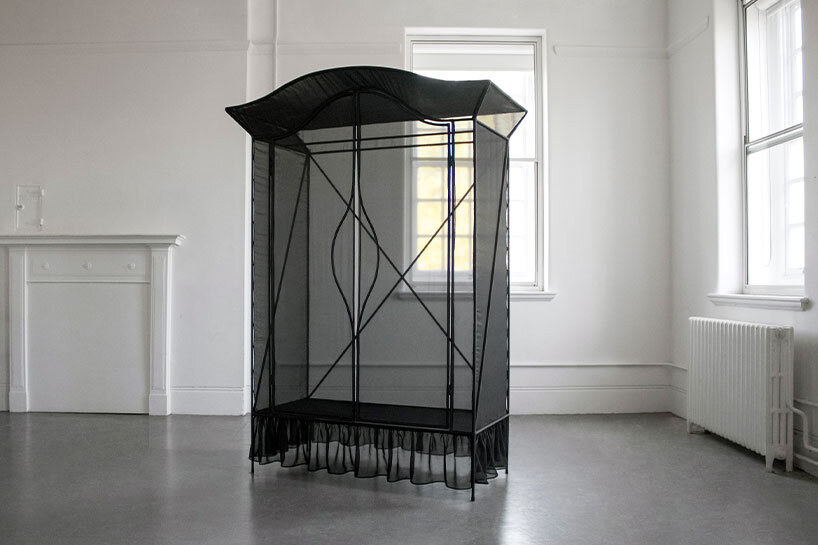
The scarcity of local manufacturing resources in Poland—contrasting sharply with the well-established industrial networks she observed in Italy and the UK—prompted Gil to undertake a nationwide investigation into surviving craft traditions. Her research revealed a glaring absence: the historical lack of a native Polish postmodernist movement. This realization stood in stark contrast to the Italian Radical Design movement, which had long served as a cornerstone of international design history. Driven by intellectual curiosity, Gil began investigating why this movement never materialized locally and what form it might have hypothetically taken. This line of inquiry culminated in her thesis project, the Post War Wardrobe, a striking piece that pairs industrial rebar with fabric to reconstruct historical memory through material lack.
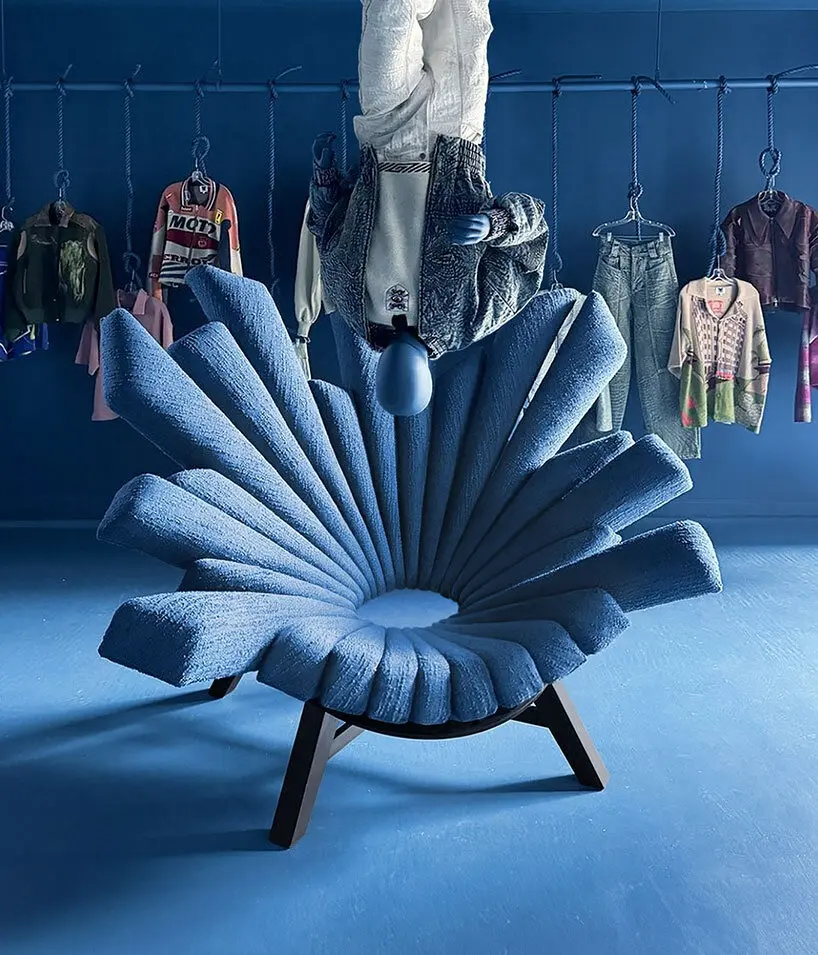
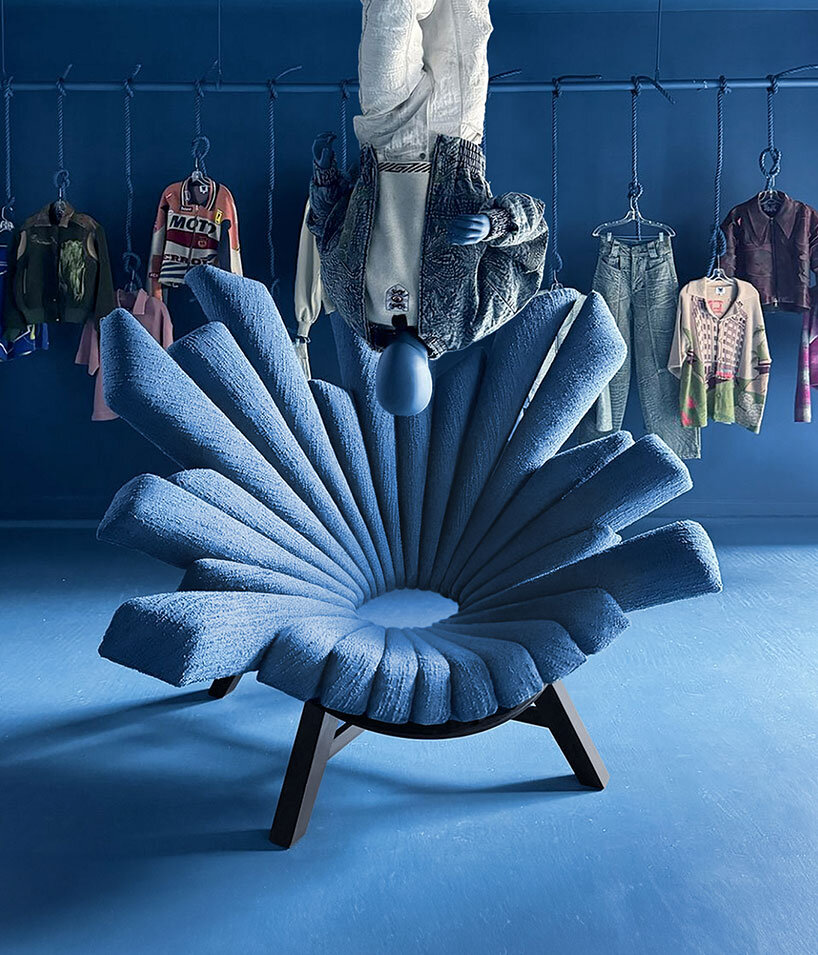
This rigorous conceptual approach quickly caught the attention of the broader creative industry. After entering a design contest hosted by the fashion brand House of Errors with a simple sketch of her All-Seeing Chair, Gil was challenged to bring the physical piece to life within a demanding, fast-paced studio timeline. The resulting prototype not only met the challenge but also secured top honors at the Young Furniture Exhibition, providing her with the validation needed to trust her own creative instincts.
Reflecting on this early success, Gil admits her initial self-doubt. "I almost didn’t submit my sketch of the All-Seeing Chair because I genuinely thought it was so obvious, that everyone must have thought of it too. I didn’t think it stood any chance for any of the prizes and yet it was recognized," she recalls. "Recognizing that pattern forced me to follow my intuition now. I’ve stopped fighting that feeling and started trusting it instead."
As her career gathered momentum, Gil sought broader exposure by showcasing her work at SaloneSatellite during the prestigious Salone del Mobile in Milan. For an emerging designer, the international furniture fair offered a harsh yet invaluable crash course in commercial realities. Recreating her complex prototypes to meet the exacting standards of the international fair required exhaustive physical, administrative, and logistical efforts. "For Salone Satellite, I knew I had to recreate my prototypes to the highest possible level to match the gravity of the fair. The process, however, was hardly creative but rather administrative, logistical and simply physical. It taught me, more than any studio project ever could, how much organizational effort it takes to be a successful designer," she shares.
The transition from conceptual self-production to commercial visibility highlighted the heavy administrative burdens placed on independent creators, making the necessity of working alongside established manufacturers increasingly clear. The following year, Gil returned to the fair to debut a sofa designed in collaboration with Nicoletti Home. This partnership marked a fundamental shift in her professional practice. By delegating manufacturing and production to an experienced brand, Gil was able to redirect her entire focus toward core design innovation, experiencing the commercial sphere from an entirely new vantage point.
"At the fair I got to experience the other major aspect to the more commercial side of the industry which is that instead of reaching only a handful of collectors, you get to have a meaningful impact on a wider audience. And it’s the direction I want to explore further, collaborations that turn ideas into impact," Gil observes.
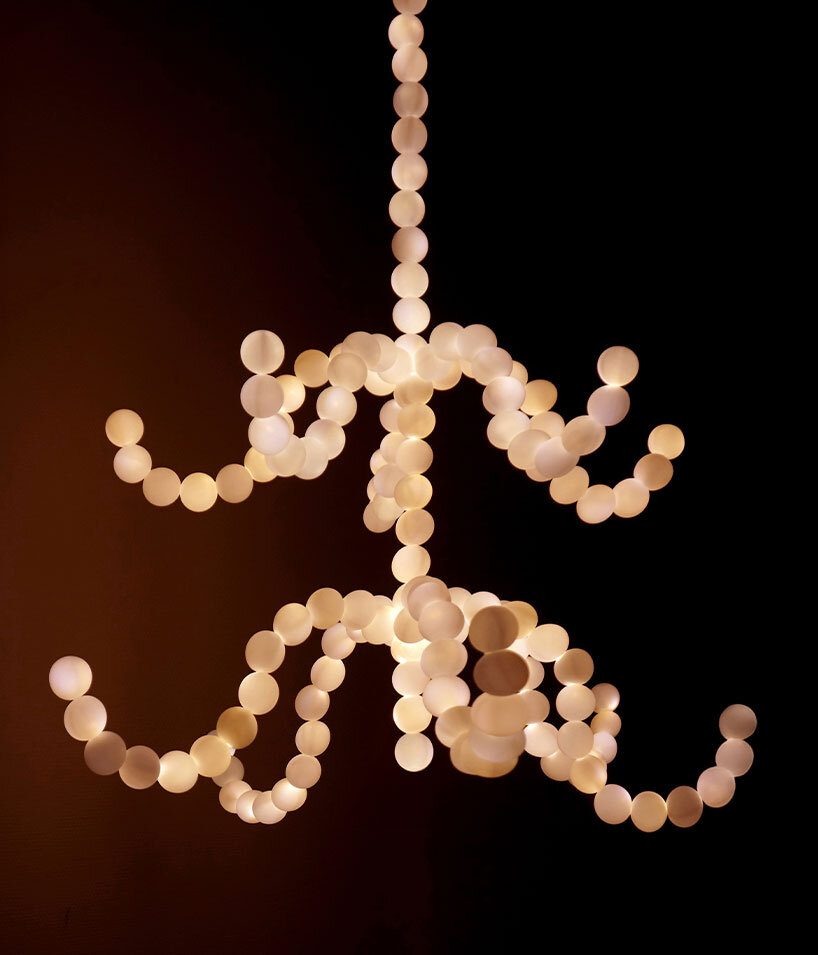
Along with commercial success came the complexities of protecting intellectual property. When unauthorized reproductions of her distinctive work surfaced online, possessing legally registered designs provided Gil with a clear, effective mechanism to safeguard her creative output. Rather than viewing intellectual property protection as a bureaucratic hurdle, she integrated it directly into her workflow.
"I have to say that after moving countries twice, I’ve come to see registering my work as part of the creative process itself," she reflects. "I’ve registered some of my work in the UK and through the EU Design system, and each time it’s felt like an investment in my identity as a designer, a way of standing behind what I create. My pieces often involve unusual techniques, and registering them early gives me the confidence to keep experimenting and putting new work out into the world."
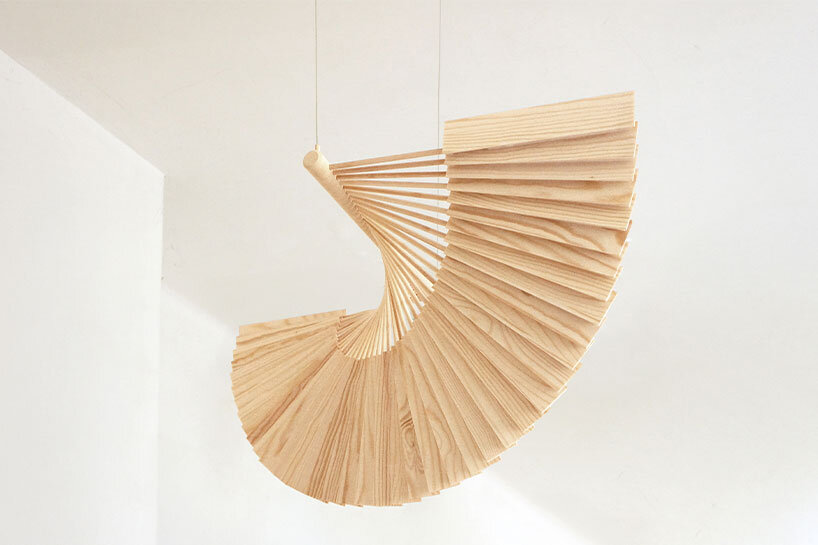
The receipt of the DesignEuropa Next Generation Design Award stands as a defining chapter in Gil’s professional journey, validating the maturity of her creative process and cementing her reputation within the European design community. The recognition acts as a foundational pillar for future industrial collaborations, reassuring manufacturing partners that beneath her bold, provocative ideas lies a deeply deliberate and disciplined methodology.
"As a young designer, I know my ‘signature’ is still taking shape and I’m genuinely excited to see how collaborations will evolve it. I think working with others has the potential to make my work much more diverse. That’s why receiving the DesignEuropa Next Generation Design Award matters to me so much. I hope it works as a kind of stamp of approval that reassures clients that behind the bold ideas, there’s a deliberate process," the young designer notes.
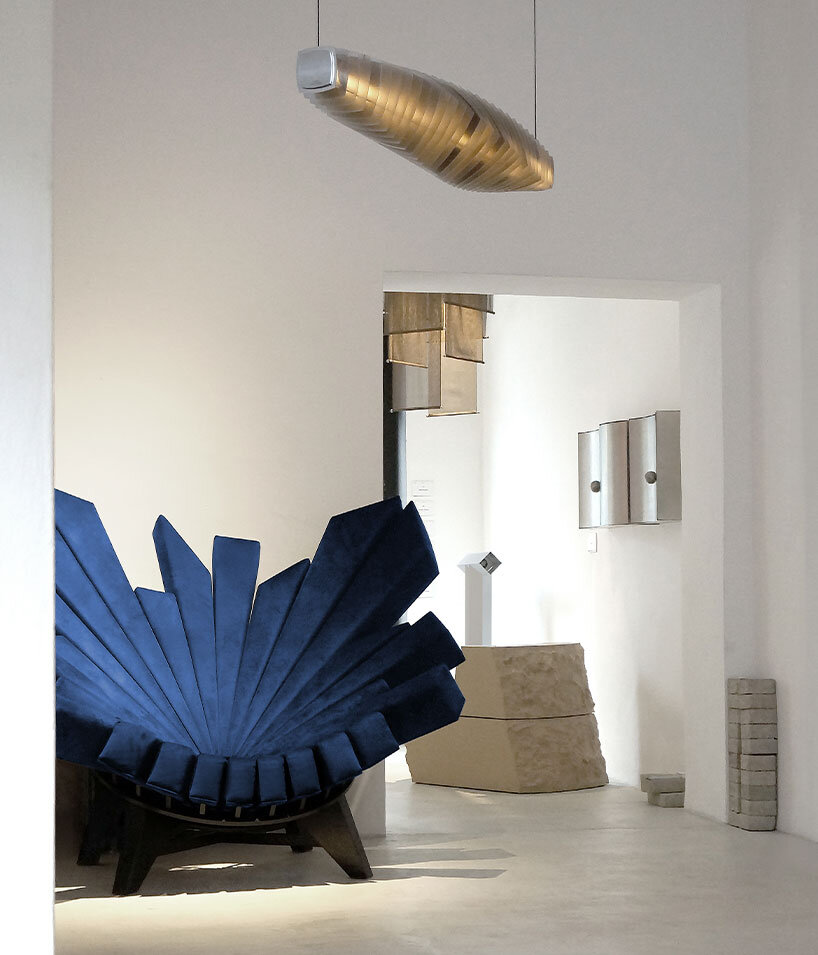
Influenced by a mosaic of diverse international traditions, Maria Gil continues to balance immediate emotional provocation with the pursuit of long-term cultural endurance. Looking ahead, her vision utilizes loud, striking forms to interrogate present uncertainties while quietly building an enduring legacy.
"I believe my work reflects that nothing is certain today. We’re not certain about the future, nor are we certain about what’s even true in the present. Through my designs, I question and invite reflection and maybe that’s why I want them to be loud now. Today, I want my work to provoke, to make people feel something," Maria Gil concludes. "But a century from now? I wouldn’t mind if they felt nothing extraordinary. Today we look at steam-bent chairs or flat-pack furniture as ordinary when a hundred years ago they were radical. It would be an honour to create things so present now that they leave a quiet legacy later."
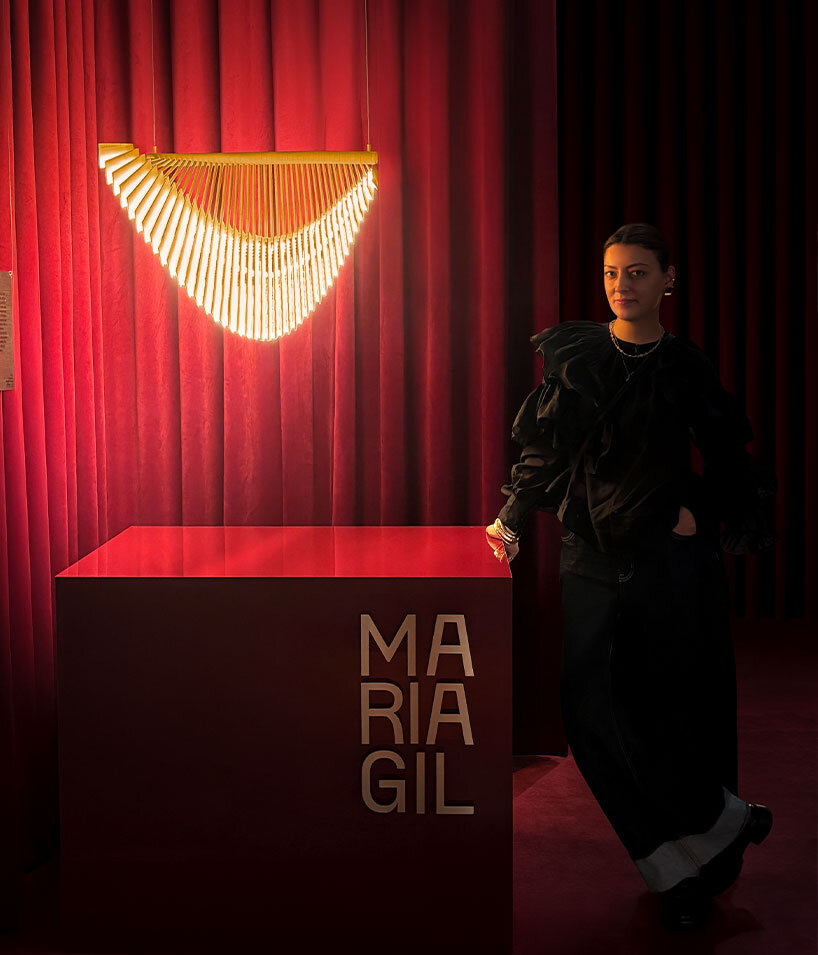
project info:
award: Next Generation Design Award 2026
organizer: DesignEuropa Awards
designer: Maria Gil | @maria___gil