The historic Portuguese city of Abrantes has long stood as a powerful physical and historical landmark within the broader landscape of the Iberian Peninsula. Positioned strategically on a prominent promontory near the geometric center of a region shaped by centuries of geopolitical evolution, Abrantes marks a profound transition point between two distinct morphological landscapes. Over the course of its long history, the city has acted as an elevated guardian, a defensive watchtower, and an essential crossing point during both times of peace and periods of conflict. Perched upon a foundational, telluric topography, human occupation in Abrantes has consistently established a deep, systemic connection between the built environment and its natural setting, weaving architecture and landscape into a unified cultural experience.
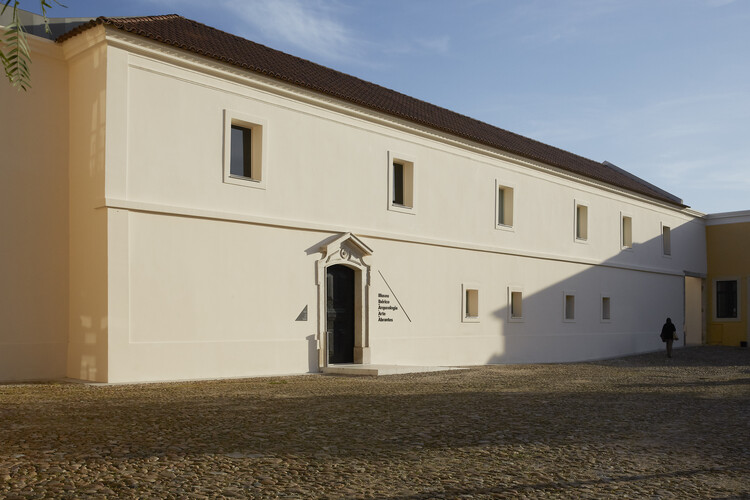
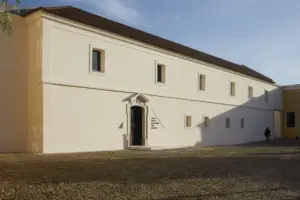
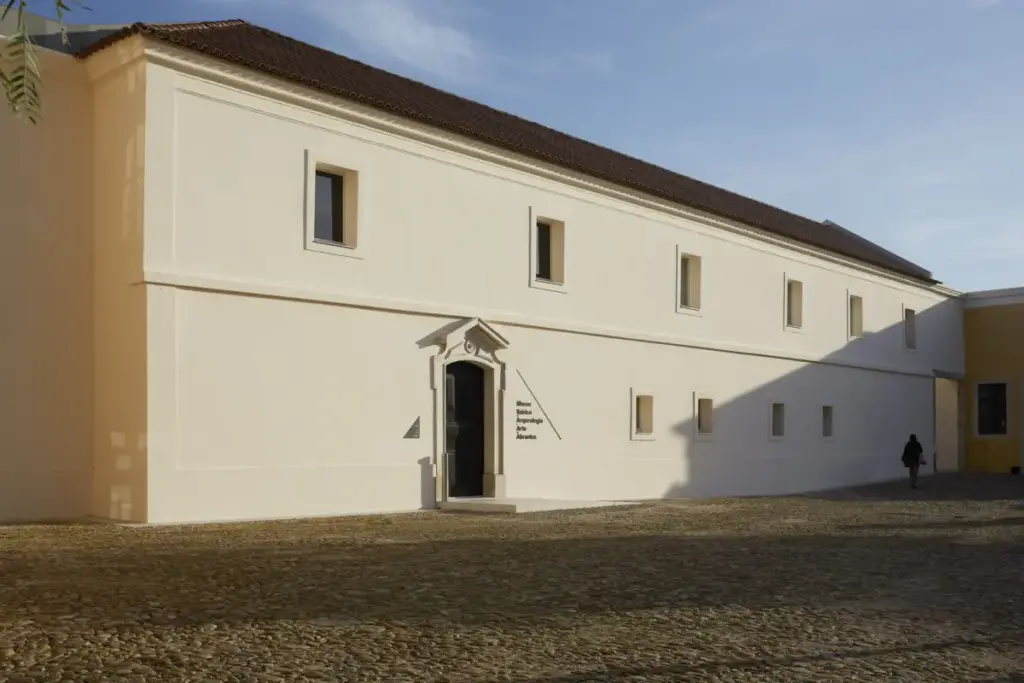
It is within this rich geographical and historical context that the Iberian Museum of Archaeology and Art (MIAA)—designed by the renowned studio Carrilho da Graça Arquitectos and curated by Susanna Moreira—takes its place. Completed to bridge past epochs with contemporary civic life, the museum stands as a physical manifestation of Abrantes’ enduring identity. The project capitalizes on the unique geostrategic qualities of the site, translating the dramatic topography of the promontory into an architectural language that honors both the archaeological treasures housed within and the sweeping vistas of the surrounding territory.
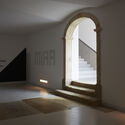
The architectural conception of the MIAA does not merely place a building upon a hill; rather, it engages in a continuous dialogue with the terrain. The architects approached the project by recognizing how human settlement has historically interacted with the rugged landscape of Abrantes. By anchoring the museum deeply into the foundational soil, the design reflects the city’s evolutionary trajectory as both a defensive outpost and a cultural focal point. The resulting structure acts as an extension of the ground itself, utilizing solid, enduring materials that mirror the geologic characteristics of the surrounding region.
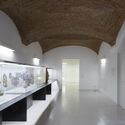
Inside and out, the museum is defined by a rigorous spatial organization that guides visitors through a chronological and thematic exploration of archaeology and art. The exterior interplay of concrete and shadow establishes a powerful modern presence that respects the surrounding historical fabric without resorting to mimicry. Natural light is carefully harnessed throughout the galleries and transitional spaces, illuminating the artifacts while framing carefully composed views of the exterior landscape. Staircases, archways, and arcades create a rhythmic architectural sequence, offering moments of pause and reflection for those moving through the exhibition spaces.
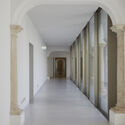
The relationship between the MIAA and the city of Abrantes underscores a broader architectural strategy where contemporary cultural infrastructure serves to revitalize historic urban centers. By establishing a museum of Iberian scope within this strategic promontory, the project reinforces Abrantes’ position as a vital cultural destination. The carefully curated exhibitions, developed under the guidance of Susanna Moreira, bring together diverse collections of artifacts and artworks that narrate the shared history and cultural heritage of the Iberian Peninsula.
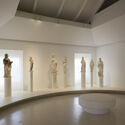
Through its thoughtful integration of site, structure, and historical narrative, the Iberian Museum of Archaeology and Art stands as a testament to the collaborative vision of Carrilho da Graça Arquitectos. The project successfully negotiates the complexities of building within a historically charged environment, creating a lasting civic monument that will continue to watch over and enrich the landscape of Abrantes for generations to come.