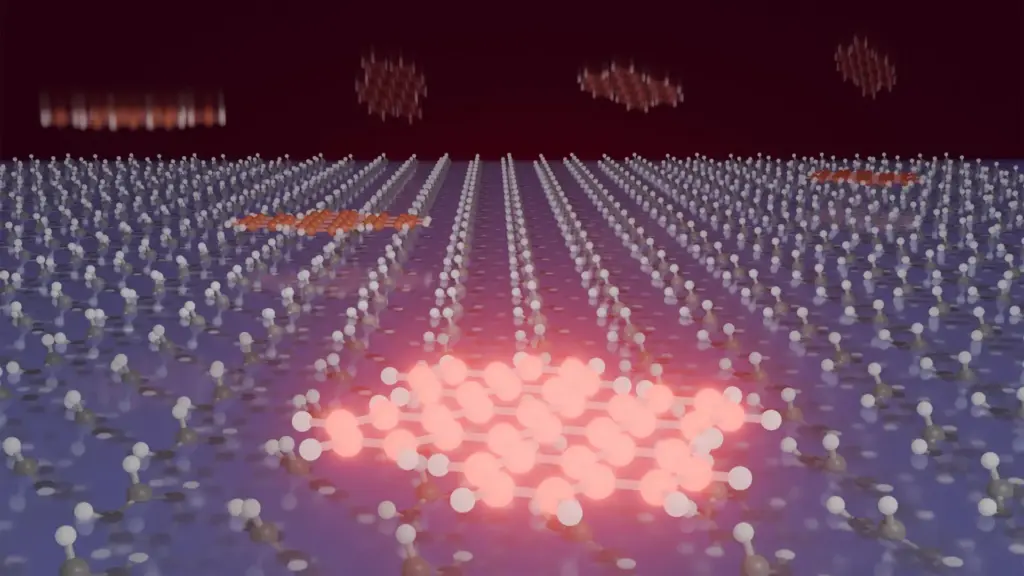
In a major milestone for quantum physics, scientists at the Max Planck Institute for the Science of Light (MPL) in Erlangen, Germany, have developed a pioneering technique that allows researchers to study individual molecules on a solid surface with unprecedented precision. For the very first time, a research team has successfully demonstrated that molecules attached directly to a surface can achieve the ultimate quantum limit of optical coherence. This achievement marks a vital step forward in overcoming a notoriously stubborn obstacle that has limited the scope and potential of molecular quantum research for decades.
The groundbreaking findings, which detail how the research team bypassed long-standing physical limitations, have been published in the prestigious scientific journal Science. By solving the persistent problem of surface-induced noise and disruption, the MPL team has opened exciting new avenues for investigating fundamental interactions between complex molecules and solid surfaces. Furthermore, the technique lays a robust foundation for the development of advanced quantum technologies, including ultra-secure communication systems and next-generation quantum computing architectures.
Why Surfaces Have Been a Major Obstacle in Quantum Physics
At the heart of many emerging quantum technologies are extremely small, discrete physical objects—such as individual atoms and molecules—that interact heavily and predictably with light. In the specialized language of modern physics, these tiny systems are referred to as quantum emitters. Because of their unique quantum mechanical properties, these emitters are capable of producing single, isolated particles of light known as photons. They can also store fragile quantum information and help establish secure, long-distance quantum connections between different nodes in a network.
These core capabilities are widely regarded by physicists and engineers as indispensable prerequisites for the practical realization of future applications in quantum computing and ultra-secure quantum communication networks. However, harnessing these capabilities requires a delicate balance of isolation and control. To study a single quantum emitter effectively, experimental physicists must find ways to keep it stable, motionless, and confined to a single, highly specific location for extended periods of observation.
Traditionally, researchers have accomplished this by trapping isolated atoms or molecules inside a near-perfect vacuum or by embedding them deeply within the bulk of solid materials. While both methods have yielded remarkable scientific insights, they each come with notable limitations, particularly when it comes to manipulating the emitters directly.
Placing quantum emitters directly on an exposed surface, by contrast, offers an exceptionally intriguing advantage to researchers. If successful, scientists could potentially manipulate individual molecules directly by "touching" them with an extremely sharp physical probe. Advanced laboratory techniques such as scanning tunneling microscopy (STM) and atomic force microscopy (AFM) already utilize microscopic tips possessing atomic-scale precision to investigate matter at the most fundamental scales. Combining the optical brilliance of quantum emitters with the spatial precision of scanning probe microscopy has long been a major goal for the scientific community.
The central difficulty, however, has always been that real-world surfaces are rarely as clean, pristine, and stable as delicate quantum experiments demand. Contaminants, dust, moisture, and chemical residues from the surrounding laboratory environment constantly accumulate on solid surfaces. These microscopic disturbances create localized electromagnetic noise and thermal fluctuations that violently interfere with the fragile quantum behavior of nearby atoms and molecules. Until now, researchers around the world had struggled continuously to preserve the pristine quantum optical properties of individual emitters once they were attached to an exposed surface.
Now, a team of dedicated scientists working within MPL’s Nano-Optics Division has successfully found a way around this seemingly intractable problem, fundamentally changing what is possible in surface-bound quantum optics.
A Clever Crystal Cleaning Method Solves the Problem
The successful research effort was spearheaded by Prof. Vahid Sandoghdar, a director at the Max Planck Institute for the Science of Light and the head of its Nano-Optics Division. To tackle the surface contamination issue, Sandoghdar and his team developed an unusual and remarkably elegant cleaning method that ingeniously takes advantage of a natural physical property exhibited by certain organic crystals.
At room temperature and under specific conditions, these crystal materials gradually evaporate through a well-known thermodynamic process called sublimation. During sublimation, a solid substance transforms directly from a solid phase into a gas phase, completely bypassing the intermediate liquid phase. The MPL researchers realized they could harness this continuous shedding process to dynamically purify the material’s surface in real time.
To execute this strategy, the research team placed a small, specially chosen crystal inside a highly specialized vacuum chamber designed for extremely low temperatures, known scientifically as a cryostat. As the uppermost layers of the crystal slowly and steadily evaporated away, they carried all unwanted chemical contaminants and surface impurities along with them into the vacuum. This continuous peeling away of the surface layers left behind a remarkably clean, atomically pristine surface underneath.
Once the natural sublimation process had successfully cleansed the material, the team rapidly cooled the entire crystal down to just a few degrees Kelvin—merely a fraction above absolute zero, which is the lowest theoretically possible temperature in the universe. This extreme thermal cooling immediately halted any further sublimation, locking the crystal structure in place and helping to maintain the newly created, pristine surface environment over long periods.
With the ultra-clean substrate safely prepared inside the cryostat, the scientists utilized a tiny, specially fabricated micro-oven to gently evaporate organic molecules onto the intensely cold crystal. This allowed the molecules to drift downward and settle securely onto the ultra-clean surface without picking up any ambient contaminants along the way.
Molecules Reach the Ultimate Quantum Limit
With this exceptionally stable and isolated environment successfully established, the researchers set out to investigate whether the newly deposited molecules had managed to retain their notoriously fragile quantum properties. Because quantum states are easily disrupted by the slightest external influence, verifying their integrity is a crucial test of any new experimental method.
Dr. Alexey Shkarin, a researcher in the Nano-Optics Division at MPL who worked closely on the project, elaborated on the evaluation criteria during a discussion of the results. "The quality of quantum emitters can be evaluated by their coherence times, which indicate how long they keep their quantumness," Shkarin explained, highlighting the central metric used by the team to assess their success.
Coherence time is a fundamental physical descriptor that details how long a given quantum system can successfully maintain the specific phase relationships and superposition properties required for complex quantum behavior. The longer this quantum coherence can persist without degradation, the better the emitter can perform in demanding technological applications that depend on precise, predictable interactions with light.
However, fundamental laws of physics impose a strict restriction on how long this coherence can possibly last in any given system. Known widely to physicists as the Fourier limit, this absolute boundary is fundamentally determined by the time required for a quantum emitter to naturally release its stored energy into its surrounding environment.
In a typical, unstable, or "noisy" laboratory environment, external disturbances and fluctuating electromagnetic fields can cause quantum coherence to decay and disappear hundreds or even thousands of times faster than this theoretical Fourier limit allows. This rapid decoherence has historically rendered surface-bound quantum experiments exceptionally difficult to interpret or utilize practically.
To the great excitement of the research team, the scientific measurements revealed that molecules deposited on their exceptionally clean crystal surface consistently reached the Fourier limit. This definitive result demonstrated clearly that the surrounding environment was sufficiently quiet, clean, and stable to preserve the molecules’ delicate quantum coherence for the maximum physically permitted duration.
This achievement marks a major milestone in experimental physics: it is the very first time that researchers have ever succeeded in reaching this fundamental quantum limit using molecules that are directly attached to a solid surface.
New Possibilities for Controlling Individual Molecules
Beyond merely proving that the method works, the breakthrough also provided the MPL team with a powerful new platform to investigate how a solid crystal surface actively influences the individual molecules resting upon it. By offering an environment devoid of noise, the technique cleared away the experimental "static," allowing subtle physical effects to finally become visible to researchers.
Further experiments conducted by the team revealed that interactions between the underlying crystal surface and the molecules can cause the molecules to align themselves in particular, predictable directions and can alter their internal energy levels in measurable ways. Furthermore, the researchers uncovered intriguing indications that the surface might also subtly influence the physical shapes of the molecules or modify the specific ways in which they vibrate when excited.
These newly observable effects could potentially provide physicists and chemists with valuable clues regarding how matter behaves at the absolute limits of the molecular scale. At the same time, they offer exciting new opportunities to exert fine control over complex quantum systems in laboratory settings.
Looking toward the future, the research team is already planning the next major steps for the project. "Our future work will focus on combining this method with AFM and STM to gain local nanometer control over individual quantum emitters," stated Vahid Sandoghdar, outlining the trajectory of the research group’s ongoing investigations.
By successfully combining their innovative ultra-clean surface technique with powerful, high-resolution scanning microscopy methods, the MPL researchers hope to be able to manipulate individual quantum emitters with spatial precision measured in mere billionths of a meter.
Such advanced capabilities could eventually reveal previously inaccessible details concerning the fundamental interactions that occur between molecules and surfaces. At the same time, this line of inquiry lays a robust foundational groundwork for engineering entirely new quantum states of matter and steadily advancing the frontier of future molecular quantum technologies.