The prehistoric fossil market has notched another blockbuster event, proving that the appetite among elite collectors for multi-million-dollar prehistoric artifacts shows no signs of cooling.
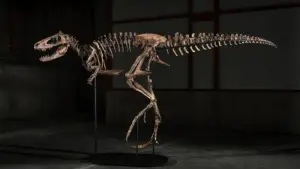
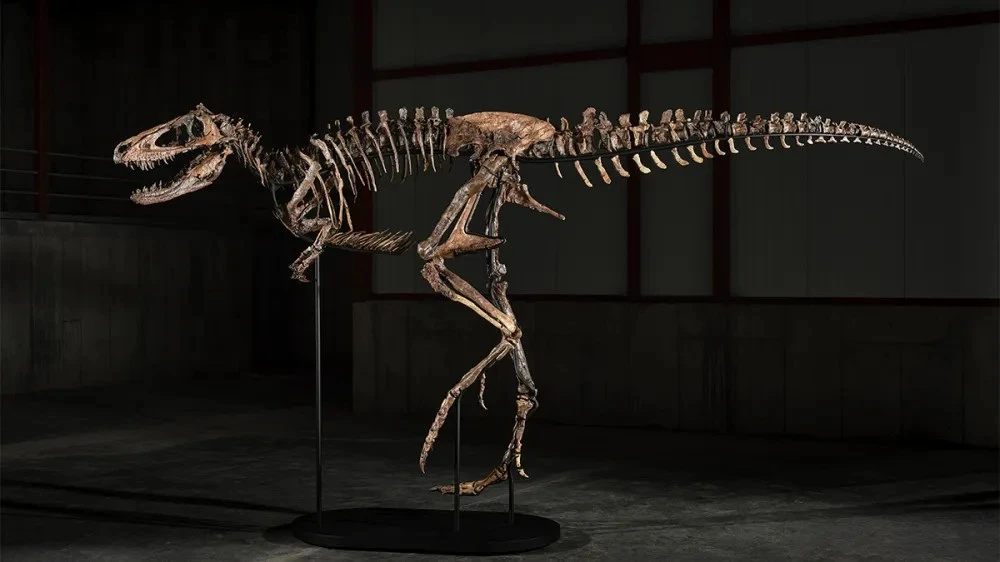
"Jodi," an exceptionally well-preserved and remarkably complete 67-million-year-old Nanotyrannus skeleton, sold on Tuesday at Sotheby’s in New York for $47.3 million, inclusive of fees. The final price obliterated expectations, landing at more than five times its optimistic $9 million high estimate. When the auctioneer’s hammer finally fell at $40.5 million, the sale instantly cemented Jodi as one of the most expensive dinosaur fossils ever brought to public auction, capturing the attention of the global art and luxury markets alike.
This monumental result comes hot on the heels of another historic sale held just three months prior at the same auction house. In that July event, Sotheby’s sold "Gus," a towering Tyrannosaurus rex skeleton, for a record-breaking $50.1 million. That summer sale, which had initially carried an estimate of $20 million to $30 million, established a dazzling new high-water mark for prehistoric fossils, eclipsing the $44.6 million paid for "Apex," a massive Stegosaurus that went under the hammer in 2024.
Remarkably, Jodi came within a hair’s breadth of breaking those top-tier records, a feat made even more impressive by the fact that the specimen is considerably smaller than a T. rex and historically lacked the ubiquitous, pop-culture brand recognition associated with its larger predatory relatives.
Unearthing Jodi and the Hell Creek Formation
The nearly 20-foot-long skeleton boasts a dramatic history rooted in the rugged terrain of the American West. It was discovered in 2019 within Montana’s famed Hell Creek Formation by rancher Jodi Pierson, the very namesake for the fossil. According to descriptive documentation provided by Sotheby’s, Jodi stands out as one of only three known Nanotyrannus skeletons in existence. The specimen comprises 191 distinct fossil bone elements, headlined by a remarkably complete and pristine skull that offers researchers an unprecedented look at the anatomy of the creature.
The Hell Creek Formation itself is legendary among paleontologists as a treasure trove of Late Cretaceous fossils, preserving a snapshot of life on Earth right before the catastrophic asteroid impact that wiped out the non-avian dinosaurs. Finding a skeleton of this completeness in such a formation is an exceedingly rare event, transforming what began as a ranch discovery into a major paleontological and commercial sensation.
Settling a Scientific Debate
For decades, the very existence of Nanotyrannus as a distinct genus was a subject of fierce, unresolved academic debate within the paleontological community. Until recently, many scientists remained deeply skeptical about whether Nanotyrannus represented a unique type of dinosaur or was simply a juvenile T. rex. Researchers argued back and forth over skeletal proportions, tooth counts, and growth rates, wondering if the smaller predators roaming the prehistoric landscape were merely adolescent versions of the undisputed king of the dinosaurs.
However, the scientific landscape shifted dramatically last year. A landmark study published in the prestigious journal Nature helped settle the contentious argument once and for all. The research identified Nanotyrannus not as a growing T. rex, but as a distinct, separate genus that lived and hunted alongside its much larger and more famous cousin during the Cretaceous period. This newfound scientific legitimacy has retroactively elevated the historical and academic value of specimens like Jodi, shifting them from theoretical juvenile curiosities into prime examples of an independent apex predator.
A Curious Career in the Art Market
Jodi is no stranger to the high-stakes world of high-end commerce. In fact, the skeleton has already enjoyed a colorful career within the upper echelons of the market before reaching Tuesday’s historic auction block.
Back in 2023, when the fossil was known under the moniker "Chomper" and was still widely marketed and identified as a juvenile T. rex, the prominent London art and antiquities dealer David Aaron offered the skeleton for sale at a price of $20 million during the Frieze Masters art fair. At the time, the ambitious offering failed to find a buyer at that specific price point. According to Sotheby’s formal provenance listings, the current consignor had actually acquired the skeleton earlier, in 2021.
Just three years after lingering unsold under its old identity, the skeleton returned to the spotlight rebranded with a new name and backed by a newly settled scientific identity as a Nanotyrannus. The pivot paid off exponentially, realizing more than double the price that was asked for it during its gallery debut.
Dinosaurs as Ultimate Luxury Trophy Objects
The staggering price fetched by Jodi provides undeniable, fresh evidence that dinosaur fossils have firmly transitioned into serious luxury trophy objects for the world’s ultra-wealthy collectors. At the apex of the global luxury market, prehistoric bones now sit comfortably alongside blue-chip contemporary paintings, ultra-rare vintage watches, and investment-grade sports memorabilia.
Over the past several years, prices for these prehistoric artifacts have climbed at a remarkable, almost unprecedented pace, driven by a surge in demand from private buyers seeking unique, awe-inspiring centerpieces for their private estates and residences.
This modern collecting trend has generated a series of headline-grabbing market milestones. Christie’s set early momentum when it sold "Stan," a formidable T. rex skeleton, for $31.8 million back in 2020. More recently, the appetite for smaller or more unusual predators has proven equally insatiable; a juvenile Ceratosaurus brought in a staggering $30.5 million at Sotheby’s last year, completely shattering its modest pre-sale estimate of $4 million to $6 million.
The Ongoing Debate Between Science and Commerce
While auction houses and private collectors celebrate these skyrocketing valuations, the commercialization of prehistoric fossils continues to spark intense debate and deep concern within the scientific community.
Leading paleontologists and museum researchers have repeatedly voiced worries that scientifically vital fossils are rapidly being priced far beyond the acquisition budgets of public institutions, universities, and museums. As these specimens command tens of millions of dollars from private bidders, critics warn that crucial chapters of Earth’s history are disappearing behind closed doors into private collections, potentially cutting off access for ongoing academic study, peer review, and public exhibition.
Auction houses and commercial fossil hunters, on the other hand, defend the practice. They argue that private investment and high-profile market sales inject necessary capital into the field, helping to fund the extraordinarily expensive, labor-intensive, and time-consuming work required to properly locate, excavate, delicately prepare, and scientifically preserve fragile specimens that might otherwise remain buried and lost to erosion.
As the market for these prehistoric titans continues to set new financial records with each passing season, the complex intersection of commercial wealth and scientific heritage remains one of the most compelling narratives in the modern art and antiquities world.