Look closely at Katsushika Hokusai’s The Great Wave off Kanagawa, one of the most celebrated and globally recognized works of Japanese art, and the brilliant, arresting whites seem almost painted directly onto the scene. Yet a closer examination reveals a fascinating secret: the dynamic white foam of the towering waves, the crisp snow blanketing the peak of Mount Fuji, and the soft clouds drifting through the sky contain no white pigment at all. Instead, their striking brightness is born entirely from physics—specifically, light scattering off the exposed, untreated fibers of traditional washi paper.
This optical effect, known scientifically as structural whiteness, bypasses the need for any colored substance. Rather than absorbing and reflecting specific wavelengths through chemical dyes or pigments, structural whiteness emerges from the precise way a material’s microscopic, internal architecture interacts with ambient light.
This same fundamental phenomenon appears abundantly throughout the natural world, operating as an efficient design strategy across diverse ecosystems. Sea spray, drifting clouds, and pristine winter snow all look intensely white because their physical structures are exceptionally effective at scattering visible light in all directions. Similar optical mechanisms can be found tucked away in delicate plant tissues and even within the airy, foamy protective nests engineered by certain species of frogs to shield their eggs. In many of these natural instances, the structures consist largely of nothing more than trapped air, yet they manage to produce striking, dazzling whiteness without relying on a single drop of chemical pigment.
That elegant natural strategy has now inspired an international team of researchers led by Professor Easan Sivaniah of Kyoto University’s Institute for Integrated Cell-Material Sciences (iCeMS), working in close collaboration with colleagues from Tokyo Metropolitan University and Donghua University. Their shared goal was ambitious: to engineer a novel foam-based materials platform capable of addressing two major, long-standing challenges facing commonly used industrial and consumer materials today.
Alternatives to Titanium Dioxide and PFAS
In modern manufacturing, white packaging, flexible films, and protective coatings routinely depend on titanium dioxide, commonly known as TiO2. This mined mineral pigment has long provided the essential opacity and brightness that consumers expect from white products. However, growing safety and regulatory concerns recently prompted the European Union to ban titanium dioxide as a food additive, sending ripples through supply chains and forcing industries to urgently reevaluate their standard formulations.
At the same time, another widely used group of synthetic chemicals, collectively known as PFAS, has become essential for conferring water- and oil-repellent properties to a vast array of materials. These fluorinated substances, valued for their durability and resistance, are increasingly under intense regulatory scrutiny because they persist indefinitely in the environment, earning them the moniker "forever chemicals." With mounting evidence pointing toward potential environmental and health risks, global efforts to phase out PFAS and find viable, safer alternatives have dramatically intensified.
The research team approached both of these complex problems by shifting the paradigm away from added chemicals and focusing instead on physical structure. They engineered carefully controlled, porous materials designed to mimic the exact ways natural foams scatter light, while simultaneously drawing mechanical inspiration from the naturally water-repellent surfaces observed on lotus leaves and various flower petals.
"A key challenge faced by biomimetic science is realizing environmentally friendly material designs inspired by nature at the scale and cost of existing materials," explained Associate Professor Taiki Yanagishima of Tokyo Metropolitan University, highlighting the manufacturing hurdles that typically keep bio-inspired innovations confined to laboratories.
Light and a Mild Solvent Create the Foam
To overcome the scaling and economic hurdles, the team developed a manufacturing method that is remarkably straightforward and efficient. First, a standard polymer is exposed to controlled light. That exposure breaks the polymer chains down into smaller molecular fragments. Following this initial photochemical step, the material is treated with a mild solvent, which interacts selectively with those freshly created fragments and causes the polymer to swell significantly.
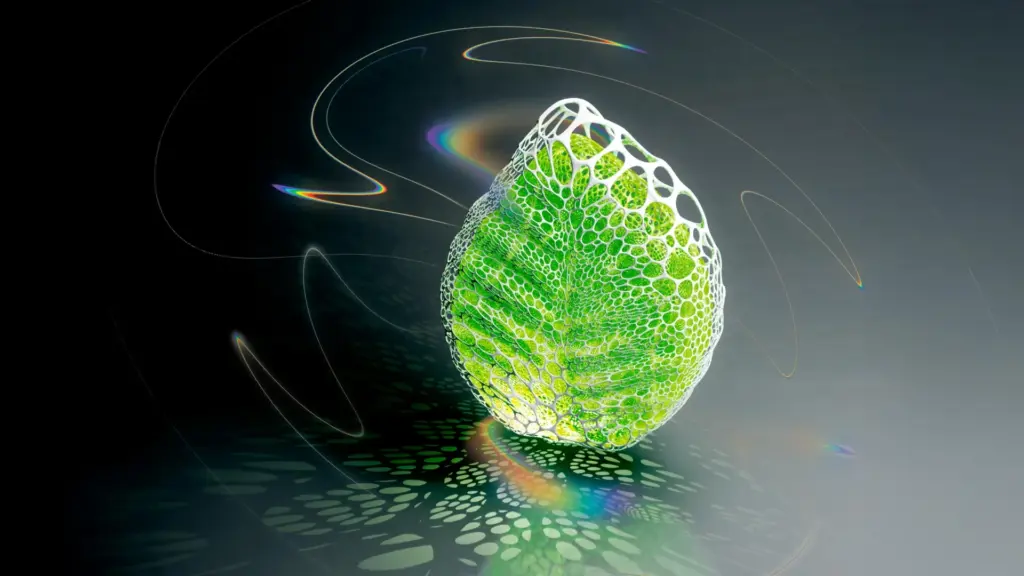
As the material expands outward, it develops an intricate, open network of microscopic pores. This single, elegant transformation bestows the material with two distinct and highly useful properties simultaneously.
Inside the body of the material, the newly formed porous structure scatters light so efficiently that the substance appears intensely white to the human eye, entirely eliminating the need for added pigments or opacifiers. Meanwhile, at the outer boundary, the expanding foam develops an extremely rough surface texture that strongly repels water, functioning in much the same way as the microscopic bumps on a lotus leaf that cause water to bead up and roll away.
The research team has designated this innovative manufacturing process as Deep Foam Photolithography, or DFP.
From Polymer Films to Fabrics
Working in close partnership with textile researchers at Donghua University, one of China’s premier institutions for textile science and engineering, the research team successfully demonstrated that the DFP method is versatile enough to work on far more than just printable polymer films. Crucially, the technique can also be applied directly to woven and non-woven fabrics, opening up wide possibilities for the textile and fashion industries.
Another significant advantage of the platform is that it does not depend on the costly development of entirely new specialty chemicals. Instead, the researchers have already successfully demonstrated Deep Foam Photolithography using a variety of readily available, commercially established polymers, meaning the technology could potentially integrate more smoothly into existing industrial manufacturing pipelines.
The resulting printable materials platform is capable of achieving ultrahigh resolutions of up to 20,000 DPI. At the same time, it successfully combines structural whiteness with advanced water-management functionality, all while completely omitting titanium dioxide and entirely avoiding the use of persistent PFAS chemicals.
Building Function Into the Material Itself
This innovative approach could unlock entirely new opportunities for creating lighter materials across multiple industries while simultaneously reducing humanity’s heavy reliance on mined mineral pigments and persistent fluorinated chemical treatments.
Rather than mixing foreign pigments into a substance to produce color, or applying persistent chemical coatings onto a surface to control how it interacts with moisture, the researchers are building those critical properties directly into the physical architecture of the material itself.
By harnessing microscopic architecture to precisely control both light and water, this technology offers a fundamentally different and potentially far more sustainable approach to designing the everyday materials that surround us. Rather than depending primarily on complex chemistry to achieve desired traits, the material is physically structured from within to provide the necessary function, pointing the way toward a cleaner, nature-mimicking future for industrial manufacturing.