For homeowners, gardeners, and builders embarking on outdoor construction projects, choosing the right timber is a critical decision that extends far beyond initial aesthetics. The longevity, structural integrity, environmental sustainability, and overall performance of a backyard structure—whether it is a raised garden bed, a backyard shed, or a custom pergola—hinge entirely on the species of wood selected. Over the past two decades, however, a significant shift has occurred in the North American lumber market, marked by the steady influx of imported timber products from Asia. Sold under various monikers such as "China Fir," "Chinese Cedar," or simply labeled generically as "cedar," these materials have become increasingly prevalent in home improvement retail channels.
While these imported alternatives often present a superficial visual similarity to traditional North American softwoods at first glance, they diverge substantially in biological classification, natural durability, and long-term outdoor performance. This market reality has generated widespread confusion among consumers who frequently believe they are investing in genuine, high-grade cedar, only to discover later that the lumber possesses entirely different physical properties. Industry observers note that understanding these distinctions has become essential for buyers navigating modern building supply inventories, where labeling practices do not always clearly communicate the exact botanical identity or geographic origin of the timber.
What Is Chinese Fir and How Did It Enter the North American Market?
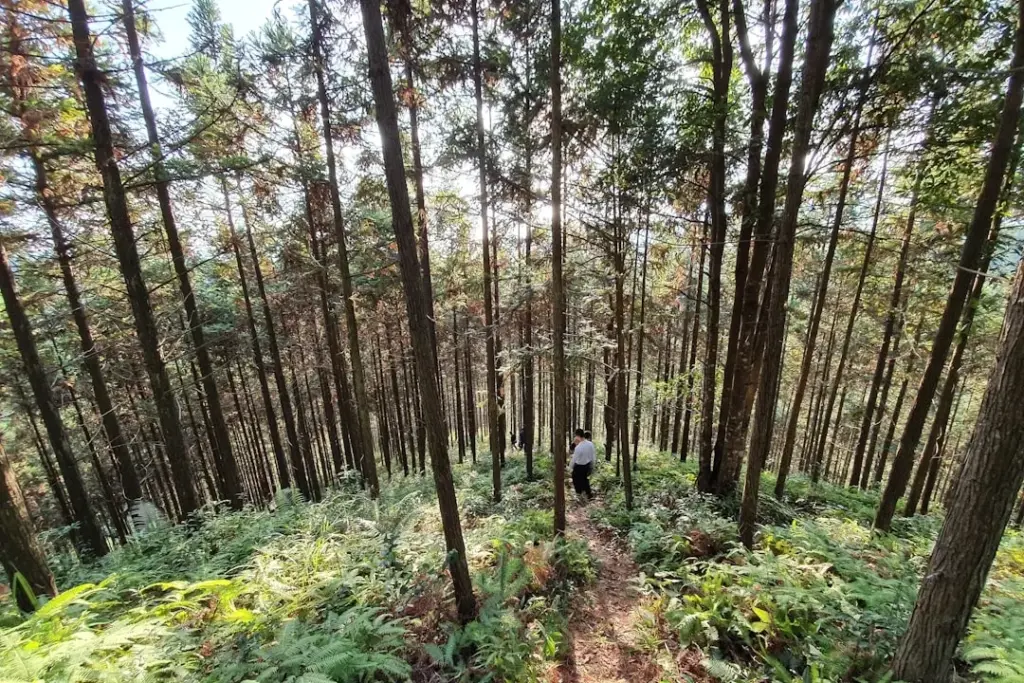
At the center of this market confusion is Chinese Fir, scientifically classified as Cunninghamia lanceolata. Native to the forest regions of China and various parts of Southeast Asia, this fast-growing softwood species has been utilized for regional construction and woodworking for centuries. However, its large-scale introduction into the North American market began in earnest around the mid-2000s, driven by a surge in imported prefabricated outdoor kits, fencing materials, and garden products.
As these bulk shipments arrived, distributors and manufacturers sought ways to market the unfamiliar timber to consumers who were already well-acquainted with the legendary performance of North American cedars. To bridge this consumer recognition gap, importers began utilizing descriptive marketing terms such as "China Fir," "Chinese Cedar," or dropping regional modifiers altogether to sell the material simply as "cedar."
Botanically speaking, however, Cunninghamia lanceolata is not a true cedar. It belongs to a completely different plant family and evolutionary lineage than the iconic softwoods native to the Pacific Northwest. Consequently, it does not inherit the specialized natural oils and cellular composition that give genuine cedars their renowned resistance to environmental decay and insect degradation. This distinction has remained largely invisible to the average retail buyer, particularly as packaging and marketing materials frequently blur the lines between distinct botanical species.
The Evolution of Lumber Labeling Practices and Consumer Confusion
The commercial journey of imported softwoods over the last twenty years illustrates a broader trend toward generalized labeling in the global timber trade. Between 2005 and 2015, the initial wave of market entry relied heavily on geographic qualifiers, with products explicitly identified as China Fir. While this transparency allowed knowledgeable builders to evaluate the material on its own merits, it gradually gave way to broader terminology as the products gained wider distribution across big-box retailers and online marketplaces.
By the early 2020s, a significant portion of these imported goods dropped geographic descriptors entirely, appearing on retail shelves and product specifications simply under the blanket term "cedar." In many cases, these retail items lack explicit species identification markings, fail to disclose the country of origin, and provide no standardized grading information to help the end user understand the nature of the material.
Industry advocates and consumer protection groups have pointed out that this lack of clarity creates an uneven playing field. Buyers frequently assume they are purchasing a direct, cost-effective equivalent to North American cedar, anticipating the same multi-decade outdoor lifespan without fully realizing that the lower price point reflects fundamentally different material capabilities. Without clear point-of-sale disclosures, consumers are left unable to make fully informed purchasing decisions, particularly when structural durability in harsh outdoor environments is the primary objective.
Side-by-Side Comparison: Botanical Realities and Performance Metrics
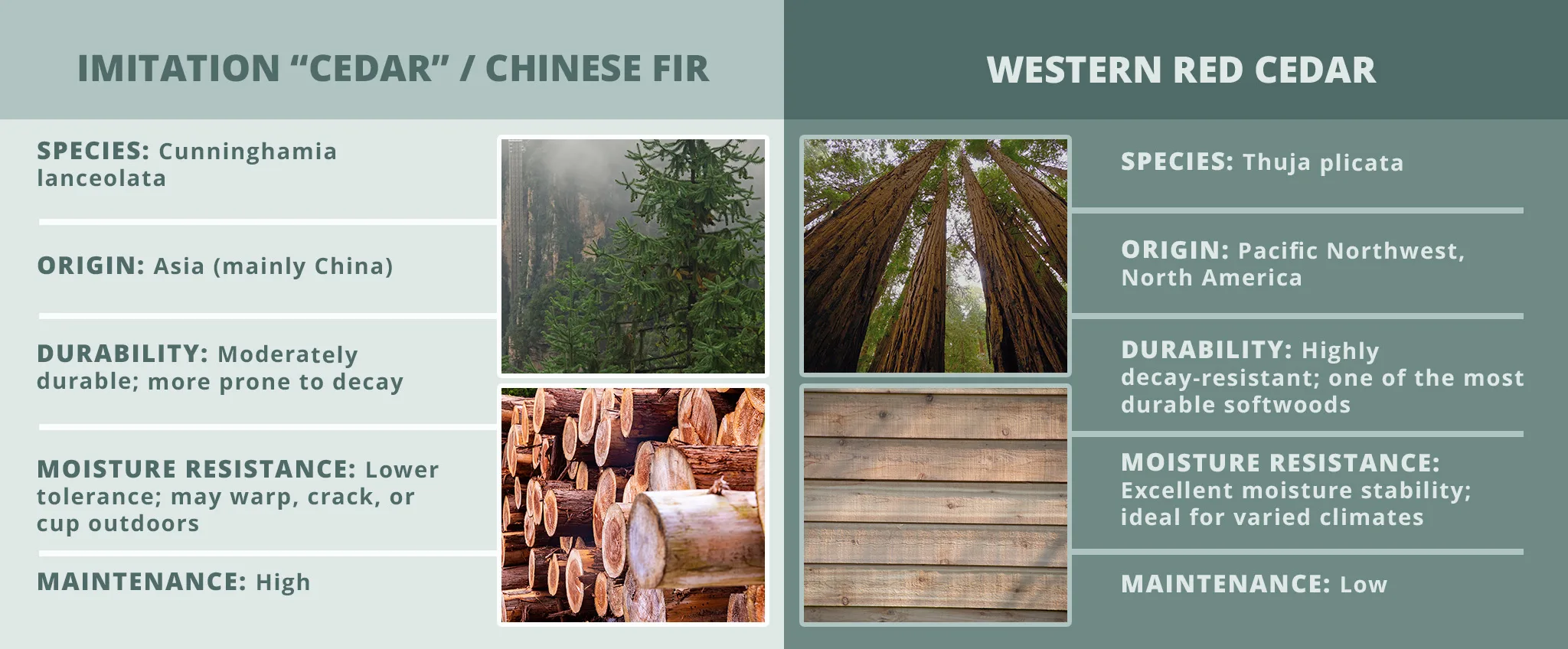
A rigorous examination of the physical and mechanical properties of Chinese Fir versus Western Red Cedar (Thuja plicata) highlights why species identification matters so much in practical application. While both materials serve valid purposes within the broader woodworking industry, their performance profiles diverge sharply when exposed to the elements.
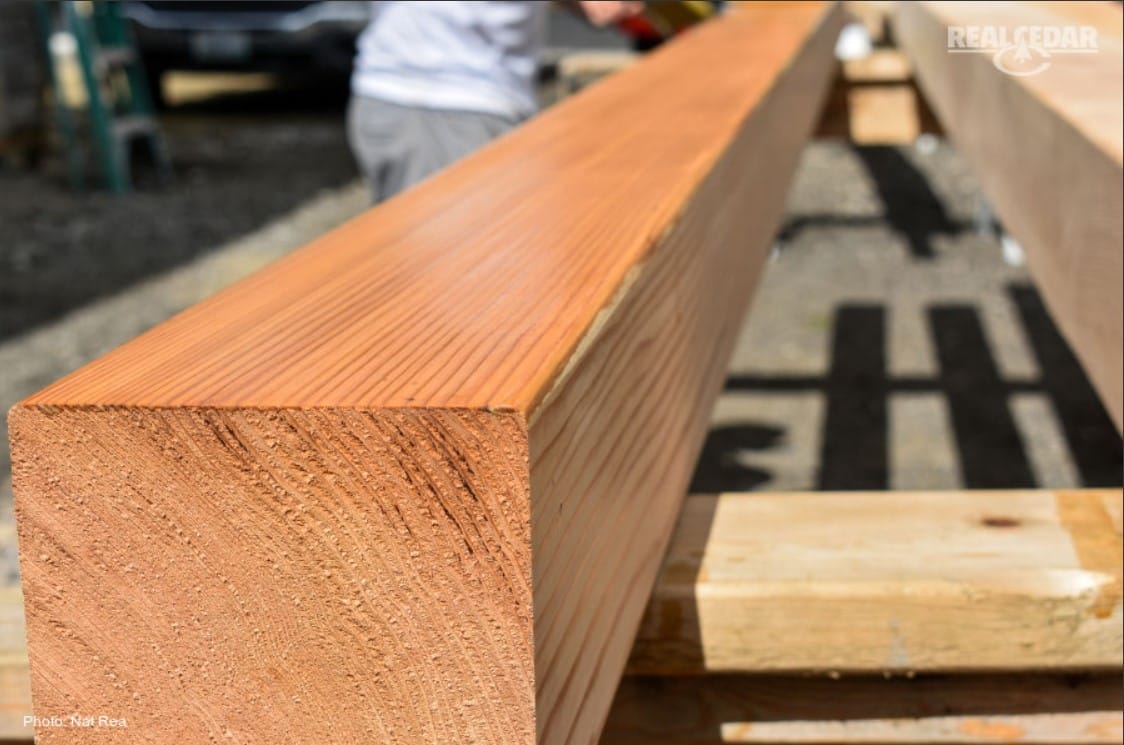
Western Red Cedar, harvested from sustainably managed forests in the Pacific Northwest of North America, is characterized by a warm reddish-brown coloration and a fine, straight grain. Botanically classified as Thuja plicata, the species is naturally saturated with organic compounds and extractives that render it exceptionally resistant to decay-causing fungi and wood-boring insects. Its low density and unique cellular structure also grant it superior dimensional stability, allowing the wood to withstand extreme seasonal temperature fluctuations and high-moisture climates with minimal warping, cracking, or cup formation. When properly installed, Western Red Cedar maintains its structural integrity outdoors for decades, often requiring very little chemical maintenance or preservative treatment.
In contrast, Chinese Fir presents a paler white to light-yellow hue accompanied by a noticeably rougher grain structure. While it possesses moderate durability under controlled conditions, it lacks the potent natural preservatives found in true cedars. Consequently, Cunninghamia lanceolata exhibits a lower tolerance for sustained moisture exposure. When utilized outdoors without frequent sealing, staining, or intensive protective maintenance, imported fir products are significantly more prone to rapid environmental decay, surface checking, warping, and structural degradation.
While Chinese Fir can perform adequately in interior finishing applications, furniture components, or low-exposure backyard projects where the wood remains sheltered from precipitation and ground contact, its outdoor lifespan is markedly shorter than that of authentic North American softwoods. Furthermore, while the sustainability of Western Red Cedar is tightly regulated by strict forestry standards and traceable certification programs across North America, the environmental and forestry practices governing imported softwoods can vary dramatically depending on the specific exporter, making independent verification much more difficult for the average buyer.
The Value of Transparency in Outdoor Construction
The ongoing discussion surrounding imitation cedar products underscores a fundamental need for transparency within the forestry and building supply sectors. As global supply chains continue to deliver diverse timber products to local markets, accurate labeling serves as a critical bridge between commercial suppliers and retail consumers. When wood products are clearly identified by their proper botanical names and regions of origin, buyers can align their material selections with the specific demands of their projects.
Industry professionals emphasize that neither wood species is inherently defective; rather, each is suited to entirely different environments. Utilizing a moderately durable, moisture-sensitive softwood like Chinese Fir in an exposed, high-moisture outdoor application often leads to premature failure and disappointment, whereas deploying high-grade Western Red Cedar for protected indoor cabinetry may represent an unnecessary expenditure. By demanding clearer labeling standards and looking beyond generic marketing terms, consumers and builders can ensure that their investments in timber yield the aesthetic appeal, structural reliability, and long-term durability they expect.