The traditional concept of interior walls has evolved significantly, making way for versatile, multi-functional partitions that serve as both spatial dividers and striking decor pieces in their own right. Whether defining distinct zones in an open-concept apartment, creating privacy in a shared bedroom, or adding architectural interest to an empty corner, room dividers have reasserted themselves as essential elements of modern interior design.

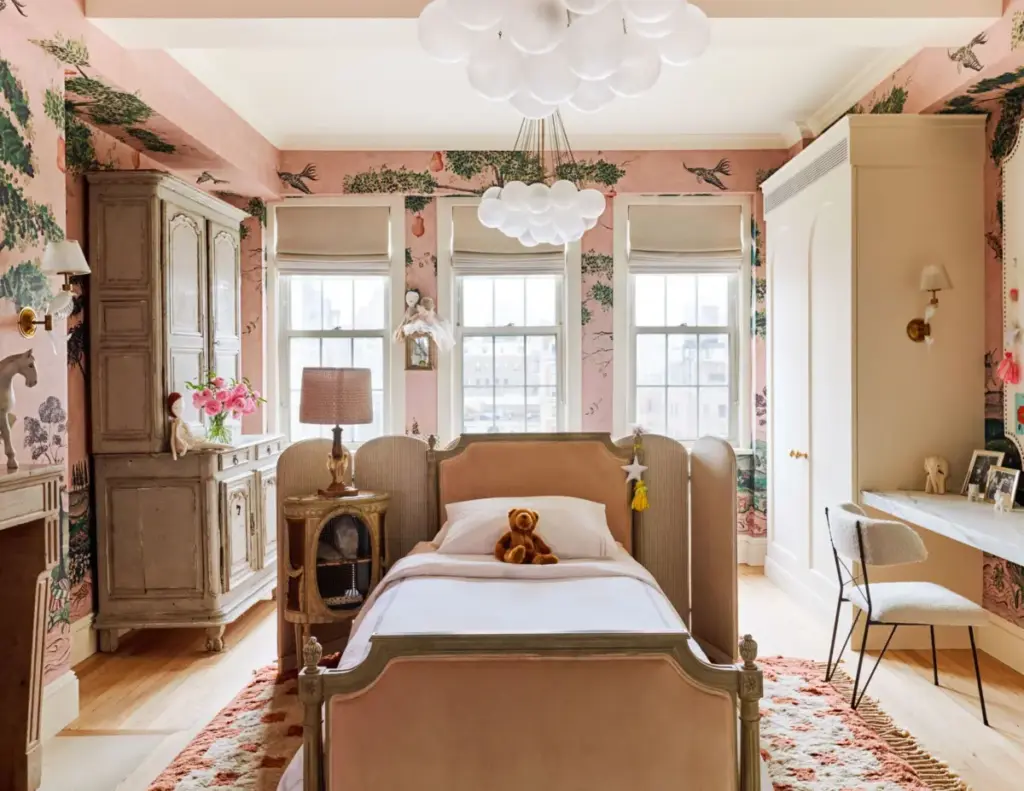
Designers and homeowners alike are increasingly turning to creative alternatives to permanent construction. In Nate Berkus and Jeremiah Brent’s Manhattan family home, their daughter Poppy’s room utilizes a vintage folding screen upholstered in Rose Tarlow Melrose House linen as an extension of the headboard, successfully separating the sleeping and playing areas while anchoring the room’s aesthetic.

The resurgence of the room divider spans a wide array of materials, eras, and design philosophies, proving that segmenting a room does not require sacrificing style or natural light.

The Versatility of Shelving and Modular Storage
For those looking to delineate space without putting up a freestanding partition wall, bookshelves offer an exceptionally functional solution. The IKEA KALLAX shelving unit, for instance, remains a staple for its sturdy reliability and agnostic design that can suit virtually any aesthetic.

In a studio apartment, a shelving unit is an excellent way to separate a bedroom area from a living room. "I first bought a two-row piece almost 15 years ago to create an office nook in my tiny Brooklyn apartment," says contributor Yelena Moroz Alpert. "It has survived six moves, and now my husband uses it in his office." Beyond creating physical separation, open shelving allows inhabitants to fine-tune the amount of visible open space by displaying books, ceramics, and personal decor items.

Modern Textures and Statement Pieces
For those seeking a bolder design statement, the market offers a diverse range of screens crafted from unexpected materials. The Hide and Seek room divider by Casa Dean, part of the CB2 Swizz Beatz collection, blends retro sensibilities with a sleek aesthetic. Crafted from vegan leather, the piece offers privacy infused with distinct artistic panache. Kasseem “Swizz Beatz” Dean, the Grammy-winning producer behind major records for artists like Beyoncé, Jay-Z, and Drake, approached the collaboration with a clear vision. "I wanted to design what I thought was the creative home for all creatives—no matter what medium you choose," he explains.

For spaces leaning toward a more relaxed, organic atmosphere, rattan and woven natural fibers provide a breezy alternative. The West Elm Zeze Room Divider introduces dimension to neutral-toned rooms while injecting a sense of relaxed 1970s style. Its three-panel woven design allows sunlight to filter through, making it an ideal option for those looking to carve out a dedicated work-from-home space without losing natural illumination. Similarly, the Bayou Breeze Daejon single-panel partition offers a semi-transparent rattan screen that elevates functionality into elegance, evoking the relaxed ambiance of a dressing room paired with a draped silk robe.

Classic influences continue to hold strong appeal. The Red Barrel Studio Niemann Shoji Room Divider draws on a style originating in eighth-century Japan as an adaptation of heavier Chinese folding screens. Constructed with fiber-reinforced rice paper inside a Scandinavian spruce frame, this minimalist piece softens rather than blocks natural light. Weighing just 12 pounds, its accordion-fold design allows for easy storage when not in use.

Architectural Accents and Outdoor Enhancements
Room dividers are no longer confined to the interior of the home. As outdoor living spaces receive the same design attention as indoor rooms, privacy solutions have adapted accordingly. The AllModern Screen Series Privacy Screen, crafted from durable corten steel, offers a light-filtering design that protects patio privacy from nearby neighbors. Because these freestanding panels are portable, homeowners can link multiple segments together to form a longer wall or remove them entirely to open up a view. Weighing 70 pounds per panel, the structure remains stable in the breeze while doubling as a trellis for climbing plants.

Back indoors, heavy architectural dividers provide a commanding presence. The Four Hands Duane Room Divider features dual-sided chenille panels, a solid-wood frame, and gleaming brass hardware, offering a distinguished aesthetic well-suited for formal corners or spaces requiring a complete visual block. Similarly, the Oriental Furniture Tropical Philippine Room Divider blends Art Deco flair with resort style, utilizing interlaced bamboo and abaca—a species of banana plant—to bring sophistication to a home office setup.

Other notable entries include the Zara Wood and Linen Room Divider, which stretches linen over a rubberwood frame to create an airy, coastal look reminiscent of a bedroom on the island of Capri. Lulu and Georgia’s Carrick Room Divider employs asymmetrical curves and natural linen panels to break up the rigid monotony of rooms heavy on corners, anchored by warm-hued wood.

For those favoring sculptural storage, the Crate & Barrel Steppe Bookcase Room Divider combines open shelving for ceramics with accessible lower cabinets on both sides, all framed in a natural walnut finish. Mid-century modern enthusiasts continue to gravitate toward the Artek Screen 100 Room Divider, designed 90 years ago by architect Alvar Aalto. Composed of vertical pine-wood slats linked by webbing, this flexible partition can be adjusted to fit any corner or easily rolled up and stored in a closet.

Additional options, such as the AllModern Haddis Panel Room Divider with its irregular cutouts, and the Red Barrel Studio Falkmar Folding Screen—a four-panel statement piece evocative of folk art—demonstrate that dividing a space offers endless opportunities for personal expression through interior design.






