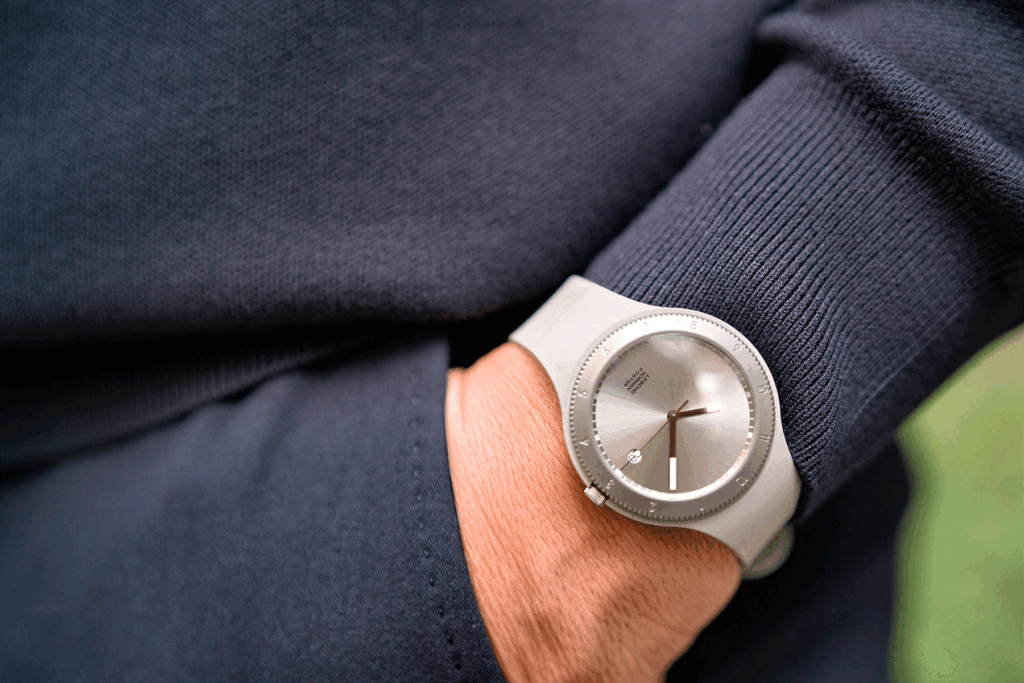
Renowned British architect Lord Norman Foster has unveiled his very first wristwatch, a meticulously engineered timepiece developed in close collaboration with Swiss watchmaker LEBOND and the Innovation and Design Unit of the Norman Foster Foundation. The LEBOND Norman Foster project applies the celebrated architect’s lifelong design philosophy—rooted in material honesty, structural clarity, and rigorous functionality—to a precision wrist-worn instrument. By rethinking the conventional relationship between a watch case and its strap, the collaboration bridges macro-scale architectural thinking with intimate, everyday design, questioning how objects function, how they are made, and how their individual components integrate into a harmonious whole.
For Foster, transitioning from designing sprawling urban masterplans, major international airports, and landmark high-rises to crafting a 38.5-millimeter watch does not represent a change in philosophy. In an interview discussing the launch, Foster reflected on the nature of design across varying dimensions, noting that scale does not fundamentally alter the underlying inquiry. Whether tackling a city, a building, a chair, or a delicate timepiece, the core questions remain identical: How does it work? How is it made? How do all the disparate parts come together?
However, the watch introduces a uniquely intimate dimension that distinguishes it from static architecture. Unlike a fixed building or a public urban space, a watch travels constantly with its wearer, accompanying them across professional environments, global transit, and quiet, private moments. It becomes an extension of daily routines, requiring a high degree of personalization, comfort, and reliability. This intensely personal relationship served as a guiding principle throughout the development process, prompting the design team to examine every millimeter of the object’s physical footprint and user interaction.
Removing the Boundary Between Case and Strap
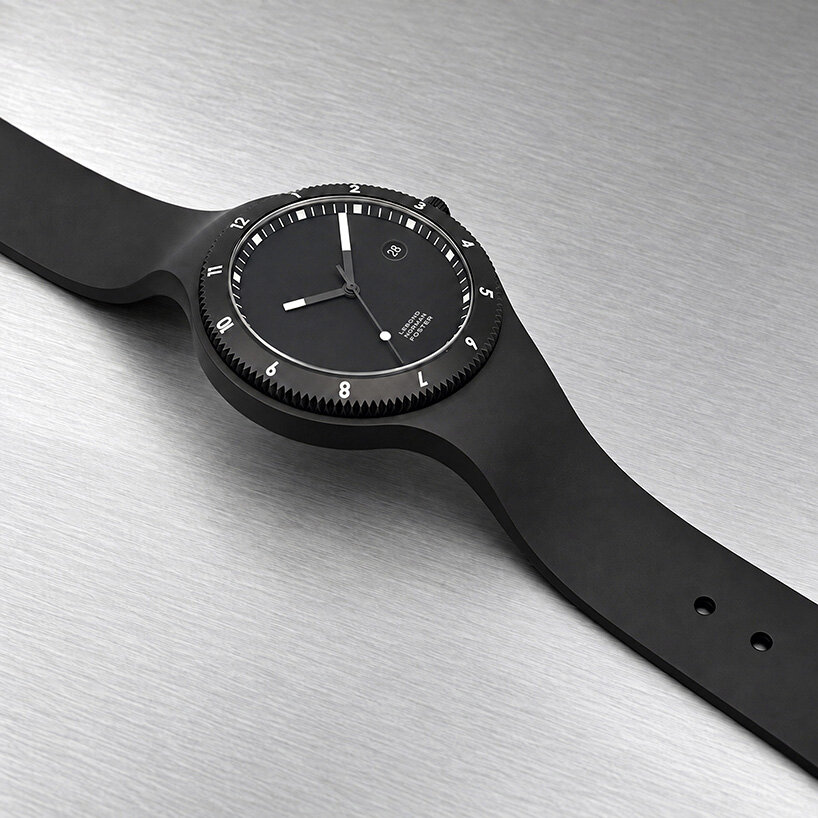
One of the most radical departures from traditional watchmaking found in the LEBOND Norman Foster timepiece is the deliberate elimination of conventional lugs—the protruding metal horns or bars that typically bridge a watch case to its strap. Instead, the design introduces a seamless, continuous profile where the strap flows directly out of the architectural geometry of the case. This integration allows the watch to sit remarkably flat and comfortably against the wrist while establishing a sleek, unified silhouette.
The interchangeable strap system further empowers the wearer, offering versatile combinations of colors and high-performance materials that adapt the watch to shifting personal preferences and wardrobe choices. Questioning established conventions was central to the collaborative process. Rather than accepting the standard industry practice of attaching a strap to a pre-existing housing as two separate entities, the design team asked why they should feel distinct. Once the strap was envisioned as a direct continuation of the case, the entire physical composition of the watch began to coalesce around a single, unified idea.
This ethos reflects Foster’s long-standing holistic approach, where form, structure, materials, and engineering are never treated as isolated elements. True to his architectural portfolio, the best designs are those where all components reinforce one another structurally and aesthetically. The watch took shape through a rigorous iterative process of hand-drawn sketches, physical prototypes, and successive adjustments—a workflow deeply familiar to anyone acquainted with Foster + Partners. Each stage of refinement stripped away excess until arriving at an essential idea where every remaining element feels entirely inevitable.
A Precision Instrument Shaped by Travel and Utility
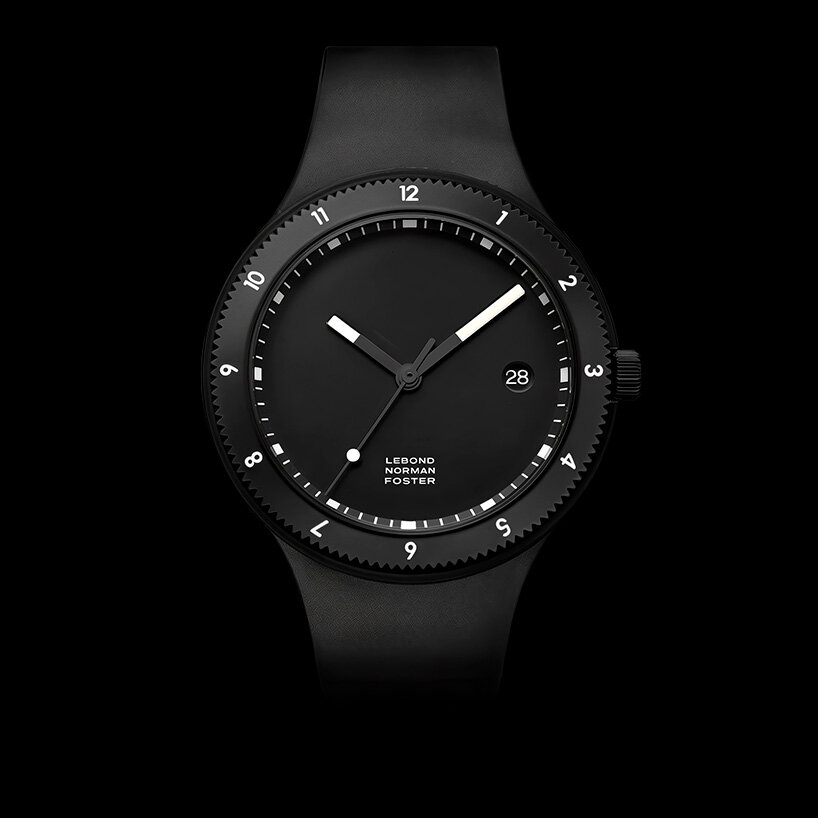
The practical character of the LEBOND Norman Foster watch is heavily informed by the architect’s lifelong fascination with aviation and his extensive personal experience with global travel. Among its most prominent utilitarian features is a bidirectional rotating 12-hour bezel, which enables the wearer to effortlessly track a second time zone using the main hour hand—a vital function for frequent flyers navigating shifting international schedules.
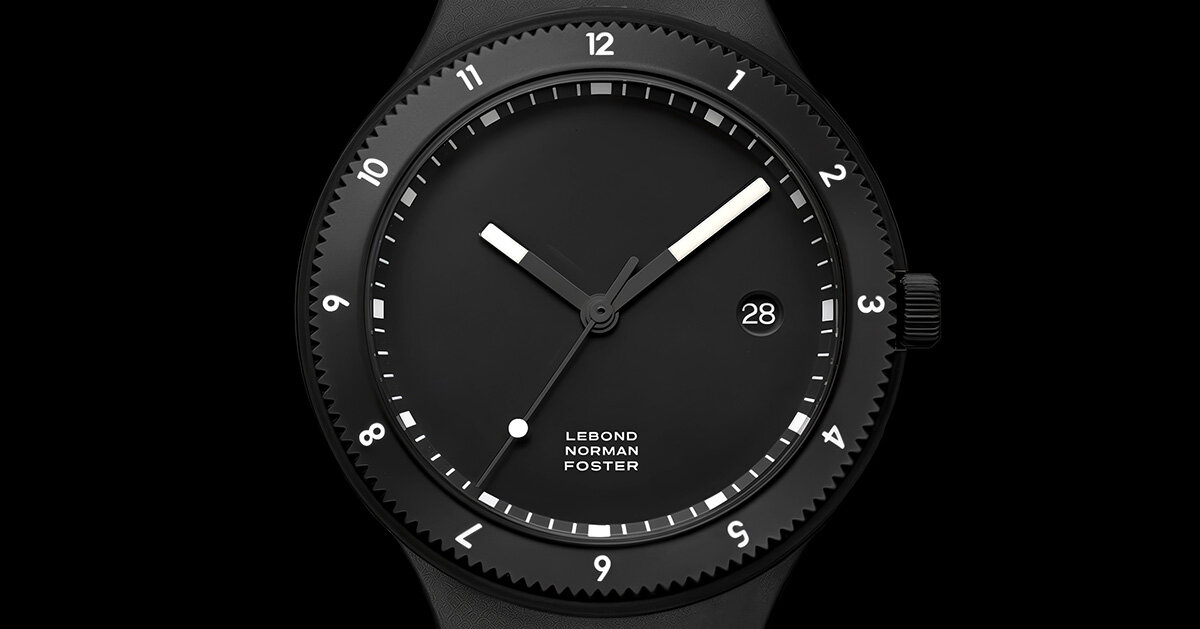
Legibility governs the layout of the dial. Restrained typography, crisp and clearly defined hands treated with Super-LumiNova for low-light visibility, and a discreet date window ensure that essential information is delivered instantly without visual clutter. For Foster, a watch must above all else tell the time clearly, feel comfortable throughout long hours of wear, and operate with absolute reliability. The rotating bezel and restrained dial layout emerged directly from these real-world demands, prioritizing immediate readability over decorative excess.
This emphasis on functional purpose also underpins Foster’s perspective on timelessness, which he views as the direct antithesis of transient fashion. While the luxury watch market is frequently driven by status symbols and rapidly shifting stylistic trends, a well-designed object should yield enduring satisfaction through decades of continuous use.
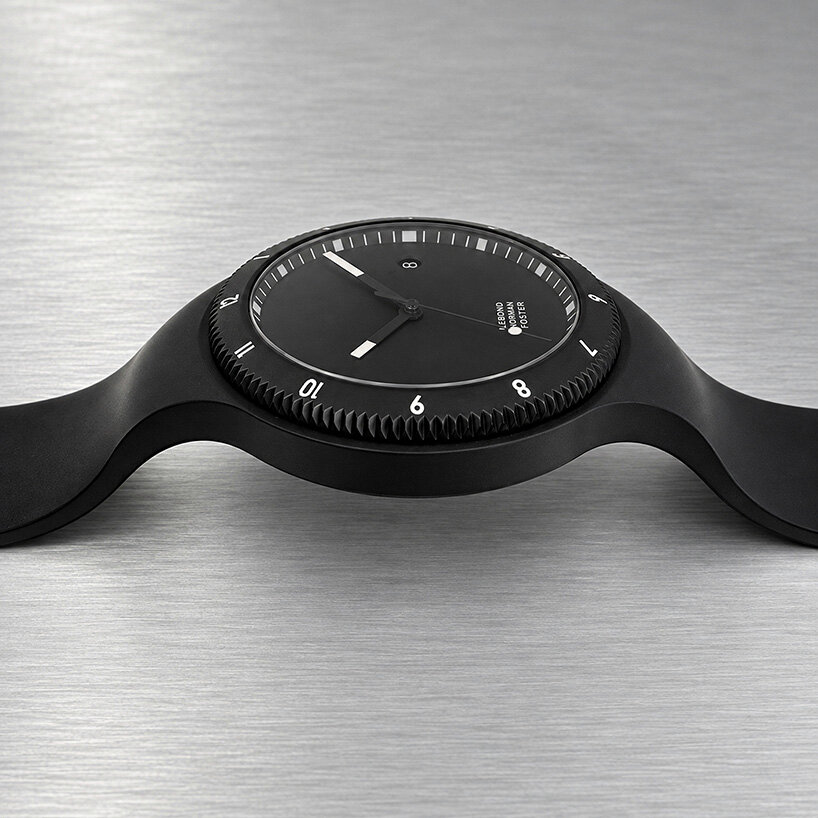
Technically, the watch is housed in a Grade 5 titanium case measuring 38.5 millimeters in diameter at its base, subtly widening to 40 millimeters where it integrates with the strap, and standing 10 millimeters thick. It is offered in two distinct finishes: a micro-sandblasted natural titanium edition and a matte black diamond-like carbon (DLC) coated edition. Both versions are equipped with a domed sapphire crystal featuring an anti-reflective coating and guarantee water resistance up to 50 meters.
The Natural Titanium Edition pairs its sandblasted case with a sunray-brushed dial, polished hands, and a light gray FKM rubber strap. In contrast, the Black Edition unites its matte black-coated case with a matching black lacquered dial and hands, coupled with a black FKM rubber strap. Both variants secure to the wrist via a precision-machined Grade 5 titanium deployant clasp. For Foster, these exact technical specifications matter only insofar as they successfully support the intended performance and longevity of the timepiece.
Making the Mechanics Part of the Visual Composition
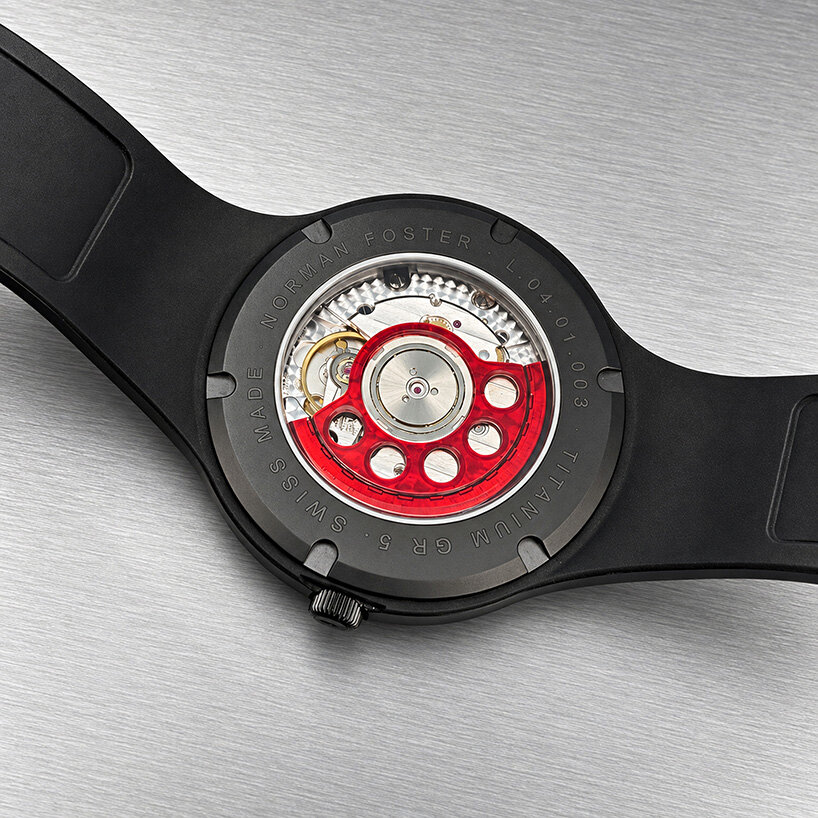
The mechanical heartbeat of the watch introduces yet another layer of engagement with engineering and visual expression. Through the transparent sapphire crystal caseback, a customized automatic movement rotor comes into prominent view. Rendered in a striking blue finish for the Natural Titanium Edition and a vibrant red for the Black Edition, the rotor features five precision-machined perforations that give it a distinctive, architectural geometry. This concentrated splash of color breaks up the monochromatic restraint of the interior mechanics while injecting a deliberate focal point into the overall design.
Internally, the timepiece is powered by a reliable Swiss automatic ETA 2892-A2 movement operating at a frequency of 28,800 vibrations per hour, complete with 21 jewels and an approximate power reserve of 50 hours. Each individual watch is uniquely numbered. Rather than concealing the mechanical workings behind a solid metal back, the design treats the movement as an integral component of the object’s overall visual identity, proving that engineering logic can achieve profound beauty when allowed to be openly expressed.
A Watch for Everyday Life and Educational Philanthropy
Beyond the horological innovation, the collaboration extends the cultural and educational mission of the Norman Foster Foundation. Through its Innovation and Design Unit, the foundation actively investigates cross-disciplinary projects that span diverse scales of human activity. Furthermore, the project carries a philanthropic and educational dimension: all financial proceeds received by the Norman Foster Foundation through royalties from the watch sales will be channeled directly into the educational programs of the Norman Foster Institute. The Institute is dedicated to training the next generation of architects, designers, and urban leaders committed to creating sustainable, resilient cities for the future.
For Norman Foster himself, the ultimate benchmark of the watch is its capacity to integrate seamlessly into the varied rhythms of daily life. He envisions wearing the piece while sketching concepts in the design studio, inspecting active building sites on international trips, or attending formal evening engagements, trusting that its understated elegance adapts to any environment without demanding undue attention.
Ultimately, the LEBOND Norman Foster watch stands as a microcosm of its creator’s broader philosophy: a testament to the power of proportion, material honesty, purpose, and clarity. It invites the wearer to appreciate not a single isolated feature, but the cohesive relationship between every constituent part—from the tactile feel of the integrated strap to the legibility of the dial and the meticulous engineering ticking silently beneath the surface.