Returning to the Orgatec trade fair in Cologne for its ninth time—twenty-two years after its initial debut back in 2004—renowned Italian furniture manufacturer Pedrali has unveiled its latest immersive concept, #PedraliGentleHabitat. With this year’s presentation, the company directly confronts a growing realization in contemporary design: that rigid, monotonous rows of corporate desks rarely spark great ideas or foster meaningful innovation. Instead, Pedrali is successfully bringing the warmth, ease, and comfort of hospitality design directly onto the modern office floor.
The installation responds thoughtfully to the overarching theme of the international trade fair, "From rooms to relationships: designing spaces in an ever-changing world." By translating this prompt into a fluid sequence of interconnected spaces, the setup proves that office furniture can be just as inviting as it is functional. The environments are carefully crafted to reflect contemporary hybrid lifestyles and the constantly evolving professional needs of today’s workforce, breaking down the traditional boundaries that have long separated corporate interiors from welcoming social spaces.
Trading Corporate Rigidity for a Gentler, Circular Habitat
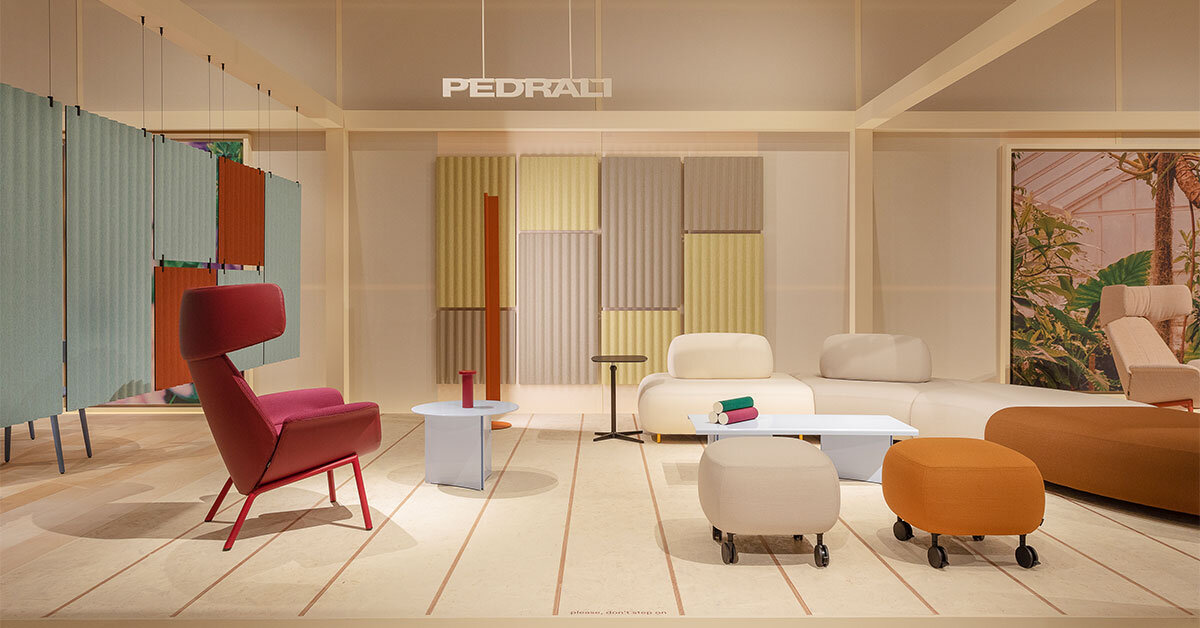
Conceived and designed by the Milan-based architectural practice DWA Design Studio, the expansive 700-square-meter exhibition stand takes shape as a warm architectural landscape. The structure is elegantly framed by exposed poplar wood and rippling canvas surfaces that play dynamically with light and shadow throughout the day. Rethinking the traditionally temporary and wasteful nature of trade show architecture, Pedrali designed the entire pavilion to be completely dismantled, packed up, and reused. In fact, many of the major structural components featured in Cologne are already enjoying a second life after first appearing earlier in the year at the Salone del Mobile.
This deep commitment to circularity extends directly to the tabletop through an experimental project titled Unico, which was developed hand-in-hand with DWA Design Studio. Instead of discarding the leftover industrial plastic that is routinely flushed out during color transitions on chair molding lines, the creative team presses this factory waste into turned plates and bowls. These unique items mirror the tactile qualities of carved stone or primitive clay, turning manufacturing byproduct into sophisticated tabletop accessories.
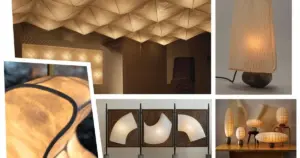
The collaboration also scales down the pavilion’s fluid architectural forms with Ondine, a new collection of fire-resistant, thermoformed polyester acoustic panels. Taking direct design cues from the stand’s undulating canvas walls, this versatile modular system functions seamlessly as wall mounts, hanging dividers, or desk screens, working effectively to keep open-office chatter firmly in check without sacrificing visual fluidity.
Modular Forms Shape the Evolving Workplace
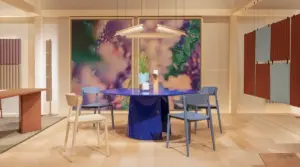
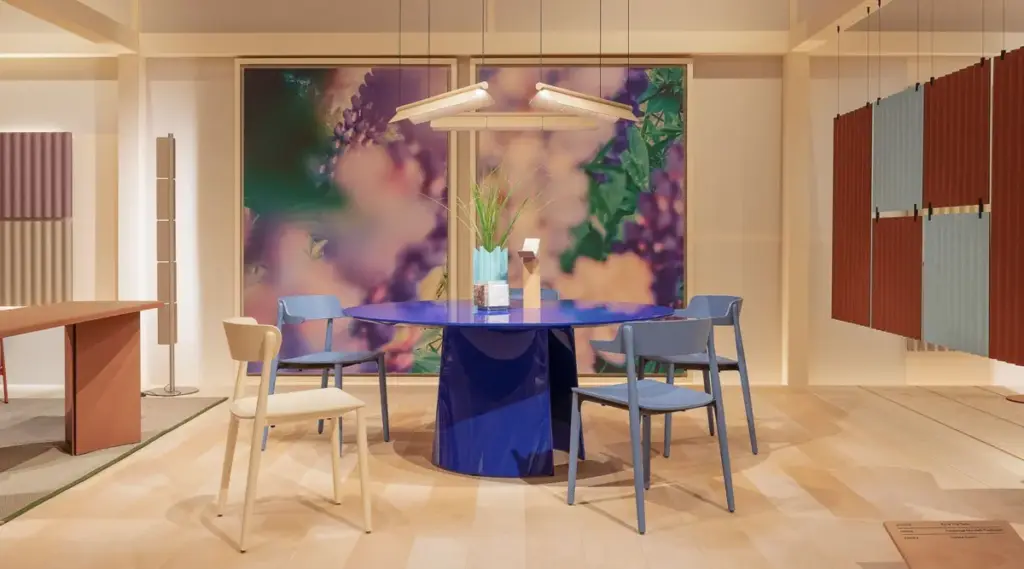
Pedrali translates modern work dynamics into focused, highly tactile environments across the exhibition space. The journey begins with an executive meeting setup centered around Robin Rizzini’s architectural Frank table. This substantial structure is paired with Patrick Jouin’s soft, organic Opale chairs, which feature solid ash or walnut legs, alongside Sebastian Herkner’s Blume Sideboard and the Kawara lighting by Yusuke Kawai, whose distinctive forms nod subtly to traditional Japanese roof tiles.
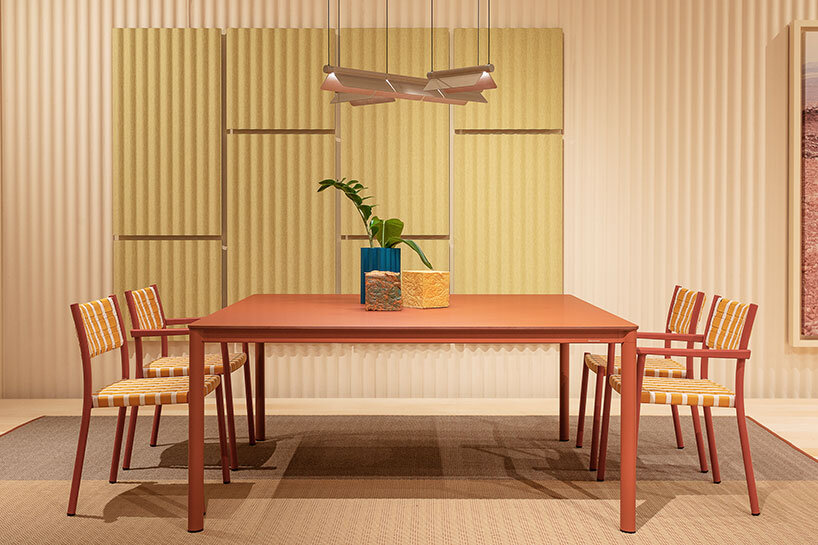
For more active collaborative zones, Rizzini’s modular Rizz Workstation benches comfortably accommodate larger teams. These are accompanied by Jorge Pensi Design Studio’s ergonomic Polar task chairs, which are newly introduced in breathable terracotta and sage green mesh variants that introduce a welcome pop of earthy color to the workspace.
Shared social zones within the installation do away with fixed, isolating seating arrangements in favor of fluid interaction. These areas are anchored by one of the latest additions unveiled at Orgatec: Busetti Garuti Redaelli’s new Buddy Oasi Serpentine system. This modular lounge setup curves gracefully into winding, upholstered islands paired with Patrick Jouin’s cocooning Ila armchairs and newly introduced castor-mounted Buddy poufs, inviting spontaneous catch-ups and informal meetings.
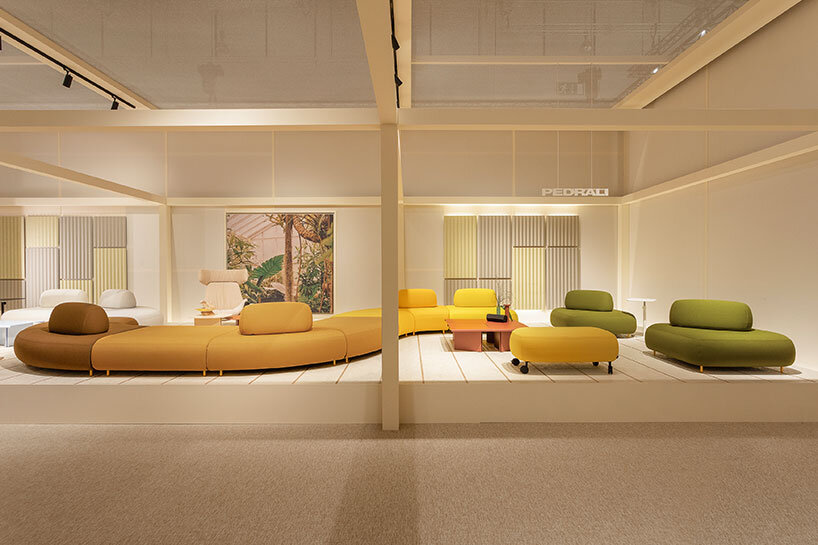
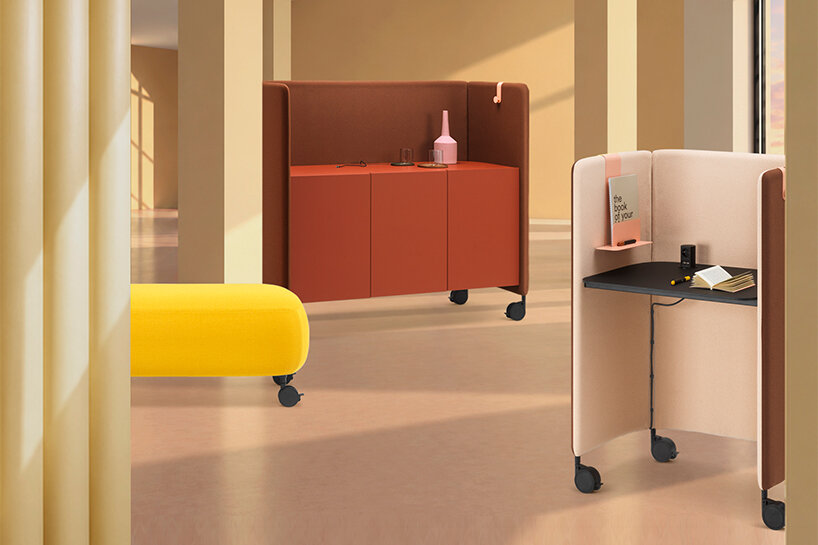
When open-plan chatter inevitably calls for retreat, the new mobile Buddyhub Desks and Sideboards wheel effortlessly in on castors to carve out instant, acoustic-wrapped focus niches. Traditional workstations transition smoothly to the Arki-Table Desk, which spotlights a newly developed integrated lighting system engineered specifically for the collection. Furthermore, Ondine desk screens can be mounted directly onto the Arki-Table Desk to ensure complete acoustic continuity across different workstation families within the same floor plan.
The curated spatial sequence wraps up by dissolving the sharp, traditional boundary that separates indoor corporate offices from the natural outdoors. Nearby, the Ikon Twist table anchors open-air settings, balanced by Formafantasma’s Estratto coffee tables, which are extruded from single-material aluminum. By weaving acoustic quiet, clean geometry, and raw tactile materials into a single cohesive landscape, Pedrali demonstrates that a well-designed office is no longer just somewhere employees go to clock in, but an inviting habitat that genuinely feels good to spend the day in.