The financial gamble of pursuing a Master of Fine Arts degree in the current economic climate is a dilemma familiar to many working artists, but few face it with stakes quite as high as a 33-year-old New York City painter who recently reached out for advice. In a detailed breakdown published in the art community section, critic and writer Paddy Johnson addressed the pressing concerns of the anonymous artist—who goes by the moniker “Dazed and Degreeless”—providing a sobering look at the true cost of higher education in the visual arts, the reality of student loans, and what an elite degree actually delivers to a professional career.
The anonymous artist’s situation encapsulates the intense pressure felt by many mid-career creatives striving to break into the next tier of the contemporary art world. Living and working in New York City, the painter makes a modest living as an art handler while carrying approximately $30,000 in existing student loans, alongside additional credit card debt. Despite these financial hurdles, the artist has been contemplating applications to some of the most prestigious and competitive MFA programs in the country, specifically
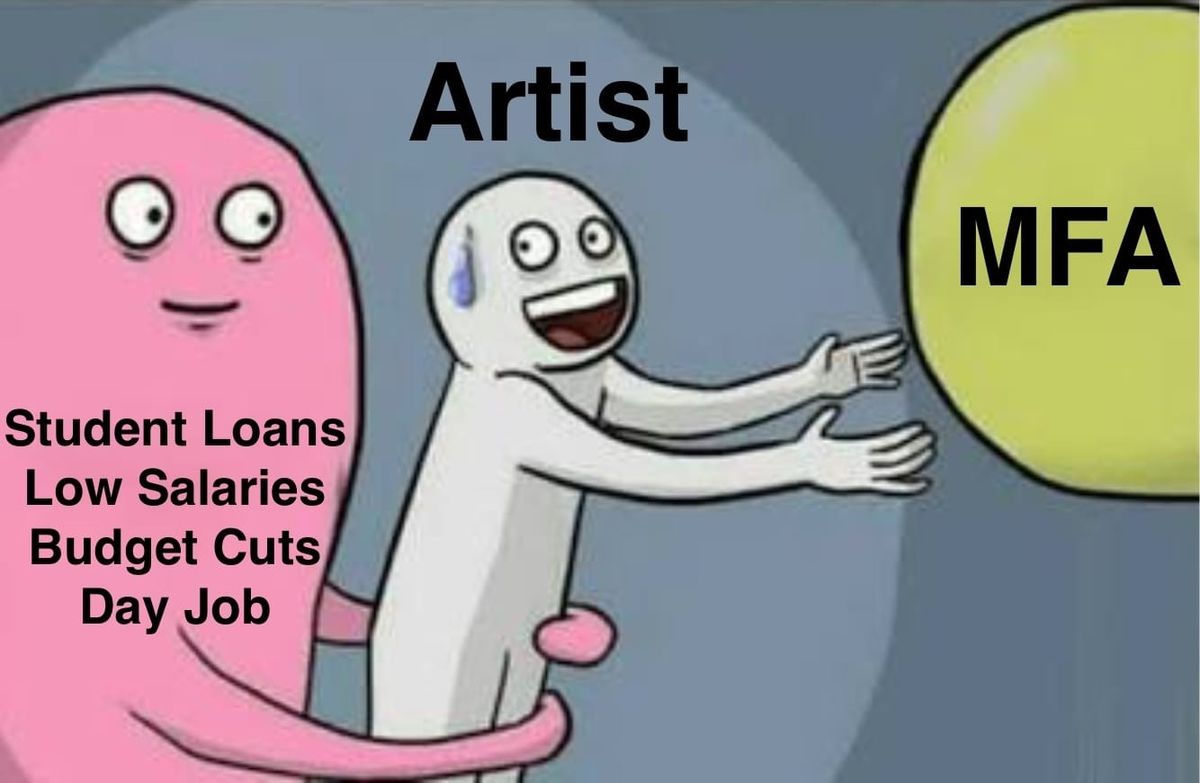
Yale University, Columbia University, and Hunter College.
The motivations driving these applications are common across the industry: the desire to unlock higher-education teaching credentials, refine one’s studio practice under the guidance of established mentors, and expand a professional network within the gallery-dense ecosystem of the East Coast. However, the financial barrier to entry at elite institutions remains staggering. Tuition, fees, and living expenses in cities like New Haven and New York can push the total cost of attendance past $200,000, particularly when factoring in Ivy League price tags. This stark financial reality leaves many prospective students wrestling with a central question: Do you actually need an MFA to succeed as an artist, or is the credential an expensive ticket to a lifetime of debt?
Addressing this dilemma, Johnson offers a candid critique of the romantic ideals that often cloud decision-making in the creative sector. As Johnson points out, if an outside observer equipped with basic math skills and no emotional investment in the art world were to evaluate this scenario, they would immediately deem the decision to take on six-figure debt for an arts degree completely irrational. Yet, the cultural ecosystem of the art world operates under a different set of values. Within the community, artists and critics spend a considerable amount of time discussing the intrinsic importance of art to society, arguing passionately that market capitalism should not dictate creative value. This cultural reverence for art education naturally sustains the demand for art schools, regardless of how exorbitant their tuition fees become.

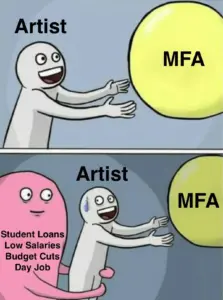
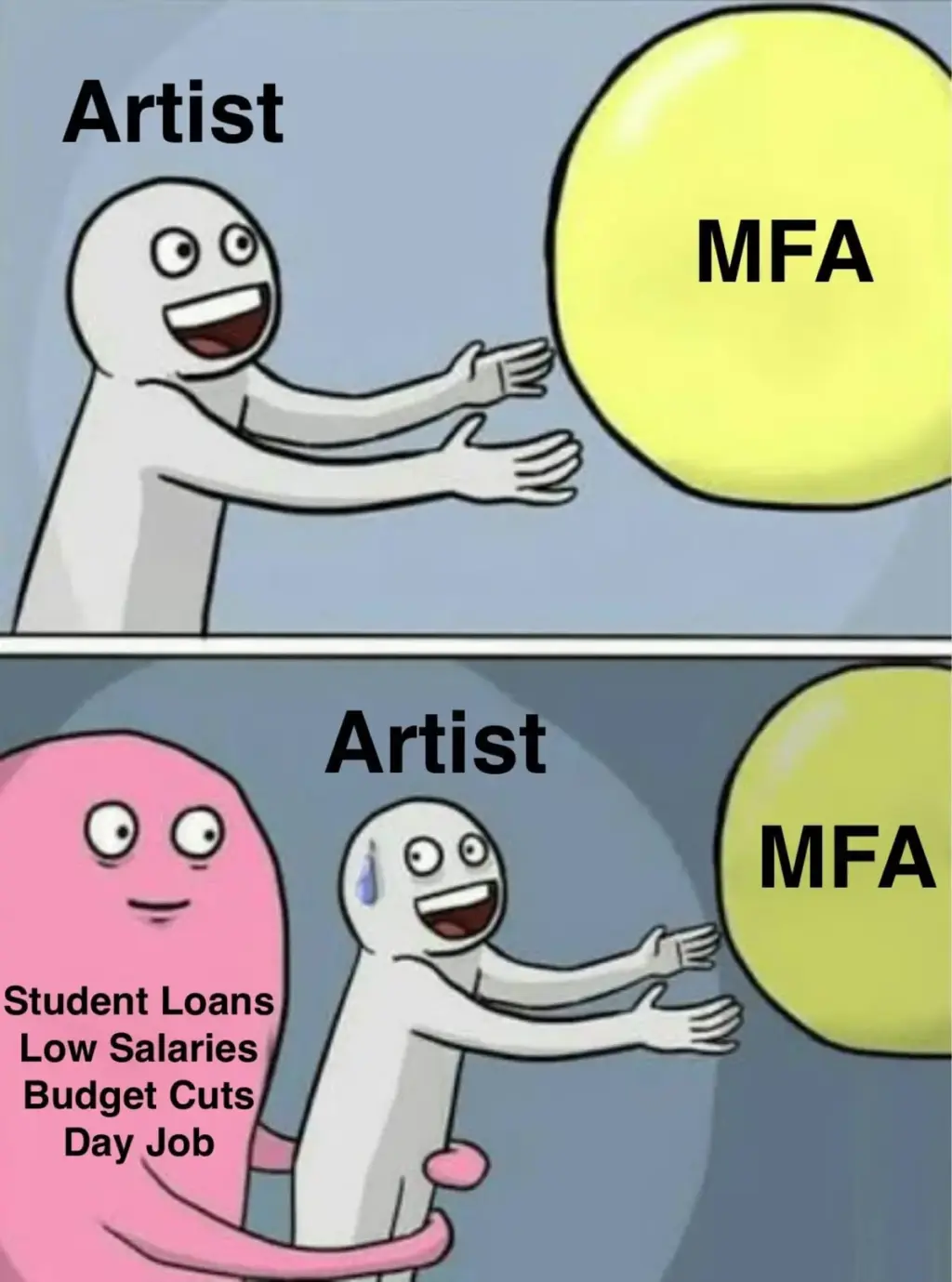
This tension between cultural idealism and harsh economic reality forms the core of Johnson’s evaluation. The romantic notion that art schools exist purely to foster creative exploration often clashes with the reality of predatory tuition models and saturated job markets. For aspiring academics and studio artists alike, the promise of a university teaching position—once a reliable safety net for MFA graduates—has grown increasingly precarious amid widespread higher education budget cuts and an over-reliance on poorly compensated adjunct labor. Meanwhile, the commercial art market remains notoriously fickle, offering sustainable financial returns to only a tiny fraction of graduates, while leaving the majority to shoulder heavy monthly loan repayments on entry-level wages.
Johnson challenges prospective students to confront their own risk tolerance before committing to a multi-year program. The central question is not merely whether an institution offers a prestigious lineage or valuable studio visits, but whether an individual is genuinely willing to spend years, or even decades, weighed down by crippling financial liabilities. For those who view the debt as an acceptable price of admission for the intangible benefits of an intensive studio community and uninterrupted time to make work, pursuing an MFA can still be framed as a viable path. For others, the calculation simply does not add up.
Ultimately, Johnson’s analysis suggests that prospective MFA candidates must learn to let go of the comforting hope that an expensive degree will automatically pay off in financial terms. As tuition costs continue to outpace inflation and the economic landscape for gig-economy workers grows more challenging, the decision to enter graduate school requires clear-eyed pragmatism. Artists must weigh the genuine desire for community, mentorship, and academic credentials against the very real possibility that their investment will yield neither a tenure-track professorship nor a lucrative commercial art career. Whether the cultural prestige of an Ivy League or high-profile public institution is worth the financial burden remains a deeply personal choice, but one that must be made with a full understanding of the economic waters ahead.