In the quiet, deliberate cultural ecosystem of Lausanne, Switzerland, industrial designers Stefano Panterotto and Alexis Tourron are quietly rewriting the visual and material codes of contemporary luxury. Operating from a Swiss city far removed from the deafening fashion capitals of Milan and Paris, the founders of Panter&Tourron craft subtle, restrained objects that manage to capture global attention without ever shouting for it.
To describe their work as "eye-catching" would be misleading. That term might easily conjure an image of something gaudy, excessively gilded, or aggressively strobing. Instead, Panter&Tourron’s creations whisper for attention—a sophisticated, "if-you-know-you-know" type of signaling that resonates deeply with discerning collectors, trendsetters, and high-fashion houses alike.
Chatting with the two designers, dressed in the dark, understated sweaters that have become the archetypal uniform of the industrial designer, one immediately senses a profound humility. They do not design with the glaring spotlight in mind. Yet, their work has an uncanny way of surfacing in some of the most culturally visible places imaginable. From a Balenciaga candle resting effortlessly on supermodel Bella Hadid’s coffee table to their minimalist ceramic table lamps glowing within the futuristic sets of an Apple TV sci-fi series, Panter&Tourron’s footprint stretches far beyond the boundaries of traditional Swiss design.
On Designing with Demna & Balenciaga
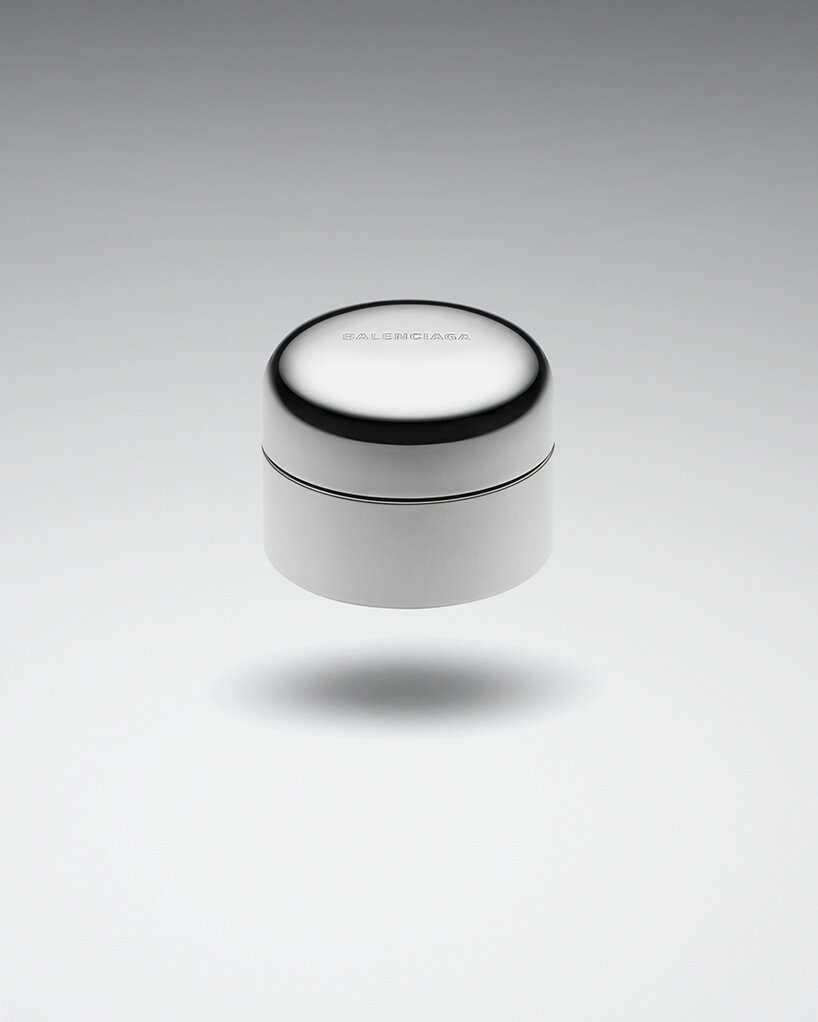
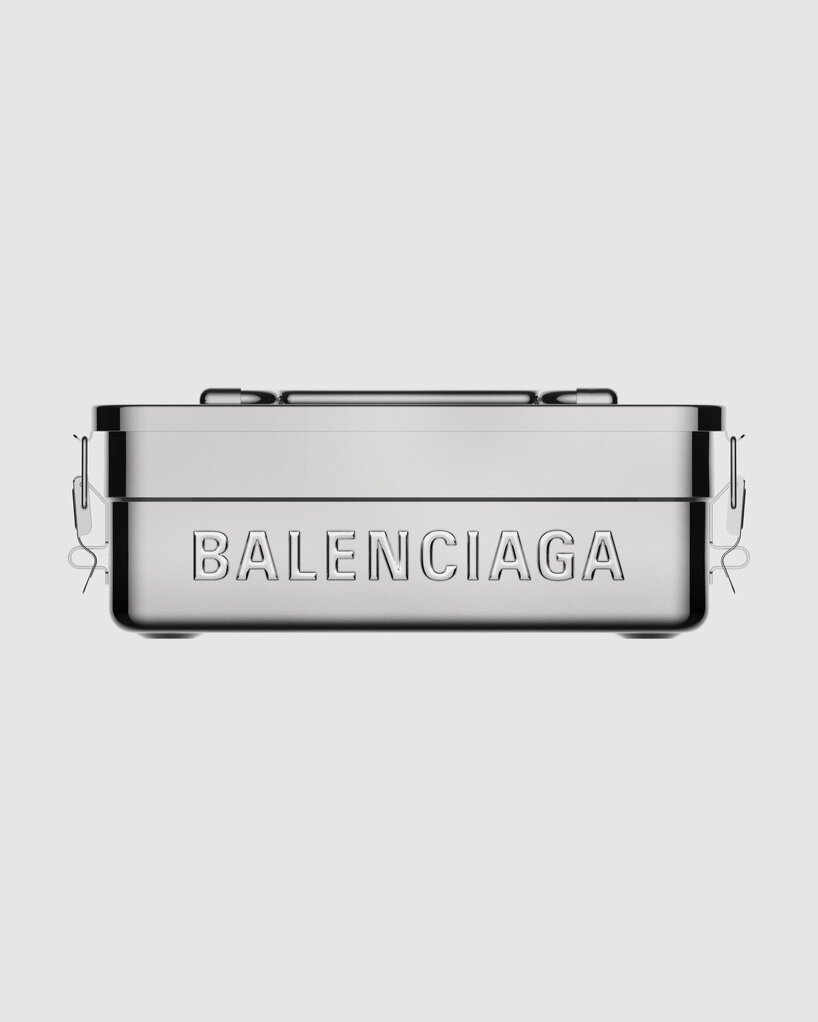
Reflecting on their trajectory in a conversation with designboom, Stefano Panterotto recalls the unique experience of creating a series of home objects for Balenciaga back in 2022. At the time, the legendary Spanish fashion house was operating under the creative direction of Demna, with Martina Tiefenthaler serving as Chief Creative Officer. Panterotto looks back fondly on the collaborative process, noting how Balenciaga’s aesthetic philosophy during that era relied on mixing highly ironic and functional elements—concepts far removed from traditional, predictable fashion references. That unorthodox approach mirrored the core values of Panter&Tourron’s own design ethos.
"We designed it in a bubble in our studio in the not-so-glamorous Lausanne, compared to Milan or Paris," Panterotto explains, highlighting the stark contrast between their peaceful Swiss workspace and the high-octane atmosphere of Europe’s premier fashion hubs.
Consequently, when the custom candles and lunch sets they had engineered began popping up across social media feeds and celebrity homes, it came as a genuinely happy, albeit unexpected, surprise. "We never thought that it would appeal to a whole world of influencers and fashion lovers," Panterotto says, still retaining a hint of delightful disbelief. "It was very funny to see it out there."
Switzerland and Expanded Horizons
The partnership between Panterotto and Tourron traces its roots back to their graduate studies at ECAL (École cantonale d’art de Lausanne), the prestigious Swiss art and design school renowned for producing vanguard creative talent. From the very beginning of their academic journey, the two realized that Switzerland—with its distinct cultural and industrial landscape—would fundamentally shape their design sensibilities.
"I studied and worked in Italy, Alexis in France, both countries with strong design heritage," Panterotto points out. However, immersing themselves in the Swiss approach to industrial design, particularly in precision-driven fields like watchmaking and high-performance engineering, fundamentally expanded their understanding of what the discipline could achieve.
After graduating from ECAL, the pair made the pivotal decision to establish their independent studio in Lausanne. "At the very beginning, we worked in the world of luxury where there are high-profile clients or really wealthy buyers behind it," Panterotto explains. "But in a way, it’s also a very private world. It’s less ‘out there,’ and Switzerland is also very privacy-driven in terms of wealth and who buys what."
The "New Codes" of Luxury
Entering the high-end market required the studio to confront long-standing industry paradigms. "We underestimated how much scarcity and material richness still defined luxury for people," Alexis Tourron reflects, recalling their initial encounters with the old "codes" of the luxury sector.
The duo found themselves unaligned with the industry’s historical reliance on traditional, heavily polished materials like solid gold to communicate value. Instead, this realization galvanized their resolve. "It pushed us to be even clearer about high-end manufacturing and performance in our own work," Tourron notes.
Over years of rigorous practice, Panterotto and Tourron have dedicated themselves to reassessing and redefining what luxury means in the twenty-first century. Tourron elaborates that this shift stems from an industry-wide movement "towards truth to material, performance, and quality, focusing on where and how things are made and produced."
Learning from Hermès Window Displays
The studio’s education in luxury has been continually reinforced by observing and engaging with high-end presentation, such as the brightly colored, meticulously crafted window displays of Hermès. Comparing this environment to his previous experiences in the tech industry—where the dominant corporate ethos was to "fail fast and fail often"—Tourron emphasizes the meticulous nature of the luxury market.
"In luxury, it is called ‘high-end’ because everything is really double- and triple-checked, like the quality of the craftsman you can collaborate with, the assembly details, the materials sourcing, etc.," Tourron observes.
Ultimately, the designers learned that within this exacting ecosystem, exceptional product design is only half the equation; storytelling is equally paramount to the object’s success. "You can create an excellent product, but to sell it for that price you need more than a perfect product; you have to have an amazing story too," Tourron reflects, encapsulating the philosophy that continues to guide Panter&Tourron as they quietly reshape the landscape of modern design.