Welcome back to St. Paul, Minnesota, where the growing season tells a tale of resilience, seasonal transformation, and stunning floral displays. For Zone 5a gardeners, the journey from the dormancy of winter into the lush vibrancy of spring and early summer requires patience, careful plant selection, and a deep appreciation for the natural rhythms of the region. Earlier this week, Susan Warde invited readers on a visual tour of her landscape from late July through October, showcasing how her garden handles the transition toward late summer and fall. Today, we step backward in time to explore Part 2 of Susan’s garden tour, focusing on the dynamic awakening that takes place from late May through July.

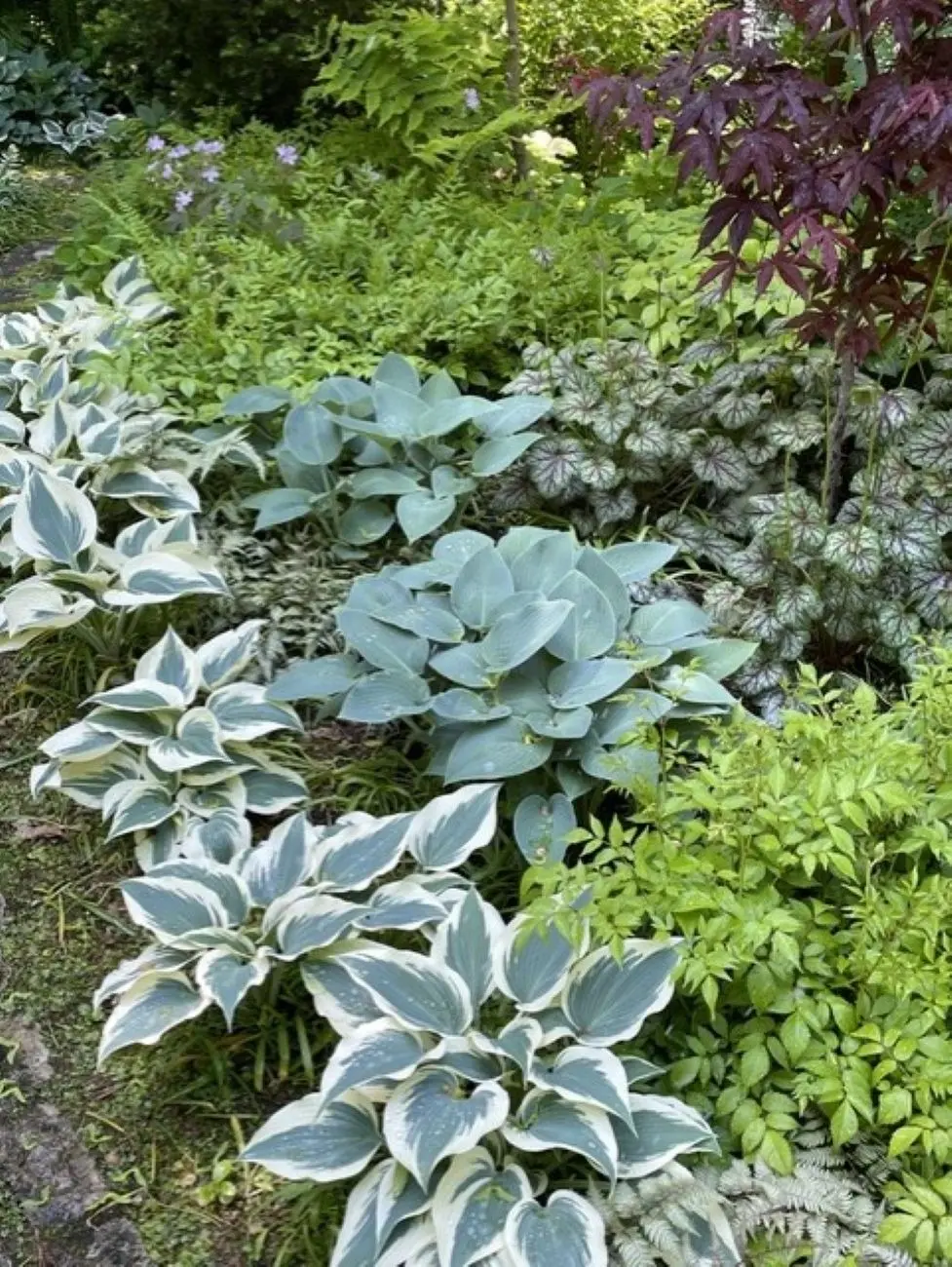
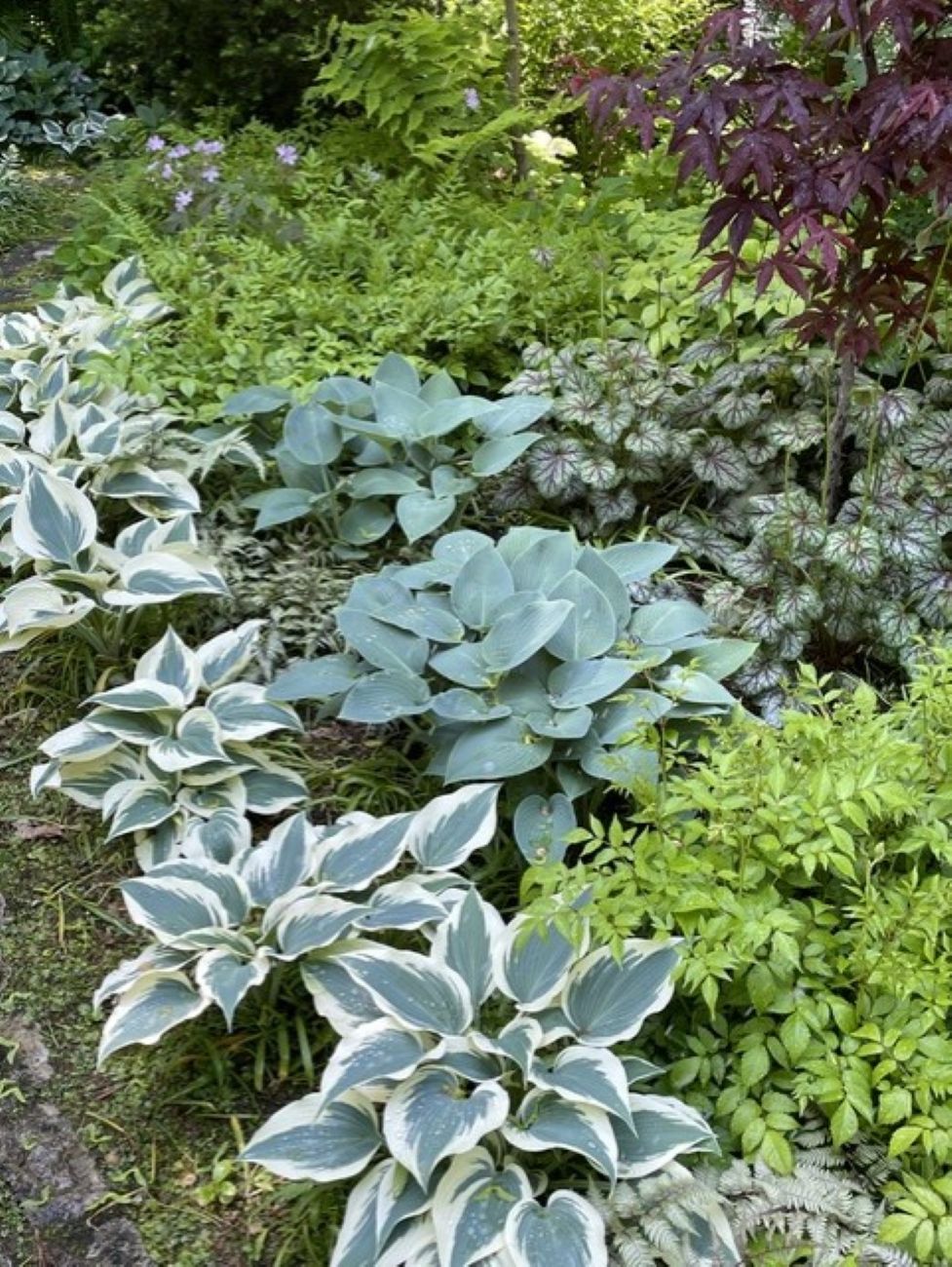
A close examination of Susan’s property reveals a thoughtfully structured landscape that balances deep, shaded sanctuaries with sun-drenched perennial borders. In the back garden, captured during a cool late May morning, the structural backbone of the design becomes immediately apparent. The dominant feature of this shaded retreat is the ‘Blue Ivory’ hosta, a cultivar prized for its striking silver-blue centers and creamy variegated margins that instantly brighten darker corners of the yard. Alongside these dependable foliage powerplants, delicate ferns, a graceful Japanese maple, and the subtle textures of wild cranesbill create a layered tapestry. In this particular snapshot of late May, the wild cranesbill stands out as one of the few plants actively in bloom, offering a gentle flush of color while the surrounding foliage establishes a lush, green foundation for the months ahead.
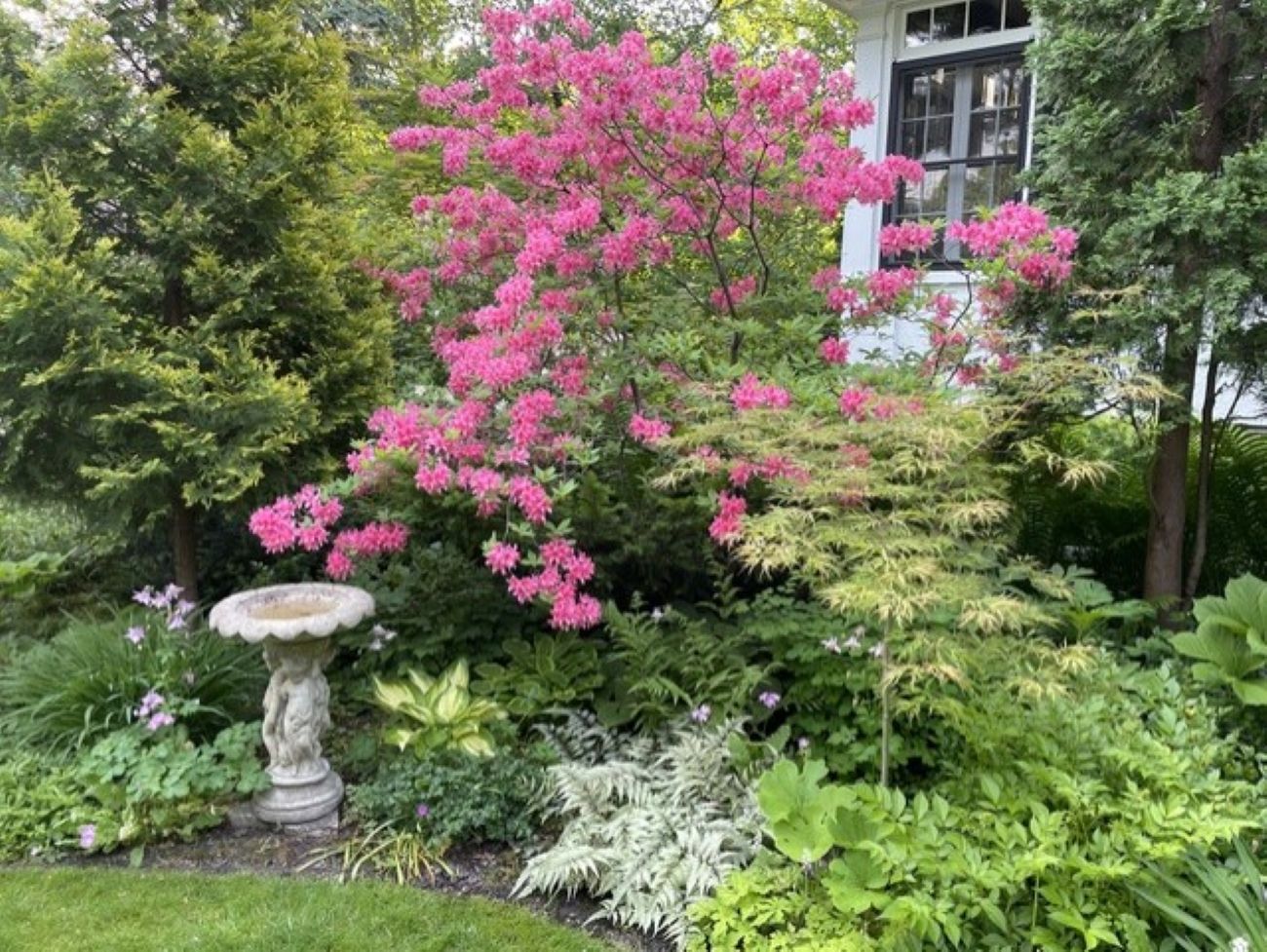
Moving toward the front garden, the landscape bursts into a more prominent display of spring color. An established ‘Rosy Lights’ azalea, a proud member of the celebrated Northern Lights azalea series bred specifically for cold climates, puts on a magnificent show with its clusters of rich pink flowers. This blooming shrub anchors a multi-tiered front garden design that also incorporates structural maples, hostas, ferns, and a welcoming stone birdbath that invites local wildlife into the space. As May progresses into late spring, the garden transitions into the domain of the iris family, showcasing Susan’s impressive collection of cultivars that bring height, architectural form, and an array of sophisticated colors to the beds.
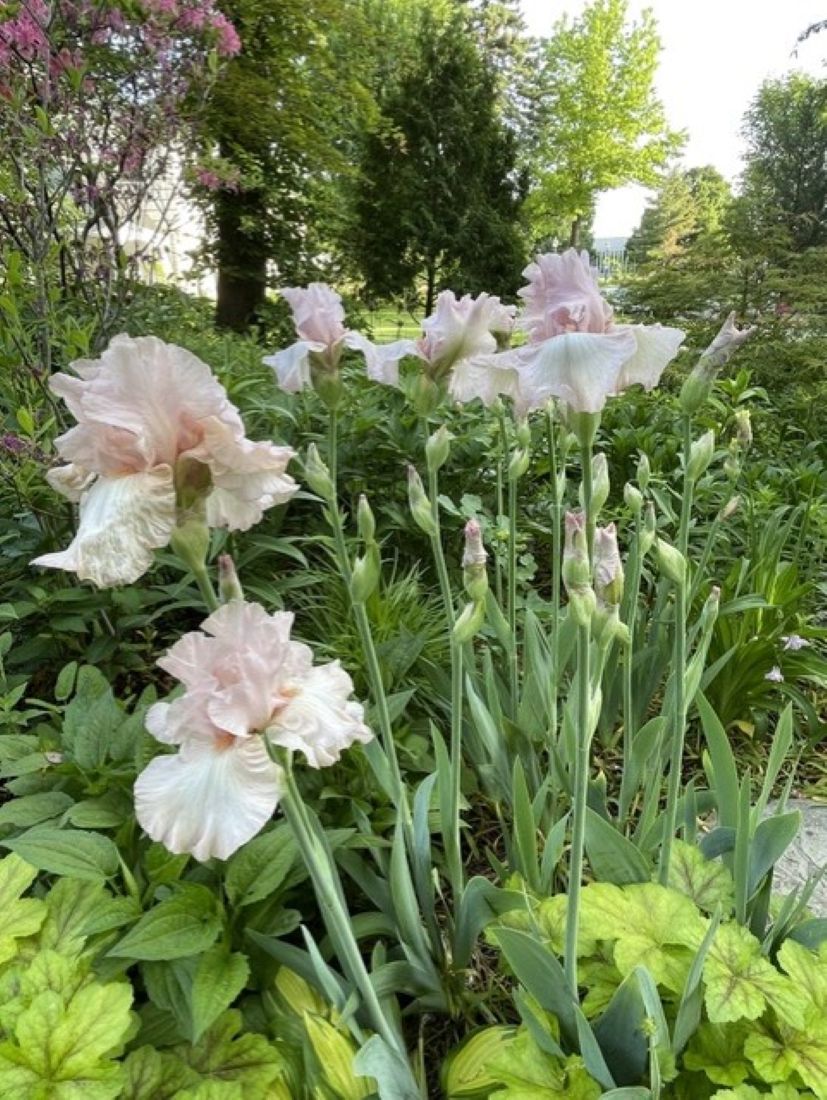
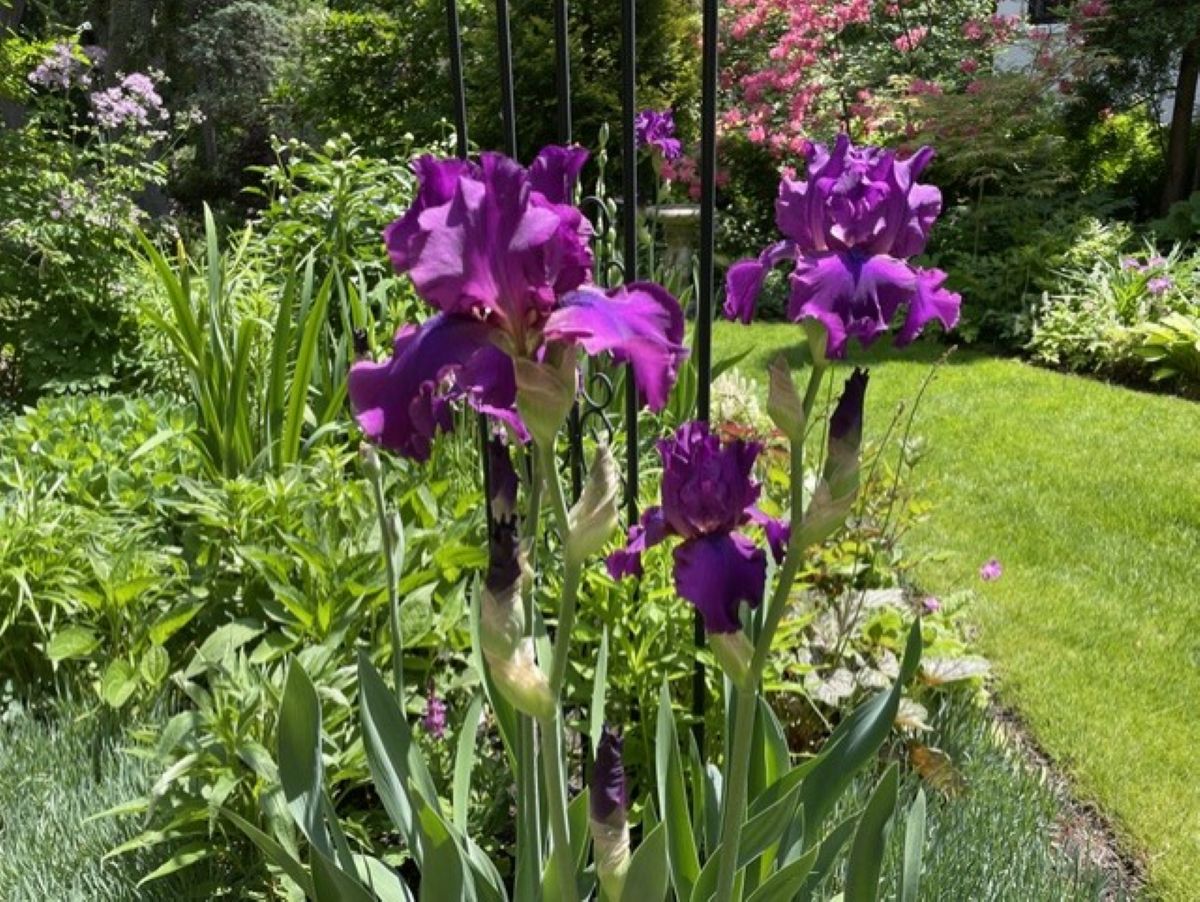
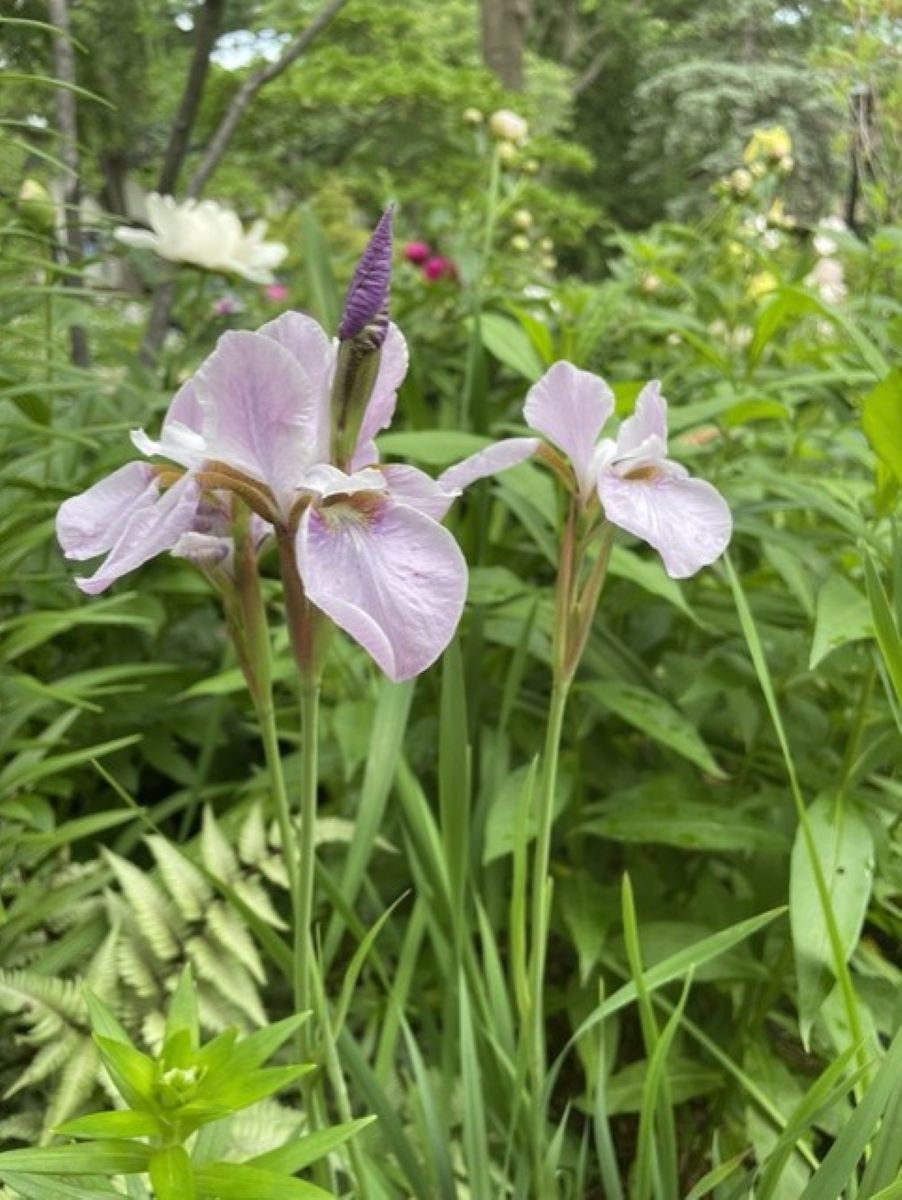
Among the standout performers in late May are her tall bearded irises. Cultivars like ‘Cherished’ offer a delicate palette of pale cream and ruffled yellow flowers accented by bright yellow beards, bringing a luminous quality to the perennial borders. Shifting the mood entirely, another tall bearded iris, aptly named ‘Sultry Mood’, introduces a dramatic contrast with its deep, velvety purple ruffled flowers and strong, upright buds that command attention. Complementing these bearded varieties is a graceful Siberian iris displaying pale lavender petals intricately veined with deeper purple. While the exact cultivar name of the Siberian iris remains unrecorded, its narrow, grass-like foliage and abundant blooms provide a classic grace note to the late spring garden before yielding the stage to early summer perennials.
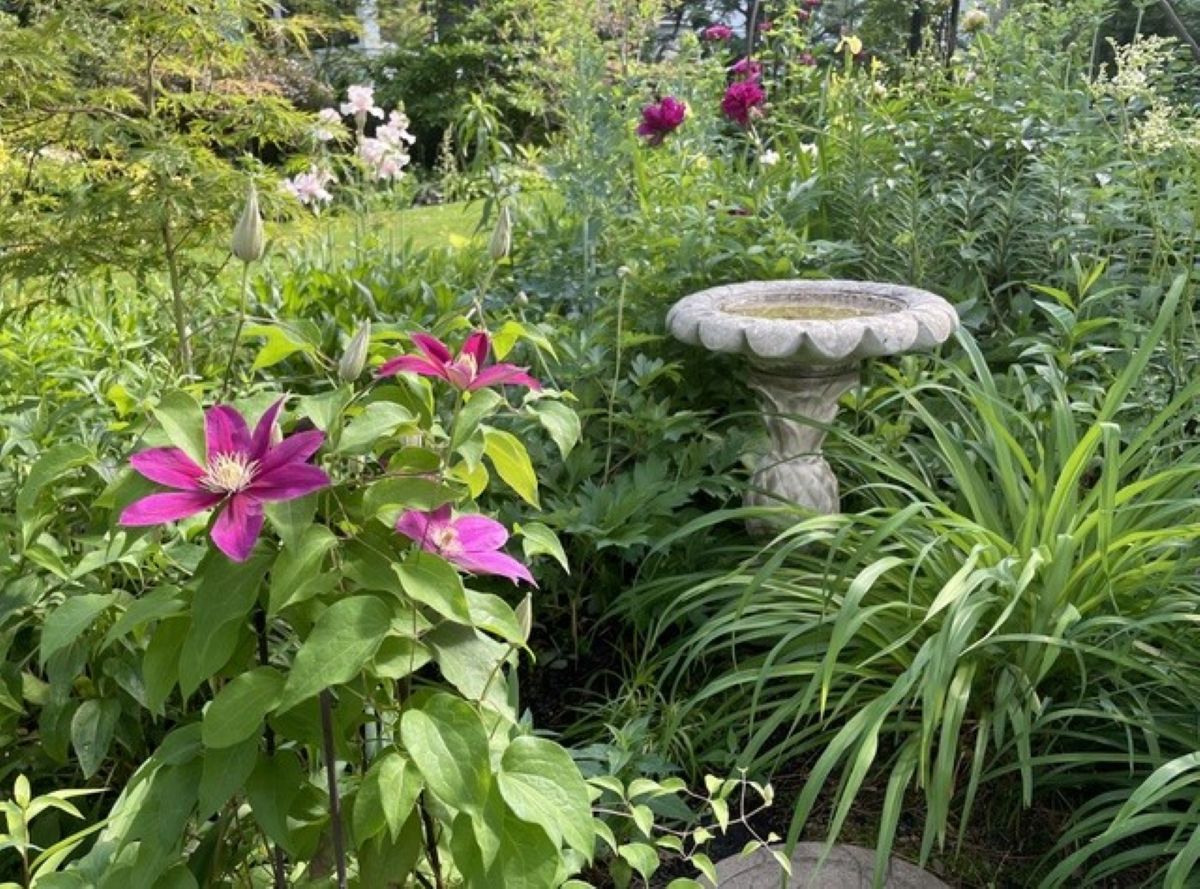
As the calendar turns to June, the vertical dimension of the garden becomes more pronounced through the introduction of flowering vines and early summer anchors. Susan’s earliest clematis, the striking ‘Acropolis’ cultivar, unfurls deep magenta flowers that weave gracefully through the surrounding landscape. In the background, a classic ‘Kansas’ peony stands ready, its heavy, traditional blooms adding a sense of timeless elegance and nostalgia to the early summer scene. This harmonious overlap of spring-blooming shrubs and early summer perennials represents the peak of floral diversity in the St. Paul property, setting a high visual standard before the garden faces the unique seasonal challenges of midsummer.
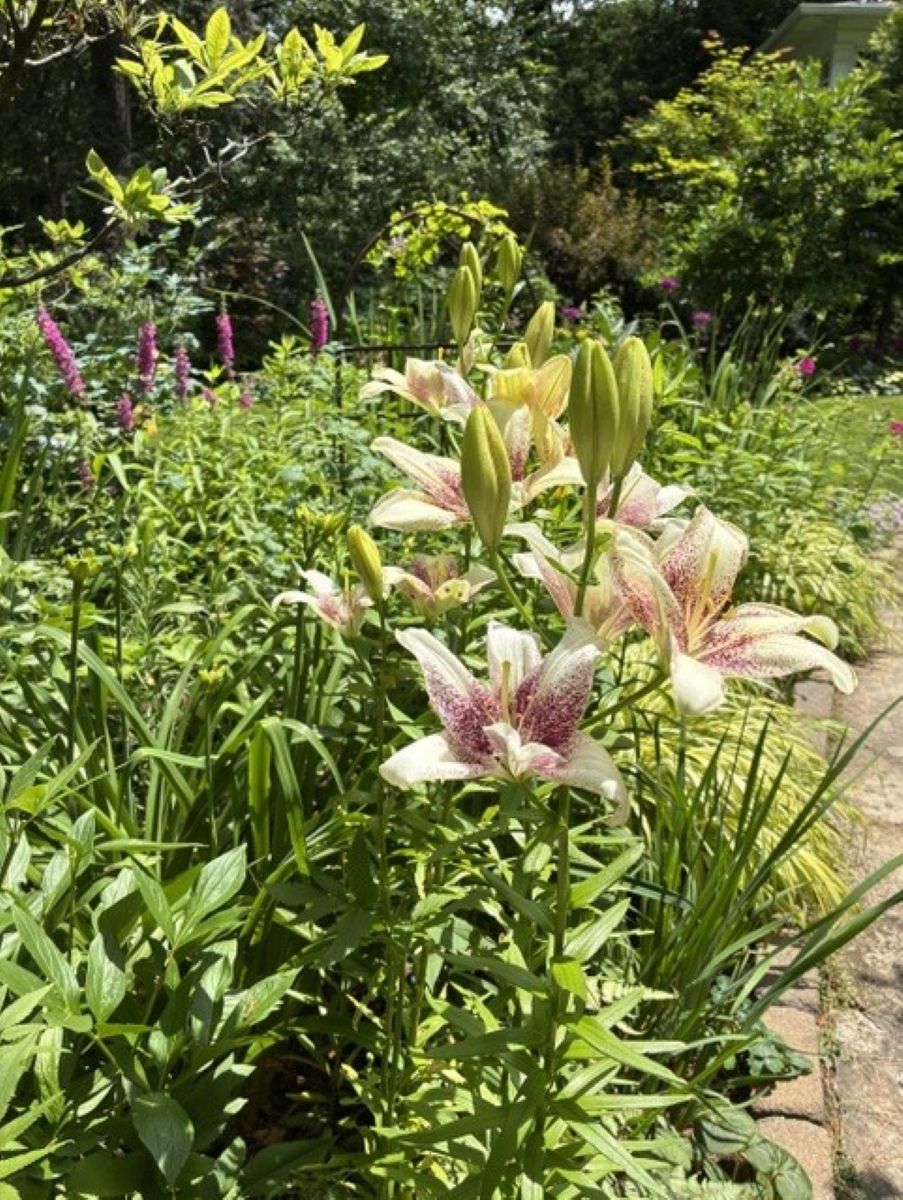
July, however, brings both triumphs and tribulations for northern gardeners. A striking Asiatic lily, labeled as ‘Stracciatella Event’, was captured in all its cream-colored, burgundy-speckled glory on July 6. Unfortunately, this moment of beauty was fleeting. Within mere days of the photograph being taken, the lily fell victim to an aggressive infestation of scarlet lily beetles. These destructive pests ultimately decimated all of Susan’s lilies, leaving the foliage in such a severely damaged state that she was forced to cut the plants down entirely to preserve the overall health and neatness of the garden beds.
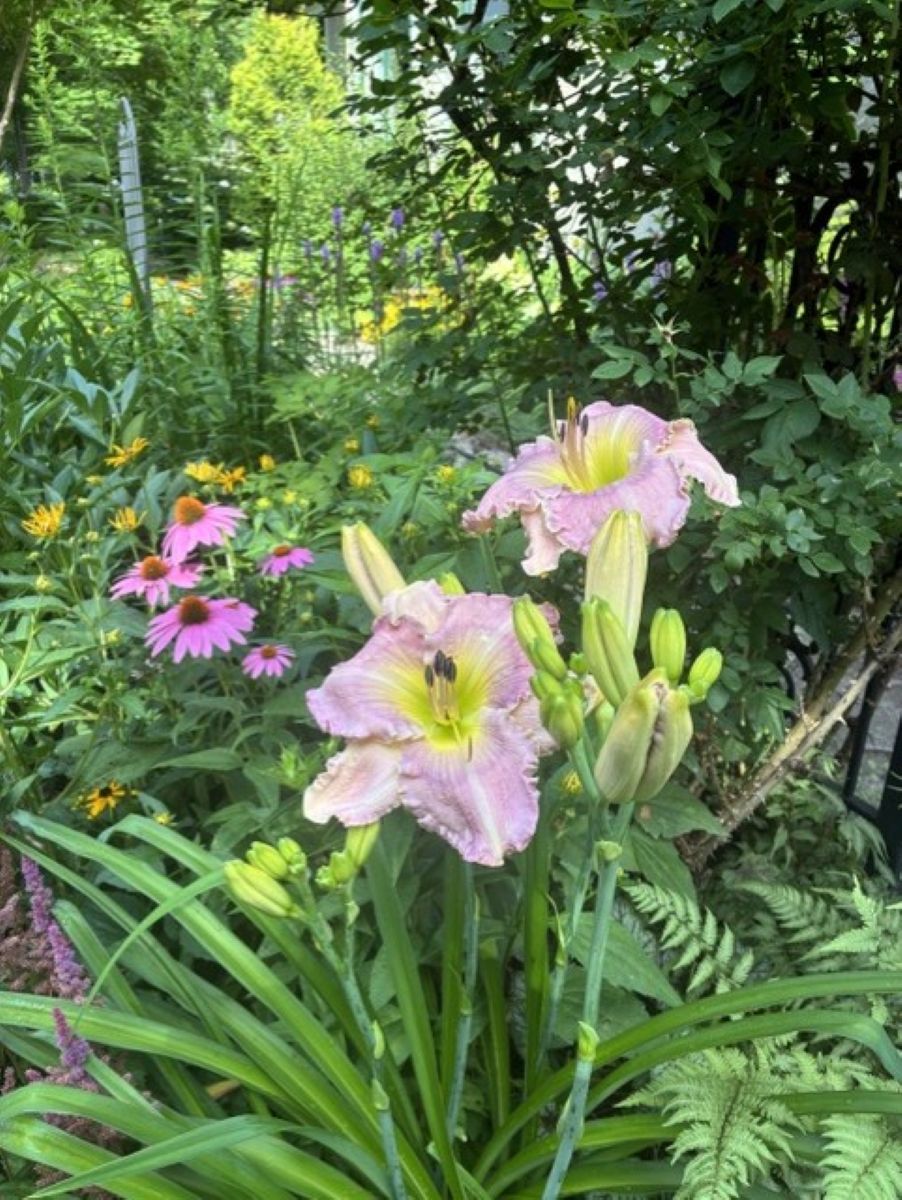
The midsummer challenges did not end with insect pests. Wildlife pressures, which are typically minimal in an urban setting, presented an unexpected hurdle for Susan’s daylily collection. ‘Lavender Moonchild’, a daylily boasting pale lavender-pink flowers and contrasting yellow-green throats, faced nightly raids during July. According to Susan, deer are a very rare occurrence within her city neighborhood—so rare that she had not encountered one in years. Yet, this summer brought a pair of young bucks that decided to make her daylilies their nightly dining destination. Despite trying multiple commercial deer sprays, neither deterrent proved effective against the persistent visitors, who routinely snacked on the developing buds and blossoms.
Fortunately, not all of the daylilies fell prey to the neighborhood wildlife. Set farther back within the protective embrace of the garden beds, a neighboring clump of ‘Marquee Moon’ daylilies escaped the notice of the browsing bucks. Photographed in midsummer, this cultivar displayed pale cream ruffled flowers with bright yellow throats, standing tall amidst lush green perennial foliage and proving the value of strategic plant placement within a suburban landscape.
A wider perspective of the side yard, captured on July 25, demonstrates the vibrant culmination of the midsummer gardening season in Zone 5a. By late July, a rich tapestry of native and traditional perennials reaches its zenith. Daylilies mingle harmoniously with pink garden phlox, purple coneflowers, cheerful yellow black-eyed Susans, and the striking vertical spikes of blazing stars. This curated mix not only provides a continuous wave of color throughout the peak months of summer but also creates a vital foraging ground for local pollinators, bridging the gap between the soft pastels of spring and the fiery tones of approaching autumn.
Reflecting on Susan Warde’s garden across both spring and fall reveals the dedication required to maintain a thriving landscape in St. Paul, Minnesota. From the delicate unfurling of shade-loving hostas and azaleas in May to the battle against scarlet lily beetles and urban deer in July, Susan’s landscape embodies both the joys and the unpredictable challenges inherent to northern horticulture. Her willingness to share these experiences offers fellow gardeners valuable insights into plant performance, resilience, and the ever-changing dynamics of a backyard sanctuary.