The 16th edition of the Gwangju Biennale, scheduled to open its doors on September 5, 2026, finds its intellectual North Star in the final, haunting line of Rainer Maria Rilke’s 1908 poem, Archaic Torso of Apollo: "You must change your life." This imperative serves not merely as a thematic hook, but as the foundational methodology for the exhibition, curated by the celebrated Singaporean artist Ho Tzu Nyen alongside a team comprising Che Kyongfa, Gahee Park, and Brian Kuan Wood.
For Ho, a visionary whose multidisciplinary practice has long interrogated the fluidity of history and identity, the appointment as Artistic Director represents a homecoming of sorts. Having participated in the 12th Gwangju Biennale as an artist in 2018 and returning in 2021 with the acclaimed video installation The 49th Hexagram—a piece that deconstructed the complex political narratives surrounding the Korean peninsula—Ho is intimately acquainted with the city’s unique cultural fabric and its history of democratic struggle.
A Convergence of Philosophy and Practice
While the title "You Must Change Your Life" draws a direct line to Rilke, the curatorial team is keen to emphasize that the phrase resonates with a profound duality. To a Western audience, it evokes the existential inquiry of Peter Sloterdijk; however, within the context of East and Southeast Asia, it carries distinctly different weight. Ho notes that the phrase is deeply embedded in the Confucian tradition, where the aspiration to transform society is inextricably linked to the necessity of first regulating one’s own life and family.

"The title goes beyond Rilke," Ho explains. "In Asia, we are often told that we must change our lives by working harder or achieving more. It feels heavy, yet it is simultaneously open. I am interested in the performativity of the statement itself—how it functions as a prompt for the artists and the viewers alike."
This ambiguity is particularly potent in Gwangju, a city defined by its courageous history of resistance against authoritarianism. For Ho, the concept of change is not a monolith; it is a fluid, often contradictory state. In the Korean context, change can mean liberation, but it can also involve the stubborn refusal to accept changes imposed by external powers. By framing the Biennale around this concept, Ho and his team have invited a multiplicity of interpretations, allowing the exhibition to act as a space where personal and political transformation collide.
An Intimate, High-Intensity Exhibition
The 2026 iteration marks a significant departure from the expansive, multi-venue formats of previous years. By bringing together 43 artists from 20 countries—a notable reduction from the 72 artists featured in the 2024 edition—the curatorial team has opted for a more unified and concentrated experience. Housed entirely within the Biennale’s main exhibition hall, the show is designed to be experienced as a cohesive narrative rather than a fragmented tour of the city.
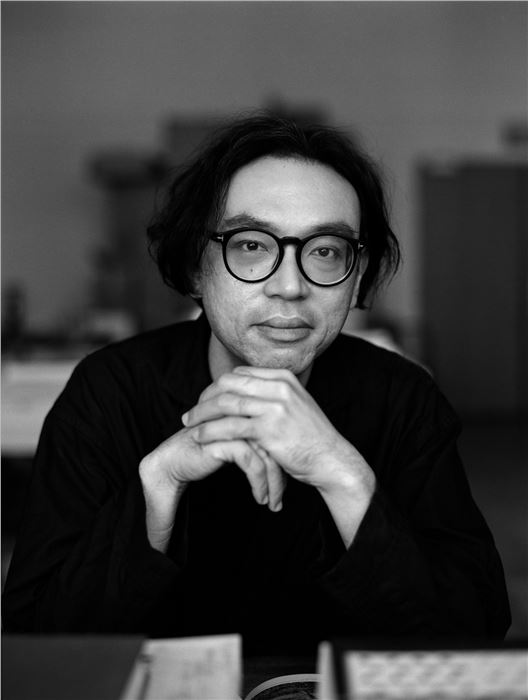
This strategic compression is intended to increase the intensity of the visitor’s experience. "The first decision was not to let geography be the determining factor," Ho says. "I have often felt the anxiety of having to travel to too many different sites at a biennale. By bringing the exhibition into these five parts within the Biennale Hall, I want to shift that feeling. Reduction in scale does not mean a reduction of impact; on the contrary, it creates a space for deeper engagement."
The list of participating artists bridges the gap between historical weight and contemporary urgency. The exhibition features the seminal works of Lygia Clark and Július Koller, placed in dialogue with established contemporary figures like Matthew Barney, Tehching Hsieh, Park Chan-kyong, and Amanda Heng. This intergenerational bridge is further strengthened by a younger cohort of global voices, including Saodat Ismailova, Lu Yang, Wang Tuo, and Jacqueline Kiyomi Gork, who collectively explore the edges of human experience and technological evolution.
Navigating the Politics of Identity
The lead-up to the 2026 Biennale has not been without its challenges. The event has faced the complexities of international diplomacy, specifically following a controversy involving the Taiwan Pavilion. The Gwangju Biennale Foundation’s initial move to re-designate the pavilion as "NTMoFA" (the National Taiwan Museum of Fine Arts) triggered significant backlash from participating artists and officials, who viewed the change as a form of political censorship. The subsequent restoration of the "Taiwan" label, followed by the withdrawal of Chinese artists and staff, underscored the volatile intersection of art and geopolitics.
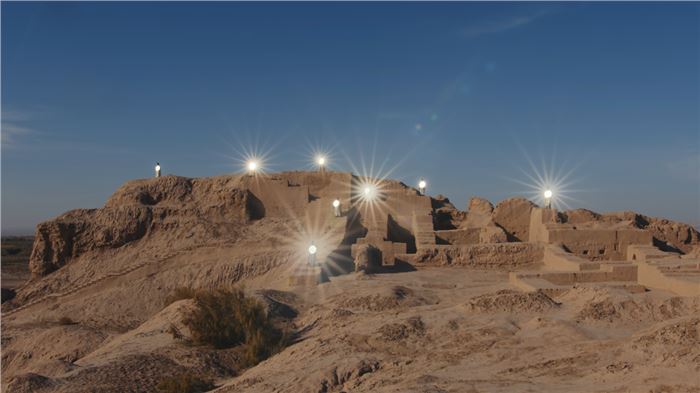
While these pavilion programs operate as a separate entity from the main exhibition, the episode highlights the very questions of national and cultural identity that permeate Ho’s own artistic work. Ho remains focused on the curatorial narrative, viewing the Biennale as a space to interrogate how history is constructed and remembered, rather than as a platform for political maneuvering.
The Role of Art in a Changing World
Central to the 2026 Biennale is the question of whether art possesses the actual power to transform us. Ho approaches this with a blend of materialist pragmatism and philosophical curiosity. "At a molecular level, every act of making something changes something materially," he observes. "At a larger level, we tend to associate change with sudden, catastrophic rupture. We often fail to perceive long-durational change. The great masterpieces of the Renaissance, for instance, change us at a rate that requires a specific, sustained sensitivity to perceive. I believe art changes us in ways that we sometimes don’t have words to describe."
This inquiry into change is also being tested through the inclusion of artificial intelligence. In a move that reflects the "inevitability" of technological evolution, the Biennale has integrated AI into its own promotional architecture. Designer E Roon Kang has developed an AI system that generates original poems based on descriptions of each participating artist’s work. These poems serve as the backbone for the exhibition’s social media presence, trailers, and merchandise.

"I am both allergic to it and embracing of it," Ho admits regarding AI. "It is changing not only how we generate images, but the very essence of what an image is. It has entered our process in an organic way, which I find quite beautiful."
Returning to the Past Without Being Trapped
When discussing the specific political legacy of Gwangju—the 1980 Democratization Movement—Ho is careful to distinguish between remembering history and becoming paralyzed by it. He references Sigmund Freud’s theory of trauma as an "absence of time," where the unconscious prevents a traumatic event from passing.
"We are interested in how one returns to those events without returning to the trauma," Ho explains. "How does one endure? How does one carry the past while continuing to transform? It is about persistence."

For Ho, the Biennale is not a static destination but a journey of "gradual accumulations." By presenting the work of artists over several years or showcasing complete series simultaneously, he hopes to guide the visitor through a process of transformation. He envisions the artists as guides, helping the audience navigate the exhibition’s narrative arc.
As the Gwangju Biennale prepares to open, it enters a particularly vibrant moment for the Korean art scene, running alongside the Busan Biennale and the Gyeonggi Ceramics Biennale. For Ho, the task of directing such a prestigious institution is not a performance of curatorship, but an extension of his own life as an artist.
"I don’t pretend to be a curator," he says. "I approach the task exactly as I would as an artist. I work with existing artworks, discourses, ideas, and symbols. Curating, for me, is just another way of building a model or a proposition. If I had to name an exhibition that truly changed my life, I would look back at Documenta 13. It is that kind of transformative potential I hope to bring to Gwangju—a space where we do not just observe change, but participate in it."