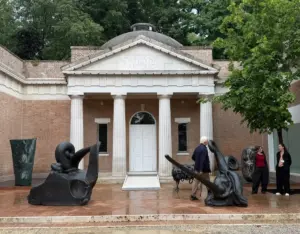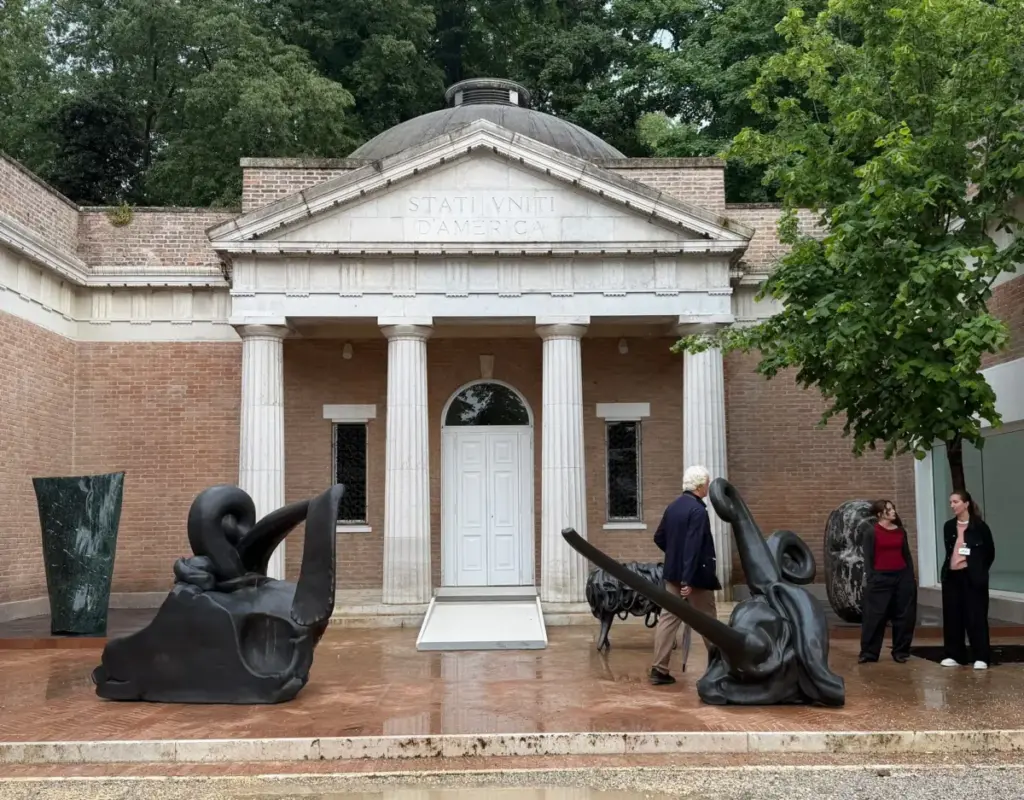
With less than a month remaining until the curtain falls on the 61st Venice Biennale on November 22, the United States pavilion is facing an unexpected financial hurdle. Commissioner Jenni Parido has issued an urgent plea for additional donations to secure the deinstallation and safe return shipping of Alma Allen’s prominent sculptures out of Italy.
The financial crunch came to light after the New York Times reviewed a correspondence circulated by Parido this week. In the letter addressed to potential donors, Parido—who founded the American Arts Conservancy (AAC) and personally commissioned Allen’s exhibition for the international art exposition—disclosed that the Trump administration-aligned arts nonprofit is confronting an acute financial shortfall. Specifically, she noted that the organization is facing an urgent funding need associated with the complex logistical processes of final deinstallation and the secure transit of the artworks back to the United States.
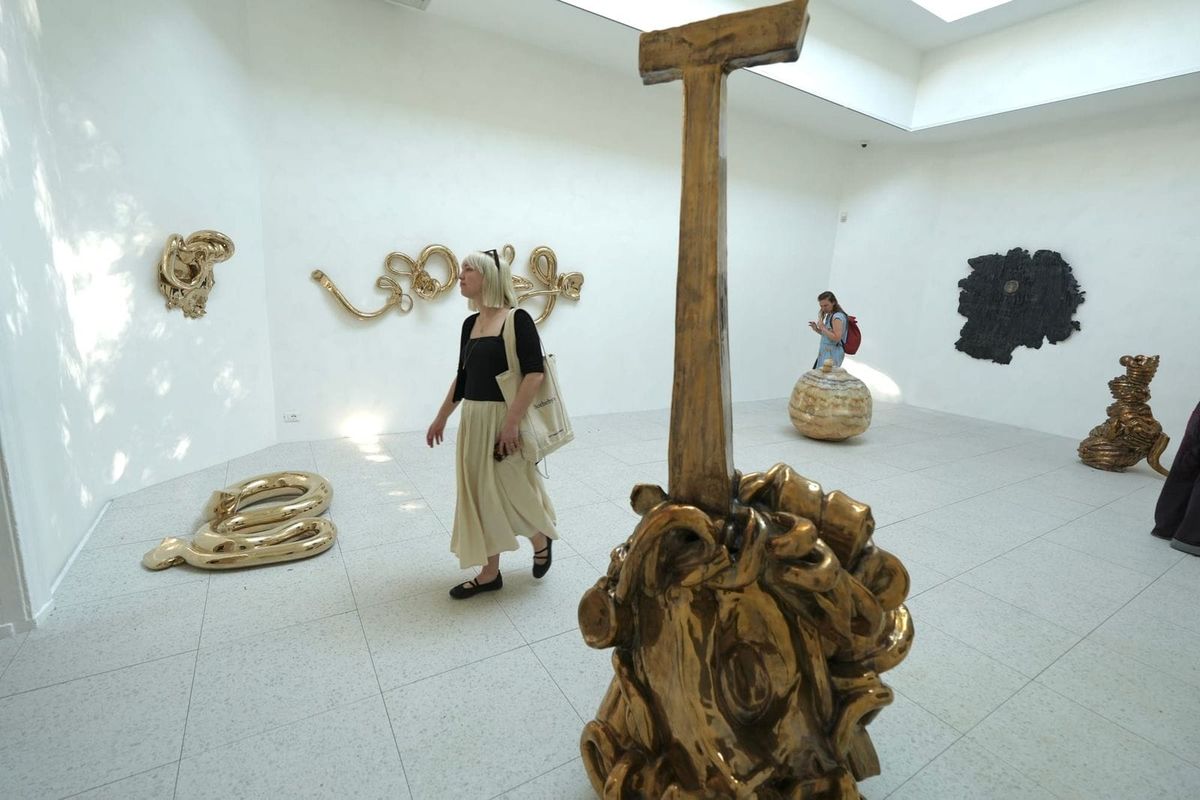
This eleventh-hour fundraising push is the latest chapter in a uniquely unconventional financial model that has characterized the U.S. presentation throughout this year’s Biennale cycle. From the outset, the preparation and execution of the American pavilion were marked by a notable degree of opacity surrounding both the artist selection process and the underlying funding ventures. Questions lingered among arts professionals regarding how the massive international undertaking would be sustained, given its departure from traditional institutional support structures.
The contours of this distinct funding strategy became clearer in April, when Parido spoke with Hyperallergic about the financial backing behind Allen’s exhibition, titled Call Me the Breeze. At the time, Parido revealed that the presentation had operated entirely without traditional institutional backing, reporting that the exhibition received no corporate or foundation funding whatsoever. Instead, she explained that the entire enterprise was facilitated entirely through the generous support of private citizens who believe in the importance of American artists and cultural exchange. To bridge the gap, the AAC even established an online donations portal ahead of the Biennale’s grand opening in May, inviting public contributions to help offset the steep costs of mounting a pavilion on the global stage.
The reliance on private philanthropy, individual donors, and specialized fundraising appeals underscores the high-stakes logistical and financial challenges inherent in presenting national pavilions at the Venice Biennale. Transporting heavy, delicate, and monumental sculptures like those created by Alma Allen requires specialized fine art handling, insured transit, custom crating, and coordinated international shipping—all of which carry exorbitant costs that scale dramatically at the close of an exhibition.

As the November 22 closing date rapidly approaches, the pressure is mounting for the American Arts Conservancy to secure the necessary capital to prevent any logistical delays in repatriating the works. Whether the final public and private appeals will generate the required funds to safely bring Call Me the Breeze back to American soil remains to be seen as the final weeks of the historic art exhibition tick away.