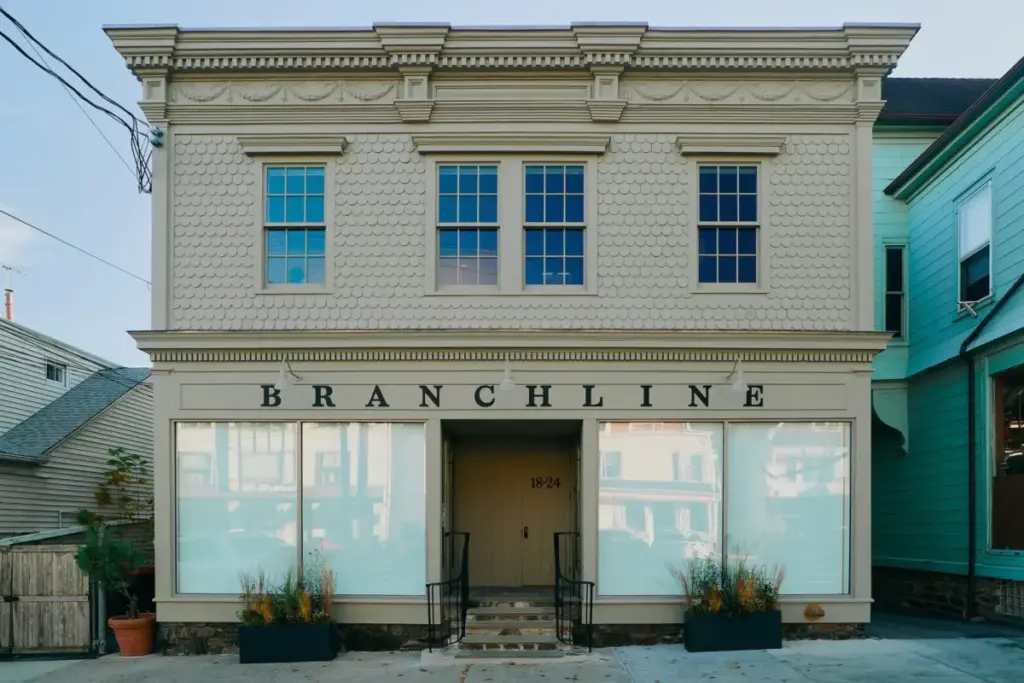
KATONAH, NY — In 1680, English colonists purchased the fertile lands that would eventually become Bedford, New York, from a Munsee Lenape sachem named Katonah, whose moniker translates to "great hill." Today, that historic name belongs to a picturesque Westchester County village that is now welcoming a major new cultural hub. Branchline, the newly established gallery and studio space of the Gochman Family Collection (GFC), officially opened its doors to the public on November 6, launching with Line Break, an inaugural exhibition featuring powerful contemporary works drawn primarily from the collection’s extensive holdings of Native American art.
The opening of Branchline marks a significant milestone for the Gochman Family Collection, which was founded in 2021. In just a few short years, the private collection has amassed over 800 works of art, building its holdings with the collaborative support of both Native and non-Native gallerists, artists, and curators. Among the key figures guiding the collection’s vision are Creative Director and Curator Rachel Martin, who is Tlingit; curator and writer Shándííín Brown, a citizen of the Diné Nation; and Director Laura Phipps, who also oversees operations at the new Katonah facility.
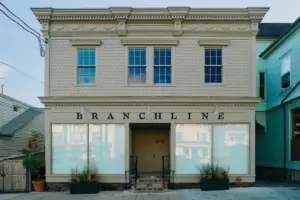
Designed with meticulous attention to detail by Elizabeth Roberts Architects, Branchline occupies two historic storefront buildings located just steps away from the Katonah Metro-North train station. The newly renovated venue is designed to be much more than a traditional white-cube gallery. It features expansive, free-admission galleries, skylit artist studios, a dedicated community ceramics studio, and residential apartments specifically intended to host invited artists during their creative residencies. By embedding these maker spaces directly into the fabric of the building, Branchline aims to foster active engagement between visiting artists and the surrounding region.
The launch of the physical space in Westchester represents a major expansion for what has largely functioned as a high-impact lending operation. According to representatives from GFC, more than 260 works from the collection have already been featured in over 100 exhibitions at major cultural institutions across the country, including the Metropolitan Museum of Art, the Whitney Museum of American Art, and The Broad in Los Angeles. Notably, the collection operates under a model that charges no loan fees to museums and galleries, a practice designed to lower the financial barriers that often prevent important institutional exhibitions from incorporating works by underrepresented artists.
This philanthropic lending model addresses a widely recognized systemic problem within the world of private art collecting. Joseph Pierce, a citizen of the Cherokee Nation and a professor who serves as the founding director of the Native American and Indigenous Studies Initiative at Stony Brook University, noted the inherent risks associated with private acquisitions. "Just because you collect something doesn’t mean you’re going to show it," Pierce explained to Hyperallergic, highlighting the precarious nature of private stewardship. "The risk is that it doesn’t circulate." By establishing Branchline as a permanent public home and continuing its robust museum lending program, GFC attempts to mitigate these concerns, ensuring that contemporary Native art remains visible, accessible, and actively engaged with broader artistic and public dialogues.
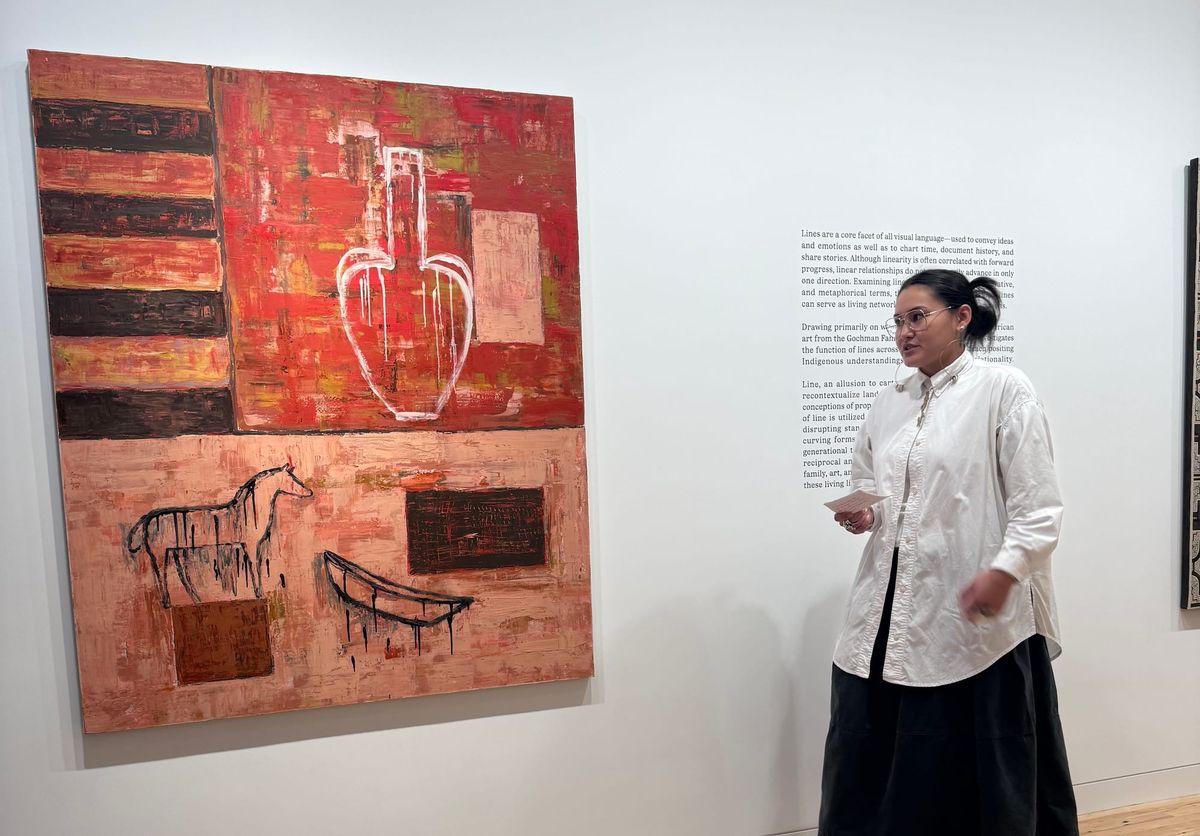
The opening exhibition, Line Break, sets the tone for this mission by showcasing compelling works that highlight the breadth, complexity, and vitality of contemporary Indigenous artistic practices. During a press preview held on November 5, GFC Assistant Curator Moonoka Begay guided visitors through the galleries, highlighting standout pieces such as Jaune Quick-to-See Smith’s landmark 1988 painting, "The Spaniard." Smith, a celebrated member of the Confederated Salish and Kootenai Nation, is among the many prominent Indigenous creators whose work forms the bedrock of the collection.
Despite the enthusiasm surrounding Branchline’s public debut, questions continue to linger within the local community regarding how the private collection and its new institution plan to engage with the Indigenous history of the region. Specifically, arts advocates and local observers have raised discussions about the nature of Branchline’s relationship with the contemporary Lenape community, whose ancestral homeland encompasses the very soil upon which Katonah and Westchester County are built. As Branchline settles into its new home in the historic Hudson Valley village, its leadership faces the ongoing task of balancing its commitment to showcasing contemporary Native art with a meaningful, sustained acknowledgment of and engagement with the local Indigenous history and descendants of the land.