In the Spotlight
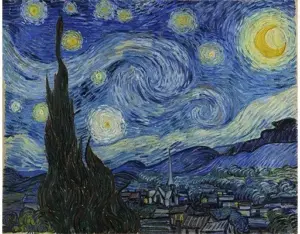
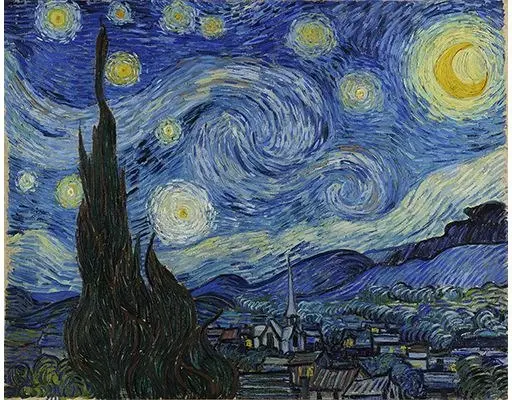
The intersection of science and art history has yielded a fresh perspective on one of the world’s most recognizable masterpieces. Astronomers have recently challenged the long-held belief that Vincent van Gogh’s The Starry Night was a purely internal manifestation of the artist’s tortured imagination. New research suggests that the swirling celestial scene was grounded in the reality of a specific dawn sky in July 1889. By cross-referencing the positioning of celestial bodies with the painting’s composition, experts are reframing the work not as a dreamscape, but as a deliberate interpretation of the physical world as it appeared to the artist from his window in Saint-Rémy-de-Provence. This finding invites a deeper appreciation for Van Gogh’s observational precision, suggesting that his visionary style was fueled as much by what he saw as what he felt.
While scholars reconsider the past, the high-end art market remains fixated on the present. Christie’s has set the stage for its upcoming 20th Century Evening Sale in New York with the announcement that Gustav Klimt’s landscape, Litzlbergkeller, will headline the event. With an estimated valuation of $60 million USD, the painting represents a pinnacle of the Austrian Secessionist’s work. As a rare landscape from one of the most sought-after artists in history, the piece is expected to draw significant international interest, serving as a bellwether for the health of the high-stakes auction market in late 2026.
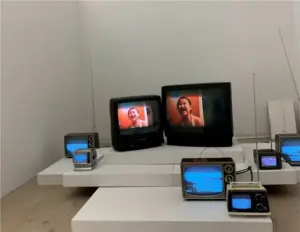
Recognition for contemporary practice continues to be a focal point for the French art scene, as the 2026 Prix Marcel Duchamp has been awarded to the artist duo David Brognon and Stéphanie Rollin. Known for their multidisciplinary approach, the pair has spent years building a practice that blurs the lines between installation, sculpture, video, performance, and photography. The jury’s decision to honor Brognon and Rollin highlights the growing importance of collaborative, cross-genre work in the contemporary canon, cementing their status as some of the most innovative voices in France today.
Museums & Galleries
The Tate has made a significant move to broaden the narrative of its national collection, acquiring a major gift of 50 works of Anglo-Indian art. These pieces, created by artists working in India during the 18th and 19th centuries, provide a crucial historical lens through which to view the cultural exchange between Britain and India during the colonial era. By integrating these works into the public record, the Tate is addressing long-standing gaps in its representation of colonial-era artistic traditions, offering visitors a more nuanced understanding of the global history of art.
Auctions & Market
The geography of the global art market continues to shift toward the Middle East. Sotheby’s has announced an expansion of its presence in Abu Dhabi, integrating fine art sales into the city’s upcoming “Collectors’ Week.” The auction, scheduled for December, is strategically timed to coincide with the opening of the long-awaited Guggenheim Abu Dhabi and will follow the city’s inaugural Frieze event. By featuring works by blue-chip masters such as Claude Monet and Andy Warhol alongside pioneers of Emirati art, Sotheby’s is signaling its commitment to Abu Dhabi as a burgeoning global hub for high-end cultural transactions and museum-grade acquisitions.
Fairs & Biennials
The momentum for the Middle East’s art calendar is further underscored by Art Basel’s preparations for its 2027 edition in Qatar. Organizers have officially unveiled the list of eighty-two galleries slated to exhibit in Msheireb Downtown, Doha, from January 28–30, 2027. Following the success of the inaugural fair, this sophomore edition aims to solidify Qatar’s position as a vital node in the international art fair circuit. With preview days scheduled for January 26–27, the event is positioned to attract a significant influx of collectors, curators, and institutional directors, marking a high-profile start to the new year.
Art History
In an extraordinary intersection of restoration and discovery, specialists working at the 11th-century Abbaye de Fontfroide in France have unearthed a hidden layer of art history. During the removal of three century-old, large-scale Symbolist murals by the French artist Odilon Redon, conservators discovered original sketches that the artist had applied directly to the stone walls. These preliminary drawings, which had remained concealed for over a hundred years, offer a rare, intimate look at Redon’s creative process. Experts have described the discovery as a landmark moment for the history of art, providing new insight into the working methods of one of the Symbolist movement’s most elusive figures.
Obituaries: A Farewell to Three Visionaries
The art world is mourning the loss of several influential figures who have left an indelible mark on their respective fields. Rudi Fuchs, the renowned Dutch curator and former director of the Stedelijk Museum in Amsterdam, has passed away at the age of 84. Fuchs was a towering figure in the museum world, having led the Stedelijk from 1993 to 2003 and served as the director of Documenta 7. His curatorial vision was known for its intellectual rigor and his ability to bridge the gap between traditional modernism and emerging contemporary movements, influencing generations of curators and scholars.
The field of sculpture also faces a significant loss with the death of Ursula von Rydingsvard, who was 84. Known for her monumental, gravity-defying sculptures crafted from cedar, von Rydingsvard was celebrated for her ability to imbue industrial-scale wood construction with a sense of emotional, almost organic, vulnerability. Her studio manager noted that she possessed a magnetic personality, serving as a focal point for those around her. Her massive, intricate works will remain as enduring testaments to her technical mastery and unique creative spirit.
Finally, the world of fine craft mourns the passing of Paul Stankard, an artist who transformed the medium of glass paperweights into a sophisticated art form. At 83, Stankard leaves behind a legacy of “glass marvels” that defied conventional expectations of the craft. Working over a 5,000-degree gas flame, he created hyper-realistic botanical sculptures that fetched tens of thousands of dollars and earned him a place in major museum collections worldwide. Stankard’s work proved that even the most overlooked objects—such as the humble paperweight—could be elevated to the level of fine art through exceptional technical skill and an eye for the natural world.
As the industry looks forward to the upcoming auctions in New York and the major fairs in Doha, these losses serve as a somber reminder of the individuals who have shaped the aesthetic and institutional frameworks of the art world. From the celestial mysteries solved in the laboratory to the physical discoveries made behind monastery walls, the narrative of art continues to evolve through the tension between history and the new.