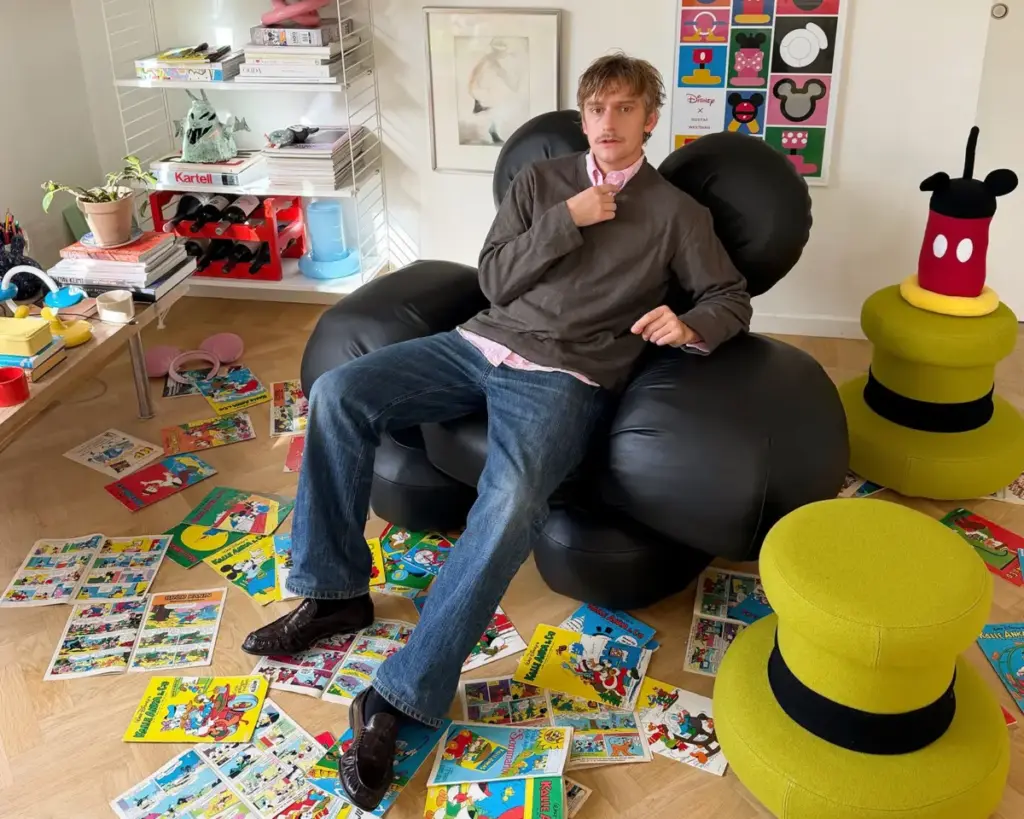
In a surprising and whimsical crossover between contemporary Scandinavian design and legendary animation history, Swedish designer Gustaf Westman has joined forces with The Walt Disney Company. The resulting collaboration reimagines some of the world’s most recognizable cartoon characters—including Mickey Mouse, Minnie Mouse, Donald Duck, and Goofy—into a bold, highly tactile collection of sculptural furniture and everyday household objects.
Known for his playful, post-modern aesthetic, Stockholm-based Westman has built an international following through his chunky silhouettes, candy-bright color palettes, and unmistakable curves. By applying this signature design language to the universally beloved visual identities of Disney’s core cast, the partnership bridges the gap between high-end contemporary design and nostalgic pop culture.
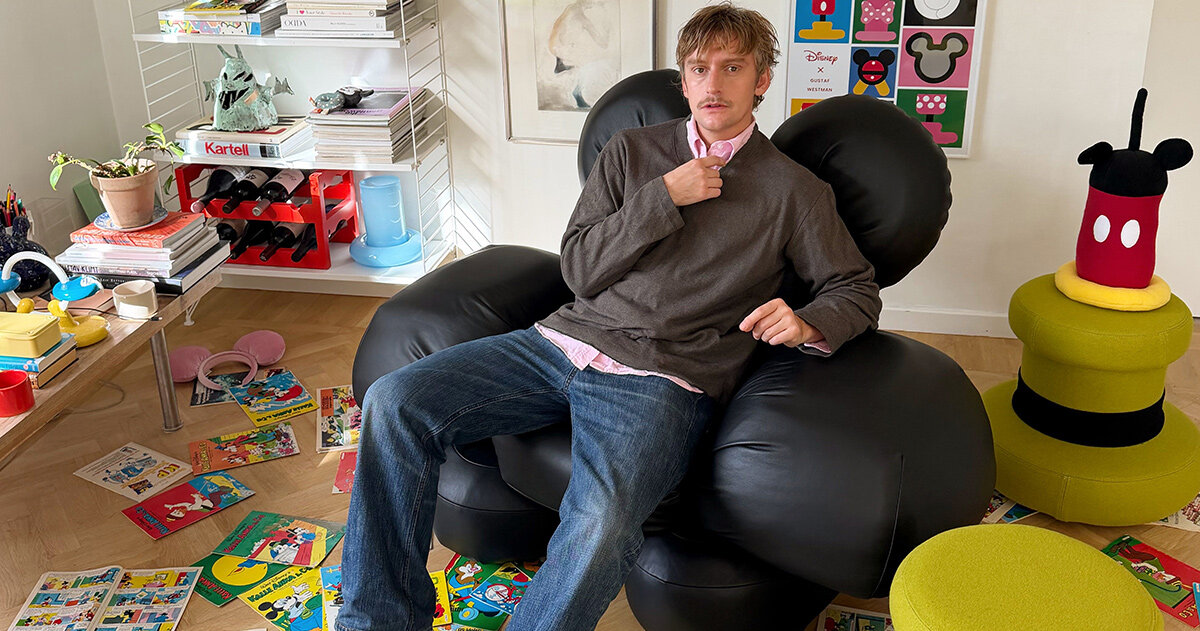
The extensive collection is comprehensive in its scope, stretching from smaller, intimately scaled tableware and decorative accessories all the way to statement-making seating, coffee tables, and larger living room furnishings. Rather than relying on literal, overly complex representations, Westman distills the essence of each character down to their most iconic graphic elements. A pair of oversized, rounded ears, a distinct color-blocking scheme, or a characteristic silhouette is often all it takes to evoke a beloved Disney personality, allowing the resulting objects to function as striking, autonomous sculptures while simultaneously honoring their animated origins.
Mickey and Friends Become Sculptural Objects for the Home
The collaboration finds some of its most charming expressions in smaller, daily-use objects and decorative home accessories. Among these pieces is Mickey’s Trouser Vase, a brilliant red ceramic vessel sculpted directly into the shape of the iconic mouse’s shorts, complete with oversized, raised white buttons that pop against the glossy finish.
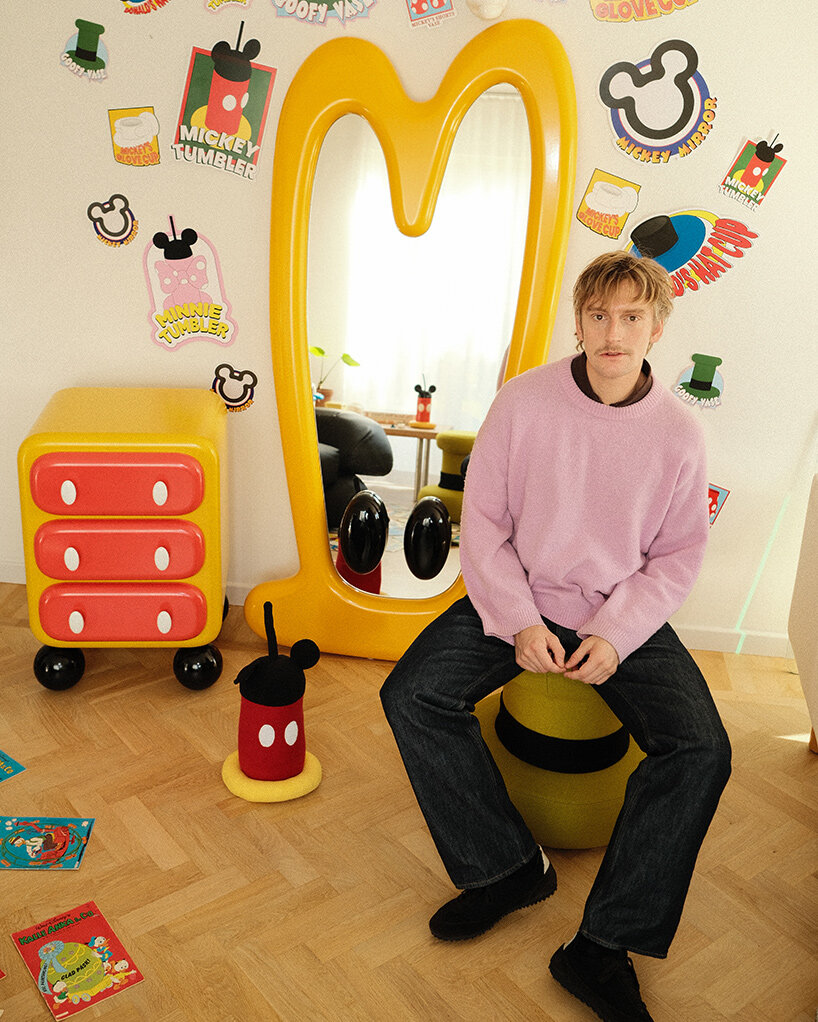
Taking an equally direct yet strikingly graphic approach, the Mickey Pipe Mirror outlines the legendary mouse’s unmistakable round ears using polished metal tubing, blending industrial materials with playful character geometry. Donald Duck is similarly deconstructed and reassembled, translated into a sculptural bookstand where his familiar sailor hat, vibrant red bow tie, and signature yellow webbed feet are transformed into a colorful composition of bold geometric forms.
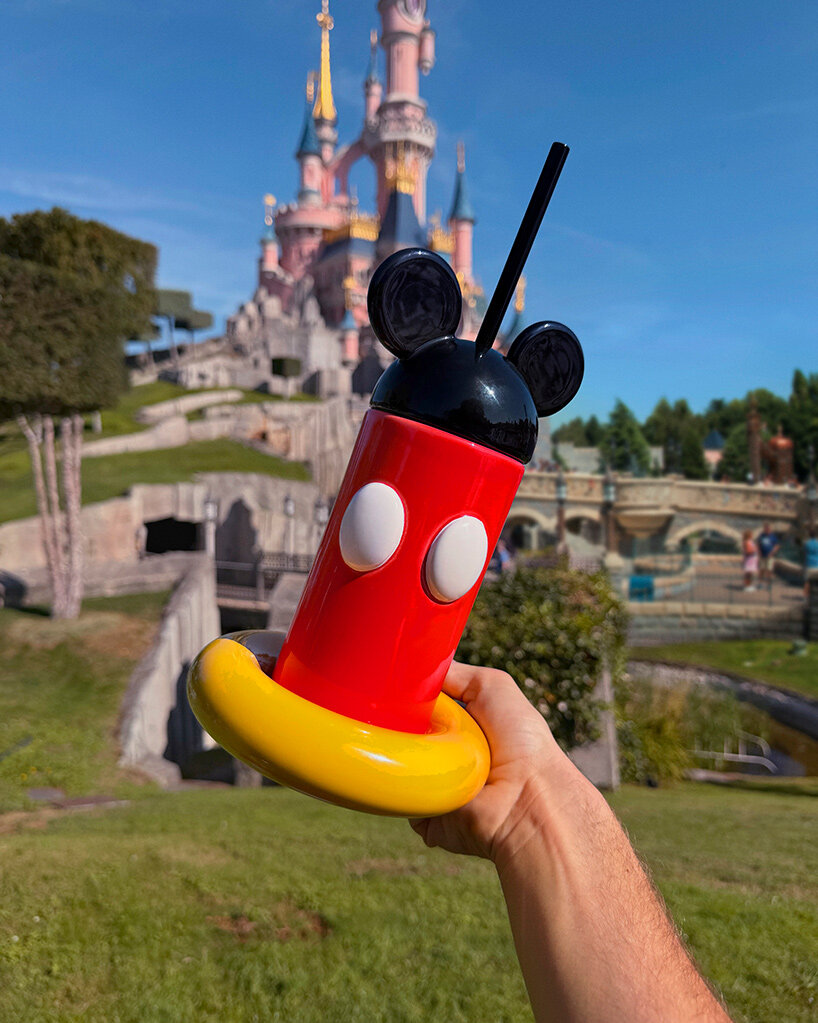
Throughout the accessory line, character details take on entirely new utilitarian functions. Donald’s classic sailor hat is repurposed as a functional cup, while Goofy’s eccentric and elongated silhouette informs the shape of a sculptural vase. Mickey and Minnie Mouse also make frequent appearances across an expansive range of tableware. Their ears and iconic accessories are seamlessly integrated into Westman’s characteristically bulbous ceramic forms, resulting in items like the Mickey tumbler—which cleverly borrows the red shorts, black ears, and yellow shoes of the legendary mouse—and Minnie Mouse cups featuring her signature polka-dotted bow wrapping around matching saucers.
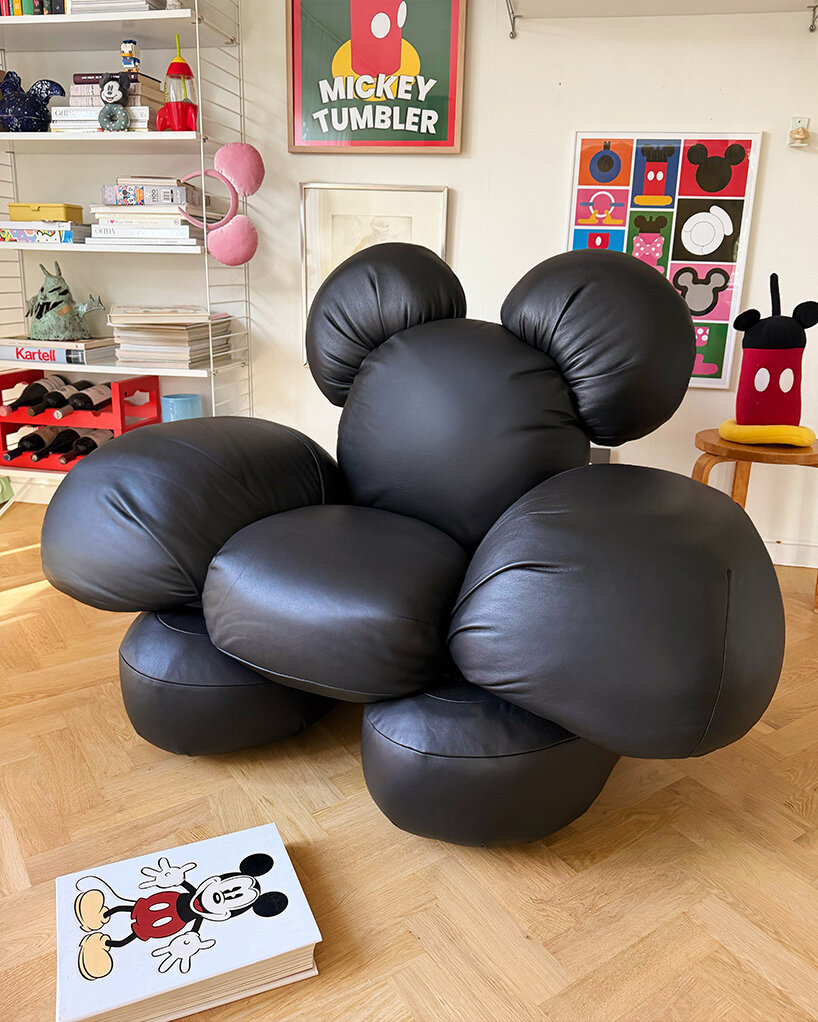
Disney’s Cartoon Silhouettes Take Shape as Full-Scale Furniture
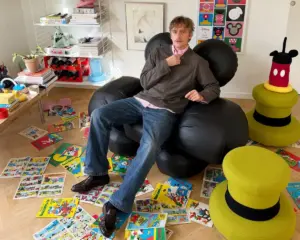
The partnership extends far beyond tabletop accessories, moving boldly into the realm of larger, architectural furniture designed to anchor a modern living space. The collection introduces statement pieces such as the Mickey and Minnie sofas, whose exaggerated, voluptuous curves bring the animated icons directly into the domestic interior in a soft, welcoming format.
Westman has also translated other members of the classic crew into functional home infrastructure. The Goofy Coffee Table and the Donald Shelf utilize the recognizable silhouettes of their respective characters to build playful yet fully functional items for the home. A Mickey Bar Cart further expands the collection’s exploration of cartoon-inspired furniture, featuring rounded profiles and a color scheme that feels entirely at home within Westman’s existing catalog of contemporary design work.
What unites these diverse pieces is Westman’s sophisticated restraint. By reducing complex characters to a minimalist set of visual cues—such as a silhouette, a pair of ears, or a specific triad of primary colors—the designer ensures that the pieces avoid feeling like mere novelty items. Instead, they operate as serious pieces of contemporary furniture that happen to be imbued with a sense of joy, humor, and nostalgia. The characters become intrinsically tied to the furniture’s geometry, actively shaping the way each sculptural object occupies space and interacts with the room around it.