As the crisp autumn weather settles in and the anticipation of winter looms just around the corner, gardeners everywhere begin looking for creative ways to maintain curb appeal during the dormant months. For those seeking fresh inspiration, a stunning new series of winter container designs crafted by New Jersey-based garden designers Ellen Goldfarb and Tracy Buttrick of What’s Blooming offers a masterclass in seasonal arrangement. Known for their striking, architectural approach to outdoor spaces, Goldfarb and Buttrick have once again turned heads with a collection of sturdy, thoughtfully composed planters designed to stand resiliently against the harshest elements while welcoming visitors with style and sophistication.
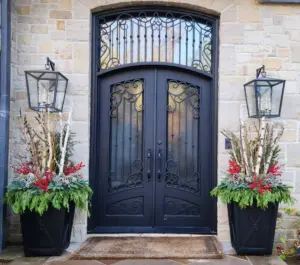
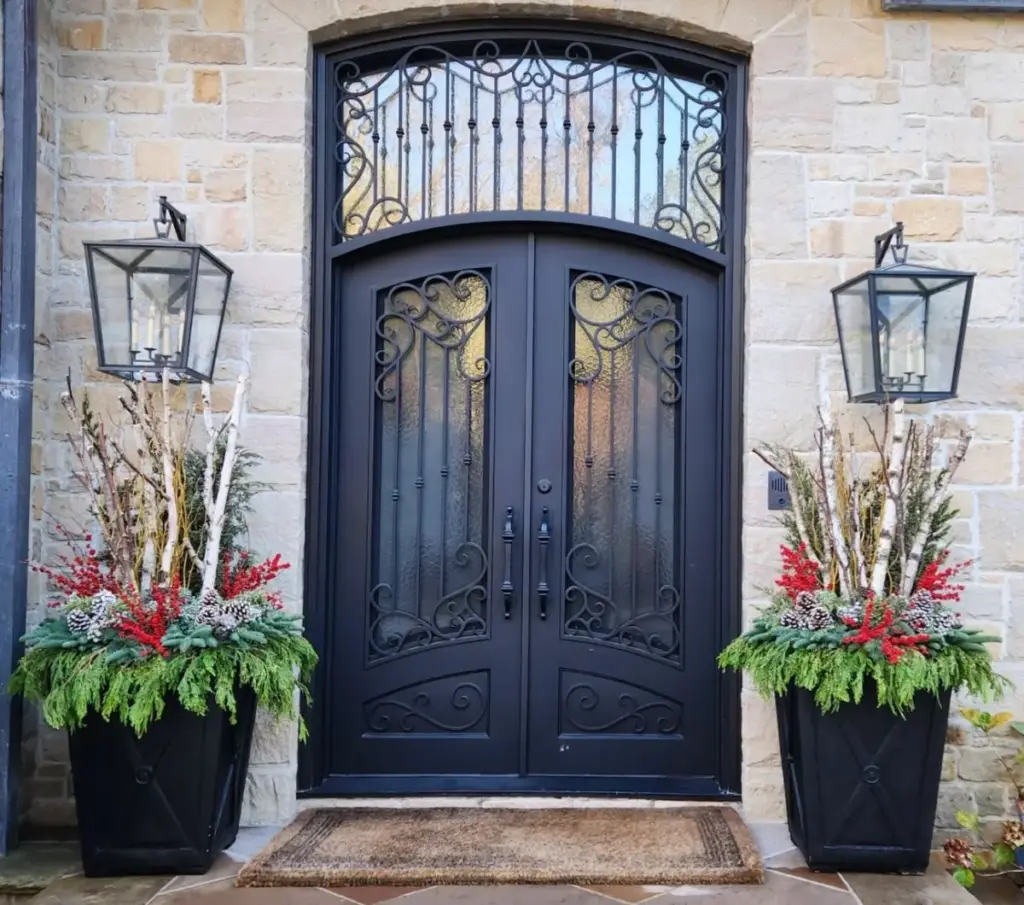
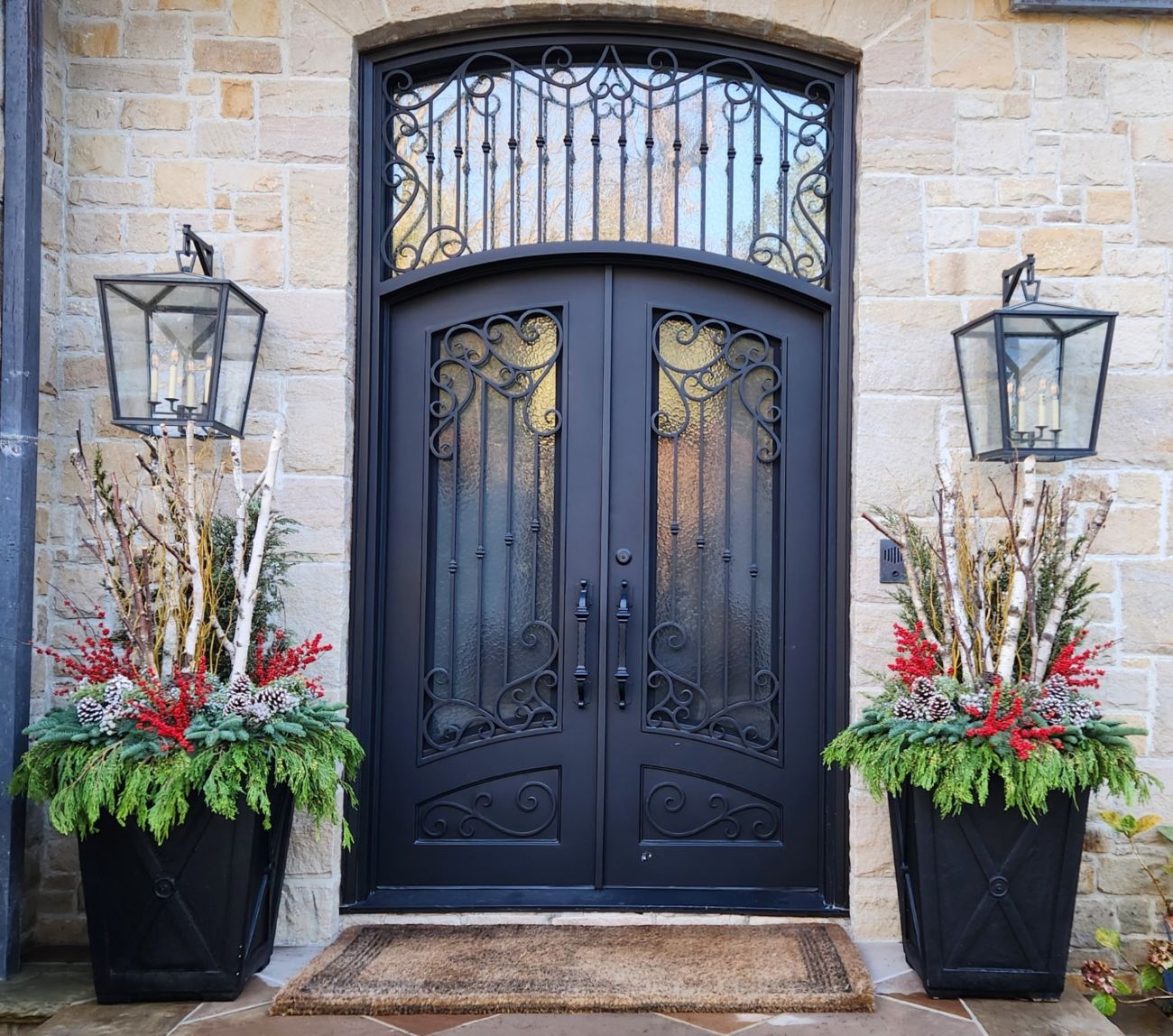
The latest showcase of their work highlights the careful balance required when dressing up prominent entryways during the colder months of the year. One particularly striking installation stands guard on either side of an impressive doorway in Saddle River, New Jersey. According to the designers, the primary challenge of this specific project lay in matching the substantial physical weight of the heavy pots and the grand double doors they accompany. Furthermore, the design team had to exercise extreme precision during the installation process to avoid damaging the delicate glass lamps positioned just above the containers.
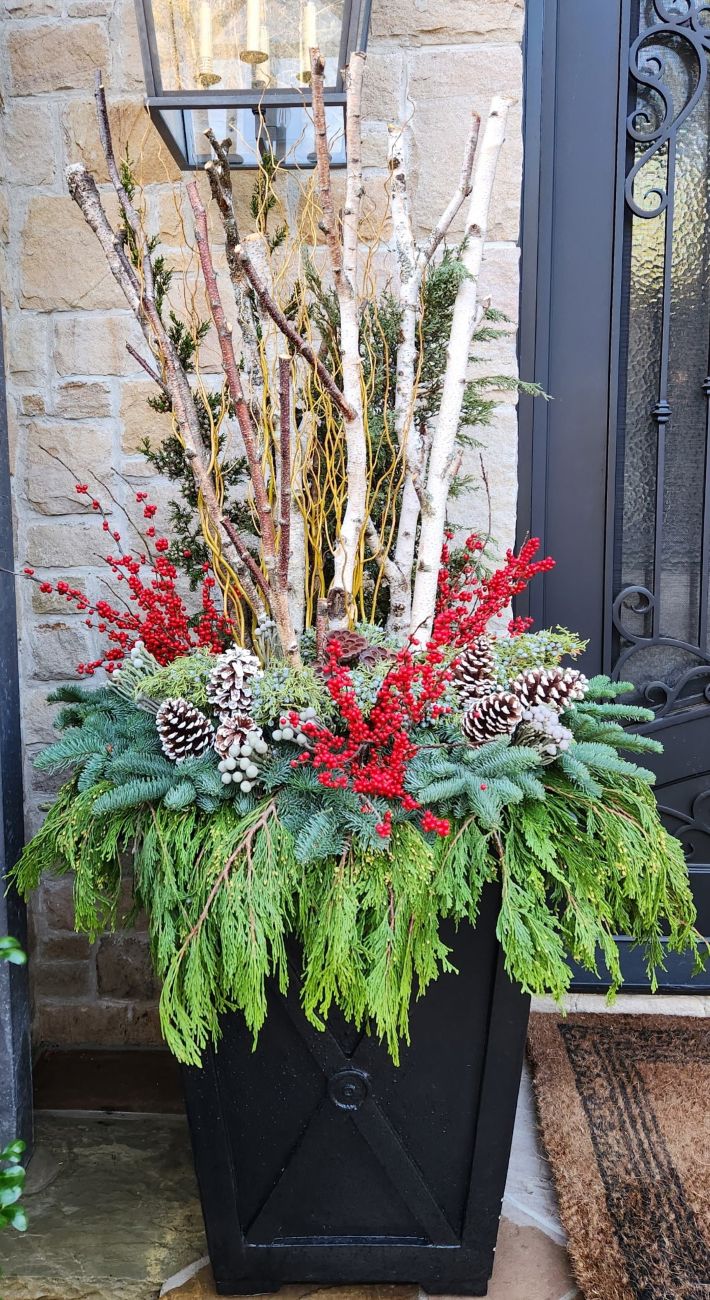
To achieve the desired visual impact, Goldfarb and Buttrick began by carefully placing structural birch logs as the focal point of the arrangement. They then filled the surrounding space with golden curly willow, scientifically known as Salix matsudana ‘Tortuosa’, which thrives in USDA Zones 4 through 8, alongside berried Chinese juniper (Juniperus chinensis, Zones 4–9). To inject a vibrant pop of seasonal color, the designers incorporated brilliant red winterberries (Ilex verticillata, Zones 3–9). The evergreen foundation of the containers was built using a rich mix of desert juniper (Juniperus osteosperma, Zones 3–9), noble fir (Abies procera, Zones 5–6), and California incense cedar (Calocedrus decurrens, Zones 5–8). The composition was ultimately finished with frosted pine cones, textured lotus pods (Nelumbo cultivars, Zones 4–10), and silvery clusters of silver brunia, creating a multi-layered masterpiece of texture and tone.
A close examination of these Saddle River planters reveals the meticulous attention to detail that characterizes Goldfarb and Buttrick’s work. Just a few steps away at the same residence, another pair of containers presented a similar set of spatial and aesthetic challenges. Working once again with chunky, heavy planters, limited porch space, grand doors, and vulnerable overhead lighting fixtures, the designers had to adapt their strategy while maintaining a cohesive look for the property’s exterior.
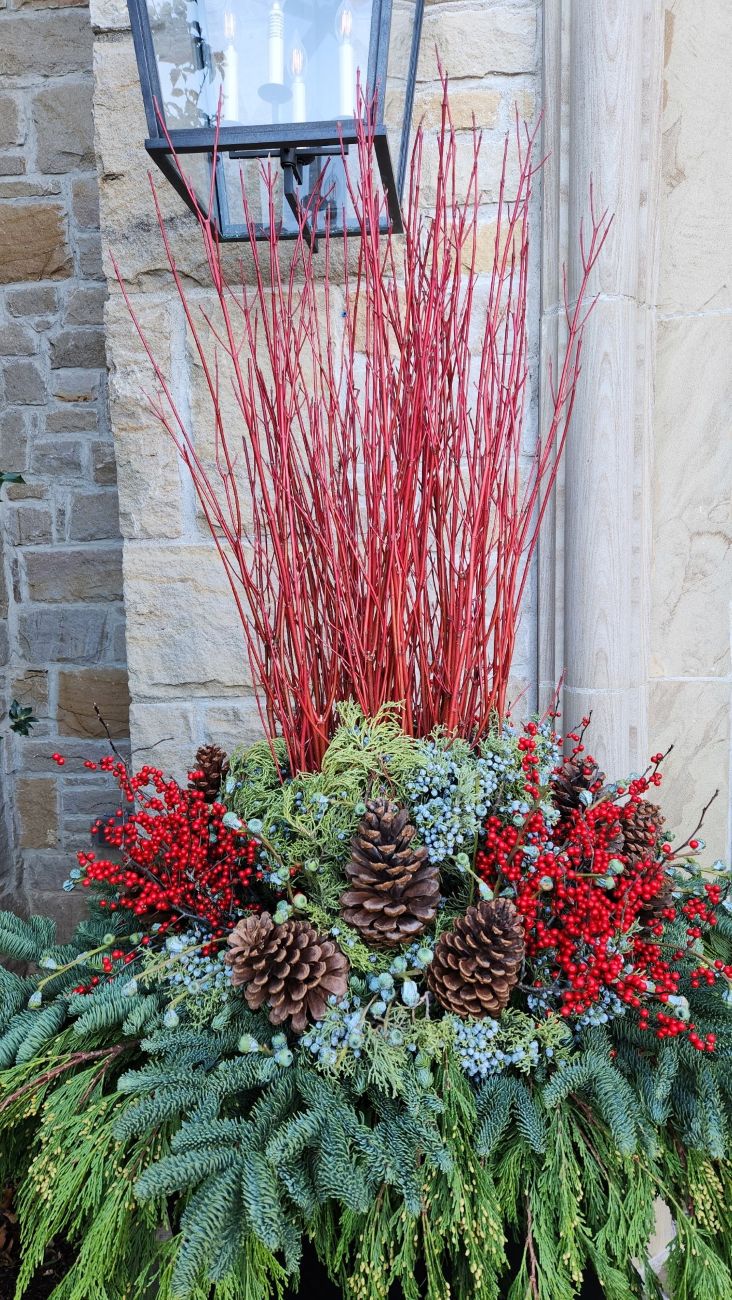
For this particular entryway spot, the design team opted to use thick bunches of redtwig dogwood (Cornus sericea cultivars, Zones 2–7), allowing the bright crimson stems to stand out sharply against the home’s off-white stone walls. This bold backdrop was complemented by generous amounts of desert juniper, more red winterberries, natural brown pine cones, silver bell eucalyptus, noble fir, and incense cedar.
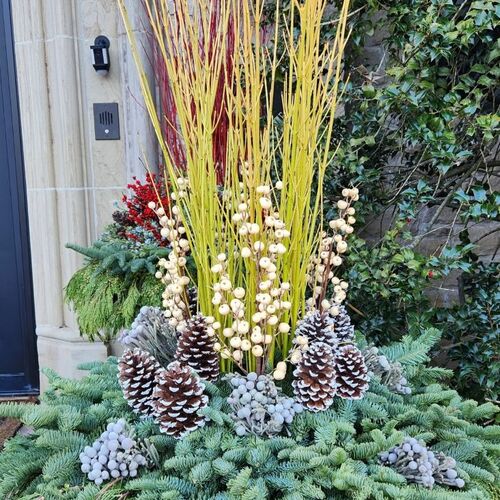
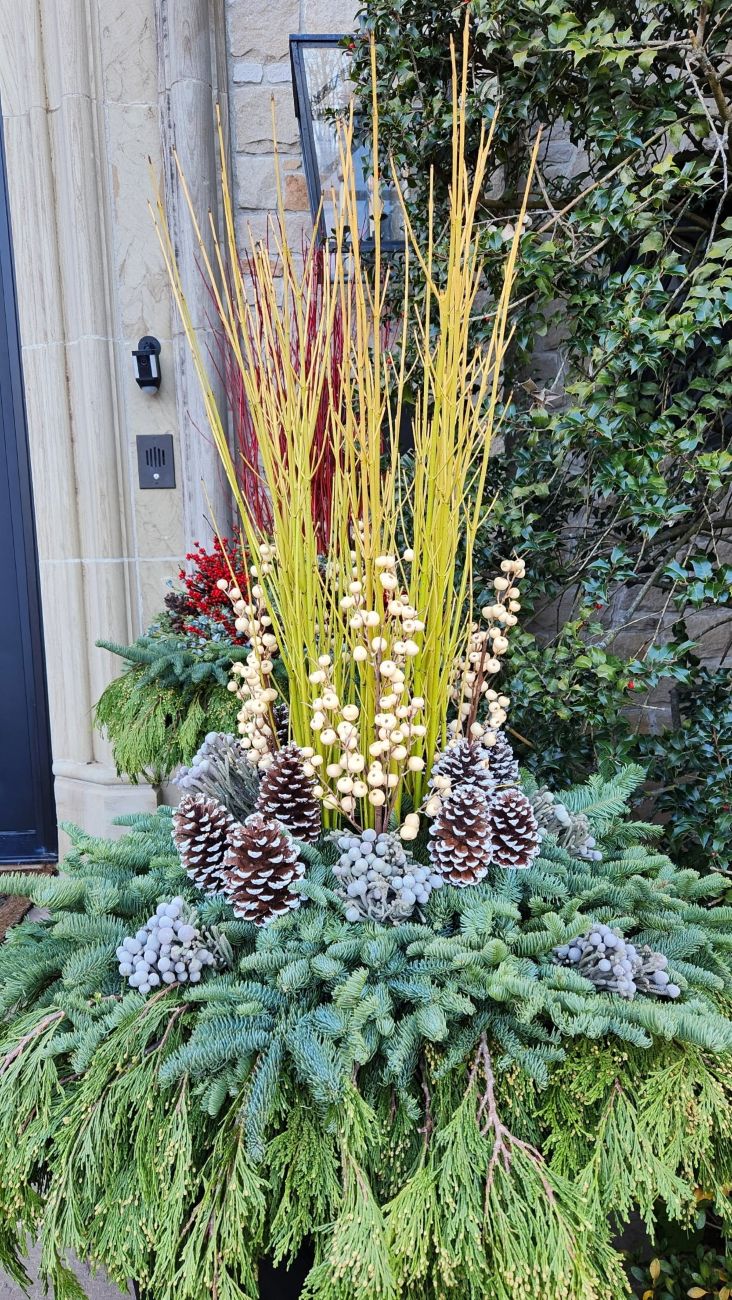
Positioned directly in front of these red-stemmed arrangements—though situated one step lower on the landing—stands a companion pair of pots designed to provide a striking visual contrast. To counteract the warmth of the red branches in the background, Goldfarb and Buttrick turned to a cooler color palette. These front containers feature yellowtwig dogwood (Cornus sericea ‘Flaviramea’, Zones 3–7) paired with artificial white berries and frosted pine cones. To tie the lower tier together with the rest of the entryway display, they incorporated clusters of silver brunia alongside additional branches of noble fir and incense cedar.
Moving away from the grand double doors and onto a more intimate covered porch at another Saddle River location, the designers demonstrated their versatility with a smaller, more refined container arrangement. This compact planter is crowned dramatically with glossy southern magnolia (Magnolia grandiflora, Zones 6–10) leaves, with pieces of incense cedar peeking subtly through the foliage. True to their signature style, the designers incorporated seeded eucalyptus, specifically sourcing striking purple-toned branches for this installation. Completed with natural brown pine cones and clusters of silver brunia, this smaller arrangement proves that high-impact winter design is just as effective on a modest scale.
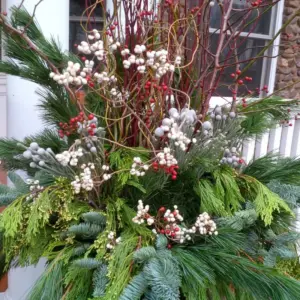
In yet another creative display from the New Jersey designers, height and drama take center stage. This particular arrangement utilizes tall, white-painted huckleberry branches—affectionately referred to in the trade as "sweet huck"—intermixed with dark redtwig dogwood. Beneath this elevated framework, the designers layered branches of seeded eucalyptus and red winterberries, accented by frosted pine cones, a touch of noble fir, and classic incense cedar.
The ongoing series celebrating Goldfarb and Buttrick’s seasonal artistry continues to resonate deeply with gardening enthusiasts looking for fresh ideas to replicate or adapt for their own homes. As the winter season approaches, these masterful creations offer a timely reminder that a dormant garden does not have to mean a lifeless one. By thoughtfully combining structural branches, resilient evergreens, berries, and textural elements, gardeners can transform their entryways into welcoming works of art that endure throughout the coldest months of the year.
For readers
inspired by these professional designs, Fine Gardening continues to offer avenues for community engagement through its ongoing garden photo submissions. Gardening enthusiasts who wish to share their own outdoor spaces, unique plant collections, or memorable garden visits are invited to submit their photographs and stories. Submissions can be completed online via the dedicated Garden Photo of the Day Submission Form, where participants can share details regarding their local growing zone, years of gardening experience, triumphs, lessons learned, and favorite plant varieties.
To support gardeners in their ongoing projects, the publication also highlights recommended professional tools and reading materials. Among these is the ARS Telescoping Long Reach Pruner, designed with drop-forged blades for long-lasting sharpness and a lightweight, balanced frame ranging from four to seven feet for comfortable pruning. Additionally, educational resources such as Planting in a Post-Wild World: Designing Plant Communities for Resilient Landscapes by Thomas Rainer and Claudia West, and The Crevice Garden: How to Make the Perfect Home for Plants from Rocky Places by Joseph Tychonievich, offer valuable insights for those looking to create resilient, nature-inspired landscapes in urban and suburban environments.