Arthur Jafa’s major survey exhibition, I Am Tony, currently on view at the New Museum in Lower Manhattan, offers visitors a bracing encounter with the artist’s characteristic gallows humor, a distinct sensibility that ironizes even the most morbid imagery while elevating the solemnity of low culture. Spanning two levels of the prominent downtown New York institution, the exhibition is densely packed with a wide array of works that venture far beyond the powerful video art that has cemented Jafa’s reputation as one of the most important living artists in the United States.
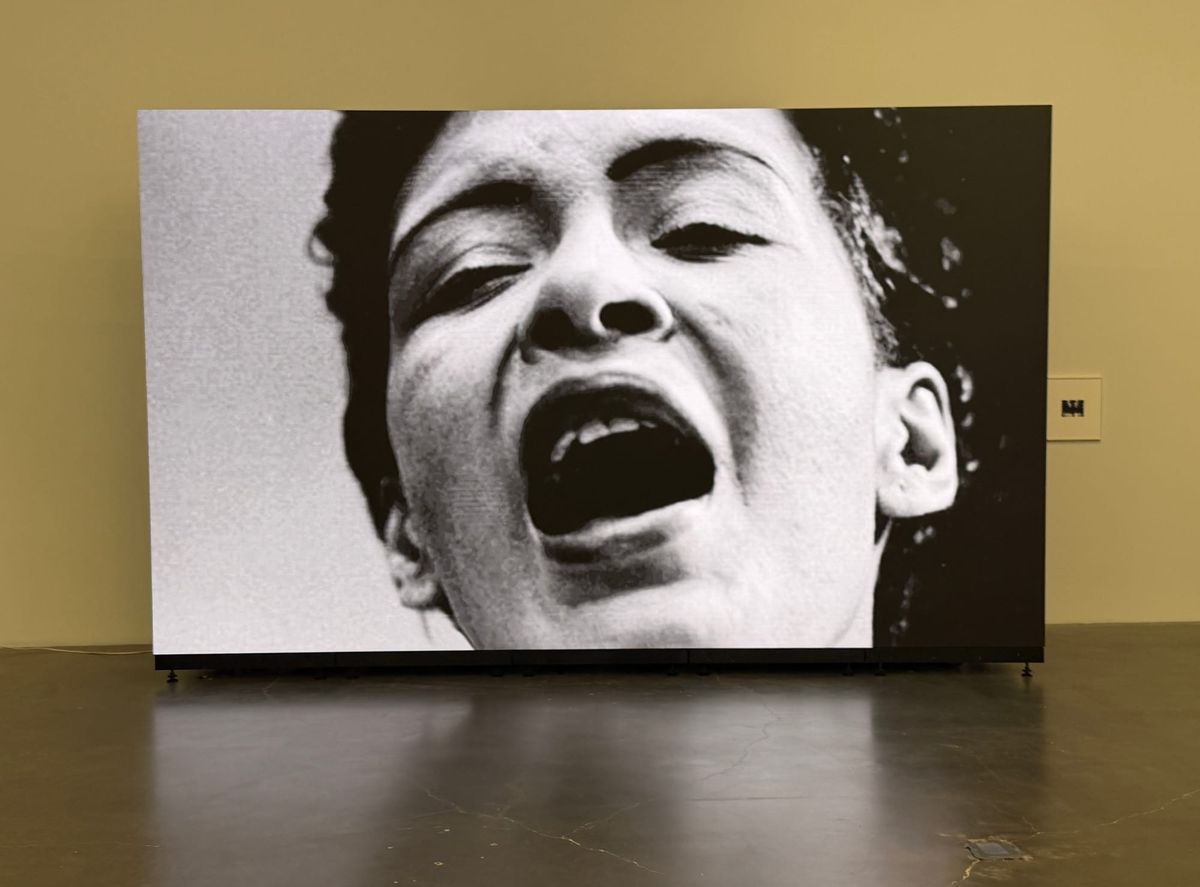
As the largest exhibition of his career to date, I Am Tony carries sweeping ambitions. While it achieves its goals with mixed results, the presentation dives headfirst into the complex, interconnected themes that Jafa has continually mined throughout his career, this time executing them in even more idiosyncratic and brash ways. These recurrent subjects include the rich and complex history of Black music, the duality of religion and secularism, American cinema, political violence, popular culture, and the pervasive influence of the internet. His eclectic references and intuitive grasp of memes and virality set him apart as an artist taking assemblage and collage to new heights, bridging historical trauma with contemporary digital saturation.
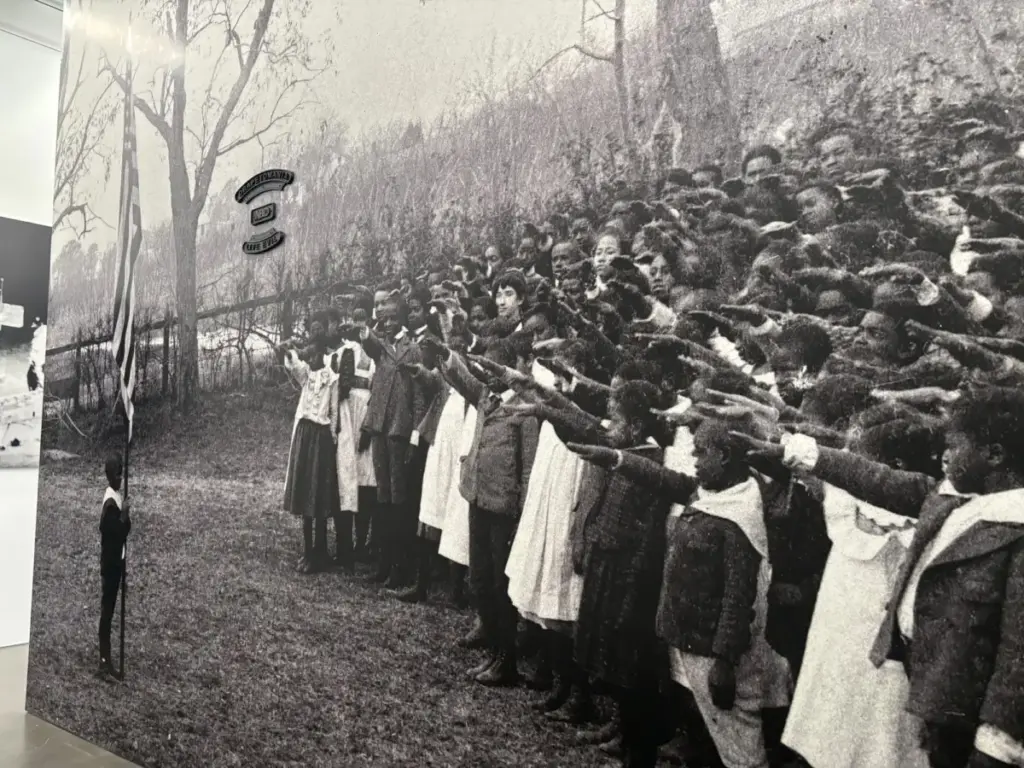
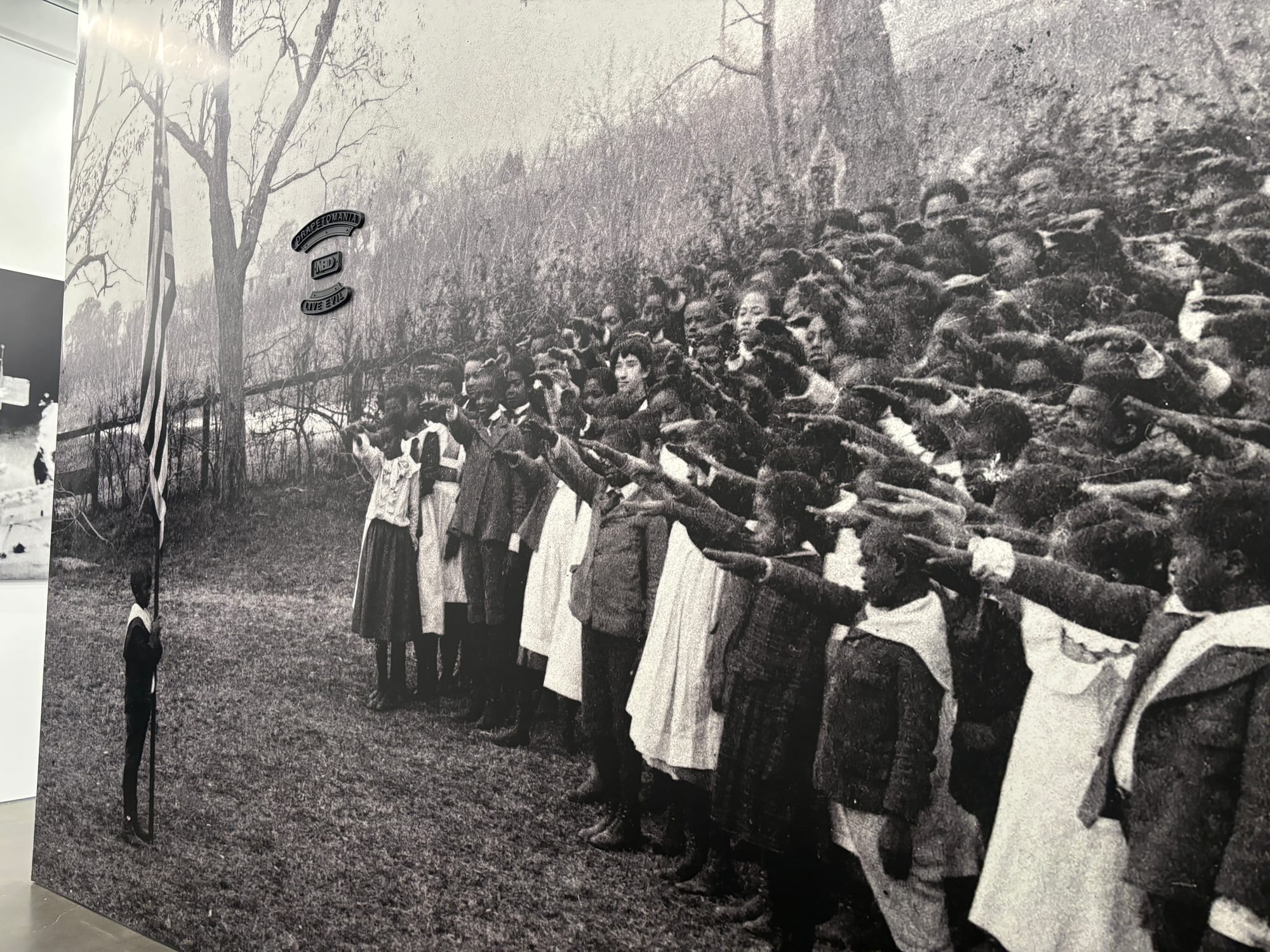
The exhibition opens on one floor with a striking and unsettling installation aptly titled “Allegiance” (2026). This piece consists of a massive, wall-to-wall black-and-white image depicting a crowd of 19th-century Black schoolchildren performing what appears to contemporary eyes to be a “Sieg Heil” salute. Positioned in the left quadrant of the expansive composition is a young boy serving as a flag-bearer, clutching the American stars and stripes.

This detail confirms that, despite initial, chilling appearances, the work is a blown-up piece of Americana: a vernacular photograph capturing a once-neutral, now-outmoded patriotic ritual. The image possesses a grainy, spectral quality, and the way its young, somber subjects cluster tightly within the frame produces an immediate melancholic effect. According to the accompanying wall text, this specific physical gesture was once a customary and patriotic way for citizens to honor the American flag during the 19th century. However, it is the devastating semantic shift—what that exact same physical salute came to signify in a 20th-century European context under fascism—that grants the piece its profound power. The artwork derives its impact through shock, stark juxtaposition, and the emergence of horrifying new connotations that only become apparent when historical imagery is wrenched out of its original context.
Moving deeper into the expansive survey, visitors encounter another monumental wallpaper installation, “Rwanda, 1999” (2026). This piece features a stark photograph taken by Jafa himself at the Murambi Genocide Memorial in Rwanda, capturing the site five years after the horrific atrocities took place. In the image, the bloodied, tattered garments of the mass killing’s victims are strewn relentlessly across the entire museum wall, creating an overwhelming visual and emotional barrier for the viewer.
It is practically impossible to stand before this wall without drawing immediate mental parallels to contemporary atrocities, such as the ongoing genocide and devastation in Gaza. One strongly suspects that this evocative resonance was entirely intentional on Jafa’s part, even though the museum’s official wall text does not explicitly mention Palestine or contemporary Middle Eastern conflicts. By leaving the historical imagery to speak for itself, Jafa underscores the cyclical nature of human cruelty and the ways in which mass violence leaves behind tangible, haunting remnants that echo across different geographies and decades.
Throughout the multi-room presentation at the New Museum, Jafa demonstrates why his mastery of assemblage and collage continues to push contemporary art into uncharted territory. By pulling from sources as disparate as 19th-century photographic archives, memorials of international genocide, internet meme culture, and the foundational rhythms of Black musical traditions, the artist constructs an environment that refuses to let viewers remain passive. I Am Tony challenges its audience to confront the uncomfortable intersections of patriotism, trauma, and political violence, cementing Jafa’s status as a visionary force navigating the darkest and most complex currents of modern history.