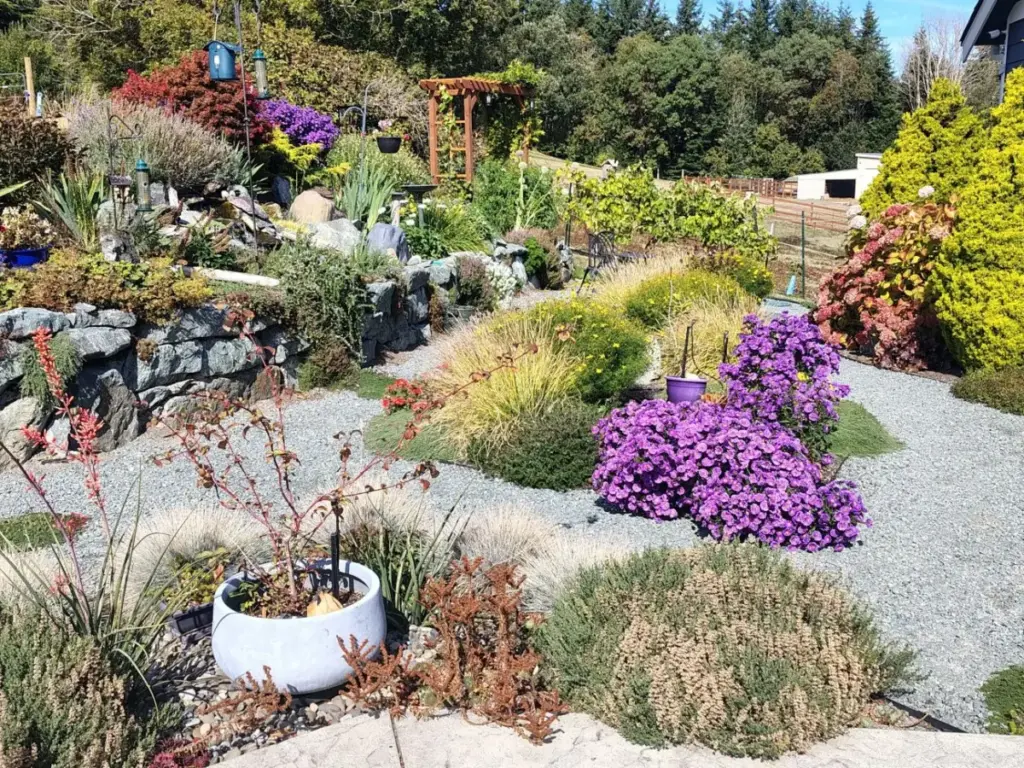
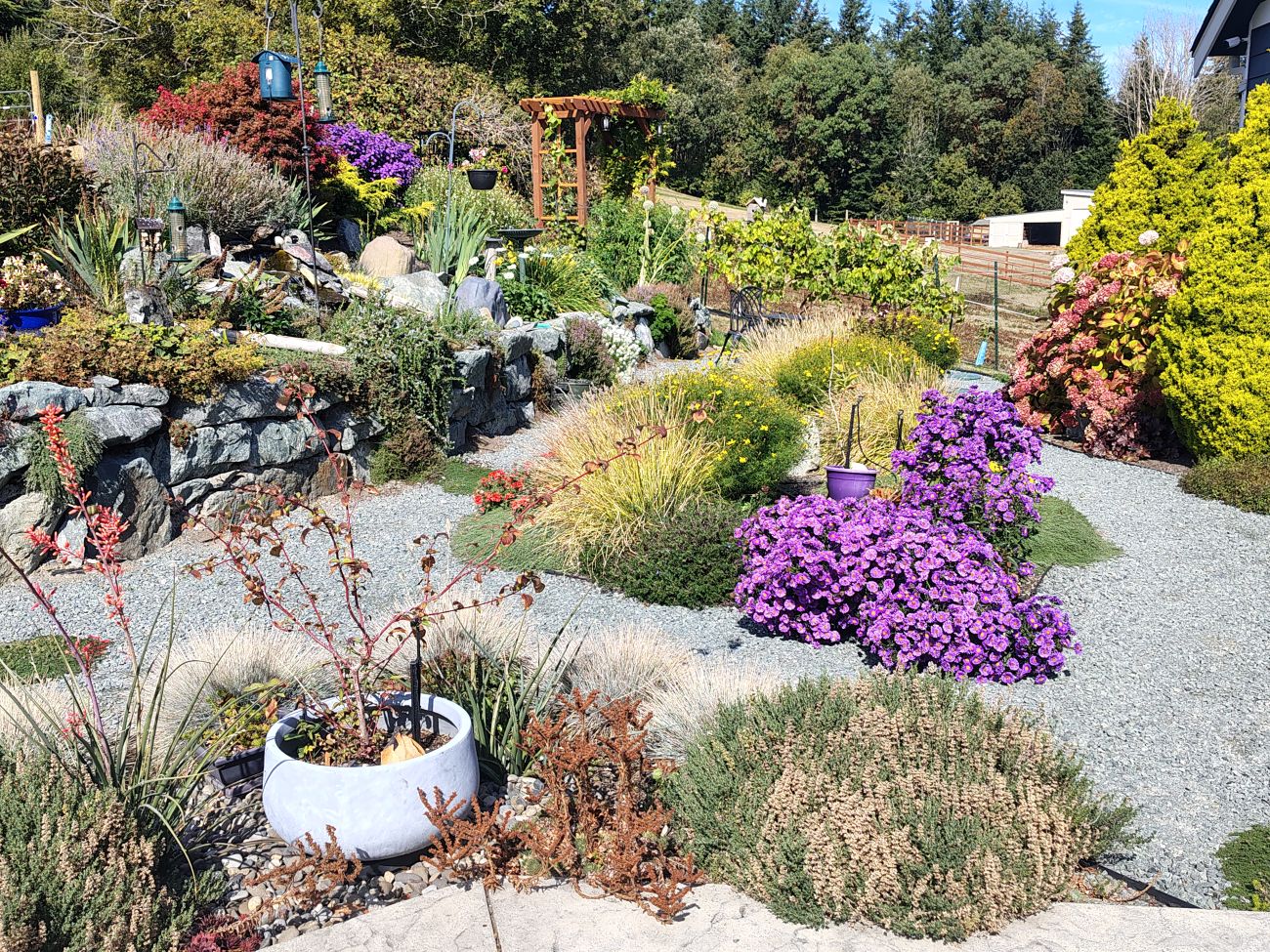
Today we are heading to Camano Island, Washington, to visit Joseph in Zone 8b. Situated at the bottom of a sloped cul-de-sac, his newly built home’s property presents a dramatic layout where he has constructed an impressive rock garden complete with gravel paths and a robust stone retaining wall. The landscape is so full of texture that it radiates an almost desert-like feel—an aesthetic one might hardly expect to encounter in the lush, temperate Pacific Northwest. Framed against the breathtaking backdrop of the distant Cascade Mountains, the setting provides a panoramic view that is truly difficult to surpass. Here is Joseph to tell us more about the ongoing transformation of his outdoor space.
The garden was born out of sheer necessity after we moved into our newly built home, and the entire process has been one of continuous experimentation and discovery. Reflecting on his trial-and-error approach to landscaping a challenging slope, Joseph notes his philosophy simply: "This is a nice plant. Let’s put it in the ground and see what happens."
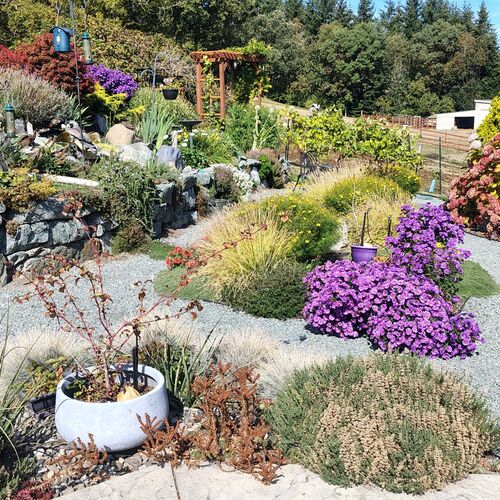
The front yard sits directly at the base of the incline, utilizing a rich, diverse tapestry of flora to handle the elevation change while offering stunning visual interest. A carefully curated selection of plants—including creeping thyme (Thymus cvs., Zones 4–9), trailing rosemary (Salvia rosmarinus cvs., Zones 8–11), liatris (Liatris cvs., Zones 3–9), asters (Symphyotrichum cvs., Zones 4–8), hydrangeas (Hydrangea cvs., Zones 3–9), lavender (Lavandula cvs., Zones 4–10), wisteria (Wisteria cvs., Zones 5–9), and productive grapevines (Vitis cvs., Zones 4–10)—work together to create constantly shifting views throughout the changing seasons.
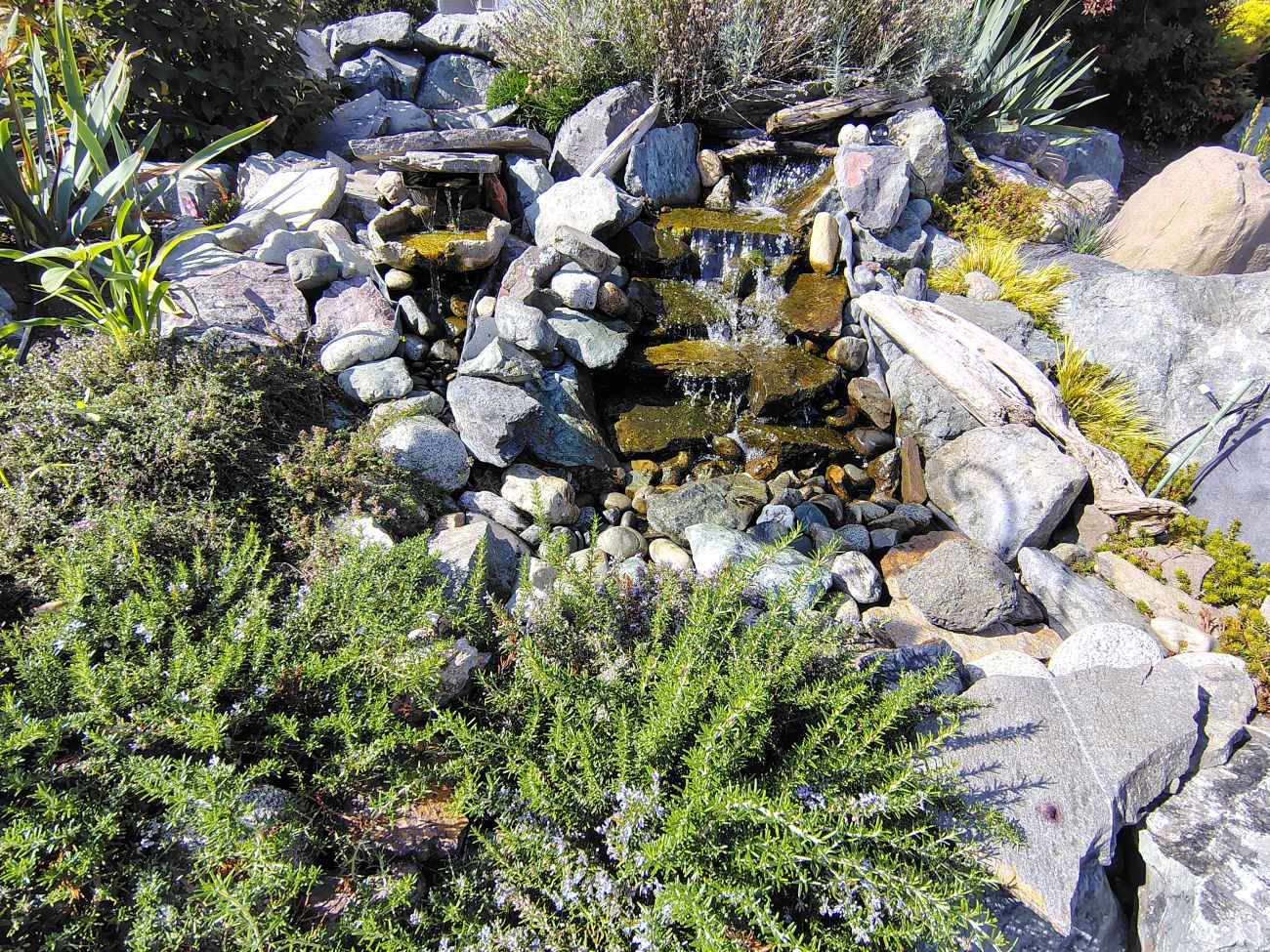
Integrating functionality directly into the slope, a custom stone waterfall feature has been built directly into the hillside. Beyond its aesthetic contribution to the rock garden design, the cascading water provides a refreshing and welcoming respite for native wildlife, frequently drawing in robins, finches, chickadees, and the occasional brilliant Steller’s jay.
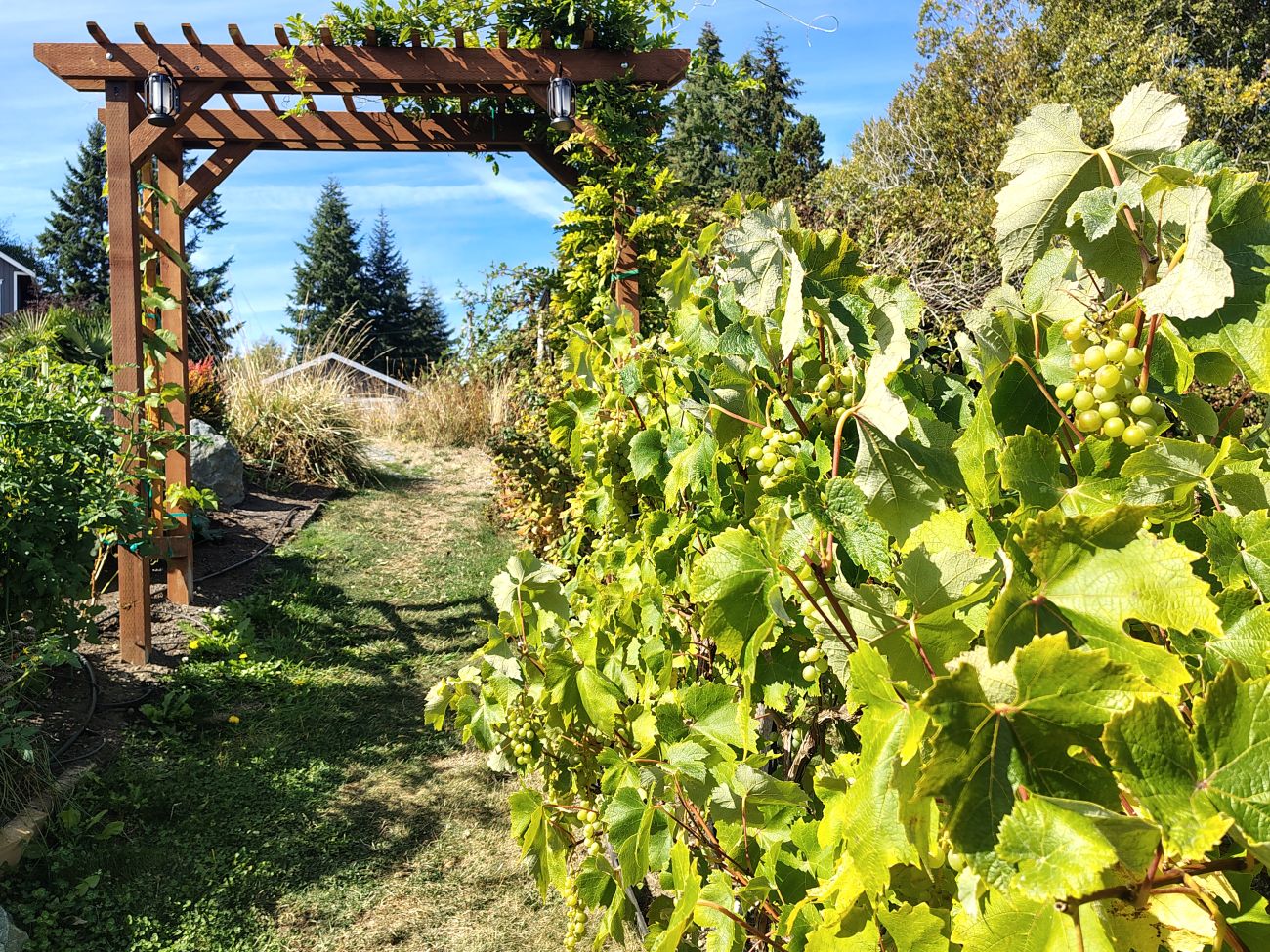
Moving further across the property, a wooden garden arbor serves as a striking structural focal point, looking out toward the east. The perimeter fence line, which is cleverly shared with a resident population of horses grazing in the pasture next door, is softly masked by a lush combination of grapevines, roses (Rosa cvs., Zones 3–9), raspberries (Rubus cvs., Zones 3–9), and clematis (Clematis cvs., Zones 4–9). Together, these climbing plants frame an exquisite view of the nearby bay and the majestic Cascade Mountains in the distance, tying the entire rural vista together.
Garden observers and visitors alike have continually praised the thoughtful execution of the space. Rock gardens remain a time-tested, highly effective method for stabilizing difficult slopes while preventing soil erosion, and Joseph’s application demonstrates how structural integrity can merge seamlessly with artistic planting choices. In particular, the brilliant purple asters blooming against the chartreuse foliage provide a fantastic, high-contrast color combination that elevates the entire aesthetic of the hillside.
We want to see YOUR garden!
Have photos to share? We’d love to see your garden, a particular collection of plants you love, or a wonderful garden you had the chance to visit!
To submit, fill out the Garden Photo of the Day Submission Form online, or send 5 to 10 high-resolution photos along with some information about the plants in the pictures and where you took them. We’d love to hear where you are located, how long you’ve been gardening, successes you are proud of, failures you learned from, hopes for the future, favorite plants, or funny stories from your garden.
Do you receive the GPOD by email yet? Be sure to sign up online to have daily garden inspiration delivered straight to your inbox.