Published on November 15, 2026, in the Opinion section of ArchDaily—a format dedicated to argument-driven essays exploring critical questions shaping the built environment—an essay by Jonathan Yeung titled "Against Program: The Productive Ambiguity of Contemporary Architecture" examines a fundamental tension in modern design: the relationship between architectural programming and spatial longevity.
In 2022, Tokyo’s Nakagin Capsule Tower was demolished, bringing an end to one of modern architecture’s most recognizable and ambitious experiments in adaptability. Designed by visionary architect Kisho Kurokawa and completed in 1972, the building consisted of 140 prefabricated capsules attached to two massive structural concrete cores. Its architectural proposition was remarkably radical for its time: individual capsules could be detached and replaced as residential needs evolved, allowing the building to continuously renew itself without ever dismantling its principal structural framework.
Yet, over the course of five decades, the proposed replacement system was never realized. Despite various grassroots preservation efforts and passionate campaigns by architectural historians and enthusiasts, deteriorating building services, changing regulatory environments, and the profound practical difficulties inherent in collective property decision-making eventually sealed the tower’s fate. The demolition of the Nakagin Capsule Tower highlighted a sobering reality within the architectural discipline: rigid adherence to highly specific functional programming and complex technological systems often undermines a building’s capacity to endure over time.
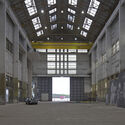
The essay points to alternative paradigms in contemporary architecture that embrace a different design philosophy—one centered on spatial openness, structural generosity, and what can be described as productive ambiguity. Rather than locking a building into a hyper-specific program dictated by rigid functional requirements, architects are increasingly turning toward structural frameworks that can accommodate multiple, shifting uses over time without requiring heavy mechanical interventions or structural overhauls.
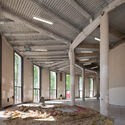
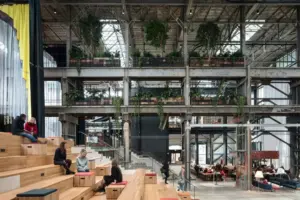
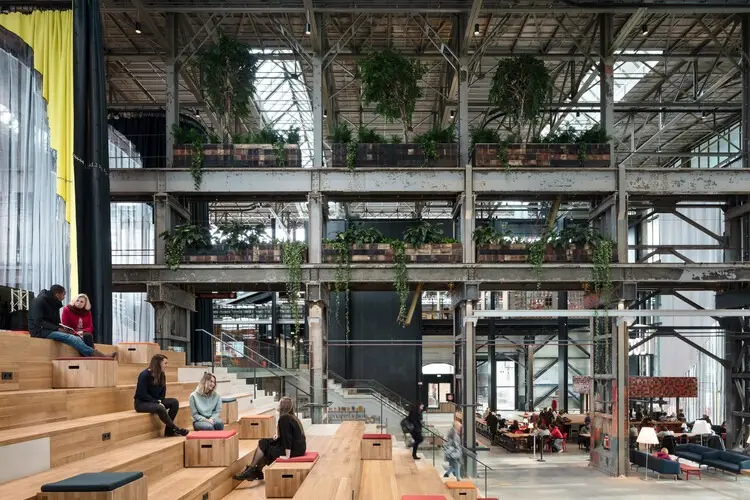
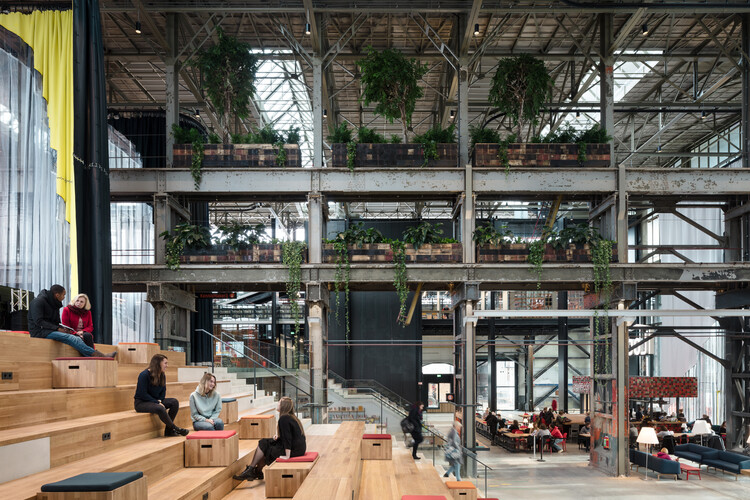
Projects such as Lacaton & Vassal’s work on the Palais de Tokyo expansion and FRAC Dunkerque, alongside adaptive reuse civic triumphs like the LocHal Library in the Netherlands—designed by a collaborative team including CIVIC architects, Braaksma & Roos architectenbureau, Inside Outside, and Mecanoo—exemplify this shift. In these spaces, raw industrial scales and indeterminate layouts invite the public to define how the architecture is used, subverting traditional notions of functional determinism.
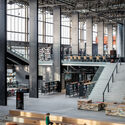
By stepping away from strict programming, contemporary architecture opens up a productive ambiguity, suggesting that the most resilient buildings are those that refuse to dictate their own future, leaving room for unpredictable human adaptation and long-term relevance.